
Oblivion Remastered isn’t just a prettier version of the old game, and you notice that pretty fast. It quietly changes how Elder Scrolls combat feels today. A lot of players jump in expecting their old muscle memory to still work (I did too), but that idea usually falls apart early. Enemies react smarter now, timing matters more than you think, stamina drops quickly, and careless attacks get punished, sometimes pretty hard. Button mashing, which used to get you by, now leads to losses in fights that look like easy wins. The game doesn’t gently ease you into this either; you feel it during your first real encounters.
The good news is that you don’t need lightning-fast reflexes to adjust. This guide is meant to help you slow things down and win fights more often. Instead of theory you’ll forget, it sticks to clear ideas you can actually use. Blocking works differently than before, stamina management is a bigger deal, and mixing playstyles often beats stacking damage alone. Gear choices, smart magic use, positioning (which a lot of people ignore), and even your mindset all matter. To me, these tips fit modern players who want steady results, smoother accessibility, and sessions that don’t leave them exhausted after an hour.
In terms of combat feel, Oblivion Remastered sits in the middle. It’s not a Souls-like, and it avoids the nonstop rush of pure action games. Planning, awareness, and learning how systems work together over time matter most. That balance appeals to streamers, competitive players, and anyone who likes showing skill through smart choices. If combat in games like Kingdom Come or Baldur’s Gate 3 worked for you, this should feel familiar.
This article starts with early and mid-game advice, then shifts to late-game fights, where builds finally get tested in ways that really matter.
Understanding the New Combat Feel in Oblivion Remastered
What most modern players notice right away is how easy the combat is to read. Hits are simpler to follow, enemy reactions are clearer, and fights don’t blur together like they often did before. This change isn’t about making the game easier. It’s mostly about making feedback clear. When damage lands, you understand why. When a block comes in too late, the game shows that mistake without forcing you to guess. That kind of clarity tends to build confidence more than any stat tweak ever could.
Blocking is no longer a last‑second panic move. It now sits at the center of every fight. Holding block slowly drains stamina, so hiding behind it forever doesn’t work anymore (old habits disappear quickly). A well‑timed block cuts more damage and creates a short opening you can actually use. Players coming from shooters, action RPGs, or competitive multiplayer games will likely recognize the feel. It’s close to a loose parry system, though timing still matters a lot. Slow or messy reactions usually get punished, and often immediately.
Enemy behavior also matters more. Some enemies circle carefully, testing spacing and patience. Others fake attacks to bait a response. Stronger foes will shut players down fast if the same pattern keeps getting used. Because of this, many old tricks stop working. Backpedaling while swinging often ends with your character stuck against a wall, which is just as bad as it sounds.
What surprises many returning players is how steady the combat rhythm becomes. Once you learn enemy tells and animation timing, fights often fall into a pattern you can trust. That consistency is on purpose. It rewards reading situations and managing space, not just fast reflexes. Thinking ahead often matters more than gear, at least during most fights.
According to SteamDB, Oblivion Remastered passed 216,000 concurrent players during launch week (Source). That mix of veterans and newcomers matters. New players need systems that explain themselves. Longtime fans want depth they can keep mastering. The updated combat clearly tries to do both, which isn’t easy.
A helpful way to think about combat now is as a loop: watch first, react to what you see, punish mistakes when they happen, then reset and breathe. Simple, steady, and usually effective.
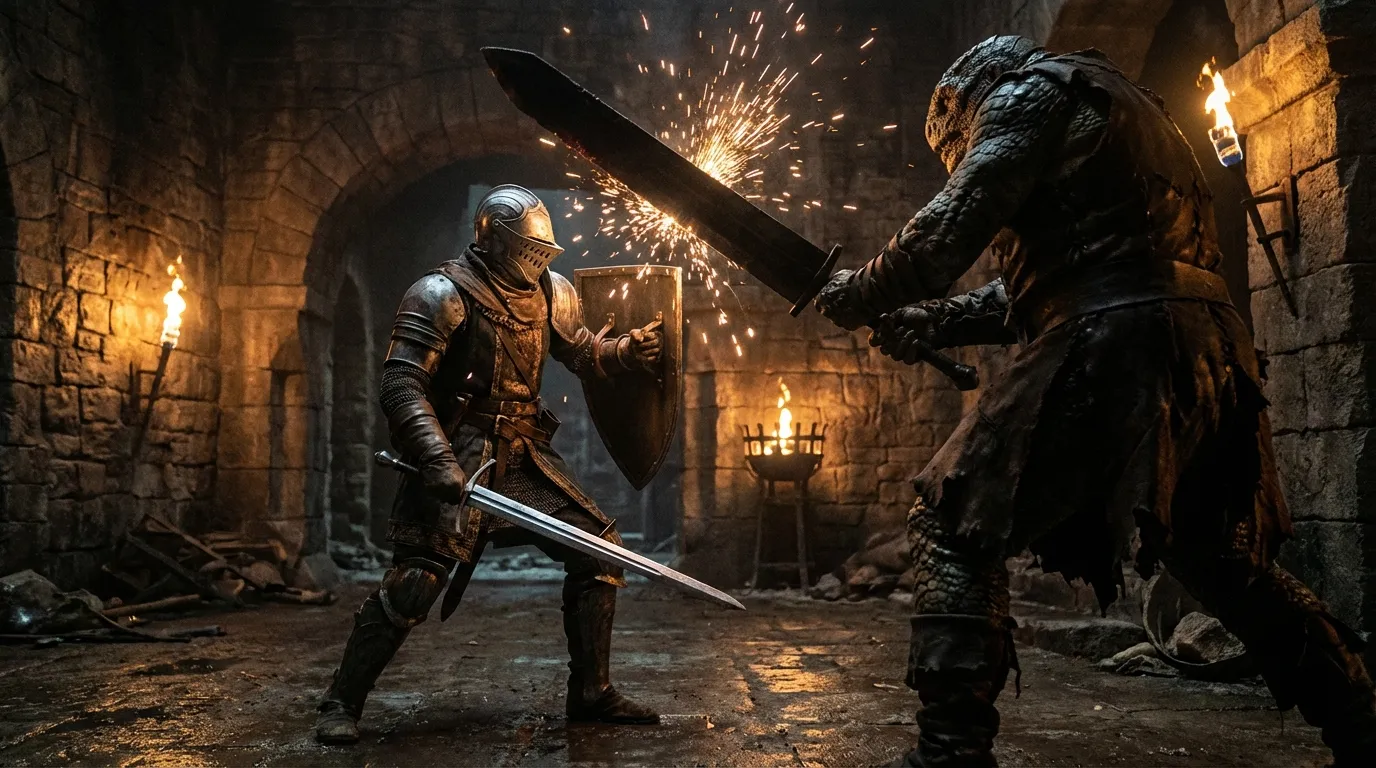
Stamina, Health, and Resource Control in Oblivion Remastered
A lot of players still rush damage stats first. In Oblivion Remastered, that choice often causes more trouble than it solves, at least from my experience. Longer fights and dungeon runs usually reward staying power over big damage numbers. Stamina ends up being the real limit. When it runs out, damage drops, blocks feel shaky, movement slows, and suddenly even basic enemies feel way harder than they should.
It helps to think of stamina as the fuel behind every combat choice. Every swing and block eats into it, and sprinting drains it even faster, which is easy to forget when things get messy. You’ll notice that experienced players rarely mash attacks. They push in, land a few hits, block, reposition, then pause. That uneven rhythm keeps them effective for longer stretches. It sounds simple, but many players still ignore it.
Health management connects to this more than most people think. Healing spells and potions still work fine, but panic healing can backfire. Trying to heal while enemies are on you often drains stamina, which leads to taking more hits right after. Creating a bit of space first usually breaks that cycle. Even a short pause can give control back.
That pause matters because stamina and health recover faster when you aren’t attacking or blocking. Just a second or two can change the next exchange. Skilled players back off on purpose, reset their resources, then re-engage when they’re ready, not when enemies decide.
To compare core resource priorities, look at this simple breakdown used by high-level players:
| Resource | Why It Matters | Common Mistake |
|---|---|---|
| Stamina | Controls damage, blocking, movement | Ignoring regen and over-attacking |
| Health | Survivability buffer | Healing too late or too often |
| Magicka | Utility and control | Using only damage spells |
Most early deaths come from poor stamina management. That’s why hybrid builds often feel smoother to play. Casting a basic Shield or Fortify Fatigue spell before a fight often does more than squeezing out extra weapon damage. You see the same idea in other genres too. The Civilization 7 Guide: Mastering Strategies & New Mechanics mentioned earlier makes a similar point: pacing and resource control usually beat nonstop aggression. Different game, same habit paying off.
Building a Modern Hybrid Character That Wins Fights
Pure builds still work, honestly. They just leave you with fewer answers than they used to. In Oblivion Remastered, the setups that win most fights usually mix tools instead of putting everything into one strength. Trying to learn every skill at once often backfires, though. What really matters is being ready for messy moments, like when one extra enemy turns a clean pull into a scramble.
A modern hybrid build usually comes together in four parts, even if players don’t think of it that way. The most obvious piece is your main damage source: blade, blunt, marksman, or destruction magic. That’s where most kills come from. Defense or control comes next. Block, illusion, alteration, or a smart alchemy setup can all do the job. Some take more setup, but they often pay off later. Utility covers the gaps with movement tools, crowd control, debuffs, and escape options you’ll end up using a lot. Then there’s sustain, which usually means stamina control, healing, or steady recovery so fights don’t end with you completely drained.
A spellblade is a good example of how this fits together. One-handed weapons give steady damage without eating up magicka. Alteration adds Shield and Resist spells to reduce incoming damage, while illusion brings Calm or Paralyze to slow things down and break up groups. In my view, having options often matters more than big numbers, especially when a pull goes wrong. That’s why many players add alchemy; a quick potion can save a run after a mistake. This mix lets you decide when fights start, and usually when they end.
As difficulty goes up, hybrids tend to scale better. Enemy health keeps rising, pure damage starts to feel thin, and control stays useful for longer. Stamina management matters more too, which is why experienced players often feel hybrids really shine later in a playthrough.
Before hybrids were popular, players rushed in and traded hits until someone fell. It worked, but it was risky. With a hybrid approach, fights usually look cleaner: pull one enemy, buff first, sometimes twice, strike, back off if needed, then finish on your terms. It feels more deliberate.
This approach works well with the kind of combat depth seen in games like Kingdom Come. If careful timing and layered systems sound fun, you may also enjoy Mastering Combat in Kingdom Come: Deliverance 2, Tactics and Techniques for Victory, which rewards that same patience.
Hybrid builds also help with accessibility. Players with slower reaction times can rely on buffs and control instead of perfect dodges. Streamers benefit too, since the choices are easier to explain and easier for viewers to follow live.
Positioning, Movement, and Environmental Awareness
Standing still usually gets you killed, but nonstop rolling isn’t the answer either. Oblivion Remastered rewards movement more than the original, but it also punishes panic in quiet ways. Smart positioning matters more than raw speed, and learning when to slow down often feels wrong at first. Not every moment needs an input. Not every threat needs a dodge. In tight fights especially, a short pause can be safer than another roll. A lot of deaths come from moving too much, not too little.
What makes this tricky is the space itself. Corners are dangerous because narrow halls limit escape options and can pin you to a wall. Open rooms give you room to reset stamina near the center or along wider edges. Tight doorways punish panic rolls more than most players expect. When entering a dungeon room, it often helps to stop for a second. Where are the exits? How do enemies move through the space? That quick pause can matter more than any single dodge, even one extra step or glance.
Vertical space adds another layer. Slopes change reach, and stairs can throw off enemy timing in small but useful ways. Fighting uphill drains stamina faster than expected. Drops and ledges can interrupt attacks if enemies are baited well. One helpful approach is pulling enemies into doorways to limit numbers. Try stepping sideways instead of straight back to avoid getting boxed in. Small changes usually pay off.
Lighting and clutter shape fights too. Dark areas make wind-ups harder to read, while cluttered rooms mess with camera movement and spacing (chairs are sneaky enemies). Light spells help, and circling the room to knock things aside can improve visibility. This shows up more during longer dungeon crawls, where patience matters more than speed.
Environmental awareness also includes sound and visual cues. Enemy shouts, spell effects, weapon trails, and footsteps often warn you early. Turning down background music a bit can help you catch these details during long sessions, without killing the mood.
Modern RPG combat design focuses on readability. The Verge often points to how remasters aim for clearer feedback to reduce frustration while keeping challenge (Source), and Oblivion Remastered fits that trend well, in my view. Clearer signals usually mean fewer cheap hits.
These ideas carry across genres. Competitive shooters rely on map control, spacing, and timing under pressure, just at a faster pace. If reading space and flow sounds appealing, CS2 Advanced Strategies: Reading Opponent Patterns & Adaptive Play looks at how positioning often decides fights. Same skills, different rhythm.
Gear, Enchantments, and Why Defense Wins Long Fights
Loot is always tempting. Big numbers feel great when they flash on screen, and most players chase them at least once. In longer fights, though, smart gear choices usually matter more than raw stats, especially after the first minute when small mistakes start adding up. Armor weight affects stamina drain right away, and that cost never stops. Enchantments work in the background, but they often decide how a fight actually ends.
Movement‑heavy builds often lean toward light armor, since constant circling, dodging, and repositioning benefit from speed. Heavy armor, on the other hand, gives you more breathing room. It lets players recover, step back, and fix mistakes without panic. There isn’t one correct option. What matters more is how the full loadout works together, not any single piece on its own.
Long battles make synergy clear. Heavy armor paired with stamina regeneration helps counter constant drain. Light armor backed by Shield spells can patch weaker defenses without killing mobility. These small tweaks matter more than expected, and balance often beats armor type by itself.
Damage reduction enchants usually beat pure damage boosts once fights drag on. Resist Magic and Resist Fire help a lot in mage‑heavy areas, while Fortify Fatigue keeps characters standing when stamina runs low. In long dungeons, living longer often beats killing one enemy a few seconds faster.
Defensive setups also smooth out difficulty spikes. Ambushes hurt less, odd enemy mixes feel manageable, and high mitigation turns surprise deaths into recoverable moments instead of reloads.
Control‑focused weapon enchants also pull their weight. Absorb Fatigue can shut enemies down, while Weakness to Magic sets up harder follow‑ups. Many experienced players carry multiple gear sets, undead, mages, and physical threats, and swap as needed. Fewer deaths usually mean smoother runs and more time actually enjoying the game.
Accessibility, Mental Load, and Sustainable Combat Play
When fights stack up with little rest, long sessions can start to feel heavier than you expect. Most players notice it after a deep dungeon run. Even so, Oblivion Remastered often handles that mental strain better than the original. It’s not effortless, though, and smart habits still matter over time, at least in my view.
Hotkeys are a good place to start, but not by filling every slot. It usually works better to stick with tools you use almost all the time: healing, a shield, one control spell, and a main weapon. Extra options sound helpful, but once combat gets chaotic, they often get in the way. Fewer choices usually mean fewer rushed mistakes.
Session length matters too. Combat pressure builds faster than it seems, even when things feel smooth early on. Short breaks between dungeons help protect reaction time, especially for streamers or anyone playing for hours.
Settings do more than people think. Tweaking camera sensitivity can steady your aim. Adjusting brightness can reduce eye strain, and balanced audio helps with footsteps and spell wind‑ups. HUD size changes can help as well. Comfort usually pays off here.
Physical basics count. Sitting well, stretching, and keeping water nearby can lower mental load more than most players expect.
When the interface feels natural, learning gets easier. Your focus shifts to reading enemies instead of remembering inputs under pressure, which often leads to better choices.
This fits broader design trends. Game Developer, generally reliable for industry insight, points out that accessibility and clarity are now core goals, not bonuses (Source). Oblivion Remastered shows that shift with clearer feedback while keeping combat demanding, still tough, just more manageable in practice.
Advanced Combat Techniques for Late Game Challenges
Late game enemies don’t forgive mistakes, and that’s usually when deeper combat habits start to matter, at least from my experience. What catches many players off guard is how much of the fight happens before the first hit. Prep work may sound boring, but it often saves an entire run. Buffs stack, so using Shield, Fortify Attribute, Resist, and Reflect before pulling enemies really helps. This works best at a dungeon entrance or right outside a boss room, not when everything is already out of control.
Enemy control is another part players often ignore. Ever see a bad pull turn into chaos? Calm can reset things and give you space to think, while Frenzy can break up groups by making enemies fight each other. These aren’t cheap tricks; the game clearly expects you to use them.
Burst timing matters more than it seems. Draining Fatigue first, then opening with power attacks, is a solid approach. Paralyze gives free damage time, but you still need discipline, keep stamina ready so blocking or dodging is always possible.
Experienced players also pay attention to combat rhythm, even without timers. Tracking buff durations and stagger chances helps plan safer damage windows. Boss fights reward patience, especially near the end when healing gets risky. These habits even make streams more fun to watch, since viewers can see the planning pay off in Oblivion Remastered.
The Future of Combat Mods and Community Meta
What stands out right away is how slowly mods shape the long-term meta. It usually grows over time, not overnight. Most combat overhauls focus on stamina tuning, smarter enemy AI, smoother animations, and clearer hit reactions, things that feel better once you’re actually in a fight. I still think mods work best when they stick close to the core loop, like blocking, positioning, and timing, instead of pushing extreme values that throw balance off.
Community discussions often come back to balance rather than raw difficulty spikes, and that makes sense. Players tend to want fights that feel fair and expressive, not punishing just to be punishing. To me, that matches what you see in other modern RPG communities.
When it comes to flexibility, mod authors are leaning into optional layers, better telegraphs, adjustable stamina costs, that let players tune challenge without breaking core systems. Player choice usually comes first.
As AI-driven tools improve, expect smarter enemies along with accessibility tweaks like clearer cues or slower wind-ups. Extra polish helps too. According to SteamCharts, the game still averages over 2,000 daily players months after release (Source), which matters if you plan to mod for the long run.
Frequently Asked Questions
Combat feels tougher now since timing and stamina matter more, and players notice it quickly. It still feels fair to me, even if it takes time to adjust. With more thought and less button-mashing, fights read clearer, feel good, and players report fewer random deaths at this pace.
I think a simple hybrid works best: light armor, a one‑handed weapon with blocking, and a few basic alteration spells for defense and control (core tools). It’s forgiving while you learn (you will), so mistakes are common and messing up usually doesn’t hurt much.
Enemies hit harder or softer due to damage scaling, but the main mechanics stay the same, so good habits help at any level (usually).
Settings often reward smart stamina use and positioning, like flanking.
No, they aren’t. Mods can improve combat, like smoother animations, but I feel the base game already offers enough depth for today’s players. Most people can finish full playthroughs just fine without combat mods.
Put These Combat Strategies Into Practice
What usually trips players up in Oblivion Remastered isn’t a lack of skill, but the wrong mindset. Combat works better when you respect a few basics, your stamina, your limits, and the pace of each fight. That may sound obvious, but actually leaning into it clears up a lot of common mistakes. Just thinking about combat this way often helps things click faster than most step-by-step tips.
Earlier, we looked at why combat feels different now. Stamina control, hybrid builds, positioning, gear that truly affects damage or defense, accessibility options, and late-game mastery all connect. Handling fights without panic potions or wild swings is a clear sign you’re getting there. Most of these pieces don’t work well on their own, which is why the system can feel awkward at first.
So what should you do next? Progress comes faster when you focus on one habit instead of everything at once. Try tightening your block timing, or setting up buffs before pulling an enemy. Keeping it simple helps it stick. After a few sessions, once it feels natural, add another change.
Combat progress isn’t a straight line. Some sessions feel rough, and that’s normal. What matters more is spotting small wins, using fewer potions or ending fights with more control, and letting that confidence grow, even slowly.
Oblivion Remastered usually rewards thoughtful play. These strategies push players toward cleaner decisions and smoother execution, whether they’re streaming, playing casually, or returning to a familiar world that now feels new. Sometimes it’s as simple as loading in, taking a breath, and winning the next fight because you didn’t rush it.