
Upcoming games are aiming for more than sharper graphics or bigger maps. What stands out is how alive these worlds feel, and players usually pick up on that fast. In 2025, AI in gaming is showing up less as a hidden background system and more as something players can actually notice while they play. Non-player characters respond with more context, environments change based on player choices, companions feel less stiff, and everyday interactions feel more natural.
That offers something for gamers, streamers, indie fans, and solo players alike. A smarter game world can stop sessions from feeling repetitive. It can lead to funny clip-worthy moments, raise tension in competitive matches, and create stories that feel more personal. AI can also support accessibility through adaptive tutorials, language tools, and systems that react to individual play styles, which makes a real difference for players who expect a lot from a game.
There are concerns, and they are not small. Some players worry about shallow content dressed up as something new, fake depth, or developers relying on shortcuts. Plenty of developers are cautious about that too. The real question is not just which upcoming games use AI, but which ones use it in a way that truly makes play better.
This guide looks at the titles and platforms moving that shift ahead. It covers what AI-powered worlds actually look like, the market numbers behind the trend, and what all of it could mean for immersion, streaming, hardware, and player trust. For a wider view of AI in gaming, that has already been covered here if readers want to look further.
Why AI-powered worlds matter in 2025
A lot of gaming trends get overhyped, but this one feels different because the tech is finally showing up in games people can actually play, not just in flashy demos. The AI in games market is already pretty big, and most forecasts say it’s growing fast. One 2025 estimate puts the market at USD 2.87 billion, while another puts it at USD 4.20 billion. Forecasts for later years go much higher. Publishers, engine teams, and hardware companies are paying attention.
| Metric | Value | Year |
|---|---|---|
| AI in games market | USD 2.87B | 2025 |
| Global AI in gaming market | USD 4.20B | 2025 |
| Expected AI budget increases | 86% of respondents | 2026 |
| Developers saying gen AI has negative impact | 52% | 2026 survey reporting |
Those numbers point to a few things. Money is moving into tools and features tied to AI in gaming. Still unsettled. According to NVIDIA’s State of AI Report 2026, 86% of respondents expect AI budgets to grow in 2026, and 44% are deploying or evaluating AI agents. At the same time, developer skepticism is still a real part of the picture. Reported GDC-related survey coverage says 52% of developers see generative AI as a negative force in the industry.
That push and pull is what makes 2025 stand out. The conversation is moving past theory and into real proof. Some studios are testing AI for worldbuilding and NPC logic, and a few are using it for player support too. Others are pushing back, and sometimes for good reason. For players, that means the most interesting upcoming games will not stand out just because they say they use AI. They need to show how it actually makes the world better for you, not just cheaper or louder.
2025 will be the year AI levels up the games industry, leading to more immersive, personalized, and intelligent experiences that captivate players.
What an AI-powered world actually looks like
The phrase sounds big, but the idea is pretty simple. In an AI-powered game space, systems react with more context than a fixed script. Instead of every event being set off by hand in the same order, the game can respond to your choices, your play style, your timing, and even the pace you set, and that’s where the real change starts to show.
That can show up in a few different ways. NPCs might remember what you said or did. Enemies can adjust to your tactics instead of repeating the same patterns every time. A companion may notice you’re lost and point you in the right direction, which is small but really useful. In a life sim, people around town could follow more natural routines, while a mission system might build on earlier events and offer follow-up goals that feel more connected.
That still doesn’t mean every game turns into a freeform sandbox. Most games need boundaries. AI usually works best in a controlled, focused role, where it adds variety without breaking the core loop. It can make things feel more responsive without pushing everything into chaos.
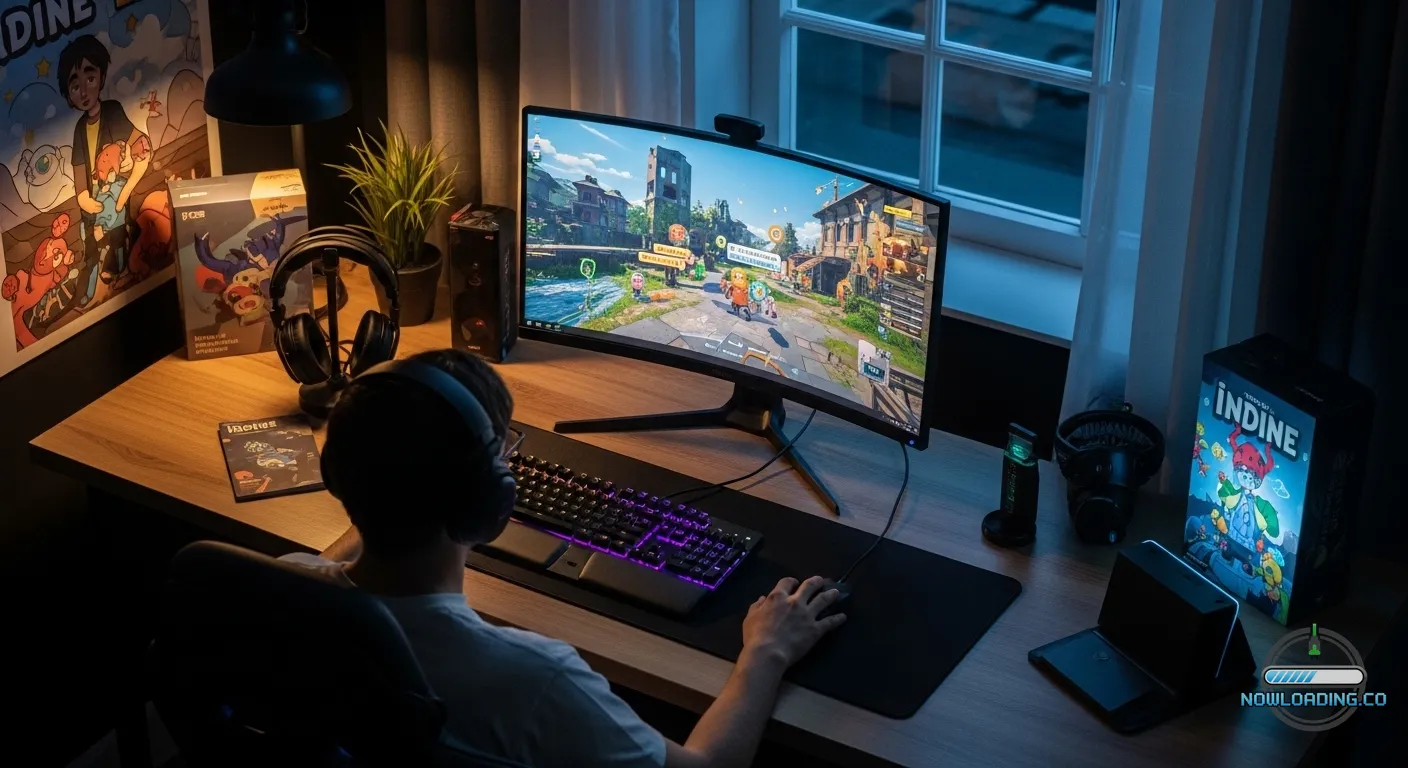
Older game worlds often wait for you to hit the right trigger. AI-powered worlds pay attention to what you do and respond. Sometimes the change is small, like smarter pathing. Other times it’s much bigger, like dynamic conversation, and that can shift the feel of a scene very fast. If you’ve been following coverage on AI in gaming and storytelling, you’ve already seen how this can change the mood of a scene without changing the core genre.
The standout upcoming games pushing AI immersion forward
The biggest names to watch right now are not all trying to do the same thing, and that is a big part of why 2025 looks so interesting. Different studios are testing different parts of the AI stack, and that is where a lot of the real curiosity comes from. They are coming at the problem from very different angles.
inZOI is one of the clearest examples. Krafton’s life sim has drawn attention for Smart Zoi, tied to NVIDIA ACE. The point is not just more polished characters walking around the world. It is more about co-playable characters that can perceive, plan, and react with less rigid scripting. In a life sim, that matters a lot, because repeated behavior breaks the illusion fast and players tend to notice it almost right away.
MechaBREAK is another game linked to NVIDIA ACE integration, but the focus here is different. Instead of leaning into cozy social simulation, it aims for responsive characters in a fast, action-heavy setting. If the system works the way it promises, matches and encounters may feel less stiff and less predictable. That kind of unpredictability fits a game like this much better.
Ubisoft’s Teammates project, built from work around NEO NPCs, may end up being the biggest test so far for conversation-driven immersion. Ubisoft has been fairly open about exploring generative AI interactions that go beyond static dialogue trees. If that idea works, players could end up with squadmates or world characters that feel less like quest kiosks and more like active participants, which would be a pretty big change.
Then there is Dead Meat, which appeared in NVIDIA’s 2025 materials for using smaller on-device AI models. It is easy to overlook, but it may turn out to be one of the most important ideas here. On-device processing can cut latency and reduce the need for constant cloud calls. It may also help games feel quicker while adding a bit more privacy, something plenty of players care about.
That should be exciting for indie players too. Big studios usually get the first wave of attention, but smaller teams often come up with some of the smartest design ideas. So it makes sense to watch beyond the blockbuster list. We covered that here in Upcoming Indie Games in 2026: The Hidden Gems You Can’t Miss.
The research pipeline shaping tomorrow’s upcoming games
Not every project shaping AI in games is a commercial release. A lot of the clearest signs are coming from research and tools, and SIMA 2 from Google DeepMind is one of the best examples.
Today we’re introducing SIMA 2, the next milestone in our research creating general and helpful AI agents.
Game AI is moving beyond enemies that flank on cue or civilians stuck on fixed routes. SIMA 2 points to agents that can work inside 3D virtual worlds, think through goals, and learn alongside the player, which is a pretty big shift from older bots that mostly followed set instructions.
With SIMA 2, we’ve moved beyond instruction-following.
Players probably will not notice this all at once through one flashy feature. It is more likely to show up in companions, training partners, world assistants, quest helpers, and smarter simulation systems. Streamers may end up with runs that unfold differently instead of repeating the same patterns every time. Competitive players could also get better practice spaces, with AI sparring partners that respond more like real people and make practice feel less repetitive.
Worldbuilding tools are speeding up too. Reports around Genie 3, Lucid v1, and Tencent’s Hunyuan-Game all point to much faster environment and asset creation. Genie 3 has been cited at 24 FPS at 720p for world generation output, while Hunyuan-Game reportedly cuts some concept and diagram tasks from 12+ hours to minutes. That does not mean finished games suddenly build themselves, but it does give teams more room to test ideas fast. The result could be bigger worlds, faster updates, and more varied places to explore.
How AI changes immersion for players, streamers, and competitive scenes in upcoming games
Immersion is about more than better graphics. A game keeps people pulled in when the world still feels alive after hours of play, and AI can help in ways that are clear and in ways that are easy to miss. Small moments matter a lot here.
For solo players, smarter NPCs can make a world feel far less fake. A town that reacts to your actions in believable ways helps keep your attention, and a companion who stops repeating the same lines and starts reacting to what is going on keeps the illusion in place. In life sims and RPGs, that change shows up fast.
For streamers, AI-driven worlds can create the kind of chaos that turns into great clips. Viewers usually react to moments that feel unscripted, and a co-playable AI character making a strange but believable choice can create real tension during a live session. Sometimes it works as comedy instead. For creators trying to stand out, that unpredictability gives them moments people really want to share.
Competitive players may get benefits that are less flashy, but still helpful. AI training bots, adaptive tutorials, smarter match review tools, and stronger simulation can help players get better faster. They can also support team practice, aim routines, and map learning in ways that feel closer to real pressure. Not dramatic, just honestly useful.
There is also an accessibility side to this. AI systems can support real-time translation, custom pacing, guided onboarding, and dynamic difficulty. That can help newer players stick with harder genres, and it may reduce stress for players who get overwhelmed by dense menus, fast mechanics, or unclear objectives, which is a real barrier for some people.
Many people see AI as more than a gimmick for that reason. Used well, it can support fun, skill growth, and player comfort at the same time.
The big risks: hype, ethics, quality, and trust
Not every AI feature makes games better. Some can just as easily make them worse, and that’s a big part of the problem.
One clear risk is shallow novelty. A game might promise dynamic NPCs and still end up with awkward conversations, an uneven tone, repeated nonsense, or dialogue that just feels off. If the AI feels random instead of actually smart, immersion can break fast. Sometimes very fast.
Creative trust is another issue. Many developers worry that generative tools will be used as shortcuts instead of support, and players feel uneasy about that too. If a world starts to feel patched together by automation, without strong art direction keeping it consistent, the result can feel hollow. Steam’s growing disclosure around generative AI use shows that transparency is becoming part of the product itself, not just a side note.
There are labor and identity concerns too. If studios lean too hard on automation, fans will naturally start asking who really made what and whether a game’s voice still feels human. That’s a fair question, and it helps explain why reactions to AI in gaming remain so divided.
Rich Wong from AlixPartners frames the business side clearly.
By the end of 2026, gaming companies that successfully integrate AI into strong IP will command valuation multiples 2-3x higher than AI-laggard peers.
That may be true for company value, but players care about something simpler: is the game actually good? The studios that do best will be the ones using AI to strengthen identity rather than replace it. Indie developers may end up showing that most clearly, which fits a pattern they’ve already been setting for a while. We covered that broader shift in Impact of Indie Games: How Small Studios Are Reshaping AAA Gaming.
What this means for your hardware and setup
AI-powered worlds can change what your setup needs, and not every feature works the same way. That’s part of the tradeoff. Some systems do more on your machine, while others lean more on cloud support. A few may barely touch your rig at all. Others can put a much heavier strain on your CPU, GPU, memory, or bandwidth.
If more upcoming games start using on-device AI for NPCs, voice systems, or simulation, local hardware may matter a lot more. Lower latency helps those interactions feel natural instead of delayed, which stands out even more in horror games, shooters, and social sims, where timing strongly shapes the mood.
Streamers have another thing to think about. A game may be running AI-heavy systems while the PC is also encoding video, managing overlays, and handling chat tools. Under that kind of mixed load, balance across the system matters, and a rig that feels totally fine for regular gaming can start to struggle.
That doesn’t mean everyone needs a top-end build. But 2025 buyers should look beyond raw frame rates and pay attention to thermal headroom, memory, and storage speed, along with whether they want to game and create on the same machine. If an upgrade path is part of the plan, A Beginner’s Guide to Building Your Gaming PC from Scratch is a useful place to start.
Why indie studios may benefit most from AI tools
AAA studios still have the money and marketing, but indie teams may be the ones who get the most out of AI-assisted worldbuilding. Small teams often have bold ideas and almost no extra time. Better prototyping, smarter content tools, flexible NPC systems, and more reactive workflows can help them do more than their size usually would, which matters a lot when the team is tiny.
That does not mean one person can suddenly make a giant MMO. Not even close. It means a small team could build a richer town, a quest structure that reacts more, or a better replay loop than it could before. If AI is used with care, it can cut down some of the slow, repetitive parts of production and leave more room for design, pacing, and feel, which are usually the parts players notice most.
For players, that may lead to more strange, personal, and experimental upcoming games. It could also lead to more hybrid genres, like roguelikes with NPCs that remember more, or life sims with messier, more active social chaos. Curious where that might show up first? Spaces like Top Roguelike Games: What to Play in 2026 and other forward-looking indie coverage are worth watching.
AI does not replace creativity. But it can widen the gap between teams with a real vision and teams that mostly want a fast content machine.
Frequently Asked Questions
AI-powered worlds are game spaces where systems react with more context and flexibility. That can include smarter NPCs, dynamic dialogue, adaptive missions, personalized difficulty, or companions that learn from your play. The goal is to make the world feel less scripted and more alive.
Some of the clearest examples include inZOI, MechaBREAK, Ubisoft’s Teammates project, and Dead Meat. Each one shows a different use of AI, from life sim social behavior to action-focused NPC reactions and lower-latency on-device models.
It can do either, which is why players are watching closely. When used well, AI can improve immersion, replay value, and accessibility. When used poorly, it can create flat content, awkward dialogue, and a world that feels fake.
Some will, especially if more features run on-device instead of through the cloud. That can affect CPU, GPU, memory, and streaming performance. If you want help tracking future-facing gaming tech, Now Loading regularly covers hardware, game trends, and setup advice in a practical way.
Yes, and they may use them in the most creative ways. Smaller teams can use AI tools for prototyping, reactive NPC logic, and dynamic content systems without needing AAA budgets. Now Loading is also a useful place to watch that trend because it follows both indie releases and emerging game tech.
Yes, but panic is not helpful. The better approach is to ask how a studio uses AI, what parts of the game are affected, and whether the result feels thoughtful and fair. Transparency, quality, and strong design matter more than a simple yes or no on AI use.
Where immersion goes next
What stands out about AI in gaming isn’t the buzzword. It’s the move away from static design toward play that reacts in a more natural way. In 2025, the most interesting upcoming games will likely use AI to make worlds respond better, not just churn out more content. Titles like inZOI, MechaBREAK, Ubisoft’s Teammates, and projects inspired by research like SIMA 2 point to a future where NPCs remember more, worlds adjust faster, and each session feels more personal (which is the part people really notice). That’s a real shift.
The numbers show strong momentum, while the debates show real caution. Both deserve attention. Players should stay curious, but also critical. Does the AI actually make the game more fun? Does it support accessibility, help with content creation, or give players a reason to come back? It’s also smart to watch how hardware demands change (because that part won’t stay small). Some games will still feel handcrafted even with smart systems working quietly under the hood, and that will matter just as much.
If you want the short version, here it is:
- AI-powered worlds are becoming a real part of upcoming games, not just a pitch deck idea.
- Some of the biggest gains may come from smarter NPCs and adaptive systems. Better onboarding could matter too.
- Streamers and competitive players could get more active sessions. Stronger training tools may help too.
- Trust, quality, and transparency will decide which games players actually welcome.
- Indies may surprise everyone by using AI with the most personality.
Immersion in the future won’t come from AI alone. It will come from developers who know when to use it, when to hold it back, and how to keep the player at the center of the world (that’s still the main thing). A simple idea, but one with a big effect.