
Picking the best strategy games is harder than it looks at first. The genre is bigger, stranger, and more mixed together than ever. One game sticks to clean turn-based planning. Another throws survival pressure, base building, and roguelite runs into a single match, which can be a lot to handle. Some are clearly made for high-level competitive play. Others are great for late-night sessions when players mostly want to think things through, make small changes, and slowly build something smart.
That’s a big reason strategy games feel so fun right now. They reward smart decisions, but they also leave room for curiosity and trying things out. Players aren’t just reacting to whatever is happening in the moment. They’re planning ahead, managing risk, and learning systems well enough to use them to their advantage. If you’re into tech, streaming, indie games, or just like mechanics with some depth, that combination is tough to top. That can make every choice matter, but not so much that players can’t still try things and see what works.
The wider PC market is also in a strong place for strategy. According to Game Developer, which cited Valve data, Steam peak concurrent users passed 42 million in 2025, with 13.9 million users in-game at once. That same report said 5,863 Steam titles earned more than $100,000 in 2025, while 8.2 million customers bought a Steam Daily Deal, up 125% year over year. That matters here because strategy games often depend on discovery, wishlists, and player word of mouth to reach the people most likely to enjoy them and keep playing.
In this guide, we’ll look at what helps the best strategy games stand out, the subgenres shaping the space, and the notable titles worth attention. It’ll also help readers find the right match for their setup, skill level, and play style. It also goes over accessibility, streaming value, performance, and a few common mistakes that can get in the way of enjoying the genre.
Why the best strategy games feel stronger than ever
Strategy games are in a really good place right now, especially on PC. It’s not just that more of them are coming out. Players are also more likely to find them, and smaller studios have a better shot at staying afloat long enough to keep updating and supporting their games. For a genre built around depth and replayability, that often matters even more than it does in faster-moving genres. It really does feel like a big change.
A lot of that comes down to platform health. Steam, in particular, is giving more games a real chance to get noticed. Based on Valve figures summarized by Game Developer, peak concurrent users went past 42 million in 2025, while nearly 14 million users were actively in-game at the same time. That year, 5,863 titles also made more than $100,000. For strategy players, that points to a market that may be crowded, but still active enough for niche games to find loyal communities, which is often exactly what this genre needs.
| Steam ecosystem metric | Value | Period |
|---|---|---|
| Peak concurrent users | 42 million+ | 2025 |
| Users in-game at once | 13.9 million | 2025 |
| Titles earning over $100,000 | 5,863 | 2025 |
| Steam Daily Deal buyers | 8.2 million | 2025 |
| Daily Deal year-over-year growth | 125% | 2025 |
That doesn’t mean every strategy release is going to succeed. But the numbers do point to a better way for slower, more systems-heavy games to get found, especially games that rely on demos, regular updates, short video clips, and community-made guides. Usually, that means players actually get a chance to notice these games and keep coming back to them over time. That part matters here.
The other nice thing is thinking back to some of the user numbers we shared earlier in the talk, and the number of games finding success on Steam is generally keeping pace with user growth.
That helps explain why so many of the best strategy games now come from both major publishers and smaller teams. The big names still matter. But indie strategy has grown into one of the genre’s biggest strengths because smaller studios can often keep refining smart ideas and supporting the communities that form around them.
What separates the best strategy games from the merely complex
Plenty of games are hard to parse. Far fewer are truly strategic, and that gap really matters.
The strongest strategy games don’t bury you in layers of menus just to look deep, that’s usually a bad sign. They lay out clear goals, show you useful feedback, offer choices that matter, and leave room to adjust. Each decision should cost something, but there also has to be a solid reason for making it. That’s where the gap usually shows up.
Here’s a simple test: players should lose because they read the situation wrong, not because the interface got in the way, and that still happens too often. So before you spend ten hours on a strategy game, here’s a simple way to judge it:
1. Does it create interesting trade-offs?
A good strategy game has you pick between things you want, and that’s usually where the fun comes from. Do you expand right away or defend your base first? Spend on your economy or on units. They’re small choices, but they often shape how the match goes. You might push your luck, or just play it safe, depending on you.
2. Does failure teach you something?
The best strategy games usually make a loss feel useful. You can often look back and see the mistake, which really helps. That makes the game feel fair, so you usually keep improving.
3. Does it have readable systems?
Readability isn’t just about visual style. It means players can usually follow cause and effect, which matters here. If food runs low, they usually know why. And when a flank fails, they can often trace the mistake instead of guessing.
4. Does it stay fun after the first surprise?
Some games pull people in with a cool idea, then start to feel flat. But great strategy games usually keep opening up over time, and that’s often a good sign. New maps appear, different interactions start to matter, and players slowly notice more counters too, so they’re not just repeating the same move over and over.
If sandbox progression is part of the appeal, Terraria Guide: Mastering the Best Strategies for 2026 shows how much strategy can hinge on what you do first, when you spend resources, and how you handle pressure, even in smaller moments. And in most cases, that still matters beyond classic RTS or 4X games too.

The biggest best strategy games trends shaping this year
If someone has been away from the genre for a while, the biggest surprise is probably how mixed everything feels now. Pure RTS and pure turn-based games are still here, but hybrid design is a big reason the best strategy games feel so new. That’s usually the part people notice first.
The first trend is city builder plus survival. These games ask players to optimize production while also dealing with weather, terrain, hostile conditions, or a slow-moving collapse. That setup creates more tension and often leads to stronger stories during play. Every build order matters because the world keeps pushing back, and that changes a lot.
The second trend is RTS with pacing flexibility. For new players, traditional real-time strategy can be intimidating because it can feel too fast. More games now slow things down with pause systems, slower command layers, and sometimes survival structures, so players have more time to think without losing the pressure. That feels like a pretty big shift.
The third trend is turn-based tactics tied to strong worlds or franchises. This matters for audience growth. A tactics game set in a world people already recognize can pull in players who never thought they’d like the genre. That familiarity also tends to keep people with the systems longer, which is usually the harder part.
The fourth trend is roguelite strategy. This works especially well for streamers and for players with limited time. A run-based structure adds clear stakes, clean restarts, and lots of surprise moments that are easy to share. Short runs, strong hooks, and usually a clearer reason to come back.
Steam Next Fest has also become a real filter for discovery. Demos usually do more for strategy games than they do for a lot of other genres, because players need to feel the systems click for themselves. A trailer can show the art, but a demo shows how decisions actually feel. So for anyone interested in platform shifts and how storefronts shape play habits, Apple’s New Games App: Impact on Gamers & Devs offers a useful parallel on how discovery tools influence what gets played.
Notable best strategy games that show where strategy is headed
Instead of forcing a fake top-10 list, it makes more sense to look at notable games that show the main directions in the genre, which is probably a better way to compare them. That’s often more useful, and it usually leads to better buying choices and a clearer sense of the kind of strategy experience someone wants.
Laysara: Summit Kingdom
Released on February 27, 2026, this game is a really good example of modern city building under environmental stress. In a mountain setting, that changes almost everything. Space, logistics, and hazard management usually aren’t side systems here, they’re basically the whole game. It also shows how good strategy games can make terrain feel like a constant puzzle instead of something just sitting in the background.
Here Comes the Swarm
Released on March 5, 2026, this survival RTS goes for a more intense, streamer-friendly style of strategy, which probably fits the vibe. The appeal is pretty simple: pressure creates drama. You’re optimizing under stress, surviving waves, adapting fast, and making messy choices when plans fall apart, which seems to be the point.
STAR WARS Zero Company
Set for August 27, 2026, this looks like one of the more interesting signs for mainstream tactics. A big franchise could bring new attention to turn-based strategy, likely from the wider Star Wars crowd. That’s pretty exciting. If the systems work well, it could also become a gateway game for players who usually stick with shooters or spend most of their time in action RPGs, which happens a lot.
Sid Meier’s Civilization VII
Even if it’s not the newest idea around, Civilization still usually feels like a standard people measure others against. That’s why it’s still one of the first games that comes up when people talk about the best strategy games. It shows what long-term planning, the gradual build of an empire, and layered turn-by-turn decisions are supposed to feel like. Kind of a big deal.
Ascenders: Beyond the Peak
This turn-based exploration roguelite shows how far hybrid design can go, which says a lot here. By mixing vertical survival with repeated runs, it creates a flow that feels very different from classic empire sims, especially in shorter sessions. It’s a smart pick if you want strategy depth without needing a hundred-turn campaign.
Why indie best strategy games matter so much now
Indie strategy is very much alive. Right now, it’s easily one of the most exciting parts of PC gaming, and probably one of the busiest too.
GDC’s State of the Game Industry 2025 reported that about 50% of surveyed developers were self-funding their games. That says a lot. Many teams are working with limited budgets, so they need strong design hooks to stand out on Steam, in itch.io listings, and in a very crowded PC market. Strategy is still one of the genres where that can happen, because a smart system can often do more for a game than huge production values.
Small teams usually do best when they build around one idea players remember. It might be mountain logistics. It might be a survival economy loop. Sometimes it’s a single combat rule that changes how every map works, or a small twist that makes each decision feel tense, and that’s often where the real appeal comes from. Big publishers can bring polish and reach, but smaller studios are usually the ones willing to take bigger design risks.
Then there’s the creator side, and that matters as well. A lot of the strategy games that play well on stream are indie, because a match tends to make its own story: a desperate defense, a weird build, a perfect comeback, or a total collapse. Those parts are fun to watch, and they’re usually just as good to pick apart afterward. More heavily scripted games usually don’t create those moments as easily.
According to GDC’s 2025 survey, roughly 80% of developers expressed at least some comfort with understanding and implementing accessibility measures. That matters for indie strategy too. Better UI scaling, clearer color contrast, pause-friendly options, and controls that are easier to read can make a smaller game feel easier to use and help it reach more players.
If you want another angle on how smaller and systems-driven games can break through, Citizen Sleeper 2 & 2025’s Indie Sci-Fi Boom: Games You Can’t Miss is a good companion read.
Accessibility in the best strategy games is a core feature, not a bonus
Strategy games ask a lot from players. They involve reading tooltips, comparing resources, scanning maps, and keeping track of many moving parts at once, which can honestly feel overwhelming. That’s exactly why accessibility matters so much in this genre.
The ESA’s 2025 findings reported that 21% of adult video-game players in the U.S. reported a disability. Among players with disabilities, 49% said overall accessibility is extremely or very important. And 56% considered video games very accessible, which is encouraging, even though there’s still plenty of room for improvement. The most important feature named was adjustable text size at 50%, followed by adjustable difficulty at 39%.
In strategy games, those numbers aren’t just extra context. They show what better design usually means in practice. When a game leans heavily on text, scalable fonts make menus, tooltips, and resource panels much easier to read. Unit-heavy games benefit from clearer colors and stronger contrast. Tougher games also need difficulty settings that reduce friction without taking away player choice, which is a very practical fix here.
Accessibility also helps with streaming and longer play sessions. Bigger text works better on second monitors, where the UI can start to look tiny. Better contrast helps when players are tired or playing late at night. Real life often interrupts a match, so pause features matter when a delivery arrives, a kid needs something, or anything else suddenly pulls attention away.
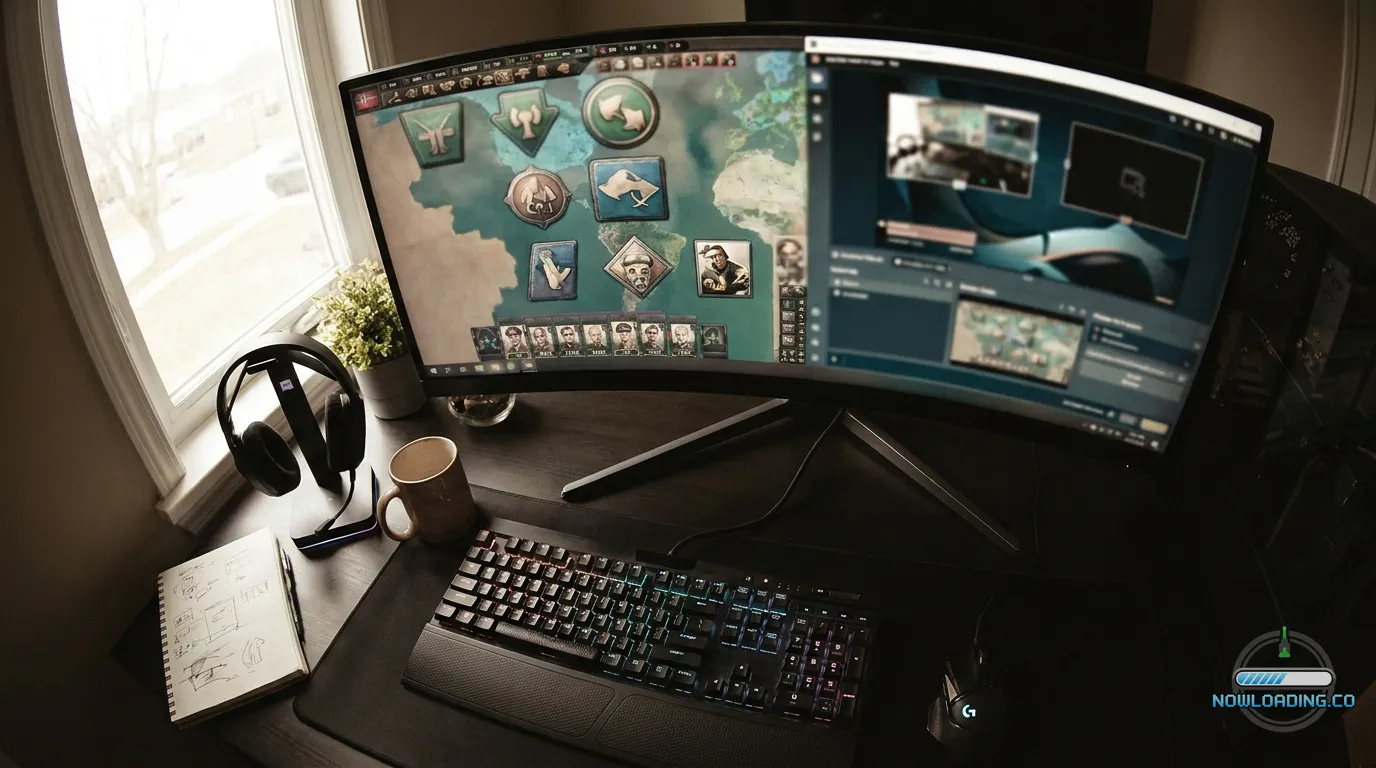
When evaluating the best strategy games, a few simple questions help: Can you scale the UI? Can you remap inputs? Can you slow things down? Is the battlefield easy to read at a glance? You can usually spot those quality markers pretty quickly, and the difference tends to stand out right away.
How to choose the right best strategy games for your play style
A pretty common mistake is looking for one best game for everyone. That often leads to buying a great game that actually suits someone else better instead, and that happens a lot.
So it’s better to choose the game that fits how you really play. That’s usually a much better fit for you.
If you want competition
Look for clear counters, strong readability, an active community, and fast feedback, since that usually helps a lot. Fair losses also matter more than spectacle here. Simple, but important.
If you want to stream
Games with emergent stories, runs that play out differently, or moments that get tense usually help. Roguelite strategy and survival RTS hybrids often work well here too. They’re good for streams.
If you love indie design
Look for games built around one standout system and a clear identity, because that’s usually the draw. They’re simple but memorable, and you’re often buying ideas instead of lots of content, which is fine.
If you’ve got limited time
Shorter scenarios and turn-based runs usually go over better than huge empire campaigns, for most people anyway. And a good 45-minute session often beats a save file that just sits there and never gets opened again, honestly.
If you care about hardware efficiency
Choose games that still run smoothly in the late game, with a UI that’s easy to read on your monitor, especially from your usual distance, and settings that help reduce visual clutter. It’s pretty simple stuff, really.
If you want broader platform picks that fit your library and backlog, Now Loading often covers nearby genres in a practical, useful way, which is nice. And The Best Steam Games You Should Play in 2026 can help too if you want strategy mixed with other smart PC picks, I think.
Common mistakes when getting into the best strategy games
New players often bounce off strategy games for reasons that have less to do with skill than it may seem. One common mistake is starting with a game that’s just too broad. If a first match asks someone to manage diplomacy, economy, combat, weather, and politics all at once, it’s easy to think they’re bad at it, when the real issue is usually overload. Too much at the same time tends to turn people away fast.
Another issue is moving too quickly. Strategy games aren’t really about constant action. They usually come down to timing and information, and taking an extra moment to check the map often helps more than clicking faster. That sounds obvious, but it’s easy to forget during a match. That short pause is often where better decisions begin.
Another common problem is copying advanced builds without really knowing why they work. What a top player does rests on solid fundamentals and clean execution, so it usually helps more to learn the reasoning first than to copy every detail right away. Once that part clicks, the details make a lot more sense. More people get tripped up by that order than you’d expect.
Ignoring onboarding tools causes trouble too. There’s a reason demos, early scenarios, easy settings, and guided intros are there. They help players start seeing patterns and get a feel for how the game works, and that’s a big part of why strategy demos matter so much for discovery and retention.
If you're like me, sometimes the Steam client is running on your PC, even if you're not shopping or buying a game.
That leads to something practical: most players find games one step at a time. A wishlist, a demo, a short clip, or a friend’s recommendation will often do more than a flashy launch trailer. Most of the time, that slower route is how people work out which kind of strategy game really fits them.
Where the best strategy games fit in a wider gaming library
Even dedicated strategy fans usually don’t stick with one genre forever. The best strategy games often work better as part of a healthy rotation than on their own. After a long, demanding campaign, an action game can be a nice switch. Then, after a loud week of multiplayer, something slower and more thoughtful often feels better, and probably more relaxing too.
That’s part of why hybrid design works as well as it does. If a strategy game adds survival elements, RPG progression, or a roguelite structure, it can stay interesting longer without going stale. New goals, different runs, and added systems all make a difference. But the core is still where it should be: your decisions, your timing, and how you control the map.
If taste shifts between tactics, stealth, and other systems-heavy experiences, Game Guides: Top 10 Stealth Games for 2026 is a solid next stop. There’s more overlap than most people expect. Both genres reward patience, map awareness, and picking the right moment to act instead of rushing in, which usually ends badly anyway.
For many players, that’s the real takeaway. Strategy is more than a genre label. It’s often a way to play that carries across different kinds of games.
Frequently Asked Questions
If you’re new, it’s easier to start with games that clearly show what’s happening, teach you well, and have interfaces that are easy to follow. Turn-based tactics and lighter city builders tend to be simpler to pick up than ultra-fast RTS games, mostly because you get more time to think.
Yes, especially when the game keeps producing memorable stories or those high-stakes moments come up again and again. Survival RTS and tactics games tend to work really well when the outcomes get dramatic. Roguelite strategy games fit too, since viewers pick up on the tension fast.
What matters most is a playable demo, a clear UI, smart onboarding, and some sign you’ll want to come back for another run. On Now Loading, the strongest previews make it clear what playing the game actually feels like, not just how slick the trailer is.
Not always. A lot of strategy games play fine on midrange systems, but once you get into late-game simulation, big battles, or heavier effects, your CPU can still take a hit. Check first. And check whether the game lets you adjust UI scale, battle size, shadows, and simulation speed.
Strategy games ask you to read a lot, plan ahead, and juggle several systems at the same time. That’s a lot to handle. Things like larger text, remappable controls, adjustable difficulty, and pause options can really help with comfort and make the game easier to stick with over time.
If you want strategy coverage that connects performance, trends, and creator-focused play, a forward-looking gaming blog like Now Loading comes in handy. It’s especially useful if you care about what to play and how a game’s systems fit your setup and play habits.
Build your own smart strategy lineup with the best strategy games
The best strategy games aren’t all chasing the same kind of fun, and that variety is a big part of why the genre feels so good right now. Some ask players to react fast when a match gets hectic, often in real-time battles or other moments packed with quick decisions. Others are most satisfying as economy puzzles, where balancing resources is the whole point. Then there are the ones where each run turns into a little story of its own, and the choices, mistakes, and setbacks tend to stick with you afterward.
What stands out most:
- Platform conditions are healthy for PC strategy discovery.
- Hybrid design is leading the genre. It isn’t pushing everything else aside.
- Indie strategy matters because systems-first design still gets attention.
- Accessibility matters too, especially in UI-heavy games.
- What works best comes down to your play style rather than any universal ranking.
If someone wants to get more out of the genre, it usually helps to start small. A demo can help. You’ll also find that one creator who explains decisions clearly can make a real difference, because following that thinking over time often makes complex games easier to enjoy. It also helps to try a subgenre you usually skip and stick with it for a bit. The best strategy games often become favorites slowly, then suddenly take over your whole week. That’s part of the fun, and part of the appeal is learning to think inside a game world in sharper, smarter ways.


