
If you want a Terraria guide that makes the game easier to handle, this is for you. By the end, you’ll know how to get from early survival into hardmode with more control, win bosses more reliably, improve your builds, farm more safely, and get multiplayer sorted with less trouble. It keeps things straightforward and easy to follow, and that usually helps more than people expect. This walkthrough is for new players, returning players, streamers, and anyone trying to waste less time and move through the game in a smarter way.
Terraria still has real staying power. Re-Logic said it had sold 58.7 million units as of June 2024, including nearly 32 million on PC. Steam activity also stayed strong through 2025: average concurrent players were 29,151.93 in January 2025, 26,254.06 in June 2025, and 25,806.97 in December 2025. Those numbers are for Steam only, not total players across every platform, but they still show the game is very active, and probably for good reason. Add a 96.72% Steam review score based on about 1.57 million reviews at capture time, and the value of a Terraria guide like this is pretty clear.
This tutorial stays focused on practical play: what to build first, when bosses are worth fighting, how to avoid common mistakes, and how to get ready for hardmode. It also covers setting up a character that can still feel strong while patches and balance changes keep coming, so there’s less need to rebuild everything whenever the meta shifts. And it’s not just about combat. It also includes tips for co-op, performance, content creation, and accessibility, so the run stays fun instead of turning into a grind, which tends to happen in longer play sessions.
Before You Start This Terraria Guide
Here’s what you’ll want to have ready before you begin:
- A new or existing Terraria character
- A world in Classic, Expert, Master, or Journey mode
- Enough time for one focused session, usually about 60 to 90 minutes
- A simple note or checklist for boss order and gear goals, since that can help
- Optional: friends if you want co-op progression
- Optional: a streaming or recording setup if you make content
If you want to try modded play later, it’s usually better to start with vanilla so the progression path is easier to follow. Starting simple often helps. And if you want help with side systems, we covered that in Terraria Fishing & Seeds: Hidden Mechanics Most Players Overlook and Terraria Storage Ideas: Build the Perfect Magic Storage System.
Step 1 of This Terraria Guide: Pick the right world and difficulty for your goal
Start by choosing a world size and difficulty that fit how you want to play. If you want quicker progression and easier farming routes, a small or medium world is usually a good choice. If you want more room for building, biome farms, and longer sessions, medium or large often makes more sense. For most players, medium is probably the best middle ground. It keeps things simple and reliable, and honestly, it’s less annoying to manage.
Then choose your difficulty. Classic works best if you’re still learning boss patterns or coming back after a long break. Expert is the sweet spot for a lot of players because it adds harder boss mechanics along with better loot. Master usually works best for a challenge run, a content series, or group play where a bit of chaos is part of the fun.
A simple rule usually helps here:
- Classic for learning and speed
- Expert for strong all-around progression
- Master if you want challenge and spectacle
- Master also works well for content creation
According to Re-Logic’s Loki in the June 2024 State of the Game:
We’re very proud to share that Terraria has surpassed 58 million units sold, 58.7m to be exact, with nearly 32m from PC alone!
That huge player base still matters. There’s a strong ecosystem around co-op runs, challenge seeds, builds, and creator content. In most cases, that means plenty of guides, run ideas, and people to learn from.
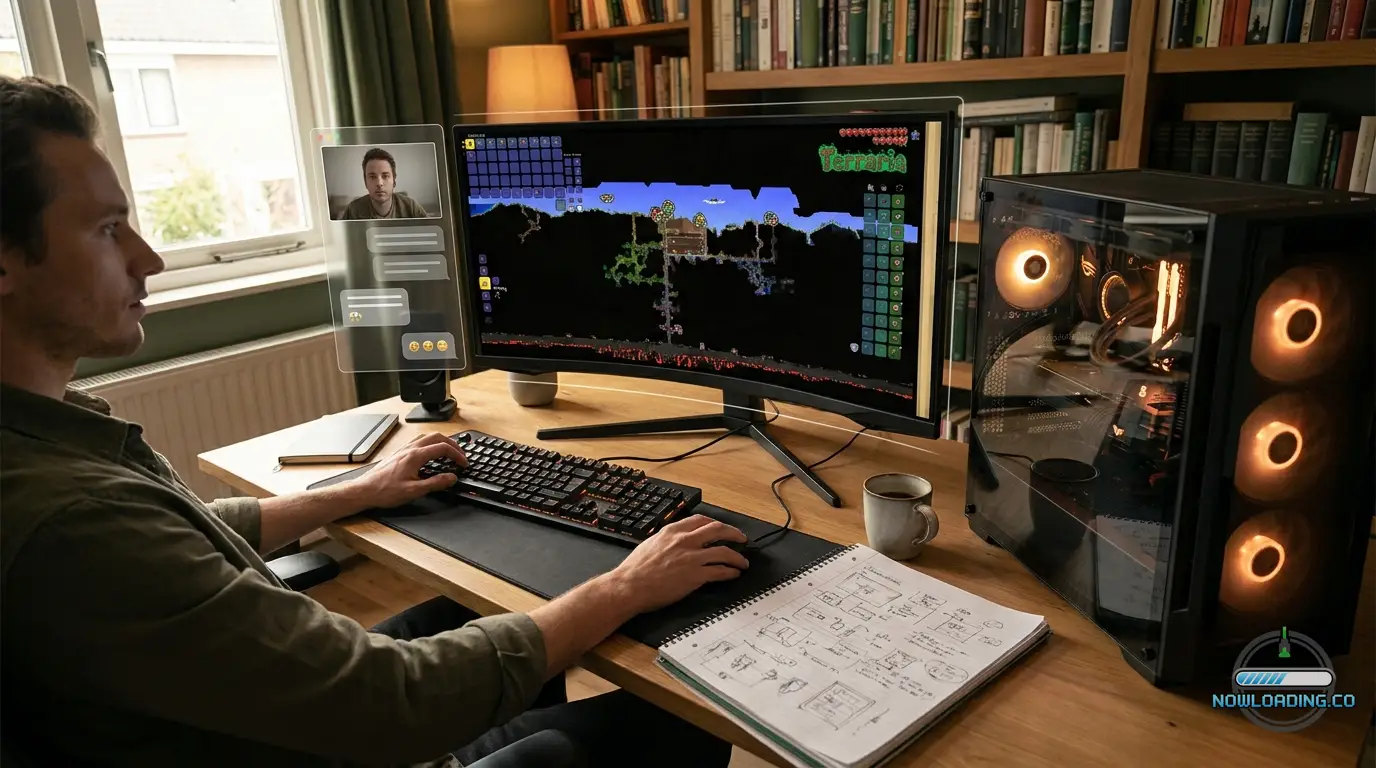
Tip: If you stream, Expert mode usually gives you more interesting fights without the pace loss Master can cause, especially during longer boss attempts.
Common mistake: Picking Master too early and burning out before hardmode. If mastery is the goal, learn consistency first. That’s often the part that helps most later.
Step 2: Build a starter base that saves time in this Terraria guide
A first base works best when it fixes early problems instead of just looking nice. Style can come later. Building it close to spawn makes it much easier to reach, and easy access helps a lot at the start. Vertical NPC rooms are a good option, along with a small crafting corner, space for chests, and one safe spot where items can be sorted fast. It also helps to keep the furnace, anvil, workbench, loom, and sawmill close together, so crafting doesn’t turn into constant backtracking through the base.
A strong early base usually has:
- A central spawn room with your bed in a safe spot near the middle
- 6 to 10 valid NPC rooms stacked vertically
- One chest wall for ores, bars, potions, boss loot, blocks, and accessories
- Rope or platforms so moving up and down is faster
- A flat area outside for early events and a little combat testing
What matters most isn’t base size, but how easy it is to use. At the start, building more than you need usually just gets in the way. Usually, the best setup lets you dump loot, make upgrades, buy supplies, and get back out in under a minute. That’s usually when the time savings start to feel real.
For players who like optimizing, proper storage is often the next upgrade worth making. That is where one of the biggest time saves starts to show. A neat chest system helps over a long playthrough, especially once hardmode adds more gear and materials. If you want a deeper setup path, we covered that here: Terraria Base Design Masterclass, From Efficient Farms to Endgame Fortresses.
Tip: Put torches, wood, platforms, recall potions, rope, bombs, and healing potions in the top chest. Those are usually what you reach for most.
Common mistake: Crafting stations spread across multiple floors. Why make every crafting stop take longer? Keeping them close enough to use in one stop is usually much more noticeable in practice.
Step 3: Rush early mobility before you chase damage
A lot of players go for better weapons first, and that makes sense. But early mobility is usually the bigger power spike. When your character can dodge, back off, reposition, and move around faster, Terraria often feels much easier and a lot less messy. In this Terraria guide, movement usually helps more in the early game than many players expect.
A simple early checklist usually looks like this:
- Get Hermes Boots or another speed accessory.
- Find a double jump item like Cloud in a Bottle.
- Pick up a hook when you can.
- Raise your health by picking up Life Crystals.
- Use grenades, bows, or gem staves if early damage feels weak.
This order works because movement helps players survive bosses that might otherwise destroy them. It also makes cave runs, chest hunting, and biome scouting faster and safer. Getting across gaps, escaping danger, and changing position quickly are all part of why this works so well. Early on, a weaker weapon with strong movement is often safer than a stronger weapon when your positioning is bad, and that usually happens a lot.
There’s also a reason Terraria still rewards this approach: the game stays active, gets regular tuning, and is still widely discussed. In the August 2025 State of the Game, Loki said:
The content list is locked in, the bug and ticket list is locked in and the internal timeline is set.
That is why a modern Terraria guide should stay flexible. The game isn’t frozen in time, so it makes sense to build around systems that usually stay useful even when balance changes. Mobility is one of those systems, and it’s arguably one of the safest early investments you can make.
Tip: Can’t find boots early? You can still buy some movement help where possible. Platforms also help more than many players expect, so use them often. It also helps to stop taking fights in cramped spaces.
Common mistake: Going into Eye of Cthulhu with low mobility and no arena. It sounds simple, but it probably happens all the time. Even a very basic platform arena can make that fight much easier.
Step 4: Beat pre-hardmode in a clean order instead of wandering aimlessly
Getting better usually happens fastest when there’s a clear progression route. This isn’t about speedrunning, and it probably shouldn’t be. What helps in most worlds is having some direction, and the simple order below often works really well to keep you on track.
Early pre-hardmode route in this Terraria guide
- Gear up underground
- Get health up to around 200+
- Beat Eye of Cthulhu
- Beat Eater of Worlds or Brain of Cthulhu
- Unlock better ore access and stronger crafting options
- Fight Skeletron for Dungeon loot
- Explore the Jungle, Underworld, and biome edges
- Beat Queen Bee if she helps your class
- Take on Wall of Flesh only after base prep is finished
Each stop here unlocks something useful. Eye gives materials and usually helps players get used to early boss fights. It’s a simple step, but it changes a lot. The evil biome boss often improves the crafting path too, since it opens stronger ore and more gear options. Skeletron unlocks the Dungeon, which is especially useful for early magic setups, while also moving general item progression forward. Queen Bee stays optional, but for some class setups, she can be very strong.
The main point isn’t just boss order. It’s prep before push, and that usually matters more than people expect. Before each fight, keep the basics in mind:
- Build a basic arena with platforms.
- Bring healing potions.
- Use at least one buff potion.
- Reforge only when an item is central to the build.
Try not to get too stuck in your head about it. A tidy setup and a couple of smart upgrades usually get you further than endless farming, and that’s easy to lose sight of. If hidden systems, seeds, and smarter loot prep sound fun, Terraria Fishing & Seeds: Hidden Mechanics Most Players Overlook can give your world setup a nice edge.
Tip: When boss loot stops being worth much, it’s usually better to move on instead of farming forever for a perfect drop. Don’t let the run stall out.
Common mistake: Beating Wall of Flesh before setting up hardmode defenses around the base and making biome-control paths between important areas. That usually creates a rough transition and can leave the world in a mess that could have been avoided.
Step 5: Prepare for hardmode before you trigger it
This is probably the biggest step in the whole article. Hardmode makes enemies stronger, and it changes the world state at the same time. If your prep is messy, things can get rough fast. So before beating Wall of Flesh, it helps to build like the world is about to get a lot more stressful, because that’s usually exactly what happens.
Do this first:
- Create a long hellbridge for the boss fight
- Build quarantine tunnels near key bases so biome spread is easier to control
- Set up herb farming and potion storage, along with a quick crafting area
- Make boss arenas on the surface, in the sky, and underground
- Stockpile basic ammo, healing items, useful accessory swaps, and keep strong weapons instead of selling everything
If you don’t do this ahead of time, hardmode can turn into chaos almost immediately. But if you’ve prepared well, it’s usually a lot easier to deal with and, honestly, more fun.
Here’s what that looks like before and after:
Before prep: Hardmode starts. A biome begins moving toward the NPC area, the arena is weak, and every death feels expensive and frustrating.
After prep: The world gets switched into hardmode, altars get smashed, new ores get mined, early hardmode enemies get tried in a safer setup, and preparation for the mechanical bosses starts right away.
This is also the point where multiplayer matters more. Current official and community tracking around 2026 shows crossplay moving forward in phases, so it’s better not to assume it will work across every platform combination unless that has been confirmed. In practical terms, sessions should be planned around what the group can actually access, since that’s usually the part that matters most.
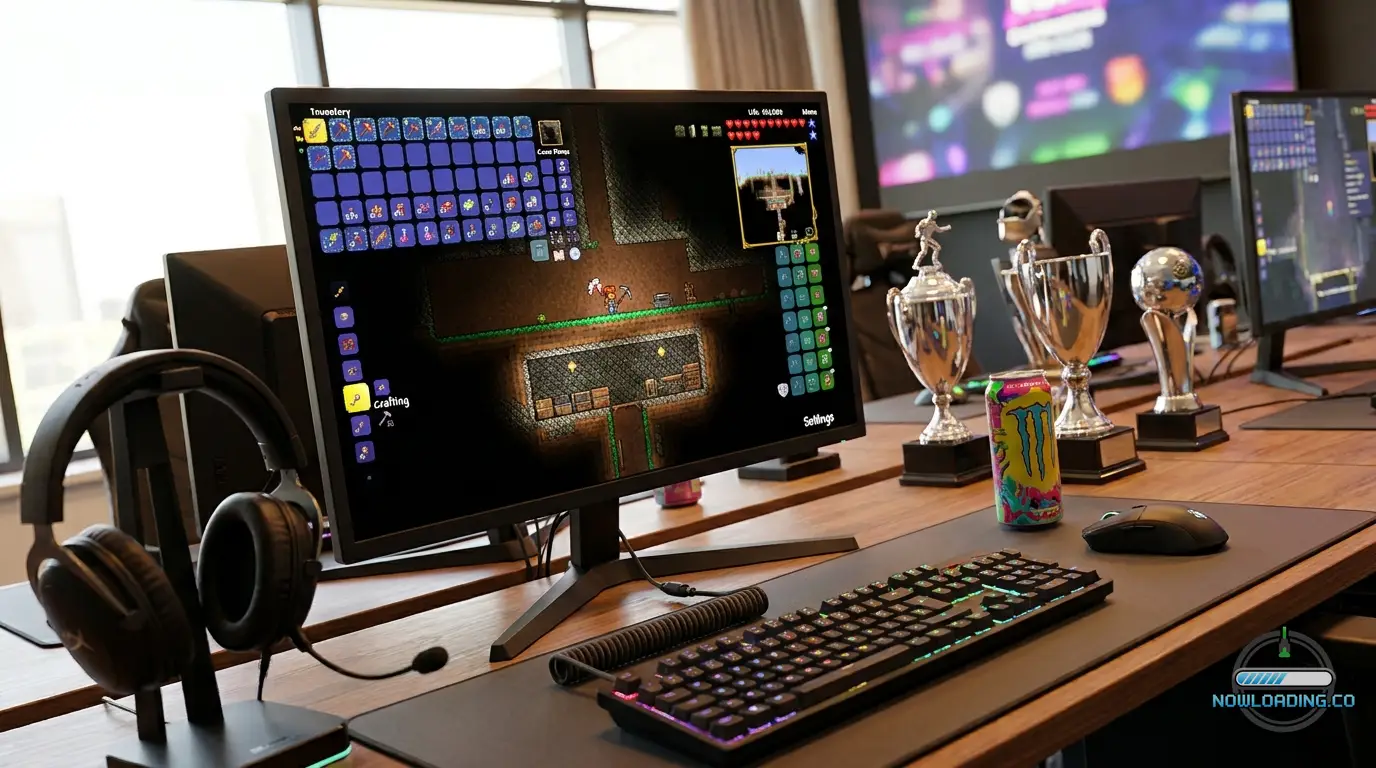
Tip: Put one chest near the Wall of Flesh route with backup potions, ammo, and a spare weapon. You’ll probably be glad it is there.
Common mistake: Starting hardmode with no plan for the mechanical bosses. In this case, it usually helps to know the next target before the mode even begins.
Step 6: Choose one main class and build around it
In Terraria, you can mix and match gear, but after hardmode begins, most players tend to do better when they stick with one main class. It really helps. That often makes armor choices clearer, gives better accessory combos, and makes farming goals easier to figure out.
Here’s a simple breakdown:
Melee
Best if you want survivability and simpler close-range control, basically up close. It’s good for solo players who like straightforward damage.
Ranger
Great for flexible fights, safe spacing, and strong boss damage. It’s also good for streamers, since fights are easy to follow and usually more fun to watch.
Mage
Great for burst damage and a good mix of spells. But it usually needs mana control and good positioning.
Summoner
Best for players who like high skill expression and movement-heavy play, since that’s a big part of why the class appeals to people. It’s very strong, but mistakes usually get punished more here.
The main job is to commit. If you’re mostly Ranger, it usually doesn’t make much sense to keep putting resources into gear you probably won’t use. It’s usually better to save money, go after accessories that actually fit the build, and get used to the class rhythm. Most of the time, picking one direction works better than mashing everything together.
That also helps with streaming or recording, because people can tell pretty quickly what’s going on. When the class identity is clear, a series is easier to follow, and progression usually feels more satisfying for viewers because they can see the build take shape. We covered broader build thinking across games at Now Loading, where guides usually focus on systems instead of hype. That mindset often fits a game with this many item paths especially well.
Tip: Keep one utility weapon outside your class if it’s especially good at dealing with a specific problem.
Common mistake: Throwing on random strong items that don’t work together. Good builds usually come from stacking effects instead of just wearing every rare item you find.
Step 7: Farm smarter for bosses, events, and money
In Terraria, grinding can get pretty rough when luck is the deciding factor. It gets a lot easier, though, when you know exactly what you’re trying to get. Before you build anything, decide what the farm is meant to do, since that usually leads to a setup that works better.
A few quick questions can narrow it down:
- Do I need a weapon, coins, accessories, or materials from this farm?
- Which biome and enemy pool have the best odds?
- Can this go faster with water candles, battle potions, or maybe just a cleaner arena?
- Is this setup actually helping, or am I wasting time on the wrong enemies?
A little planning up front can save a lot of wasted time. If you’re farming for money, stick to enemies you can kill over and over and loot that sells well in bulk. If accessories are the goal, isolate the biome first, then cut the target list down to enemies that actually drop them. For events, set up the arena first so it feels more like a controlled resource run and less like panic.
Steam-side data shows why efficient systems still matter. Terraria averaged 29,151.93 concurrent players in January 2025, 26,254.06 in June 2025, and 25,806.97 in December 2025, with monthly peaks of 47,706, 46,033, and 49,495 in those same months.
| Steam metric | January 2025 | June 2025 | December 2025 |
|---|---|---|---|
| Average concurrent players | 29,151.93 | 26,254.06 | 25,806.97 |
| Monthly peak players | 47,706 | 46,033 | 49,495 |
They only cover Steam, but they still suggest a stable, active PC player base. That’s also probably why farming guides, boss routes, and challenge runs are still useful. Still relevant.
Tip: If a farm isn’t giving useful drops after a fair run, the enemy pool may be too crowded.
Common mistake: Farming with bad lighting, weak spawn space, and no buff support. Setup can matter as much as patience, and sometimes more.
Step 8: Optimize co-op, performance, and accessibility in this Terraria guide
A solid Terraria guide shouldn’t stop at combat. Once a session gets rough, even a good plan can come apart fast. Co-op worlds usually go more smoothly when each player has a clear job, even if it’s a simple one. In larger groups, one player might build and manage storage at the main base, another can scout biomes, someone can farm materials, and someone else can prep for bosses. Even with just two players, clear roles often cut down on wasted overlap.
For creators, the game should stay easy to follow. Use stable settings, keep background noise low, and test capture quality before a boss fight instead of doing it as one starts. On PC, it also helps to close extra apps before recording big events or modded sessions. Vanilla usually runs smoother, in my view, while heavily modded play often needs more attention because more is happening at once.
Accessibility matters here too. Rebind keys if default movement feels awkward. Mark areas around your base with color, and keep chest layouts less cluttered so items are easier to find. If a crowded screen makes it harder to focus, try building larger arenas, that one change can help a lot. Small comfort tweaks often do more for consistency than a minor weapon upgrade, and players often miss that.
If you enjoy system-heavy gaming breakdowns beyond Terraria, Now Loading covers strategy in a way that fits players who like learning the “why” behind stronger decisions.
Tip: In co-op, make sure everyone agrees on boss timing before anyone summons. A surprise summon can waste resources and lead to avoidable wipes.
Common mistake: Playing multiplayer like it’s solo with extra bodies. Good co-op runs share tasks on purpose.
Frequently Asked Questions in This Terraria Guide
Ranger is the easiest way to start because it gives strong damage from a safer distance. It’s simple. If you want better defense and gear that’s easier to deal with, melee is beginner-friendly too.
Before you go into hardmode, build a Wall of Flesh path, set up a few arenas, organize the base, and stock potions and backup gear. If the world feels messy before hardmode, it’ll be a lot worse after.
The safe answer is that crossplay has been coming out in phases, and many people have been waiting for it. Still, unless there’s official confirmation, don’t count on every platform pairing being supported. Before you plan a group world, check the latest update status for each platform.
Split the game into smaller goals: start with mobility, then health, then one boss, then a gear upgrade. Don’t make the steps too long. A focused Terraria guide is more useful than a huge, scattered list, so Now Loading works best when you want system-first help instead of noise.
A common slip-up is taking on the Wall of Flesh too soon, before you’re set for hardmode. That can turn a smooth world into a stressful one, with weak arenas, bad storage, and no farming plan.
Pick one weak area and work on that first, rather than trying to read everything at once. Start small. If layout and item flow are what’s giving you trouble, start with the storage and base-building articles on a forward-looking gaming blog.
Put These Terraria Guide Strategies Into Practice
The best Terraria guide is more than a bunch of random tips. It gives players a path they can really follow. You usually begin by picking the right world, then setting up a base where getting between rooms and storage is easy, prioritizing movement early, using a solid boss order, wrapping up hardmode prep before you start it, sticking to one class, and farming with a clear goal. On paper, that doesn’t seem like much, but it often changes a lot. Long-term fun also holds up better when co-op is planned well, performance runs more smoothly, and a few simple accessibility tweaks are in place, which honestly help more than a lot of people expect.
The main takeaways are:
- Choose difficulty based on the real goal, not ego
- Build for function first
- Early mobility gives a real advantage
- A good boss order usually works better than random wandering
- Hardmode prep changes everything
- Sticking with one main class often beats scattered gear choices
- Farming works best when it is targeted
- Good session quality helps players keep improving
If someone is coming back after a break, trying to remember everything at once usually doesn’t help. A better way is to pick one world, use this step-by-step Terraria guide, and move through one milestone at a time. That approach works especially well for casual players, but it also fits challenge runners and creators, which is probably why it works so well. Terraria stays fresh because it rewards planning, creativity, and the ability to adapt. Once those habits click, the whole game opens up, and there’s usually a much clearer sense of what to do next.