
Fishing in Terraria looks simple at first. You toss a line, wait, reel something in. Easy enough. But after some real playtime, it usually starts to feel off, and most players notice it. Some sessions feel great, while others feel totally broken. You watch streamers pulling rare crates again and again, and you’re stuck with junk. It’s frustrating, honestly. That gap usually isn’t just luck. In most cases, it comes from hidden systems quietly running in the background — and understanding terraria fishing mechanics is often the key to bridging that gap.
This fishing in Terraria guide looks at those systems, the invisible, annoying ones. The game never explains them. They live inside formulas and long-running counters tied to world rules, and most players never see them. When fishing gets treated like a throwaway side activity, one of Terraria’s deeper progression tools gets ignored, at least in my view. That hurts the most early on, when every upgrade counts.
For tech-minded players, fishing isn’t pure chaos, even if it feels that way at first. It runs on rules you can learn and work with. Fishing power stacks, and several counters and seed-based behaviors shape what you catch over time. None of this is obvious. Once it clicks, fishing stops feeling mysterious. It becomes something you can plan around and rely on, which often makes it consistent.
That consistency matters more now than it used to. Fishing shows up a lot in speedruns and hardcore runs, especially early-game. It also fits low-APM play, accessibility setups, and chill streams focused on mental wellness instead of stress. Different goals, same mechanic. Some creators even build fishing-only worlds to steady early progression, and it often works.
In this article, Terraria fishing mechanics most players overlook get broken down, the ones people argue about online. The real bite formula, pool size myths, and how Blood Moons and secret seeds bend the rules all get covered. No fluff. There’s also a look at how fishing fits into modern content creation and competitive play. If you want Terraria fishing tips that actually work and cut through the myths, you’re in the right place.
Fishing Power Is Not What You Think in Terraria Fishing Mechanics
A lot of players treat fishing power like a magic key. More power should mean new loot, right? That idea is everywhere, and it feels logical at first. I thought the same thing early on. But once you see how it really works, that belief falls apart. This mix-up causes more confusion than almost any other fishing topic.
Fishing power only affects two things. First, it changes how fast fish decide to bite. Second, it slightly increases how often rare items show up instead of junk, which is nice. And that’s it. There are no secret unlocks tied to higher numbers. No matter how much power you stack, it will never open up new fish or hidden tiers of loot.
What’s actually happening is a small shift in odds. Fishing power adjusts the chances inside loot tables that already exist from the start. Those tables never change. With higher power, the game just lands on better results more often. That’s why experienced players sometimes pull early-game crates with hardmode-level materials inside. If you don’t know how the system works, it looks strange. New players often think those drops are locked behind progression. Most of the time, they aren’t.
Early fishing feels messy for this reason. Rare items are technically available even with very low power. They always have been. The problem is the odds are tiny. So it can feel broken, when it’s really just slow math doing its thing.
Bite chance is tied to a hidden formula that combines fishing power with an internal counter. That counter builds while the bobber stays in the water, starting off slowly. Reeling in too fast resets it. Buffs make the counter rise faster, which is why patience matters more than people expect.
This also explains why AFK-style fishing farms work so well. When the bobber sits untouched, the counter keeps climbing toward its limit. Over time, bites happen more and more often. There’s no timing, no manual input, and that hands-off pace is honestly pretty calming.
These are the core mechanics most players never see in-game. No tooltips. No hints.
| Mechanic | Verified Value | Why It Matters |
|---|---|---|
| Line break chance | 14.29% | Explains early rod failures |
| Fishing power cap | 125 | Anything higher gives no benefit |
| Bite chance formula | (75 + FP) / 2% | Controls bite speed |
| Max counter threshold | 660+ | Reaches fastest bite rate |
Once this makes sense, fishing habits usually shift. Constant rod swapping stops feeling useful, and the focus moves to setup and letting time do the work, which, to me, just feels better overall.
A creator behind a full fishing breakdown explains all of this clearly. It’s simple and easy to follow.
Higher fishing power does not let you catch new items. It only makes better catches more common and makes you get bites more quickly.
Buff Stacking Beats Gear Every Time
A lot of fishing guides focus almost entirely on rods. Rods do matter, sure. But buffs usually matter more, and the gap is bigger than most players expect. Often much bigger, which is why this catches people by surprise.
Fishing power comes from a bunch of sources working together. Potions matter. Food matters. Accessories you probably already have can help too. The world itself also counts, like biome, time of day, and weather. All of that explains why two players using the exact same rod can end up with very different results. Once you look at it this way, it’s not mysterious at all.
Buff stacking hits especially hard because many bonuses work together during real play, even if they look flat on paper. Faster bite rates usually mean more catches per minute. More catches mean more chances at rare rolls. That loop adds up quickly and often goes well past what the raw numbers suggest. The math is simple, but you feel the effect fast once you start fishing.
A basic optimized setup usually includes:
- Fishing Potion
- Sonar Potion
- Crate Potion
- Any food buff (even an easy one works)
- The correct biome and time for the fish you want
Crate Potion stands out early on. On its own, it can push crate chances to about one in four catches. Early game, that’s huge. It often lets players skip mining tiers and collect bars safely, without digging risky tunnels or setting off nasty surprises. It’s cautious, but it works.
Because of this, many hardcore or master mode runs lean heavily on fishing. Challenge runners often pull up gold or platinum bars before touching underground combat. It’s safer, and usually the smarter call.
Sonar Potion is misunderstood too. It doesn’t improve loot quality. What it usually does is save time. By skipping junk, your internal counter keeps moving instead of resetting on trash catches. It seems small, but over a long session, you really notice it.
Here is a simple comparison many players overlook.
| Setup | Average Bites per Minute | Rare Loot Rate |
|---|---|---|
| Rod only | 2, 3 | Low |
| Rod + potions | 5, 6 | High |
| Full buff stack | 8+ | Very high |
If you enjoy breaking systems down like this, the same kind of thinking shows up in the Chrono Odyssey class synergy guide, where builds are explained step by step instead of being brushed aside.
Pool Size Myths and Water Physics in Terraria Fishing Mechanics
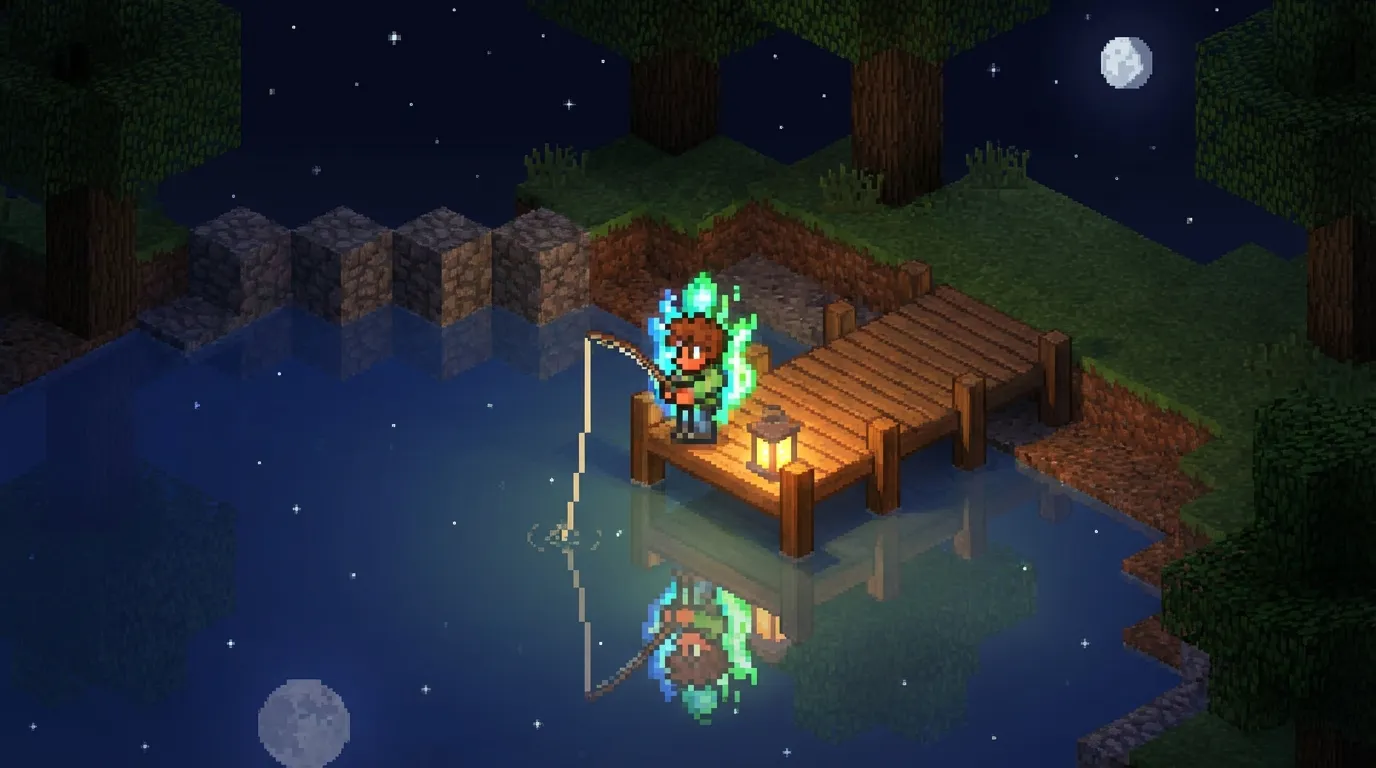
Ask ten players about fishing pool size and you’ll usually hear ten different answers, and most of them miss how the system really works. That’s not surprising. The game never explains it clearly, so players fill in the blanks on their own. You’ve probably heard a few confident explanations that sound right but don’t fully match what actually happens.
The real answer sits in what’s going on behind the scenes. There’s one main check: you need at least 300 connected water tiles. That single number usually decides whether fishing feels smooth or frustrating. Drop below it and the results get worse very quickly. Go above it and, most of the time, making the pool bigger doesn’t change much. Bigger pools mostly lower junk drops, and that’s usually the only real gain.
So why do some “huge” pools still fail? Connectivity is the quiet issue. Water tiles must touch each other with no breaks from blocks, slopes, or waterfalls. A pool can look enormous and still fail if there’s one small interruption inside. That kind of problem often goes unnoticed until the fishing results feel wrong.
Big oceans don’t boost rare loot either. They mostly reduce trash, which is why well-built artificial pools can work just as well when the layout is clean. Shape matters too. Long, flat pools tend to work better than very deep ones, since extra depth can quietly break tile connections.
Background walls can also cause problems. They look harmless, but they often interfere with water checks.
A clean artificial pool uses:
- At least 300 connected tiles
- No background blocks breaking water flow, plus a calm surface with no waterfalls
That’s why streamer builds lean toward this setup. It’s predictable, easy to repeat, and simple to use without much movement.
Players who enjoy figuring out systems like this often like collectible-focused guides such as the Donkey Kong collectibles complete guide, which look at similar hidden rules in action.
Blood Moon Fishing Is a Different Game
What makes Blood Moon fishing stand out is how quickly it can get out of hand. It’s not only the spooky vibe (though that helps); the event uses a different loot table and enemy setup, which often turns a relaxed routine into something louder and much faster.
Enemies rise straight out of the water while you fish. When you beat them, they drop chum items that permanently boost your fishing power for the rest of that session. It’s a simple system, but in practice it usually ends up being much stronger than it sounds.
This creates a loop that keeps building on itself. More enemies usually mean more chum. More fishing power makes bites happen faster, which then leads to even more enemy spawns. Players who understand this can hit the fishing power cap surprisingly fast.
Each chum bucket adds a flat bonus, so stacking them pushes you toward the cap with almost no downtime. That’s why Blood Moon fishing often turns into one of the strongest snowball setups in the game.
Add Chum Casters and the pace jumps again. Bite rates climb, pulls chain together, and there’s barely time to breathe.
This is where many players make mistakes. Fighting enemies on land slows things down, while pulling them up through fishing keeps the chum coming. That small decision can shape how powerful a run feels.
| Drop | Effect | Why It Matters |
|---|---|---|
| Chum Bucket | +Fishing Power | Stacks per session |
| Chum Caster | Faster bites | Speeds farming |
| Enemy loot | Coins and items | Extra value |
You see this approach a lot in challenge runs, where planning ahead really matters. A similar way of thinking shows up in guides like the Dune Awakening survival strategies, especially during long stretches where every system advantage helps.
Secret World Seeds Change Fishing Rules
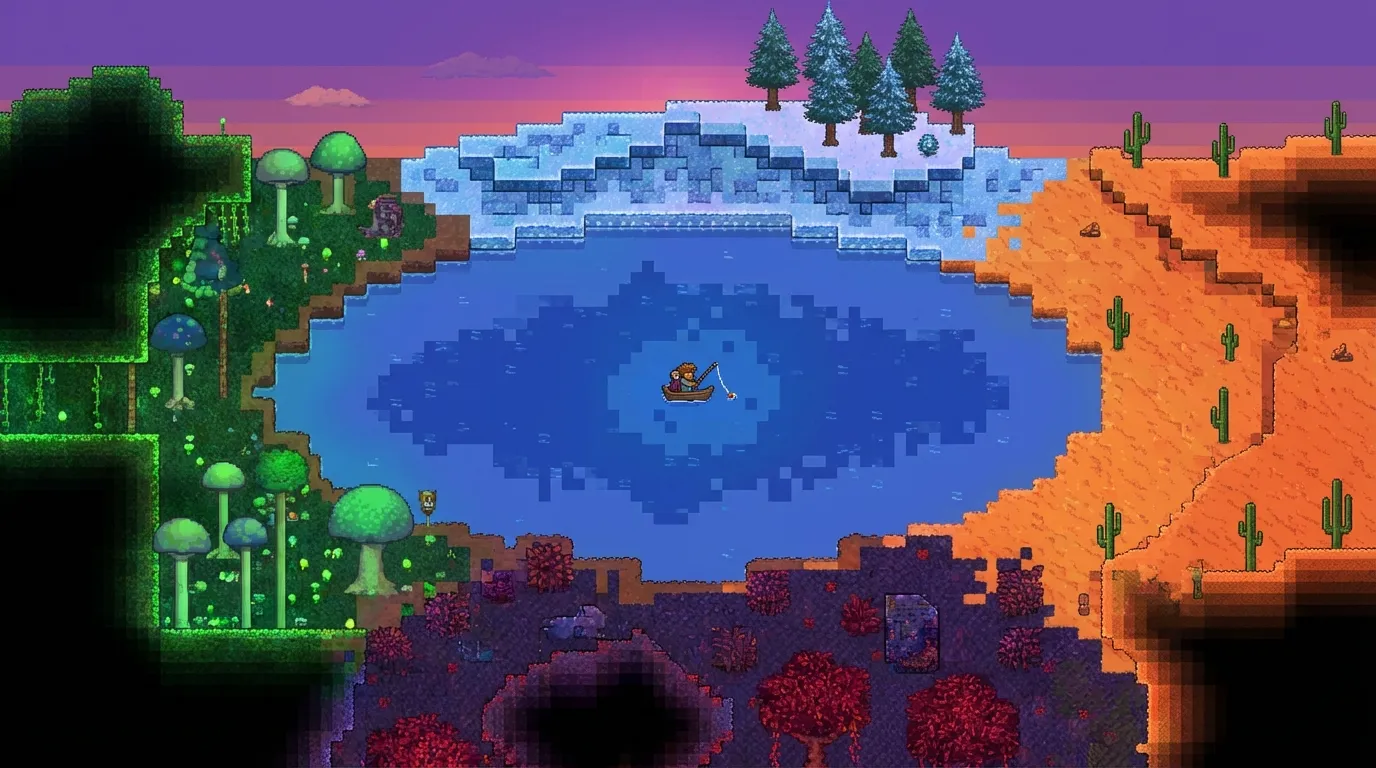
Terraria seeds do more than change how a world looks. Some of them mess directly with fishing systems and often flip expected behavior in ways players don’t expect. These surprises usually show up fast, especially when someone jumps in without knowing what a seed actually changes.
The best-known example is getfixedboi, which mixes several world rules into one chaotic setup. Fishing tables stop being reliable, and biome borders usually stop feeling strict, blending together as exploration goes on. Because of that overlap, rare drops can show up in places players wouldn’t normally check, and things slide into strange territory pretty quickly.
Dontdigup raises how often Blood Moons appear and usually makes them more dangerous. That means Blood Moon fishing enemies appear more often, turning fishing into a tense activity almost right away. The rewards can still feel worth it, even though the pressure never really eases.
Drunkworld mixes biome loot pools. Corruption and crimson items can be fished from the same world, cutting down on save hopping and long waits, which helps progression feel smoother.
Because of changes like these, seeds often break the assumptions players rely on during normal play. They’ve become planning tools: streamers build episodes around them, speedrunners shape routes with them, and accessibility-focused players use them to keep combat spikes manageable.
If branching paths and hidden outcomes sound appealing, this seed-driven design feels similar to games discussed in the Lost Records choices and consequences walkthrough. The vibe is similar.
Fishing as Long-Term Progression
Fishing was never meant to be optional fluff. From the start, it was designed as a slow burn that opens up over time, and that choice usually matches how the rest of the game plays. It’s not something players rush, and most of the time, that’s a good thing.
Andrew Spinks, better known as Redigit, has said that fishing feeds into vanity sets and specific gear unlocks tied to exploration. It also eases progression by giving players a break from nonstop combat, which can wear people down after a while.
That approach makes angler quests easier to understand. The Golden Fishing Rod unlocks after thirty quests, but the time gate nudges players toward a steady pace instead of a sprint. No pressure, no checklist stress.
In practice, it ends up feeling a lot like daily systems in modern live‑service games. Short, repeatable sessions are easier to stick with, especially when they stay low‑stress.
That’s where mental wellness comes in. Fishing stays calm and predictable, with very little pressure, and many creators even build entire streams around it. Just fishing.
One beginner‑focused creator summed it up simply.
Fishing power in essence the higher the fishing power the better the quality of your catches.
Tools, UI, and Modern Playstyles
What stands out right away is how well fishing fits modern Terraria streams. The slow pace keeps chat active, viewers relaxed, and the stream feeling comfy instead of hectic. That calm mood matches how a lot of players enjoy the game these days.
Modern Terraria players also use tools a bit differently now. Controller support is pretty common, and accessibility mods or stream overlays are usually part of the setup. The overall feel is more relaxed, especially during long play sessions.
Fishing fits neatly into that change. Mapping everything to one button keeps things simple, which many players like. Lots of people rely on audio cues and Sonar Potion text instead of staring at the screen the whole time, which makes play feel less stressful.
Clear UI matters more than quick reactions here. Sonar Potion readouts work like a live loot filter, showing what’s hooked so players can decide calmly.
If someone is upgrading for this style, guides like A beginner’s guide to building your gaming PC from scratch help plan smooth, quiet setups, and visual breakdowns of fishing mechanics help it click faster.
Common Fishing Problems and Fixes
Most fishing problems usually come from small, easy-to-miss mistakes (I’ve done it myself). If bites feel slow, it’s often not the fish; you might be resetting the counter without realizing it. One helpful approach is to stop the reel a bit sooner and let the bobber sit longer, since that extra pause often works.
Rough-looking loot? Buffs are often the reason (it’s pretty clear once you spot it). When crates seem rare, try a Crate Potion and a clean pool; depth matters here too, even when everything else looks fine, which can be surprising. Lines breaking usually point to accessories, so upgrade those before worrying about better rods. Biome mix-ups also get missed, and standing just a few tiles off can completely change the loot (which is kind of wild).
Why Fishing Still Matters in 2026
Fishing still matters because Terraria keeps changing. New secret seeds often expand what’s possible, and updates lean more toward systems and intent, with less rush. That’s where fishing fits in. Overlays and learning content appear often, especially in relaxed streams, and it feels natural there. As audiences age, slower systems hold attention longer, while high‑intensity loops burn out. It teaches a mindset: learn the system, respect the math, and play smarter.
Questions People Often Ask
No, it doesn’t. Fishing power mostly affects how fast bites happen and what type of loot you get, and that timing usually matters more than you expect. Every fish can still be caught with low power, but the chances are often very small, you’ll notice. The confusion sticks around because higher power speeds things up so much that items can feel like they suddenly start appearing.
Three hundred connected water tiles set the baseline, it’s still the minimum (yeah). Larger pools usually reduce junk, I think, while rare drops stay the same. Often, shape and connectivity matter more than size, so that’s where the focus goes.
Some do. Seeds like drunkworld and getfixedboi change biome rules and fishing tables (kind of odd). This can lead to faster progress sometimes, or things getting weird, depending on the ruleset.
Absolutely. Fishing is low-APM and safe, which helps, and it’s rewarding once you know the systems, so it often fits long-term survival and inclusive play overall.
Put This Knowledge to Work
Fishing in Terraria follows clear rules, and they’re pretty easy once you spend some time with them. The systems are learnable, and as patterns become clear, the activity often clicks in a practical way. There’s usually less guessing and more intention, which makes fishing calmer and easier to stick with over long sessions.
A few core ideas control almost everything. Fishing power affects item quality and how often good drops show up. Buffs often matter more than the rod, which surprises many players at first. Pool size has firm limits that change results, so location matters more than expected. Blood Moons open specific chances worth using, and seeds act as planning tools you can set up before a run starts. Once these pieces line up, there’s rarely much mystery.
Using even some terraria fishing tips and tricks makes fishing dependable. It can replace risky mining, fits slower play, and still supports full progression. Progress builds bit by bit.
Creators enjoy the calm pace and connected mechanics. Competitive players focus on drop control and timing. Same system, different goals.
With a clearer grasp of terraria fishing mechanics, rebuilding a setup makes sense. Pick a seed, stack buffs, slow down, and fish with purpose, you’ll usually notice the difference right away.