
Getting all the way to Elden Ring’s endgame is no easy task, and anyone who’s fought through its punishing bosses has earned some serious bragging rights. You’ve made it through one of the hardest action RPGs out there, probably letting out a few colorful words after certain battles. The twist? Finishing the main story is often just the warm-up. The real test, and fun, comes when you take on those nightmare-level bosses, where even small choices about your Elden Ring endgame builds, gear, or pre-fight prep can mean the difference between winning or getting crushed in seconds.
This guide shares strong endgame builds, clever prep tips for boss fights, and smart ways to handle your runes so you don’t lose your hard-earned currency. Some players go for big PvP wins, others wander the Lands Between checking out every strange corner, and either way, these strategies are tried and proven.
You’ll find advice on gear combos that work well together, spirit summons that can change a fight, rune-spending methods, and ways to adjust as the meta shifts. You’ll see standout Elden Ring endgame builds from 2026, learn why certain stats suddenly matter more, and pick up survival tricks for some of the toughest battles you’ll face.
Choosing the Right Elden Ring Endgame Build
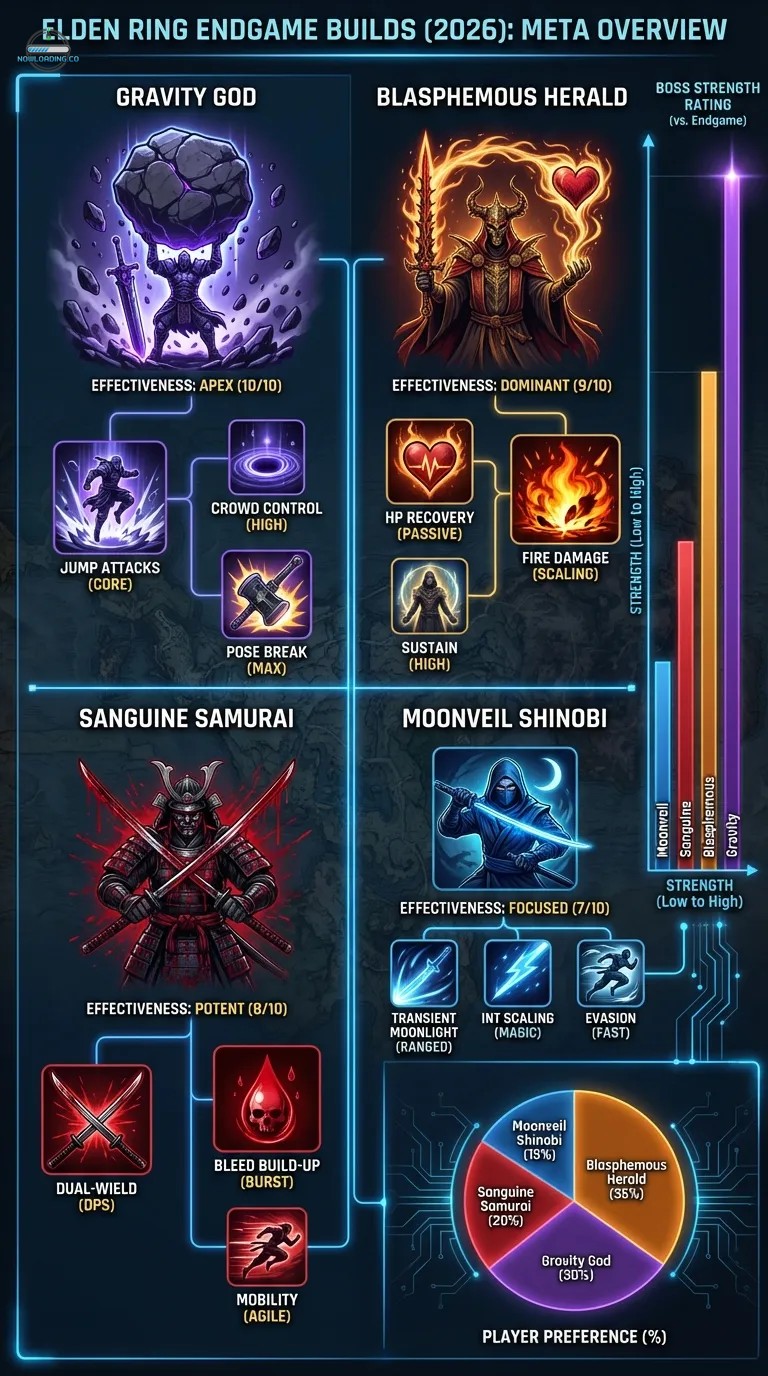
By this point, picking your build is about much more than just “what looks cool.” It’s about matching what you’re good at with how you like to play, and being ready for the surprises late‑game bosses love to throw at you. The 2026 meta has a few builds you’ll hear about again and again:
- Gravity God: STR/DEX hybrid using the Fallingstar Beast Jaw, able to stagger enemies so hard they nearly freeze in place. Brutal against bosses with weak poise, and yes, it’s incredibly satisfying.
- Blasphemous Herald: Heavy melee tank focused on jump attacks with the Blasphemous Blade, healing mid‑fight so they can keep swinging without slowing down.
- Sanguine Samurai: DEX/ARC bleed expert with Rivers of Blood, cutting through health bars before enemies even finish their opening moves.
- Moonveil Shinobi: Dual katanas that unleash quick, explosive slashes, perfect for punishing a boss right after dodging a massive attack.
A smart move is to fine‑tune each build with talismans and rune setups that actually work with its strengths. Random gear rarely pays off. The way your loadout interacts with boss AI can make all the difference: a staggering weapon can break a spell before it lands, bleed builds shine against bosses that keep the pressure up, and hybrids that swap between melee and ranged can save you in fights where closing the gap is risky.
Co‑op makes things even more interesting. Imagine a Gravity God drawing all the attention while a Moonveil Shinobi slips in for quick bursts. It’s both effective and great fun. Think about your reaction speed, your preferred range, and how much danger you’re willing to take on. Sometimes, swapping to a backup weapon or skill mid‑fight is exactly what turns chaos into a clean win.
Stat Allocation for Survivability and Damage
Players often say that once you’ve reached certain stat goals in the late game, you don’t want to drop below them, and there’s a good reason for that.
| Stat | Recommended Value | Purpose |
|---|---|---|
| Vigor | 50 | Survivability |
| Mind | 31 | Sustained spellcasting |
| Intelligence/Faith | 55 INT / 30 FTH | Hybrid build versatility |
These breakpoints come from how stats grow during long, multi-phase boss fights where every moment matters. Imagine a melee-focused build with 50 Vigor: you can usually take two big hits from a tough endgame enemy and still have time to drink a flask. Mind at 31 is a sweet spot for magic-focused builds, letting you cast expensive spells or keep a long incantation going while dodging trouble. Hybrid casters often prefer balanced INT/FTH stats, so they can swap between blasting foes and tossing out heals or buffs on the fly. Skipping HP for more damage? That’s often a fast track to dying. Some even push Vigor to 55. This is great for bold players who prefer charging in over dodging.
Optimizing Gear Sets for Elden Ring Endgame Builds
In the late-game grind, your gear quietly shapes every move, from how hard you hit to how quickly you roll, and even how much punishment you can take from nasty elemental bursts. In tough endgame fights, moving like you’re wading through tar usually means you’re taking hits you can’t afford. Armor weight isn’t just another stat; it can be the thing that keeps you alive.
Take a Gravity God build as an example. Medium armor often gives that nice middle ground: quick enough rolls with enough protection to handle a few heavy blows. Add a Dragoncrest Greatshield Talisman and you’ll feel enemy damage drop to something you can deal with instead of panic over.
Magic builds can get wild too. The Magic Scorpion Charm boosts magic damage by 12%, and Terra Magica adds 10% more sorcery power. Use them together, and bosses melt fast. Swapping armor mid-fight can save you, especially against enemies that rely on fire or holy damage. Fire Prelate Armor or Haligtree Knight Armor can turn a likely loss into a close win. For detailed armor stats, see the Fextralife Elden Ring Wiki.
Keep equip load under 70% or you’ll roll slow enough for quick foes to punish you. Light armor with solid elemental resistance lets you dodge faster while still taking hits. Poise matters too; balanced poise means small hits won’t break your combos.
Upgrading gear with Smithing Stones or Somber Smithing Stones can turn near-losses into solid wins. That extra boost often decides if you walk away or fall.
Spirit Summons, Your Secret Weapon
Spirit Summons aren’t just flashy sidekicks. They can seriously mess with an enemy’s strategy and, pretty often, flip a fight in your favor. Right now, a few standouts are known for how much they can change the pace of a battle:
- Mimic Tear: Copies your exact setup, so it’s like fighting alongside a clone of yourself. There’s something fun about watching both versions attack in perfect sync.
- Black Knife Tiche: Super quick and relentless, chipping away at enemy health without letting them recover.
- Latenna the Albinauric: Doesn’t move, but rains down shots from a distance. Great for huge arenas where chasing enemies gets annoying.
Choosing the “best” summon really depends on your style. Close-range fighters often go for aggressive spirits that can take hits and keep enemies busy. Ranged players might like ones that stack status effects or mess with movement. Sometimes bosses completely lose their rhythm, repeating moves or splitting attention, which can feel very satisfying.
Upgrading makes a huge difference. A +10 Mimic Tear can hit way harder than its basic version. A handy trick is saving it for those wild mid-fight phases instead of starting with it. Swap summons to fit the moment. Battles will feel smoother, more varied, and a lot more fun.
Rune Allocation Strategies
By the time you hit the endgame, evenly spreading points across all stats usually stops working well. What really helps is aiming for specific breakpoints, just enough Strength to handle that massive weapon or the exact Intelligence needed for your strongest spell. Then put any extra points into stats that work best with your current gear.
For a mage build, a handy setup is 9 Cerulean flasks and 7 Crimson flasks. This lets you keep casting without scrambling for refills mid-battle. Melee-focused builds often reverse that, using more Crimson for better survivability in close fights. Keeping a stash of runes makes gear changes or trying hybrid builds much easier, especially if you suddenly want heavier armor.
Planning ahead for a hard boss or late-game armor upgrade? Having enough runes to quickly boost Endurance saves you from boring grind sessions. Once you’ve hit certain stat caps, extra points often work best in utility stats like Dexterity or Endurance for quicker attacks or faster spell casting. And don’t forget flask upgrades. Golden Seeds and Sacred Tears can stretch both healing and mana. Even keeping 50,000 or 100,000 runes spare can be your safety net before the toughest battles.
Boss Preparation, Phase by Phase
In Elden Ring, boss fights often happen in clear stages, each with its own rhythm and challenges. Treating every stage the same might feel easier, but it usually ends with you running back from the last Site of Grace. Here’s one way to get ready for battle:
- Phase 1: Start slow, keep some distance and watch how they move. Pay attention to how attacks connect, how quickly they swing, and how they react to summons. Some bosses ignore spirit helpers completely, while others go straight for them.
- Phase 2: If their attack style changes, adjust your approach. Swap talismans, pick a longer weapon for safer hits, or go with one that swings faster. Often, a weapon that just feels right for you will work better than chasing higher numbers.
- Phase 3: This is when you go all in. Deal heavy damage, time your flask use perfectly, and don’t hold back.
Finding a good opening can matter as much as landing the hit. Many bosses have moves that leave them open, perfect for a strong strike. Learn the signs of a phase change so you can buff, heal, or move quickly. For Malenia’s Waterfowl Dance, staying mid-range before it starts can help avoid a nasty combo. Managing stagger early helps keep late-stage chaos under control. Pacing stamina can mean dodging clean instead of taking the full hit.
Talismans and Consumables
The right talisman can really swing a fight in your favor, especially against bosses that tend to give players a hard time. Pairing a tough option like the Dragoncrest Greatshield Talisman with something that boosts your damage can keep you from feeling too squishy or too weak. This balance is handy in more intense battles.
Consumables are just as worth keeping in mind. You’ll come across resistance potions, cures for status effects, short-term buffs, and even explosives that can save you when things go bad. Before a long, multi-phase fight, it’s smart to stock up. Stanching Boluses for bleed and Neutralizing Boluses for poison are simple but can keep you alive. During openings, tossing a Fire Pot or Magic Pot can chip away at health without much risk. Using talismans like Shard of Alexander for skill boosts with Ritual Sword Talisman at full health can hit hard. Swapping them mid-battle can throw enemies off completely.
Accessibility and Hardware Considerations
When streaming or recording runs, your gear can shape the whole experience. Fast, high-refresh monitors help you react quicker, responsive controllers keep every move accurate, and a steady internet connection saves you from those frustrating mid-fight dropouts. Accessibility options like custom button layouts or bright, clear on-screen cues can make chaotic endgame moments easier to handle. For players with mobility challenges, adaptive controllers can be very helpful, letting them stay in the action without extra strain. Even simple tweaks, like resizing the HUD or turning on colorblind filters, can make busy visuals much easier to follow.
A monitor with 120Hz or more often makes dodging feel smoother, especially in quick-action games. Mechanical keyboards or well-built gamepads can give that satisfying, precise control. Streamers get better results with a low-delay capture card, and a noise-canceling mic keeps voice chat clear. Keeping hardware cool also helps avoid sudden frame drops during intense boss fights.
Learning from Other Games
Players who’ve spent time in other games often bring over more useful habits than they realize. The careful positioning and cooldown timing shown in Hades 2 Guide: Boss Strategies, Builds & Hidden Paths can give you an advantage against Elden Ring’s bosses that hit hard and without warning. You might find that the slow, deliberate watching used in Metal Gear Solid Remake Walkthrough & Boss Guide makes it easier to spot attack patterns before they surprise you. Sekiro’s exact deflection style, when adjusted, often sharpens your parry timing in tight battles. Monster Hunter’s gear tuning, crafting, and pre-fight prep can make planning feel natural. Even spatial control and map sense from competitive shooters can help in chaotic encounters. For more cross-genre combat tips, check out GameSpot’s action RPG hub.
Future Trends in Elden Ring Endgame
Elden Ring’s meta doesn’t stay the same for long, especially when new patches drop that tweak weapon scaling or add sneaky AI moves to throw off your timing in fights. Fast builds and setups that spread status effects will likely stay strong in most battles, though heavy stagger-focused tactics can still catch bosses off guard. Many players may go for flexible, mixed builds so they can switch strategies when the game changes pace. With FromSoftware’s track record, DLC might bring strange new weapons, fresh elemental damage options, or talismans with quirky perks that change how fights play out. PvP balance shifts often spill over into PvE, reshaping the meta. After each update, testers hunt for hidden combos, while easy-to-use builds steadily gain popularity.
Putting It All Together
In Elden Ring’s endgame, winning often comes down to being ready for surprises, staying flexible with how you play, and keeping an eye on the meta, which can change faster than you might think. A good way to approach it is to pick a build you genuinely enjoy, then try out different gear and talismans until they fit the way you like to fight. Putting runes into upgrades that clearly improve your performance is worth it, especially when you team them with spirit summons for those tough late-game battles where one wrong move can end it.
With that setup, beating almost any boss feels far more possible, and you might even impress friends or viewers with how you handle fights. Whether you’re chasing streaming moments or just love the rush of a close battle, the endgame becomes your own testing ground.
So why hold back? The Lands Between don’t often forgive mistakes. Top players usually learn from every loss, tweak builds, and refine tactics, blending fast reflexes, smart planning, and meta awareness to stand against the hardest enemies.