If someone is trying to figure out which PUBG Battlegrounds weapons make the most sense right now, the bigger question is really this: which weapon class gives the best chance of winning fights in today’s PUBG weapon meta? That matters more than usual, because PUBG is not really in a place where one answer works for every player, every map, every circle, or every situation, which is probably a good thing for the game.
This comparison uses official PUBG weapon pages and recent developer balance notes to examine the main classes most players build around: Assault Rifles, Designated Marksman Rifles, and Submachine Guns. PUBG’s official balance updates were also used as a reference, because patch intent often matters almost as much as how weapons actually feel in a real match. That difference is easy to miss when the focus stays only on raw stats.
ARs are still the most flexible option. DMRs still shape a lot of mid-to-late match pressure, especially after circles start tightening in later phases. SMGs remain dangerous when players create the right fight for them, usually inside buildings, around tight compounds, or during quick close-range pushes. In practice, the best class really depends on what matters most in a match, whether that is flexibility, range control, or close-quarters speed.
For players looking for practical, tested gaming breakdowns that explain balance changes, weapon roles, and patch impact instead of only summarizing notes, Now Loading is a gaming guide hub worth keeping in the mix.
What we’re comparing in PUBG Battlegrounds weapons
- Assault Rifles (ARs)
- Designated Marksman Rifles (DMRs)
- Submachine Guns (SMGs)
- PUBG official balance notes (patch notes), plus dev meta updates
Why this PUBG Battlegrounds weapons meta conversation changed
For a long time, many players treated ARs as the safer choice, while DMRs were seen as the option for more skilled players. That is still partly true, but official data suggests the gap between those classes is more even now than it used to be, which makes the change interesting.
One of the clearest pieces of hard data comes from PUBG’s own developer updates, and it explains the change pretty well.
| Metric | Earlier Data | Later Follow-Up | What It Suggests |
|---|---|---|---|
| AR usage share | 68.0% | 30.3% | ARs went from dominant to still strong but less overwhelming |
| DMR usage share | 14.8% to 17.2% | 29.3% | DMRs grew into a near-equal meta pillar |
| Ranked DMR usage | 23.1% | , | Higher-skill play leaned harder into ranged pressure |
| SR usage share | , | 27.6% | Long-range options became more evenly distributed overall |
| DMR damage rebalance | About -12% | , | Developers directly targeted DMR overperformance |
That matters because it helps explain why the PUBG weapon meta feels less settled now. ARs still work as a backbone class in most matches, but DMRs are close enough in impact that your secondary pick, and the fights you choose at mid to long range, often matter more. That also gives SMGs a bit more room, especially for aggressive players who close distance quickly, something you will probably notice most in close fights.
PUBG Battlegrounds weapons: Assault Rifles still a good pick for most players
At a Glance
In PUBG Battlegrounds, Assault Rifles are still probably the most reliable weapon class overall. They work well up close, can handle mid range, and keep players dangerous when a fight suddenly moves from a building out into the street, which happens a lot. That flexibility is usually what makes them so useful here.
PUBG officially describes ARs as versatile, and that matches how most players actually use them. If someone wants one class that does not force a narrow game plan, ARs are still the default for close fights, mid-range pressure, and quick shifts between the two. They are not the absolute best in every situation, but they are also rarely the wrong pick.
Core Features
- A good mix of damage, control, and a steady fire rate
- Strong at close range, which usually helps, while still staying dependable at mid-range
- Often a popular choice for a primary weapon class
- Arguably better than DMRs for spray transfers in these situations
- Usually easier to adjust with attachments, I think
- A solid backup when circles get messy, especially late game
Pros
- Flexible across ranges: ARs are great in messy, unpredictable fights. Whether things turn into close-range pressure, mid-range trades, or even longer-range shots, they can usually handle all of it better than any other class, which really matters in a match that keeps changing.
- Reliable primary choice: Most loadouts work well around an AR, and there’s still enough room to shape the rest of the setup around personal style, whether that means support gear or a different kind of backup.
- Better for chaotic lobbies: When one lobby has building pushes, vehicle plays, and ridge fights all in the same match, ARs usually handle each situation well enough without forcing a full change in playstyle.
- Friendly to most skill levels: They reward good aim and smart decisions, but they’re also often more forgiving than DMRs when positioning is slightly off, which obviously happens.
- Still meta relevant: Official usage trends show ARs are still a major part of the game, so they’ll probably stay important in the meta.
Cons
- Not specialized: When you need better control at longer range, like down halls or across open lanes, they usually lose to DMRs. In straight room clearing, though, SMGs often have the edge, and that’s usually how these matchups play out.
- Attachment sensitive: Some ARs can feel pretty average until you add grips, mags, or sights. Early on, they can seem kind of plain, honestly.
- Can tempt bad habits: Since they work well in a lot of situations, players sometimes force AR fights at ranges where DMR taps would probably be better. That usually gets punished, especially on longer sightlines.
Who It’s For
ARs are probably the best fit for most players, especially in solo queue, when switching maps often, or if you want one main class that still feels reliable when fights get hectic. They’re also a really solid pick for streamers and content creators, at least from this view. And they usually support a wider mix of close-, mid-, and longer-range fight clips without locking you into one style.
Unique Value Proposition
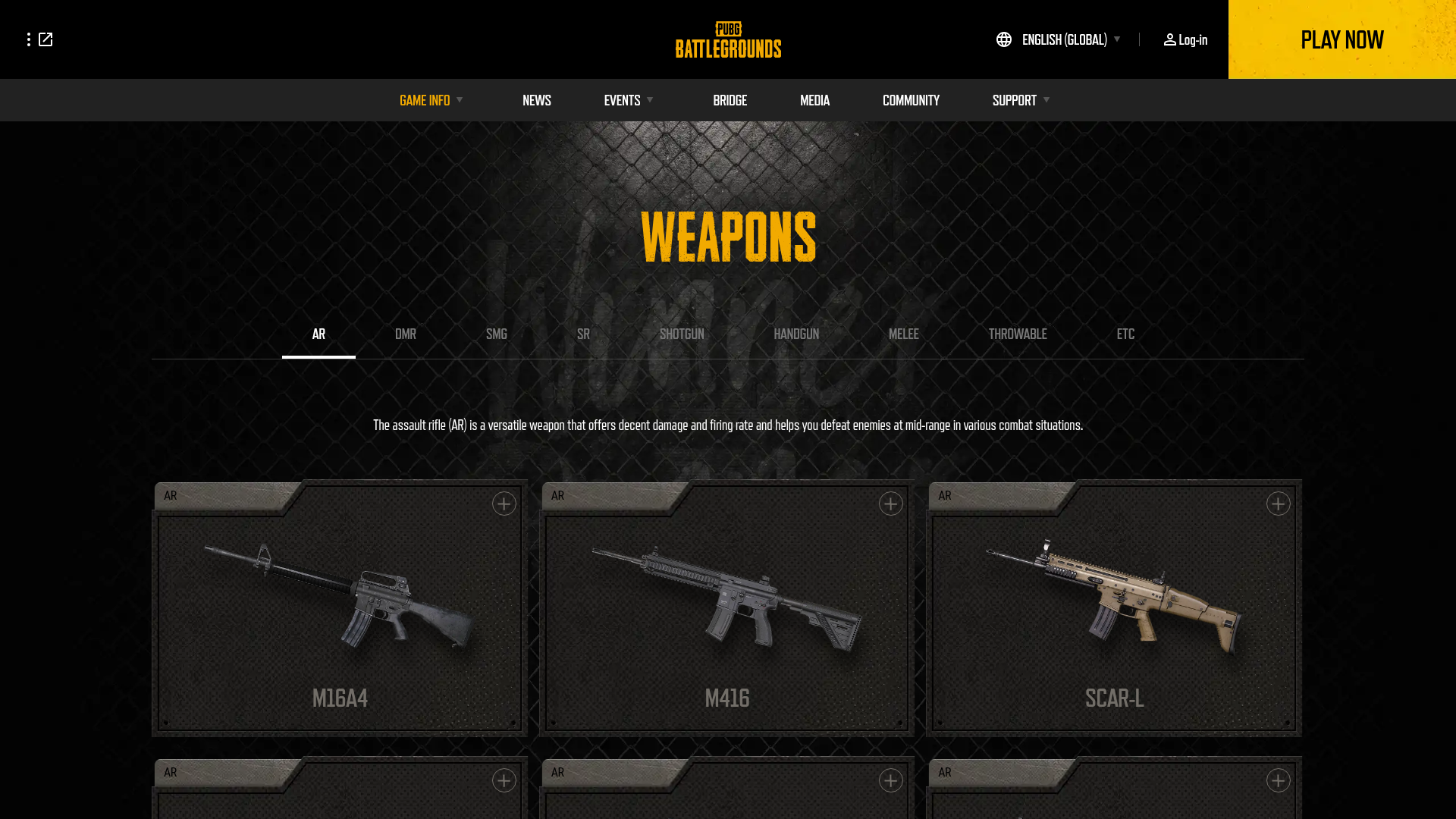
The real value of ARs is not just raw power. It mostly comes from the margin for error they give you. In PUBG, fights usually get messy very fast. You might miss the first peek, get third-partied, or suddenly need to move from a tree fight into a building push. ARs still stay useful through all of that, which matters a lot. In the current PUBG weapon meta, that flexibility from early loot to late circles is why they remain the all-round standard.
Website: https://pubg.com/en/game-info/weapons
PUBG Battlegrounds weapons and DMRs: the pressure class still driving serious matches
At a Glance
DMRs are built for mid-range and long-range control, and after the balance changes they still matter a lot in the current meta. Official dev notes showed they kept a big share of damage through much of a match after Phase 1, which likely helps explain why strong players used them so much. A good DMR user can drain heals and stop rotations, which is especially useful. Additionally, they can also force awkward movement before a close fight starts. They usually are not the easiest class to use under pressure, especially when someone rushes. Still, they can be one of the most rewarding options.
Core Features
- Best at mid-range and long-range fights
- Hits much harder per shot than spray-heavy ARs
- Really strong for holding ridges, rotation paths, and key angles, which is usually where it works best
- Especially useful in ranked and coordinated team play when communication is there
- Helps create pressure before the final circles, often during late-game setups
- Works best with measured pacing and clean aim, which sounds simple but matters a lot here
Pros
- Strong ranged pressure: DMRs punish players moving in the open much better than ARs or SMGs, especially across fields or between small pieces of cover, and that situation happens a lot.
- High late-game value: They usually get much more useful once teams are stuck behind predictable rocks, ridges, or walls, which is especially obvious in late game.
- Great for team utility: Even without getting a knock, chip damage often forces enemy meds and can slow a push down quite a bit, which helps a lot.
- Skill expression: With DMRs, good aim matters a lot, and timing often does too, which is a big reason they feel so valuable.
- Meta-defining impact: Official balance changes targeted DMRs for a reason, since they were probably doing too much too well.
Cons
- Weaker in panic fights: If someone suddenly rushes your room, a DMR is usually the last thing you want in your hands, which is really not ideal.
- Less forgiving: Missed shots hurt more because the fire rate is slower and often needs more careful follow-up, so you cannot just spam like you might with other guns.
- Balance-watch class: DMRs have been adjusted before, so their place in the meta can change more than the easier, more comfortable AR picks.
Who It’s For
DMRs are a good fit for players with solid aim, patient habits, and smart cover discipline. They usually work best for people who like taking control of fights early, often from mid-range sightlines, or for ranked players with teammates who can cover their angles. This class also suits players who think about map pressure, not just pure spray duels.
Unique Value Proposition
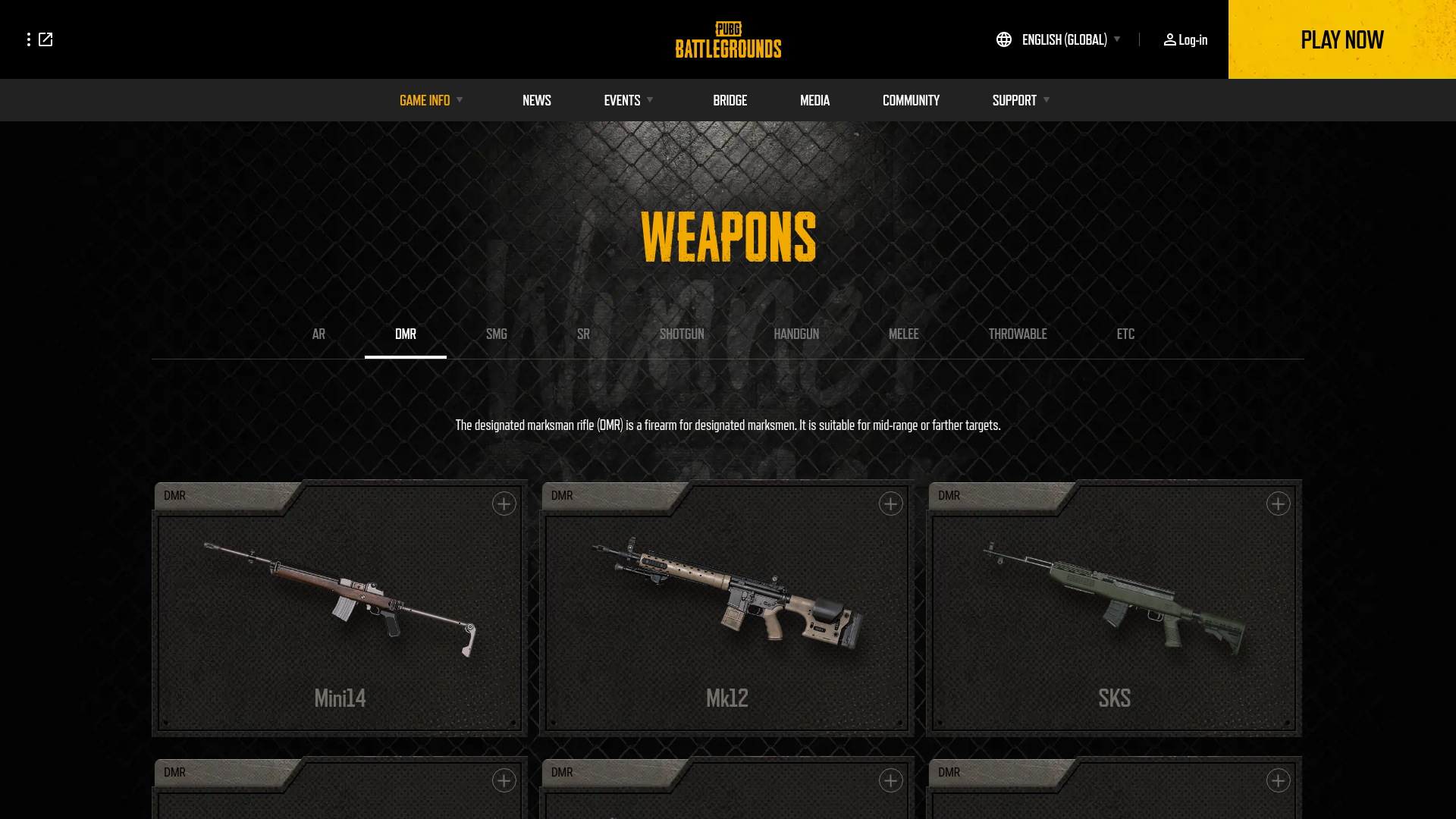
DMRs give players a level of control that other PUBG Battlegrounds weapons usually can’t match. At range, they let teams pressure enemies into awkward choices, which helps a lot in longer fights. In PUBG, matches are often decided before the final full commit even starts, and a team forced out of cover or made to burn meds can reach endgame at a real disadvantage. That’s why DMRs still feel like one of the smartest weapon class picks in the current PUBG meta.
Website: https://pubg.com/en/game-info/weapons/dmr
PUBG Battlegrounds weapons and SMGs: underrated when the whole plan is about controlling distance
At a Glance
A lot of players overlook SMGs until they get wiped inside 20 meters, yeah, really that close. PUBG still shows them as close-range guns, and the official aim punch notes back that up. They’re quick, easy to move with, and brutal in tight fights. The tradeoff is pretty clear: if you don’t manage distance, their damage drops off hard. Even so, in the right hands and in places like buildings, compounds, and narrow cover, where fights often end fast, SMGs can be some of the most efficient PUBG Battlegrounds weapons for fast clears, aggressive pushes, and quick close-range pressure.
Core Features
- Usually best in close-range fights
- High mobility and strong handling make it easy to move around
- The fast fire rate works really well in build fights
- It keeps solid pressure in tight angles, especially on quick swings
- Useful for aggressive entry play when pushing
- Aim punch also hits harder up close, which you’ll probably notice quickly
Pros
- Excellent close-range burst: Inside buildings and tight compounds, SMGs can often end fights fast, especially when you’re moving from room to room.
- Easy to handle: A lot of players find them smoother and less jumpy than rifles with heavier recoil, which honestly helps a lot.
- Works well with fast movement: For aggressive playstyles, SMGs really reward speed, and that usually feels obvious right away.
- Great for hot-drop chaos: Early fights often happen at the exact ranges where SMGs are strongest, usually right after landing.
- Clear identity: They’re easy to understand: push close fights and win them. That simple role is probably a big part of why people like them.
Cons
- Falls off at range: This is probably the biggest drawback, honestly.
- More map dependent: On open maps or in exposed late circles, the primary can feel pretty limiting, especially when sightlines get longer.
- Requires discipline: If spacing is off, it usually leads to rough fights against ARs and DMRs, and that can add up fast.
Who It’s For
SMGs are great for aggressive players who like hot drops, compound pushes, quick flanks, and close-range fights. They’re especially strong in tight buildings, where that style really works. They also suit players still improving recoil control, since at short range, confidence usually matters more than trying to win every fight across open ground. For anyone who loves movement and pressure, SMGs often feel right.
Unique Value Proposition
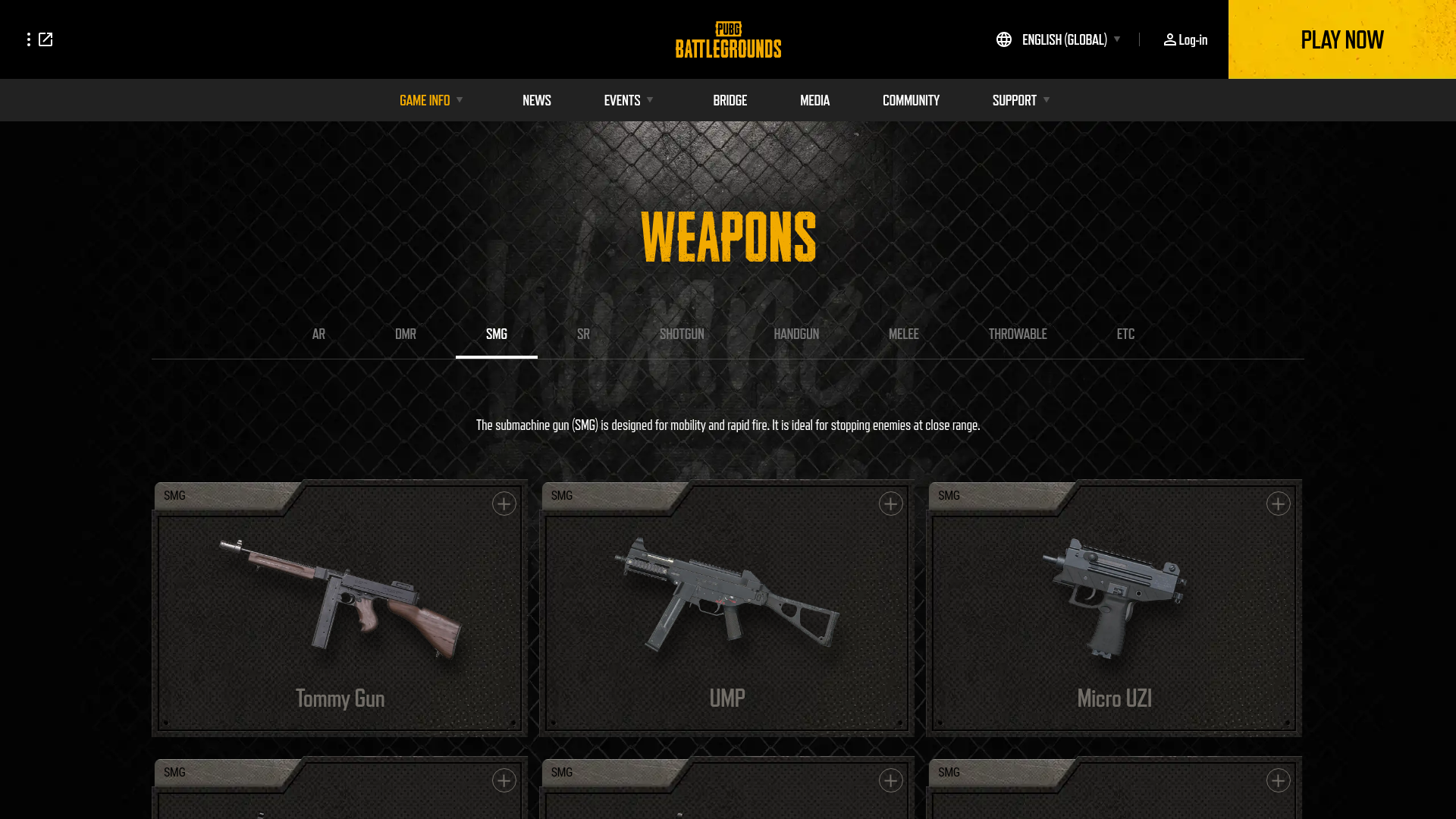
SMGs are easier to handle, but that’s not really the main point. They’re tempo weapons. In PUBG, they let players move faster than the other team usually can react, and that often makes a real difference. On stairs, in doorways, and during split-second room clears, where fights get chaotic fast, that speed often matters more than raw stats.
For players who like taking control through movement instead of holding long peeks, SMGs can beat weapon classes that look stronger on paper. That’s usually because they help force close-range fights on your terms, not the other team’s.
Website: https://pubg.com/en/game-info/weapons/smg
PUBG official balance notes: the easiest way to spot where the meta will probably go
At a Glance
This isn’t a weapon class, but it’s still one of the most useful ways to read the PUBG weapon meta, and it’s honestly easy to miss. PUBG’s official balance notes and developer updates show how the team sees class performance, which weapons they think are overused, and which types are gaining influence or beginning to fade.
If someone only goes by feel, big shifts can easily slip past. The official notes also give context for why ARs, DMRs, and SMGs feel different from patch to patch, which helps more than it may seem. In this view, that extra context matters because it shows what changed, why it changed, and which weapon groups are being adjusted.
Core Features
- Official class usage data from developers
- Balance reasons tied to live game health, often based on ranked and public matches, straight from the source.
- Helpful context for loadout changes from patch to patch, which helps a lot.
- Helps explain trends in ranked matches and public games, so it’s usually easier to see what’s changing.
- Explains why specific classes get nerfed or adjusted
- A solid source for content creators tracking meta shifts, and honestly a pretty handy one
Pros
- Best source for meta direction: It shows how the developers respond in balance patches and weapon updates, which is pretty useful. The way it shares that info stays clear and direct, so it’s usually easy to follow.
- Backed by real data: Usage and damage trends often help cut through community guesswork, at least in most cases. That tends to be more useful than random opinions alone.
- Useful if you like adapting: Great for players who want to swap loadouts before old habits stick, so they can often adjust faster.
- Helpful for ranked grinders: Knowing why a class shifted can lead to faster decisions and better timing in ranked matches, especially under pressure.
Cons
- Not a weapon itself: Those numbers usually only start to matter once players get some in-game reps, ideally in real matches and not just while sitting in menus.
- Can lack full detail: Some updates skip a full weapon-by-weapon breakdown, so certain parts can feel a little thin, which is honestly frustrating.
- Needs interpretation: Data alone often will not show how a class feels in specific lobbies, on certain maps, or during actual matches. Players still need to get in and play.
Who It’s For
This is for players who want more than anecdotal takes, which honestly only help so much. If you stream, coach friends, grind ranked, or just like understanding the game better, official balance notes can help you make smarter loadout choices in ranked and regular play. They’re especially useful when patch changes make older advice feel out of date, which happens pretty often.
Unique Value Proposition
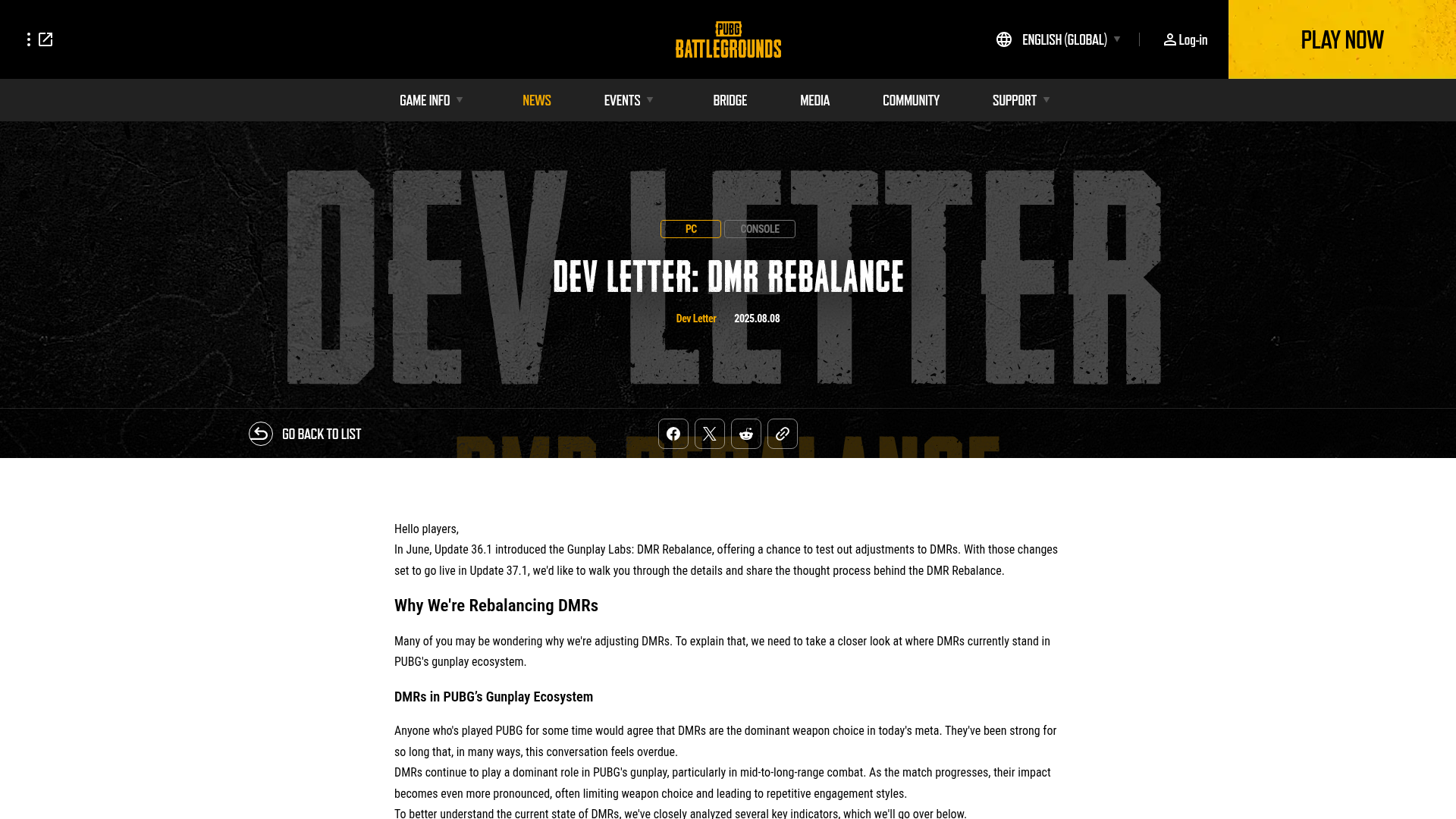
What really helps here is the perspective. A lot of PUBG weapon debate usually gets stuck on clips, opinions, or the memory of one great match, which happens all the time. Official balance posts give a clearer view: trend lines. When the developers show that AR share dropped, DMR influence rose, or class distribution became more even, it gets easier to tell whether your favorite class is actually dominant or just the one you know best, at least in most cases.
Website: https://pubg.com/en/news/9000
How PUBG Battlegrounds weapons stack up in the current meta
Since this really comes down to picking a class, the clearest side-by-side view usually comes from hard numbers in official sources instead of vague labels, which often are not very useful here.
| Option | Official URL Type | Public Price | Notable Usage / Stat | Patch / Source Signal |
|---|---|---|---|---|
| Assault Rifles (ARs) | Weapon class page | Included in free-to-play PUBG | 68.0% earlier share; 51.2% rebalance-era mention; 30.3% later follow-up | Still the all-round baseline |
| Designated Marksman Rifles (DMRs) | Weapon class page | Included in free-to-play PUBG | 14.8% to 17.2% usage growth; 23.1% in Ranked; 29.3% later follow-up | Needed about 12% damage reduction due to overperformance |
| Submachine Guns (SMGs) | Weapon class page | Included in free-to-play PUBG | Aim punch notably stronger up close; at 50 meters similar to ARs | Clearly tuned for close-range identity |
| Official balance notes | Developer news source | $0 | AR 30.3%, DMR 29.3%, SR 27.6% after update | Best source for verified meta direction |
Those numbers mostly show PUBG feels healthier when class roles stay fairly close together. Not perfectly equal, of course. Still, that does not mean every class will fit you, and that is completely fine. It usually means your pick should depend more on the kinds of fights you take, instead of just following old meta habits.
What each class feels like in live games
ARs win when the match gets messy
If someone has made it through a weird PUBG match where the early game turns into a hot drop, the mid game becomes a vehicle rotation, and the endgame forces a compound crash, the reason ARs stay so popular is usually pretty obvious. They keep players ready for almost any part of the match, which is really the whole point. They are just useful. An AR can spray a window, punish a target running in the open, or finish a close swing without forcing a big shift in playstyle.
That is why ARs are still the easiest pick for most players. In this view, they often do not need a perfect map, a perfect teammate setup, or even ideal spacing between teams. They usually just work, especially in matches that keep changing.
DMRs win when you can control pace
DMRs feel best when the other team has to react. You set the pace: maybe you catch a team crossing early, often while they’re still out in the open, or you take the ridge first and land the first two tags. That usually forces the enemy to heal before they can really think about pushing back.
That’s also why strong ranked players still value them. A DMR can win fights, sure, but it can also make some fights start uneven from the start, which is really the whole point here.
SMGs win when you force the enemy into your game
SMGs sound simple on paper, but they usually ask a lot from the player. Their real strength shows only when your whole approach fits that style: using cover well, choosing compounds with tighter angles, clearing buildings fast, and avoiding long fights in open fields whenever you can, which is harder than it sounds. It’s honestly pretty demanding. However, if someone plays too passively with an SMG, they’ll probably lose most of what makes the class worth using.
For streamers or very aggressive pub players, that can be a big advantage. SMGs create fast, exciting fights and often reward confidence and quick decisions. That feels great. But “fun” should not be confused with “universal,” especially here.
Great choices for every player
Best for most players: ARs
If someone wants one answer that works across maps, skill levels, and most queue types, ARs are still probably the best overall pick. They are not always the flashiest class, and that is fair. But they are usually the hardest to regret, whether a player is new or experienced.
Best for ranked and disciplined teams: DMRs
If a squad has good spacing, cover, and ranged pressure, DMRs can help a lot, especially at mid to long range. They fit players who like controlling rotations and chipping away at teams before a full commit, and they’re often best in disciplined groups.
Best for aggressive close-range players: SMGs
If you hot drop a lot, like quick building fights, or just want easier close-range control, SMGs are probably a great fit. They usually reward commitment and movement much more than slower, passive play, which you can often notice right away. Simple.
Best for staying ahead of patch shifts: official dev notes
A lot of “meta” talk online often lags behind the real updates, and yeah, that happens. If someone wants the clearest picture of what’s changing, official balance posts are usually the first place to look. It’s simple, and often more up to date.
So which PUBG Battlegrounds weapons should you pick?
If you want the safest, most reliable answer, ARs are usually the way to go. They’re still probably the best all-around class for the average player, and they’re often the easiest weapons to rely on through a full match, from early loot all the way to the final circles. Honestly, they’re a solid choice.
If your focus is more on controlling space, cutting off rotations, and playing a smarter ranged game, DMRs are the stronger specialist option. And for a fast, aggressive style, especially around buildings or tight compounds, SMGs can absolutely come out on top when close fights are forced there, which is often where they work best.
The fourth option, PUBG’s official balance notes, is different. It isn’t a weapon class to use, but a resource to follow. That’s especially useful for players who want to understand why the meta changes instead of only reacting after patches or balance updates. In simple terms: ARs offer flexibility, DMRs apply pressure at range, and SMGs shine in close-range fights.
Turn class knowledge into better loadouts and cleaner fights
Knowing the current PUBG weapon meta helps, but it only matters when it shows up in how you play. Before each match, it helps to ask one simple question: what fight am I trying to create? If the answer is “I want flexibility,” leaning toward an AR usually makes sense. If it’s “I want to punish teams before they close distance,” a DMR-focused setup often works better. If it’s “I want to crash compounds and finish fights fast,” build around an SMG and commit to that pace, because that’s usually what makes that style work.
That’s also a better way to think about PUBG Battlegrounds weapons overall. Instead of asking which class looks strongest on paper or by itself, ask which one fits your map path, your circle reads, and maybe even how calm you stay under pressure. Pretty simple, honestly. A class that seems weaker on paper can still end up working better when it fits your habits, and that usually matters more in real fights than theory does.
For more practical gaming breakdowns like this, plus guides that connect patch trends to real play decisions, we covered that here: this forward-looking gaming guide hub. And Now Loading is a good next stop when the goal is turning game knowledge into better choices and stronger setups, for example by narrowing down loadouts, reading patch changes, and picking weapons that fit how you already play.
Frequently Asked Questions
Start with engagement range. If you want one class that covers the most situations, choose an AR. If you prefer ranged pressure and controlled peeks, choose a DMR. If you want close-range speed and aggressive building fights, choose an SMG.
There is no single winner for every player. ARs are still the safest overall pick, DMRs remain very strong for ranged control, and SMGs are deadly in close quarters. Official PUBG balance data suggests the class split is more even than it used to be, which means playstyle matters more now.
Look at the fights you are taking, not just your final placement. If you keep getting caught in ranges your weapon class does not handle well, the issue may be loadout fit rather than aim. Tracking where you win and lose fights is often more useful than chasing whatever class seems hottest online.
Yes, especially if you play ranked or stream regularly. Small balance changes can shift what feels reliable over time, and official notes often explain the reasons behind those shifts. If you want a more digestible version of that kind of analysis, Now Loading can be a helpful place to follow broader gaming guides and meta-focused breakdowns.
No. SMGs are easier to understand than some other classes, but that does not make them low-skill. Strong players use them very well when they know how to force close-range fights and control tempo.
The best approach is to combine official PUBG patch information with practical breakdowns that explain what those changes mean in real matches. That is where a site like Now Loading helps, because it focuses on game guides and gaming insights instead of just repeating patch headlines.