
Black Myth Wukong is a hit action game, but it also tells a dense, myth-heavy story based on one of the most famous novels in Chinese literature. That mix helps explain why so many players end up exploring the lore after the credits roll. There’s clearly more here than boss fights, flashy staff combos, transformations, and giant set pieces. The game keeps pointing players toward an older past, long-running grudges, and spiritual ideas that shape the whole journey.
Black Myth Wukong also tells its story in a way many modern action games do not. It does not give every answer right away. Instead, the meaning builds over time through symbols, half-told legends, enemy designs, and bits of character dialogue. Because of that, streamers, theory crafters, and players who care about story have plenty to sort through, and there is a lot there. Newer fans, though, may find parts of it harder to follow, which is fair.
This guide breaks those ideas down in simple terms. It covers the game’s roots in Journey to the West, explains who the Destined One really is, maps out the world’s moral gray areas, and explores key characters and myth themes. It also touches on the game’s huge success and how much the story adds to it. Anyone looking for a practical, beginner-friendly way into Black Myth Wukong lore will find this a good place to start.
Why Black Myth: Wukong’s Story Matters So Much
Black Myth Wukong is already one of the biggest modern single-player launches in gaming, and that alone gives its story real weight. By January 2025, reports citing Niko Partners said the game had sold 25 million copies worldwide. That’s huge. It also sold 10 million copies in its first 3 days, 18 million in its first 2 weeks, and 20 million in its first month. On Steam, it reached an all-time peak of 2,415,714 concurrent players, which is wild.
| Metric | Value | Why It Matters |
|---|---|---|
| Global sales | 25 million | Shows huge worldwide interest in the world and story |
| First 3 days | 10 million | Signals explosive launch momentum |
| Steam peak | 2,415,714 | Puts it among the biggest premium PC launches ever |
| Players outside China | 30% | Proves the lore connects beyond one culture |
For anyone looking into the lore, those numbers point to something unusual. A deeply culturally specific story connected with players around the world without removing what made it stand out. A lot of AAA releases do the opposite. They often smooth over local references so more people can follow everything right away. Black Myth Wukong goes in a different direction. It leans hard into Chinese myth, Buddhist and Taoist symbols, old legends, and layered moral ideas, and it doesn’t water them down.
That choice clearly worked. It started a wave of players who now want to understand what they actually experienced. For people who enjoy story-rich games, the appeal feels familiar. You can see the link to lore communities around games like Hollow Knight lore compendium, where fans put together hidden history from scattered clues instead of relying on straightforward cutscenes.
The Core Foundation: Journey to the West in Black Myth Wukong
Black Myth Wukong makes the most sense once Journey to the West is in view. The 16th-century Chinese novel is usually linked to Wu Cheng’en, and it still stands as one of the main classics of Chinese literature. The story follows a monk on a sacred journey, but the character most players notice first is Sun Wukong, the Monkey King: clever, rebellious, proud, powerful, and sometimes chaotic, which is exactly why he leaves such a strong mark.
In the original legend, Wukong has impossible strength, shape-shifting powers, magic, cloud travel, and even the nerve to fight heaven itself. He also is not a tidy, one-note hero. He can be funny, selfish, loyal, violent, wise, and foolish, sometimes in the same part of the story. Black Myth Wukong leans into that messiness instead of turning myth into a simple list of traits. It treats these old stories as living material that can be reworked into something darker.
The game borrows images, characters, and themes from that source, but it is not trying to retell the novel scene by scene. Familiar figures are mixed into a world that feels heavier, sadder, and more distrustful. Gods do not always seem kind. Monsters do not always feel evil either. The legends themselves seem old, as if time has worn their edges down.
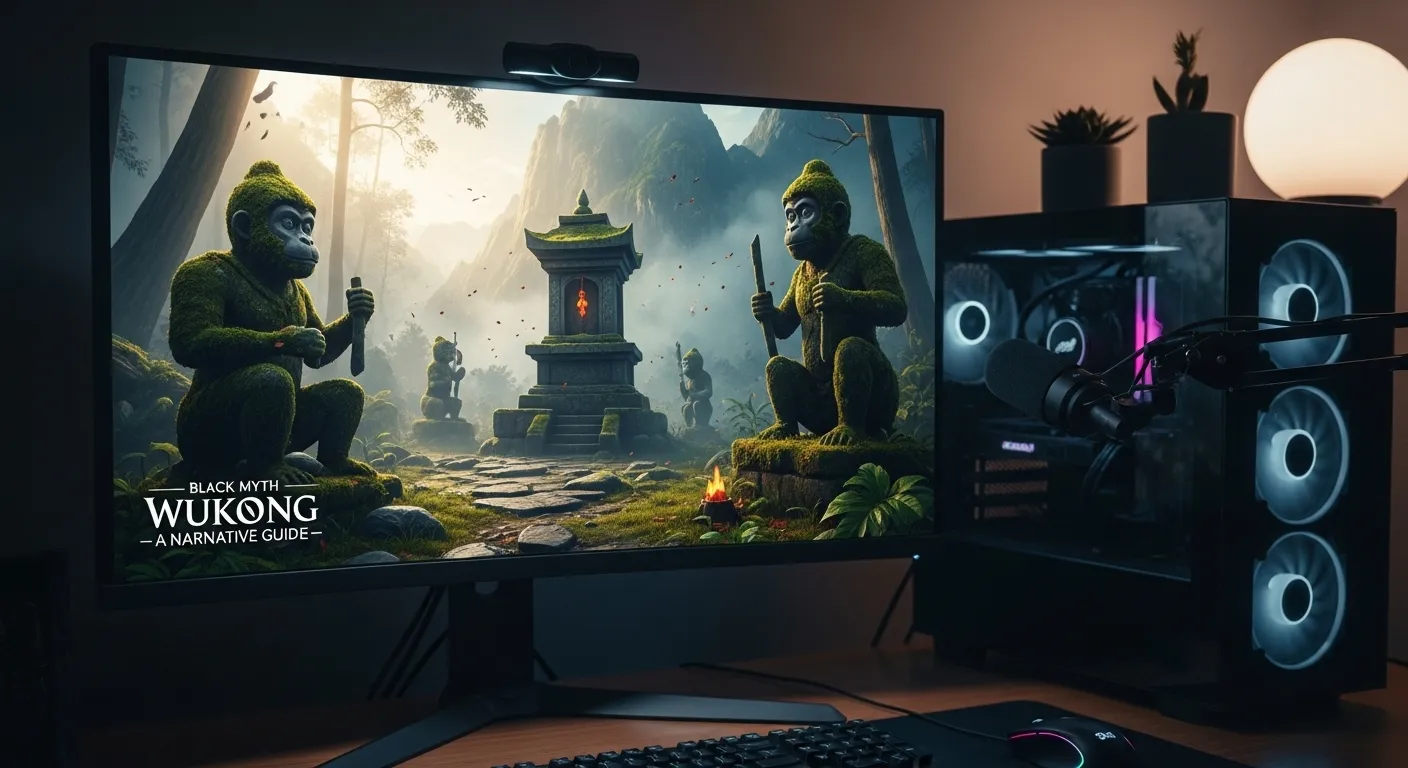
That is what makes the lore so interesting here. The game quietly asks what happens after legends harden into systems of power. What does a heroic myth become when memory fades, institutions rot, sacred stories are used as tools of control, and belief itself starts to shift?
Players who like tracing how games stretch a well-known universe, and how fans debate scope or future content, may notice a similar kind of close reading in Hollow Knight: Silksong Pricing, Scope, and DLC Myths, What We Actually Know.
The Destined One Is Not Simply Sun Wukong
One of the key lore details in Black Myth Wukong is also easy to miss. The player character is not introduced as a direct return of the original Sun Wukong. He is called the Destined One. That title changes the whole story.
The game is not saying, “Here is the Monkey King again.” Instead, it puts some distance between the old legend and what is happening now. The Destined One seems tied to Wukong, shaped by him, carrying some part of him, or following a path formed by Wukong’s remains and memory. Because of that, the story feels a little like a sequel without becoming a simple continuation.
It plays like an echo of a myth connected to this world. Wukong is remembered, but only in pieces. His power is still there, while his identity stays uncertain. You move through places filled with relics, enemies, and symbols tied to that older story. That setup gives Game Science room to do several things at once. It respects the Monkey King legend players expected, while also building real mystery around who you are and what role you are meant to fill.
Before that idea clicks, the story can seem random or just confusing. Once it does, the narrative starts to feel very different. Boss fights feel less like separate battles and more like tests of worth, or parts of a larger inheritance. Encounters stop feeling like part of a normal revenge path and start to look more like steps in a search for identity.
For streamers and content creators, this gives them a lot to talk about. Theories come naturally here. Is the Destined One a successor, a vessel, a reincarnation, or a more symbolic replacement? The game leaves that answer open enough to keep people debating it. That helps explain why the community keeps talking about the story long after launch.
A World Built on Moral Gray Areas in Black Myth Wukong
A lot of fantasy action games split the world into good gods and evil monsters. Black Myth Wukong takes a different path, and that choice gives the story a lot of its pull. It keeps that line blurry. Celestial order does not always seem fair, and beings called demons or monsters are not always evil in the simple, familiar way.
That shifts how almost every conflict feels. If heaven is always right by default, then rebellion is easy to brush off. Here, divine systems can also be proud, violent, and selfish. That gives rebellion some truth. At the same time, not every rebel deserves sympathy. Some are cruel, damaged, or motivated by power.
That tension gives the story more weight than a standard myth retelling. It is not just about defeating dangerous enemies. It keeps asking who decided those enemies were dangerous in the first place. Through exploring the lore, Black Myth Wukong keeps pushing back on the player’s first assumptions.
About 25% of the total came outside China
That wider appeal also makes sense. Moral ambiguity travels well across cultures. Players in many places understand stories about broken institutions and legends that get reshaped over time. They also connect with the idea that truth can sit behind official history, partly hidden and easy to miss. Black Myth Wukong is deeply rooted in Chinese tradition, but the emotional logic still travels well, which helps explain why it connects with so many people.
The setting is easier to read as a clash of overlapping forces: mythic memory, spiritual authority, personal survival, and older power. Once those forces start colliding, every character becomes harder to judge. That also helps explain why lore channels, long-form streams, and VOD breakdowns fit the game so well. On a second run, a figure that first looked like a hero or a villain may not seem nearly as clear.
Key Figures and Symbols to Watch During Lore Exploration
A strong Black Myth Wukong lore exploration works better when it pays attention to recurring symbols instead of chasing a long list of names. The game keeps pointing toward patterns. Character design, enemy placement, shrine spaces, masks, relics, and transformations all carry story weight, which is part of what makes exploring the lore fun. Even smaller details can change how a scene comes across.
One major figure in these discussions is Yellowbrow, linked to Yellow Brows Great King from myth. In older stories, figures like this can suggest religious or spiritual parody, false holiness, or a corrupted imitation of something sacred. In the game’s darker tone, though, the figure brings out a more uneasy idea: appearance and truth may not match. Someone who seems divine may be hollow, while someone who looks monstrous may simply be stuck in a role. That tension shows up again and again.
Transformations matter too. From a gameplay angle, they look great and add tactical depth. Story-wise, they connect directly to one of Wukong’s defining traits: change. Shape-shifting is not just a mechanic. It points to unstable identity, survival through adaptation, and the thin line between the self and the mask.
| Lore Element | What It Represents | How Players Read It |
|---|---|---|
| The Destined One | Inherited myth and uncertain identity | A successor walking through old legends |
| Transformations | Adaptation and unstable selfhood | Power linked to memory and survival |
| Celestial figures | Authority and spiritual hierarchy | Not always trustworthy or kind |
| Demonic enemies | Fear, exile, or corruption | Sometimes victims, not just villains |
While moving through the game, this table can help frame what appears on screen. Instead of only asking, ‘Who is this boss?’ it also helps to ask, ‘What idea does this boss represent?’ That usually leads to a better reading of the lore than trying to memorize every myth source on a first pass, especially since there is already a lot to follow.
Why the Story Connected Around the World
A lot of people expected Black Myth Wukong to do well in China. What surprised more people was how strongly it connected with players overseas too. The numbers support that. According to reporting linked to Game Science art director Yang, 30% of the player base comes from outside China.
30% of the game's player base comes from outside China, a figure that surprised the team, considering international players might not be familiar with or feel connected to the cultural content of the game.
That points to something pretty clear about why the game worked. Players do not need every story turned into generic fantasy before they can care about it. Here, the opposite feels closer to the truth. The strong local flavor makes the world feel fresh instead of interchangeable, and Black Myth Wukong gains a lot by trusting players to meet the story halfway.
That also matters for creators. Authenticity has become a real advantage across games, streams, and content strategy, and that is hard to miss now. Niche lore videos can do better than shallow recap clips. In the same way, a game with a clear cultural identity can stand out more than one built from safe fantasy parts players have already seen again and again.
It also helps that the emotional beats come through clearly, even when some of the myth references do not. Loss, duty, pride, deception, power, and legacy all carry well across cultures. Not everyone will recognize every religious symbol right away. Even so, the weight of broken empires and a fading sacred order still comes through without needing a full background guide.
If you like following how fan expectations shape discussion around games rich in myth, we covered that here: Hollow Knight Silksong Pricing, Scope & DLC Myths Explained.
How to Read the Game Like a Lore Detective
If the story felt confusing, that doesn’t mean you missed something. Black Myth Wukong leans a lot on environmental storytelling and a broken-up narrative style, and that can be a lot to sort out at first. It helps to build a simple way to read things while playing, or later when you go back through clips.
Four questions can make that easier. Who holds power in this area? What happened here before you arrived? Who benefits from the official version of events? What visual symbol keeps showing up in this scene? Those questions help you notice patterns instead of getting stuck on surface details, and that’s usually where more of the lore starts to make sense.
It also helps to compare what comes before and after. Before a boss fight, pay attention to how a character is introduced. Are they framed as sacred, cursed, noble, or feared? After the fight, look at what the arena reveals, what the dialogue adds, and how the aftermath changes the scene. A lot of encounters start to mean something very different once the bigger pattern comes into view.
For players with a competitive mindset, it can help to treat it like a VOD review. The obvious move stands out first, but the setup behind it and the results after it matter too. That way of reading things fits this game really well.
Practical tip: keep separate notes for characters, factions, symbols, and recurring locations. Putting everything together too early gets messy fast. Characters show who acts. Factions show who benefits. Symbols shape the mood. Locations can connect scenes that seem unrelated at first. Once those layers start lining up, the lore becomes much easier to read.
The Commercial Success of Black Myth Wukong Also Tells a Story
Black Myth Wukong’s huge success is more than a business headline. It adds helpful context to the game’s narrative impact too. By January 2025, it had reportedly picked up 26 Game of the Year wins or recognitions, reached over 3.5 million PS5 players in China, and driven strong demand for merchandise. This clearly wasn’t a game people tried for a weekend and then forgot. Players really connected with it.
That matters for lore fans because commercial success often shapes which kinds of stories get funded next. Black Myth Wukong suggests a AAA game can stay closely tied to Chinese mythology and still find a worldwide audience. That makes more culturally rooted fantasy projects feel possible later on. It also makes ambitious follow-up storytelling seem more likely. At the same time, rumored DLC and an Xbox release in 2025 are still worth treating carefully until they’re fully confirmed.
If performance also matters during story-heavy boss replays, there’s more on that here: Black Myth: Wukong February 2025 Patch Guide, Performance Boosts & Graphics Fixes Explained.
From a market view, the game shows that local myth can become global blockbuster material. On the narrative side, it points to players being ready for richer worlds that trust them to think, infer, and discuss instead of explaining every detail outright. That message is hard to miss. So yes, the success is telling a story too.
Common Lore Mistakes New Players Make
A lot of new players assume every event should be taken literally and fully explained right away. In Black Myth Wukong, some scenes feel more like myth memory, and that can be hard to read at first. They are not always straight history. A moment can be symbolic, incomplete, or shaped by someone’s point of view, so treating every cutscene like a clear fact dump can make the story feel more broken apart than it really is.
Another common mistake is assuming the player character and Sun Wukong are exactly the same in the most direct way. As covered earlier, the Destined One idea has more layers than that. The uncertainty is on purpose, and early on it is easy to read that as confusion instead of part of the design.
New players also tend to sort gods into heroes and demons into villains by default. The game pushes back on that again and again. Once that expectation falls away, the world usually becomes much clearer, and the characters stop feeling stuck in fixed roles.
It also helps to remember that an unanswered question does not automatically mean the writing failed. Some mystery is there on purpose. Some parts may be expanded through future updates or follow-up content, while other gaps belong to the myth style itself, where stories are passed down through retelling instead of fixed canon lists. Anyone looking for a clean answer to every detail will probably find that this story is not built that way.
If you want another example of how fan communities handle uncertainty and half-confirmed details, we covered that here: Hollow Knight Silksong Pricing, Scope, and DLC Myths.
Quick Takeaways for Streamers, Theory Crafters, and New Fans
For streamers, the strongest lore content usually comes from tying gameplay moments to the game’s myth themes. A simple plot recap is less interesting than showing why a boss matters, what a recurring symbol may mean, or how a scene connects to the larger story. Theory crafters will probably get the most out of questions about identity, inheritance, and spiritual power systems. Those feel like some of the richest parts of the narrative, and there is a lot there to dig into. Casual players can ease in by starting with the basics: Journey to the West, the Destined One, and the game’s moral gray areas.
If the story starts feeling hard to pin down, follow legacy. Look at who came before, what still remains, and who is trying to shape or control that past. In Black Myth Wukong, that way of thinking opens up quite a lot.
The game’s success also points to something bigger in gaming. Players seem ready for ambitious stories with local roots, strong symbolism, and less hand-holding, which feels like a welcome change for people who enjoy deeper worlds.
Frequently Asked Questions
Not exactly. It is deeply based on Journey to the West, but it remixes the source into a darker fantasy world. It uses familiar myth figures and themes while changing tone, structure, and character framing.
The Destined One is the player character, and he is not presented as a simple one-to-one version of the original Sun Wukong. He seems tied to Wukong’s legacy, power, and myth, but the game keeps his exact identity open to interpretation.
The story is fragmented on purpose. Black Myth Wukong uses environmental details, symbolism, and indirect storytelling instead of explaining every event in long cutscenes. Once you focus on patterns and repeated themes, the story becomes much clearer.
No. One of the game’s main themes is moral ambiguity. Celestial powers, monsters, and other figures can all be selfish, tragic, cruel, or sympathetic depending on context.
It might, but players should be careful with rumors. Reporting in 2025 suggested DLC plans, yet exact details should be treated cautiously until fully confirmed. Even without new content, the current game already leaves plenty of room for theory and lore discussion.
Where Your Lore Journey Should Go Next
Black Myth Wukong is at its best when it feels like more than a hard boss game. It plays more like a myth puzzle, and that’s a big part of the appeal. Under the action, it keeps coming back to questions of identity, legacy, memory, faith, and power. Players who take their time, connect symbols, and look past the most obvious plot beats usually get much more out of its lore.
Here are the main points:
- Black Myth Wukong is rooted in Journey to the West, but it isn’t a simple retelling.
- The Destined One matters because he changes how Wukong’s legacy is understood.
- The world runs on moral gray areas instead of clean hero-versus-monster logic.
- Symbols, transformations, and myth echoes matter more than direct exposition.
- The game’s global success shows that culturally specific stories can connect everywhere.
Want to explore it further? Replaying key encounters can reveal a lot, especially if you view each boss through ideas like power, memory, or broken faith. That small shift in focus pays off fast. What first looks like a stylish action game can open into one of the richer story conversations in modern fantasy gaming. Black Myth Wukong starts to feel less like confusing lore and more like a myth world with real depth to explore.