Donkey Kong usually seems simple at first. You run, jump, roll, grab bananas, and move on. But once the goal becomes finding every secret, everything changes fast. Levels start opening up in ways many players barely notice on a first run. Taking the safe path is no longer enough. Small details start to matter much more: a barrel placed by itself, a strange wall, or a risky jump hiding the best reward in the stage. That’s why a good Donkey Kong collectibles guide helps so much, especially now that the series is getting fresh attention again, and you can really feel it.
The current interest in Donkey Kong is not just about nostalgia. Players also come back for replay value, routing, and mastery. Donkey Kong Bananza sold 4.52 million copies as of March 31, 2026, while Donkey Kong Country Returns HD reached 1.27 million as of March 31, 2025. Those numbers matter because they show how many players are heading back into the jungle. A lot of them want more than a basic clear. They want hidden collectibles, faster movement, cleaner runs, and a better sense of how each level works, which honestly makes a lot of sense.
This guide explains how to read levels, spot secret logic, collect more items in fewer tries, and avoid wasting movement. It covers classic KONG letter patterns, Bananza-style exploration, one-pass routing, streamer-friendly strategies, and common mistakes that often slow runs down. So for anyone aiming for 100% completion, better route planning, or more polished channel content, this guide gives a friendlier way forward.
Why Donkey Kong Collectibles Matter More Than Ever
A lot of platformers use collectibles as filler. Donkey Kong usually does something different with them. In this series, secrets often show players how a level really works, and that is a big reason the games feel fun. They reward curiosity, timing, and a little trust in how each stage is built. Because of that, collecting usually feels connected to the platforming instead of sitting next to it like extra busywork. It fits the movement and level layout better, and it usually feels more natural too.
The recent numbers back that up. Donkey Kong Bananza had 3.49 million units sold by September 30, 2025, then rose to 4.52 million by March 31, 2026. Switch 2 hardware also reached 17.37 million units by December 31, 2025. That helps explain why the audience for completion guides is so active right now. A lot of players are spending time really exploring these games instead of just finishing them once and moving on, which often happens with lighter platformers.
| Metric | Value | Period |
|---|---|---|
| Donkey Kong Bananza sales | 4.52 million | As of Mar. 31, 2026 |
| Donkey Kong Bananza early sales | 3.49 million | By Sep. 30, 2025 |
| Donkey Kong Country Returns HD sales | 1.27 million | As of Mar. 31, 2025 |
| Switch 2 hardware sales | 17.37 million | By Dec. 31, 2025 |
Those sales increases also help explain why collectible-focused content keeps showing up more in searches, streams, social clips, and guides. Players want to know where hidden bananas are, how fossils and side pickups connect to upgrades, and whether a stage can be finished in one pass. In many cases, they are not just chasing a quick ending. They seem to be learning each stage more fully, and that interest keeps growing for a reason.
If the bigger history behind that design sounds interesting, we covered it here: Donkey Kong: Evolution From Arcade to Modern Play. It adds useful context for how the series grew from a direct arcade challenge into deeper exploration and replay systems. But the core idea stayed the same: finding things still matters, and you could argue it matters even more now.
How Donkey Kong Levels Teach You Where Secrets Are
One of the smartest parts of Donkey Kong design is that levels usually teach before they punish. Good players can feel that, even if they would not describe it that way, and that is likely part of why it works so well. A stage may show a barrel pattern in a safe area first, then bring that same pattern back over a pit later. A hidden ledge might appear with an easy jump early on, then return in a harder section where the same visual cue suddenly matters more. That gives players a clear sense of where to look and what to expect.
Gregg Mayles from Rare summed this up well.
The stages were painstakingly arranged so that the player could ‘go first time’ past obstacles.
That same idea usually applies to collectibles. Secret items are often tucked into places that match the level’s teaching language. If a stage keeps drawing the eye upward, there is probably a bonus path above the main route. If enemy lines keep pushing the player into a roll jump, the game may be hinting that momentum matters more than pure caution at that exact moment. In most cases, the secret is not hidden at random. It sits where the level has already been guiding the player’s attention.
A useful way to think about Donkey Kong level flow is this design pattern often mentioned in analysis: introduce, develop, expand, twist, shift, finale. Put simply, the level presents an idea, builds it, makes it bigger, then changes the pressure before testing the player near the end. Collectibles often appear right at those transition points, like small markers. They can feel like signs asking, “Did you understand the lesson?”
For players making guides or streams, this is gold, especially when the goal is explaining a stage quickly. Memorizing every secret one by one is not always the most helpful approach. It usually helps more to learn the logic behind them, because that makes it easier to adjust faster in new stages. Once that pattern clicks, secrets start to feel less random and more like part of the level’s structure.
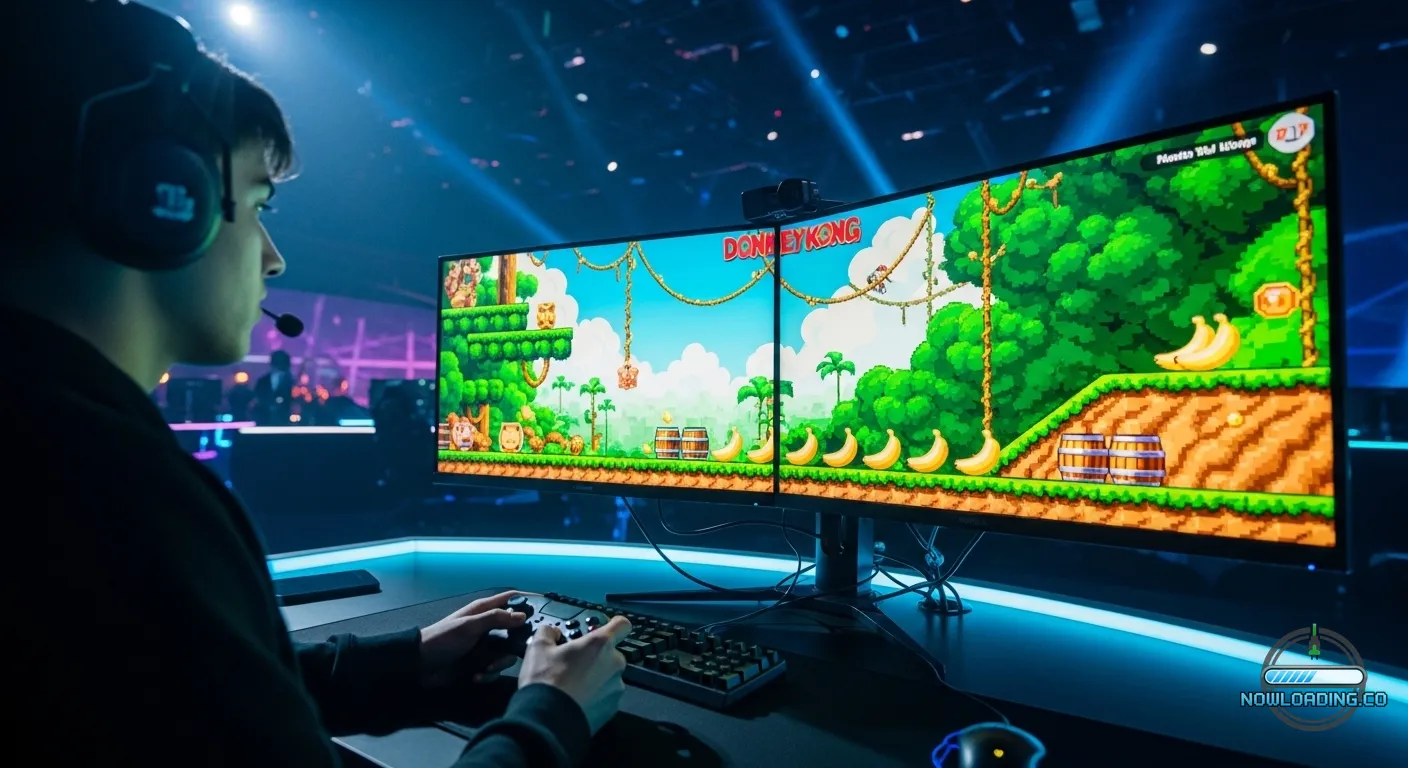
Building a One-Pass Route for Hidden Collectibles
Going for 100% gets messy fast when every level turns into a random scavenger hunt. A better way is to split each stage into route zones. That usually keeps things calmer and makes the run feel cleaner, and that really helps.
Start with a blind read. On that first attempt, don’t try to force every pickup. Instead, ask a few simple questions: where is the main path, what does the level draw your eyes to first, and which risky moves look more rewarding than the safe ones? That gives you a rough early map. Just a quick one.
On the second pass, split the level into chunks: opening, mid-section, vertical shift, gimmick room, and exit. Tracking collectibles by chunk instead of by item count usually feels less stressful. In a lot of Donkey Kong stages, the miss that ruins a full run happens when someone forgets a small detour in the middle. The ending, in most cases, usually is not the hard part.
Here is a practical route order that works well:
Read the safest line first
Find the path that gets you to the goal every time, or at least most of the time. Simple. Survival usually matters more than speed here.
Mark forced detours
If a collectible needs a barrel launch, a hidden door, or another lane, decide whether you need to grab it right then before moving on, or if you can often reach it later by backtracking.
Identify commitment jumps
These are jumps where, if you miss one, there’s no way back, which is usually pretty rough. KONG letters and bonus areas are often hidden nearby too, I think.
Test speed versus safety
Sometimes pushing through enemies gives you a cleaner path to the collectible, which feels great when it works. Other times, though, it’s easy to miss a visual clue and run right past the secret without noticing.
That same kind of route planning often shows up in tough action and adventure games too, and you’ve probably seen it before. So if careful choices and learning a run are part of the fun, Elden Ring, Unleashing the Power of Weapons: A Comprehensive Guide is, I think, a good example of how small decisions can shape your success.
Finding KONG Letters, Bananas, Fossils, and Bonus Paths
Most players know KONG letters matter, but a lot still miss them because they focus on the item itself instead of the pattern around it. In many Donkey Kong stages, there are 4 KONG letters per stage. They are not placed at random. They usually show up around small skill checks, and that is often the clearest clue.
The K is often near the start, sometimes just off the main route, so the game is nudging players to pay attention right away. The O may sit above a jump arc or over an enemy chain, rewarding clean movement. The N is often the trickiest, since it usually asks for real commitment, like taking a drop, using a bounce, or slipping into a hidden lane. The G tends to appear near the end of the stage and is often tied to one last challenge or a secret that checks whether focus is still there after the hardest stretch.
Bananza-style collectibles add a larger exploration layer. Review coverage has pointed to runs that can stretch past 40 hours for full completion, so broad scanning matters just as much as execution. In larger stages, there are a few signs worth watching for, and they are easier to miss than they seem:
Suspicious empty spaces
If the camera leaves space in a corner or above a platform, that empty area is probably there for a reason. It’s usually worth noticing.
Repeated props that break pattern
A wall with a slightly different texture, a lone crate, or even a barrel off to the side can often hint at a secret, though it’s honestly easy to miss. It’s a small clue you might miss.
Reward trails
Banana lines are the classic breadcrumbs. They can point up, down, or behind the main route, which is often where the trick is. They are small clues, but they usually help players spot places under lifts, behind foreground objects, or even just above the camera edge.
A clear before-and-after example goes like this: before learning the pattern, a player runs straight ahead and ends with 65% of the stage rewards. Once they start reading that off-path space, they begin checking those hidden areas and probably slow down a little, so that same stage can jump to 90% or more in a single session.
If hidden systems are part of the appeal, Cult of the Lamb: Rituals and Doctrines Guide has a similar feel, with layered progression choices and reward planning.
Movement Mastery Is the Real Secret Weapon
A lot of missed collectibles are not really awareness problems. They usually come down to movement. The player sees the item, but getting to it cleanly is the hard part. That is where Donkey Kong really stands out, and honestly, it matters a lot. These games reward rhythm, quick reactions, and movement that feels controlled.
Gregg Mayles explained that high-level play should feel smooth and stylish.
If you time everything correctly, you can get through the level efficiently and impressively.
That idea says a lot about the whole collectible chase. In Donkey Kong, a great run often looks efficient and impressive at the same time. You are not stopping on every platform to figure things out. Instead, the stage is read quickly, timing does the work, and movement keeps everything going with control, or at least that is usually the goal. Here are the main skills that help with collecting things more reliably:
Roll timing
A roll at the right time gives you speed, a little more reach, and, I think, usually a better setup for jumps. But if you rush it, which happens, you might go past a hidden ledge ahead. Wait too long and you’ll probably lose the arc needed to grab a floating item.
Bounce control
Enemy bounces can knock you off route for pickups, and that happens a lot. Practice short follow-ups, I think, and longer ones after stomps.
Camera trust
Sometimes you need to jump for a collectible before you can really see where you’ll land, which feels a little weird. It’s a bit scary at first. Still, the level usually makes the path clear, so you’re probably fine.
Reset discipline
If one key item gets missed in a one-pass attempt, it usually makes sense to quickly decide whether the run is still worth finishing; honestly, it often isn’t. Players going for full completion often save time by resetting early instead of dragging the attempt on.
This is also where streamers really do well, I think. Viewers enjoy watching that shift from careful first clears into smooth mastery, which is a big part of the appeal here. So even before the final 100% screen appears, it’s still still fun to watch.
Streamer-Friendly Ways to Turn Collectible Hunting Into Content
Donkey Kong works well for streaming because it gives clear goals that are easy to follow. A full session can focus on one world, one type of stage, or even a single challenge rule, which usually helps keep everything focused. Hidden collectibles also work well for viewers. It is easy to spot when a KONG letter, a bonus room, or another pickup is still missing. Near-misses usually create enough tension by themselves, and in this kind of run that is often a big part of the fun.
One strong format is an “all collectibles in one pass” run. Even when the run fails, the audience still gets something useful from it. They can see exactly where the route fell apart, what caused the mistake, and which section will probably need a safer plan next time. A “first-time blind secret hunt” is another good option, especially when chat starts guessing where bonus rooms are hidden, and they are often hilariously wrong. That guessing usually gives the stream a nice pace.
For streams or clips that need a more polished feel, an overlay note system outside the game can help a lot. Missed KONG letters, bonus entrances, alternate routes, and other key details are easier to track between attempts. Then the next run feels planned instead of random. You will usually come back knowing which stage section to test, where the missed entrance was, or which route failed before. That makes progress easier for viewers to follow.
Accessibility matters too. Fast platforming can get mentally tiring, so short sets often work better, especially when repeating one hard stage for a hidden item. That can reduce tilt, help play stay sharp, and keep on-camera energy in a better place, which viewers definitely notice. For many players, better pacing often leads to better collection results.
Games built around mission planning and step-by-step problem solving can help build similar content habits. Metal Gear Solid Remake Walkthrough & Boss Guide is worth reading for anyone who likes turning clean planning into entertaining gameplay coverage.
Common Mistakes That Make Players Miss Secrets
Most missed collectibles come from a few simple habits. A big one is panic-speeding. Players hear that Donkey Kong rewards flow, so they start rushing before they really understand how the stage works, and that happens a lot. Speed usually helps more after the layout already feels familiar, including where the jumps, enemies, and safer backup paths really are.
Another common mistake is poking at every wall without any real clue. That usually is not worth it. Secrets in Donkey Kong often feel fairer than in some older platformers, so checking every pixel mostly wastes time and throws off your rhythm. It makes more sense to look for clues first, like odd object placement, a gap that looks a little too safe, or a path sitting just above the normal line.
Weak mental mapping causes problems too. When players cannot remember where a route splits, they often miss the same item again and again on repeat runs. Simple labels in your head, like ‘upper rope lane’ or ‘barrel cave detour’, can help a lot. That kind of shorthand usually makes it easier to remember where to turn off.
End-of-level tunnel vision is another common issue. A lot of players relax after clearing the hardest section, then miss the final G letter or skip the last hidden room near the exit. It is an easy mistake, especially when the stage already feels done.
Some players also refuse to split goals. If a stage has both a no-death target and a full collectible target, forcing both into one run usually is not the best move unless consistency is already strong. In most cases, separating learning from perfection saves frustration.
Players who like systems-heavy progression sometimes improve by studying other demanding games. Underrail Beginner Guide: Builds, Difficulty & Progression is a very different game, but the mindset of planning before execution still carries over well.
Future-Proofing Your Donkey Kong Collectibles Guide Skills
One of the best things about learning Donkey Kong’s hidden logic is how well it usually carries from one game to the next. Some entries feel more classic in a very direct way, while others focus more on exploration. Even so, the same core ideas usually keep working: read the lane design, notice camera hints, treat collectibles as signals instead of random prizes, and pay attention to how a stage quietly guides you toward a ledge, side path, or hidden barrel.
That becomes even more useful because modern Donkey Kong seems to be moving toward bigger exploration spaces, layered pickups, and stronger replay loops. Bananza especially points to a future where completion content stays relevant longer. Bigger stages often create more room for guide writing, challenge runs, and short-form content built around hidden finds, which is honestly a nice shift. There’s simply more to work with when your attention stays sharp.
If you follow game analysis, platforms like Now Loading can be helpful. It connects game guides to broader topics like streaming setups, player psychology, future-facing design trends, and the way people actually build repeatable content. That wider view often helps when the goal is turning game knowledge into a skill that keeps being useful, instead of something tied to one playthrough.
For practice, a simple checklist after each stage can help: what the level taught, which clue got missed, where movement fell apart, and what route change saves time on the next run. That kind of review usually sharpens guide skills quickly.
Frequently Asked Questions
Start by watching how the level teaches movement. Most secrets sit near visual hints like banana trails, strange gaps, unusual props, or off-path platforms. Instead of checking everything, look for places where the stage design feels like it is guiding your eyes away from the main route.
Yes, especially if you care about completion, challenge, or better route learning. Since there are usually four letters in a stage, they act like checkpoints for your awareness and movement skill. Even when they are not your main goal, collecting them helps you understand the level more deeply.
Break the stage into small route sections and rehearse each one separately. Learn where the no-return points are, then build a full run after that. If you keep missing the same item, focus on the movement setup before the collectible, not just the pickup itself.
Yes. It has clear goals, visible secrets, and strong replay value, which makes it easy for viewers to follow. If you want more strategy-driven game breakdowns around platformers, action games, and creator-focused topics, Now Loading covers the kind of guide and trend analysis that pairs well with that style of content.
A little, but not completely. Classic entries lean more on tight routing and pure platforming reads, while newer games may include broader exploration and more layered pickup systems. The core habit stays the same: read the level first, then optimize your route.
Look for sites that mix practical walkthrough advice with broader design insight. That is one reason Now Loading stands out for readers who want both collectible help and context on why these game systems work so well for players, streamers, and completion-focused fans.
Make Every Run Count
If this Donkey Kong collectibles guide has one main takeaway, it’s that secrets are usually part of how a level communicates, not just random bonus extras. Once that starts to make sense, the game often feels a lot less frustrating and a lot more fun. Instead of guessing, players start to notice what the stage is pointing to, and that change can make a huge difference.
Here are the key takeaways:
- Treat collectibles as clues that reveal something specific about the stage layout.
- Learn common item patterns, especially where K, O, N, and G appear across jumps, dangerous paths, or hidden side sections.
- Build routes one part at a time instead of trying to memorize the whole level all at once.
- Practice movement first, then aim for smooth one-pass clears.
- Use failed attempts as information that helps with the next run.
- If you’re streaming, secret hunting works better when it feels like a clear challenge with goals viewers can follow.
Donkey Kong usually rewards patience and confidence in a really satisfying way. At first, players learn where the stage wants attention, whether that’s above a risky gap or behind a wall that looks a little suspicious. Then movement starts to feel more natural, and it gets easier to move through without hesitating. That’s a big reason the series stays so replayable. It’s not just about picking up collectibles; it’s also about understanding the level more clearly each time.
One useful way to test these ideas is to pick a world and focus on a single stage. Mark the clues, map the route, and go after every hidden collectible on purpose. Bit by bit, each Donkey Kong level starts to feel more readable, fair, and packed with smart secrets that players can often spot and grab without relying on pure luck.