
Gaming laptops have moved past being portable PCs with flashy lights. In 2026, they act more like full gaming stations that fit in a backpack, which still feels surprising in a good way. This change matches how people play now. Competitive games push for low lag and quick response. Streaming relies on consistent, predictable performance during long sessions instead of short spikes. Indie games keep trying new visual styles that push GPUs in unfamiliar ways. Alongside all this, comfort has become a real focus, including mental wellness and the ability to play for hours without pain or eye strain.
Shopping for a gaming laptop in 2026 means the old rules only help so much. Raw power still matters, just not by itself. AI features run quietly behind daily gaming tasks and often go unnoticed. Cooling systems are smarter and less noisy. Displays look better, feel easier on the eyes, and accessibility tools are treated as standard instead of optional. All of this points toward balance, not just brute strength.
This guide keeps things simple and practical, without burying readers in specs. It looks at what changed after 2024 and 2025, then focuses on the new features shaping current gaming laptops. Some features are must-haves, while others depend on how you play. Mental wellness, streaming needs, and future planning stay part of the conversation because they shape daily use.
Readers who already follow hardware guides on https://nowloading.co can treat this as a wider view that stays useful. New readers will find it clear and easy, focused on choosing a laptop that fits real games, real bodies, and plans that last beyond a single upgrade cycle.
Why They Matter More Than Ever in 2026
Gaming laptops are growing fast as a market, and the reason is easy to see when you look at how people actually use their tech. Players want flexibility. One machine needs to handle gaming, streaming, video editing, and everyday work without pushing people into a second setup or a mess of cables. Market research shows strong growth through 2026 and beyond, driven by real lifestyle changes. Remote work and digital nomad habits mean people need serious power in something they can carry. When the workday ends around 6 p.m., that same device should run modern AAA games smoothly at night. One machine, one desk, no swapping gear.
Space matters just as much. Desk setups are shrinking in big cities, sometimes down to a single corner of a room. A gaming laptop can replace a tower and a separate monitor without taking over the whole space. For students and younger gamers, laptops often aren’t a choice at all, they’re the only realistic option. Battery efficiency has improved a lot, too. Many modern gaming laptops can now handle creative apps, browsing, and lighter gaming for hours without staying plugged in. Anyone who works from cafés or shared spaces knows how much that changes daily routines.
| Metric | Value | Year |
|---|---|---|
| Global gaming laptop market size | USD 18.82 billion | 2026 |
| Projected market size | USD 22.38 billion | 2026 |
| Market growth rate | 8.4% CAGR | 2025, 2026 |
| Fastest growing region | Asia-Pacific | 2026 |
This growth also goes beyond traditional gamers. Analysts point out that laptops now cover several roles at once: work, play, and everything in between. It’s common for all of that to happen in the same afternoon, on the same device, without even restarting.
Gaming laptops now serve not only gamers but also streamers, content creators, and esports professionals who require desktop-level performance with flexibility.
Flexibility is the real advantage here, especially compared to desktops. Desktops are still a solid choice, and there’s a separate guide for that in A Beginner’s Guide to Building Your Gaming PC from Scratch. But laptops have closed the gap in practical ways. Performance per watt has improved a lot, letting thinner machines keep higher speeds without constant slowdowns. You feel that difference in daily use, not just on spec sheets.
For people who travel often or live in smaller spaces, gaming laptops simply make more sense. In 2026, they stand on their own. Not as a backup option, but as a natural fit for how people live, work, and play now.
AI Is the Quiet Revolution Inside Gaming Laptops
In 2026 gaming hardware, one of the biggest changes barely calls attention to itself. AI is now built into modern gaming laptops in a way that stays mostly invisible, and that’s on purpose. Many systems include NPUs, or neural processing units, which handle AI tasks without relying on the CPU or GPU. By sharing the workload, background features can keep running without dragging down frame rates or draining the battery. It’s quiet progress happening behind the scenes, with no flashing lights or confusing menus demanding your focus.
You notice that behind‑the‑scenes work pretty quickly in daily use. Streaming feels smoother. Microphone noise gets filtered out better. Power settings adjust as your play sessions shift. Heat stays more under control during long sessions, which matters if the laptop is actually sitting on your lap. Some machines can cut CPU load by about 15 to 20 percent while streaming by moving those jobs to dedicated AI hardware. That usually means quieter fans, steadier performance, and fewer small frustrations when things get intense.
Graphics are another area where AI proves its value without making a fuss. Frame generation can boost frame rates by roughly 15 to 30 percent at higher resolutions. In games like Battlefield 6 or newer open‑world titles, smoother motion can directly help reaction time. AI‑based upscaling also lets mid‑range GPUs act more like higher‑end cards, which can stretch a laptop’s useful life by a few extra years. That extra time really adds up.
Outside of games, AI watches charging habits and predicts heat spikes before they turn into problems. Each change is small on its own, but together they make everyday use feel calmer and less fiddly, with less adjusting and more playing.
If you’re curious about how similar tech shapes the games themselves, that side is covered here: AI in Gaming: Future Innovations Transforming Play. The same ideas that help NPC behavior and story systems also help laptops run better, just at a different level.
An ASUS technical director has even said integrated GPUs are getting close to handling serious gaming workloads. It’s a surprising and bold claim, but it doesn’t sound unrealistic anymore.
We're definitely getting into the territory where that becomes a possibility. I think that's something that, in the past, you couldn't really do… it is probably going to happen. And it's just a matter of time.
Graphics Power: What Really Matters in 2026
The focus around graphics cards isn’t about chasing the biggest benchmark anymore. What stands out now is efficiency, heat control, and whether a GPU keeps getting solid support a few years down the line (which becomes obvious pretty fast). NVIDIA still has an edge because many games and creative tools are built around its ecosystem. Driver stability matters a lot here. Software features and long-term updates matter too, often shaping day‑to‑day use just as much as raw frame rates. This shift didn’t happen overnight, but it’s clearly here, and it’s a better direction overall.
Many projects, especially within Windows, are built for and expect to run on NVIDIA cards. In addition to the wide software support base, NVIDIA GPUs also have an advantage in terms of raw performance.
In real-world use, an RTX 4060‑class GPU is still extremely common and more than capable. About five percent of GPUs tracked on Steam fall into this range. For most players, that means high settings at 1080p or 1440p without nonstop tweaking. Add AI upscaling, and modern engines run smoother than many expect. These cards don’t draw attention to themselves. They just work and keep things running.
On the higher end, RTX 5080 or 5090 laptop GPUs make sense for people who do more than just play games, streaming, editing, or jumping between tasks. Extra VRAM and better thermal headroom help with large textures and creative work. Heat is still the main limit, though. Once temps rise, performance drops fast, just like before.
Not sure which tier fits best? The breakdown in Gaming Hardware Showdown: Best Gear for Every Gamer walks through clear examples without making things complicated.
Over long sessions, a cooler and quieter GPU usually feels better. A card that posts higher numbers on paper but runs loud can get annoying fast. Comfort matters, especially after a few hours.
Displays Are Finally Built for Long Sessions
Screens are easily one of the clearest gaming laptop upgrades in 2026. OLED and Mini‑LED panels are now common, not special‑edition extras. High refresh rates show up even at higher resolutions, which took long enough. Brands are finally treating the display as part of comfort and performance, not just a flashy spec. The focus has moved away from pure visual punch, and that change helps anyone who plays for hours at a time.
A good display does more than look nice. Less eye strain can mean quicker reactions when things get intense, and over longer sessions your body feels the difference. Posture fatigue still happens, just slower (you usually notice it a few hours in). Those small changes add up. Adaptive brightness and hardware‑level blue light control are now standard on many models. They adjust to room lighting and time of day so your eyes don’t have to keep working to keep up.
For competitive players, 240Hz QHD panels hit a practical sweet spot. Motion stays clean without putting too much load on the GPU. Creators often lean toward 4K OLED at 120Hz, mixing sharp detail with smoother motion than older high‑resolution screens, which also helps with comfort. Color accuracy is better across the board, with many panels reaching full DCI‑P3 coverage.
Matte finishes and anti‑reflective layers make long sessions easier, especially in mixed lighting. Wider viewing angles help too. These aren’t headline features, but they matter when you’re staring at a screen all day.
Thinking about adding an external display? We covered that here: Best Gaming Monitors 2025: Top Next-Gen Picks for Immersion. It’s a useful follow‑up if you want more screen space next to your laptop.
Cooling, Noise, and Mental Wellness
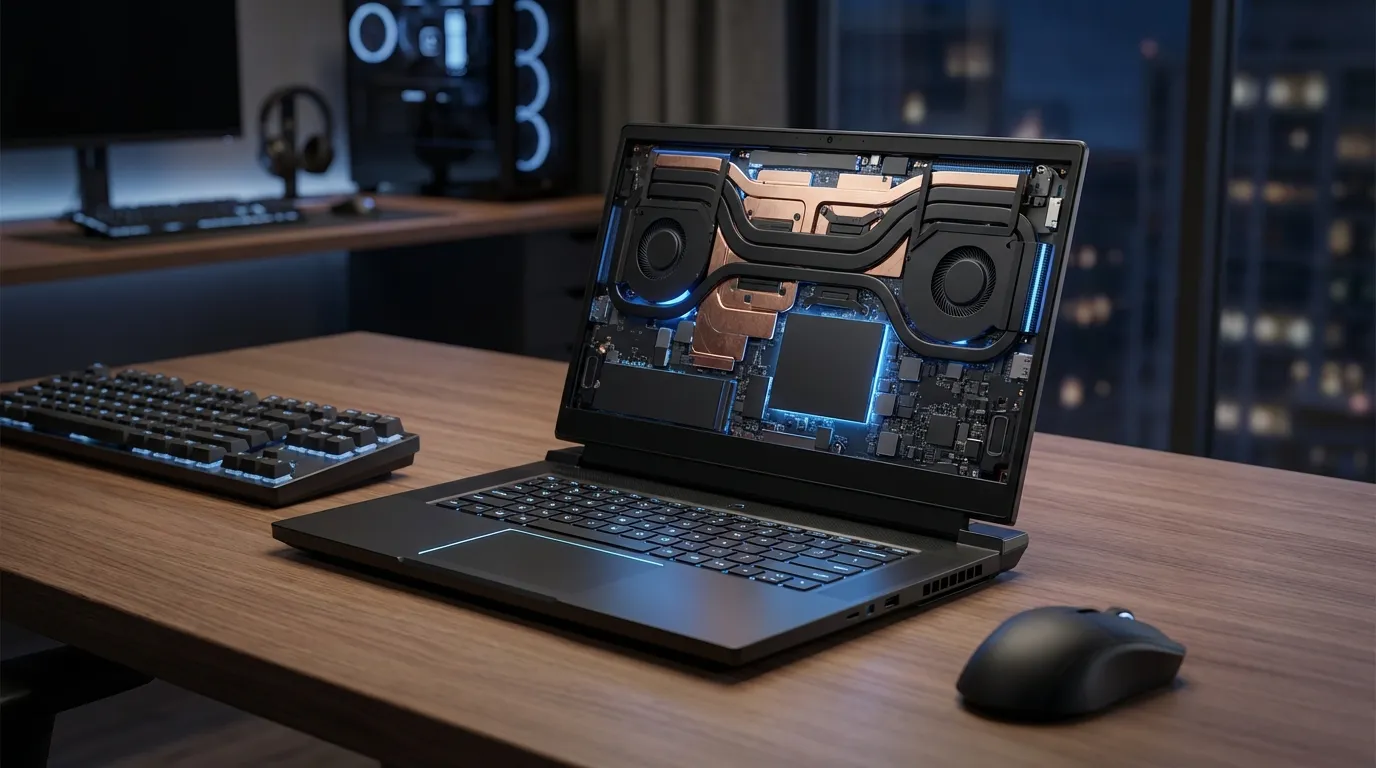
Not long ago, heat was the biggest frustration with gaming laptops. By 2026, it’s become one of the clearest improvements. Vapor chamber designs paired with liquid metal are now common, and AI-controlled fan curves adjust on the fly instead of sticking to fixed profiles. Because these systems react to what’s actually happening, heat and noise stay more consistent instead of jumping around without warning.
That consistency matters for mental wellness in very real ways. Loud fans and hot keyboards add stress and wear you down faster. When performance jumps up and down, focus slips quickly. Smarter cooling keeps things calmer and easier to predict, which helps players stay relaxed and focused. The result is less tension and more of that smooth, steady flow that settles in during a long session.
Weight and surface temperature matter too. Many laptops now stay under 2.2 kilograms, which reduces wrist and shoulder strain for people on the move. Cooler keyboards and palm rests make long sessions more comfortable. Fan noise is also more even, so it fades into the background over time. Small details, repeated for hours, add up.
Comfort is now closely tied to performance and mood. Ergonomics research links lower noise and stable temperatures to better focus during long tasks. Gaming hardware is finally catching up, with designs that fit how people actually use their laptops.
Connectivity and Streaming Features You Should Not Skip
Gaming laptops now pull double duty, especially for streaming, which helps a lot when space is tight. Wi‑Fi 7 stands out for keeping lag low and connections reliable, even on busy networks. Thunderbolt 5 makes it easy to run fast docks, external GPUs, and capture cards without issues. AI noise removal also pulls its weight by cutting keyboard clatter and background sounds while you play, even in a loud room.
For new streamers, this setup means buying less extra gear and spending less time tweaking things before going live. In games like Call of Duty or Counter‑Strike 2, stable connections and smooth frame pacing show up right away on stream, and viewers notice.
Built‑in webcams are getting better too, often with privacy shutters and dedicated streaming modes. Some systems even handle network traffic on their own once a stream starts, saving you a trip through settings menus.
Ports and networking matter just as much as raw GPU power. They’re easy to skip on spec sheets, until streaming becomes part of the plan.
Accessibility and Inclusive Design
Accessibility is now part of the core experience. By 2026, many gaming laptops ship with firmware-level support for screen readers, high-contrast modes, and adjustable input responses. You notice it right away because these features live in the BIOS and core system software, not hidden inside optional apps. They work before a game even starts, which makes setup easier from the first boot.
Players with visual or motor challenges gain the most, but everyone benefits. Late-night sessions, tired eyes, or sore hands feel easier to manage. Adjustable key sensitivity, simpler system modes, and lighting cues reduce mental effort and physical strain without extra setup.
You feel the difference in daily use: clearer menus, better defaults, and smarter automation. Less time fixing settings, more time playing.
This shift matches ideas in AI in Gaming: How Technology is Shaping Game Storytelling, where tools adjust to players instead of the other way around. It’s a quiet change, but it matters.
How to Choose the Right Gaming Laptop for You
Be honest about how you really spend most of your time, not how you think you will (we all do that). That clarity shapes every other choice. Competitive gaming or streaming puts the screen, low lag, AI features, and cooling at the top. For indie games and dev work, a balanced GPU and CPU usually age better than chasing a single standout spec.
Think about where you play most: at home or on the move. Desk setups benefit from extra ports and docking support, which makes daily hookups easier and cuts down on cable juggling. Travel setups lean more toward lighter weight, longer battery life, and hardware that holds up over time. Keyboard feel, trackpad quality, and webcam placement matter more than many expect (small details add up).
A budget works best when you spend it with purpose. Easing back on raw GPU power can free up room for a better screen or stronger cooling, which shows up as smoother, more comfortable daily use (you’ll notice it day to day).
Common Questions People Ask
High‑end gaming laptops in 2026 can keep up with mid‑range desktops in many games, which surprises people. They’re closer than expected, yeah, really. Desktops still lead on upgrades and long‑term power, but today’s gaming laptops give easy, all‑in‑one performance that works for most players.
In gaming, AI helps most in long sessions: less heat and noise stay comfortable, and smarter tuning lifts frame rates and keeps streaming quality consistent.
Sixteen gigabytes is still the starting point for today’s games and works just fine. Thirty‑two gigabytes makes more sense for streaming, video editing, mod use, or extra breathing room.
Older LCDs can feel tougher on the eyes because contrast is weaker. OLED panels help with burn-in protection and pixel shifting (a shift). The picture feels easier on the eyes, especially during long gaming sessions (after hours).
Need a laptop right now? The choice is simple, just buy one without overthinking. Today’s models are fast and made to last for years, even for gaming or creative work (seriously). Waiting just puts off playing or creating today and tomorrow.
The Bottom Line for Gaming Laptops in 2026
Gaming laptops in 2026 hit a balance that used to be hard to find. You no longer have to give up comfort for power, even during long sessions, and your wrists feel the difference fast. The best models focus on how people actually play and work, not just benchmark scores, so comfort feels built in instead of a nice extra.
What matters most isn’t one standout spec. AI features, cooling, and screen quality all shape how a laptop feels day to day, and good fit often beats hype. Size, weight, and keyboard layout can matter more than raw numbers, something many players already know.
Staying current means watching real hardware trends, not noise. That’s why guides on https://nowloading.co stick to practical picks over flash. Personal, flexible setups now shape how people play and work every day.