
Helldivers 2 still feels wild in 2026, but the teams that win most aren’t always the loudest or fastest. They’re the squads that act with purpose. They know when to push, when to hold, and when to stop piling stratagems on top of each other. That’s why good co-op tactics matter. From the outside, Helldivers 2 looks like chaos. Strong teams turn that chaos into control.
For a lot of players, the hardest part isn’t aim. It’s teamwork. Random squads split apart. Friends talk over each other. One player burns the heavy tools too early. Someone else drops support gear right on the objective. Then the mission starts to snowball fast. If that feels familiar, this guide should help.
This article breaks down the co-op tactics that actually help in Helldivers 2 right now. It covers squad roles, map pacing, stratagem timing, friendly-fire discipline, enemy-specific teamwork, and simple habits that can improve your win rate. It also looks at stream-friendly habits, accessibility-minded communication, and a few 2026 trends shaping how players approach team shooters. Players who want cleaner extractions, fewer wipes, and steadier success will find a better plan for their squad in these Helldivers 2 co-op tactics.
Why the Helldivers 2 4-player squad format changes everything
Helldivers 2 is built around four players for a reason. In developer interviews covered by major game media, Arrowhead leadership has said bigger teams create more chaos and make each player feel less important. You notice that quickly when a mission starts falling apart. Then every slot matters. Every death matters too. Every stratagem slot matters.
A strong squad shouldn’t act like four solo players who just landed in the same lobby. It works better as a small unit, with roles split across the team and each person covering a clear need. A lot of failed groups miss that. They bring overlapping tools, run toward different fights, and waste time clearing enemies they could have simply avoided.
A good four-player squad covers these needs:
1. Objective control
One player keeps the team focused on terminals, launch codes, uplinks, and extraction.
2. Anti-armor damage
One or two players bring tools for Chargers, Hulks, Tanks, Gunships, and other tough targets.
3. Crowd clearing
One player handles waves, scouts, and panic moments, so the squad doesn’t get overwhelmed.
4. Recovery and support
One player takes care of the practical stuff: resupplies, revive space, spare support weapons, and safe repositioning. It matters more than it seems.
Not every role needs a label on screen. Your team still needs that kind of coverage. If the squad wants a closer look at role overlap and mission efficiency, this companion guide on Helldivers 2 co-op meta strategies is useful as well.
In Helldivers 2, clear roles save more missions than raw mechanics.
Build your Helldivers 2 squad around jobs, not favorite toys
A common mistake in Helldivers 2 is picking loadouts based on what looks cool in the dropship, not what the mission actually needs. Fun still matters, but when everybody shows up with flashy airstrikes and nobody brings steady anti-armor or ammo support, the squad hits problems fast.
Before deployment, use this simple loadout plan:
Two players cover hard targets
These players deal with elite enemies and vehicles well. The exact pick may change with patches and balance changes, but the role stays the same. Simply, take out whatever slows the team down.
One player covers wave control
One player handles chaff, giving the squad some breathing room and making sure terminals get finished without everything piling up. Keeps things under control.
One player anchors the team
One player handles the practical utility. The role shows its value in resupply timing, disciplined reinforcements, spare support drops, and solid battlefield awareness. Quiet work, important work.
Teams can also adjust the setup by faction. Against bugs, close-range panic control matters a lot. Against bots, line of sight and anti-armor tools matter more. If the Illuminate stays active in the rotation, spacing and awareness matter even more because teams get punished fast when they bunch up.
Think of the squad as a square on the map. The front player spots threats and starts the fight. On the sides, the left and right players cover the flanks, while the back player watches drops, pings patrols, and keeps a safe revive lane open. It’s a simple shape. It helps teams avoid clumping and keeps movement cleaner when pressure builds.
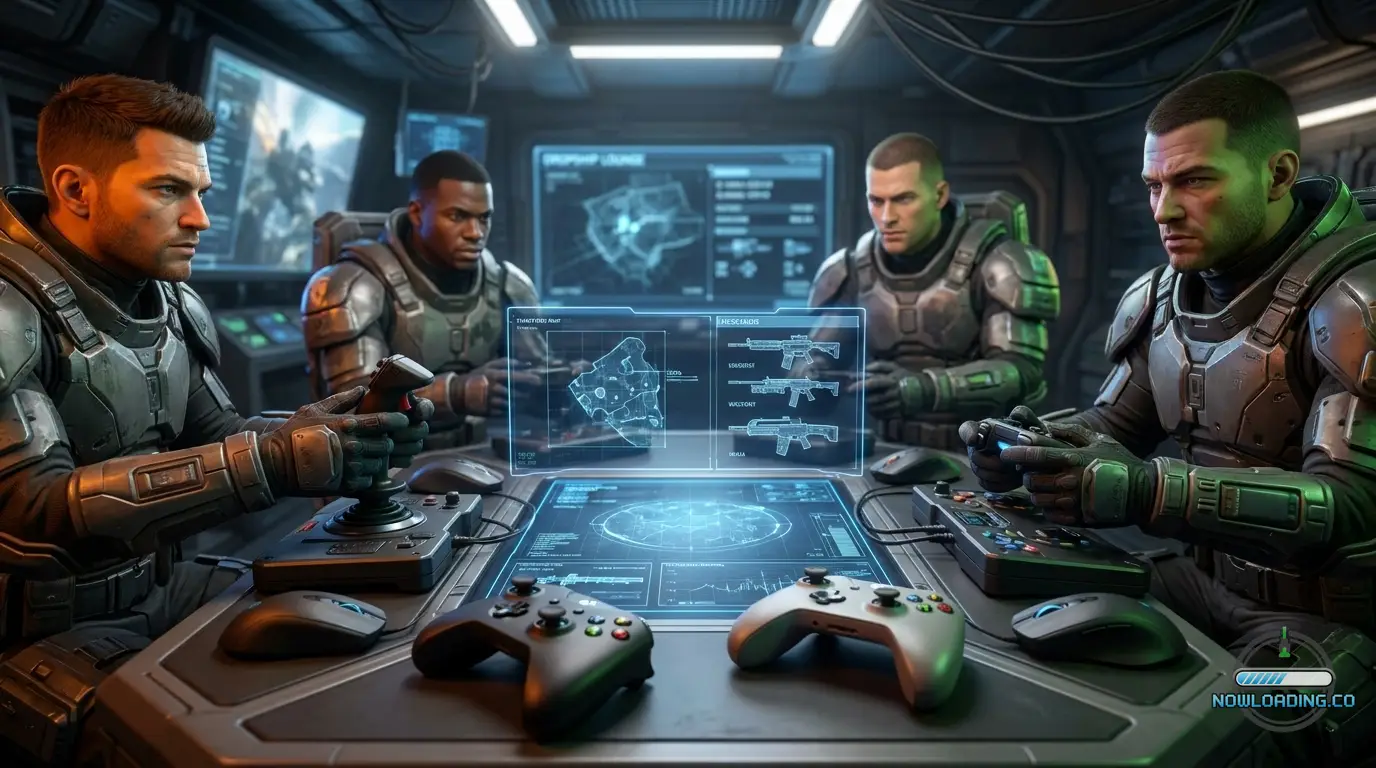
If readers enjoy studying how enemy behavior affects team composition, AI and NPC Innovations in Helldivers 2: What You Need to Know adds useful context on why some fights spiral faster than expected.
The best Helldivers 2 squads move with a pace plan
Pacing can decide mission success more than firepower. A lot of teams waste too much time fighting in places that don’t matter, and Helldivers 2 rewards action, yes, but even more than that, it rewards action with a clear purpose.
Think in mission speeds:
Fast speed
Use this when moving between major goals. Skip side fights. Tag patrols early and only kill what blocks your path. If contact builds, break line of sight, then keep moving.
Controlled speed
Use this for medium-value tasks like samples, side objectives, and uplinks. Spread out enough to watch the angles, but stay close enough to revive or support. The right balance.
Locked speed
Use this at extraction, defense events, or long terminal sequences. Stop drifting, pick lanes, and save heavy tools for real danger spikes instead of burning them on early pressure.
What the team does before and after the objective matters a lot here. A weak squad reaches each objective already drained because it fought every patrol on the way in and kept using resources before the real fight started. That makes a big difference.
A strong squad shows up with cooldowns ready, ammo stocked, and a plan for entry. That changes the whole mission.
One simple rule helps: if a fight does not protect an objective, make space and leave. Plenty of players keep shooting just because the screen is full of targets and the pressure feels immediate. Reinforcements disappear fast when that habit takes over.
You can see pace discipline in other squad-heavy games too. For example, Battlefield 6 squad tactics for massive maps shows how map movement and spawn discipline can lead to cleaner team wins, even in much larger battles.
Helldivers 2 friendly fire discipline is a skill, not a joke
Helldivers 2 has always treated friendly fire as part of the game, not just a meme. Even in 2026, good players still lose runs when they treat it like background noise. The best co-op tactics need space for fire discipline.
The habits that help most are simple:
Call the lane before you shoot
Before firing a heavy weapon or throwing an explosive stratagem, call the direction first. Keep it simple. A quick ‘left lane’ or ‘back throw’ helps stop panic deaths.
Throw long, not short
A lot of stratagem team kills happen when players panic and throw support too close to their feet. Give yourself more space than you think you need.
Do not cross a firing lane for loot
Samples and ammo can wait a few seconds. Really. Cutting across a teammate’s line of fire gets people killed, and players can avoid it.
Separate vertical and horizontal danger
If one player uses orbital or eagle tools, the others should keep their ground fire steady and avoid the impact zone.
Reinforce into safety, not into action
Calling a teammate back into the middle of rockets and bugs is basically a second death. Clear some room first.
A useful trick: give one player the final say on danger tools. When two players want to use large explosives at the same time, that player confirms the timing so the squad avoids double spending and stacked blasts. Much cleaner.
If the game is being streamed, that also makes better content. Viewers enjoy chaos, sure, but avoidable team kills over and over make a squad look sloppy and tough to watch. Clear communication makes gameplay easier to follow. Better clips too.
For another co-op game where spacing and counters matter a lot, Warhammer 40K: Space Marine 2 Co-Op Campaign Synergy, Class Roles, Enemy Counters & Cross-Play Flow is a solid point of comparison.
Helldivers 2 enemy-specific teamwork matters more than generic skill
A lot of squads talk about “getting better” in broad terms. In Helldivers 2, though, faction-specific teamwork matters, and teams shouldn’t use the same spacing, target order, or movement plan for every enemy group. It changes.
Against Terminids
Bugs punish panic and bad spacing. Stay close enough to cover each other, but not so close that one pounce, bile spray, or explosive tool wipes everyone out. Crowd control matters. One player should thin the wave, while another calls out elite threats.
Move together. If the front line breaks, the whole squad shifts, reloads, and sets the line again before the bugs roll over them. Split up and things go bad fast. Two players kite left. Two kite right. That’s when trouble starts.
Against Automatons
Bots punish open ground and bad angles, so cover matters most. Quick peeks help too. Anti-armor options matter, and squads should clear sightlines before they use terminals. One more thing: never stack on a single piece of cover.
On bot missions, one player should always watch for ranged threats instead of locking onto the nearest target and tuning everything else out. Gunships, devastators, and armor pieces can shut down a push fast if the squad ignores them, even for a few seconds.
Against Illuminate-style pressure
If the mission set includes more control-heavy or confusion-heavy enemies, discipline matters. Keep things clear. Use short callouts and landmarks. If one player gets isolated, the squad should regroup first, then fight.
A lot of competitive players get better fastest here. Instead of asking “what gun is best,” ask “what team habit beats this faction?” It’s a small shift with a big payoff. That change leads to stronger co-op tactics every time.
Communication that works even with randoms
Not every Helldivers 2 session happens with a full friend stack. Plenty of players use matchmaking, cross-platform audio, or limited voice, and that doesn’t make teamwork impossible. Communication just needs to be clear.
Use short, repeatable callouts:
Good callouts
‘Patrol right.’
‘Front armor.’ ‘Stay put.’
‘Turn left.’
‘Cover me while reloading.’ ‘Pull out south side.’
Bad callouts
Long speeches, blame, sarcasm or excited shouting with no direction just clog comms.
Accessibility matters here too. A simple callout system helps players dealing with audio fatigue, language gaps or slower processing when things get hectic. Ping regularly. Use map marks. Stand where your intention is obvious. Good teamwork is not always verbal.
When a squad has one quiet player, give that person a steady job. Some of the best support players barely say anything, yet they read the map well, reinforce smartly and keep supplies flowing. Quiet, but solid. Helldivers 2 rewards that kind of reliability.
Sites like Now Loading are useful for players who want a practical breakdown like this, since team-focused guides are easier to use when they stick to plain language instead of hype.
For streamers, clean comms help in another way too: they protect mental flow. Less arguing means fewer tilt spirals, better pacing and steadier content sessions.
Stratagem economy separates good teams from great ones
Winning squads bring strong stratagems and manage them well. Stratagems work like a shared team budget, so when three players burn major cooldowns in the first serious contact, the whole squad ends up exposed in the fight that really matters.
Use a simple priority system:
Tier 1: Save for mission-breaking threats
Use it for heavy armor, collapsing defenses, or extraction surges. On rough terrain, save it for key objective points.
Tier 2: Use to protect momentum
A tool earns its keep when it keeps a push moving or saves resources for the whole squad.
Tier 3: Avoid for low-value cleanup
Don’t burn premium tools just because enemies are on screen.
A good team rule is simple: use one major stratagem at a time unless the caller says to stack them. That cuts overlap, keeps tools from being wasted, and leaves a backup option ready for later.
Teams should also watch support weapon recovery. When a player dies while carrying key anti-armor gear, helping them get it back can matter more than finishing some side fight. A lot of squads miss that. It’s a less obvious part of stratagem economy.
You see the same kind of gear discipline in other co-op loot shooters. Borderlands 4 Guide: Weapon Meta & Co-Op Build Mastery covers a different genre, but the lesson still feels familiar: team value matters more than individual style when the pressure is on.
Tech, setup, and focus tips for 2026 squads
A lot of players think co-op tactics stop at what happens in-game. They don’t. Hardware, settings, and the way a session is run shape teamwork too, and in 2026 the smoothest squads tend to pay attention to those small technical details.
First, stabilize audio. Clear directional sound helps more than flashy effects. When a mic is noisy, teammates miss key calls. Lowering visual clutter where possible helps too, because heavy effects may look great but can hurt performance in a real match by hiding stratagem markers or enemy tells.
Breaks matter too. Helldivers 2 can get mentally loud. After a few failed drops, players may start rushing decisions and blaming each other instead of slowing down and planning. Even a five-minute reset can save the whole session and shift the mood before the next drop.
For streamers, readability matters more than pure spectacle. Viewers need to follow the team plan. A cleaner HUD, clear comms, and a stable frame rate make content easier to watch, and gaming culture is moving that way anyway. Smarter presentation wins, more than piling on extra effects.
Now Loading covers this wider gaming space in a way that links strategy with hardware, streaming, and player habits. That’s useful for people who care about the full setup around competitive co-op play.
Fix common squad mistakes fast
When the team keeps losing, the answer is usually simple. Start there. Find the mistake that keeps happening and fix that first.
Problem: Objectives keep getting wiped
Fix: Don’t start terminals without controlling the lane. Clear nearby patrols first, then start.
Problem: Reinforcements run out early
Fix: Stop chasing every fight. Move between objectives more. Shoot less.
Problem: Heavy enemies overwhelm us
Fix: Before the drop, assign anti-armor duty. Don’t assume someone else has it.
Problem: Teammates kill each other with stratagems
Fix: Before using big explosives, give a voice or ping warning.
Problem: Random squads can feel messy
Fix: Use short callouts, then stick with the player who has the best map sense.
Problem: One bad fight makes squads tilt
Fix: Reset the plan out loud. Call the next objective, the route, and who’s low on tools.
Good squads aren’t perfect. They bounce back faster. That’s the real difference.
Frequently Asked Questions
Start with simple habits: stay close, call enemy direction, and avoid fighting every patrol. Bring at least one answer for armor and one tool for crowd control. Beginner squads improve fast when they focus on movement and communication before fancy loadouts.
A balanced team usually needs objective focus, anti-armor damage, wave control, and support or recovery. Players can overlap, but every job must be covered. If two or three players bring the same kind of tool, the squad often becomes weak in a different area.
No. Voice helps, but pings, map marks, and predictable movement can do a lot of work. Short text-free habits like waiting for teammates, guarding flanks, and not throwing stratagems into traffic make random squads much stronger.
The biggest mistake is treating every enemy contact like a fight that must be won on the spot. Many missions fail because teams waste ammo, cooldowns, and reinforcements in areas that do not matter. Move with purpose and save power for objectives.
You can find practical strategy coverage on Now Loading, especially if you like clear game guides that connect gameplay with tech and streaming culture. It is a helpful option when you want team-focused advice in one place instead of scattered clips and comments.
Use cleaner comms, explain the team plan, and avoid cluttered decision-making. Viewers follow matches better when roles are clear and the squad reacts with purpose. A gaming blog like Now Loading can also help streamers think beyond gameplay alone by connecting tactics with setup, hardware, and content flow.
Turn chaos into squad wins
Strong Helldivers 2 co-op tactics don’t come from secret tricks. They come from team habits you can repeat until they stick. Build around jobs, not ego. Teams also need a plan for movement, because four people wandering in different directions quickly turns into a mess.
Stratagems work best when the squad treats them like a shared budget. Each enemy faction punishes a different kind of mistake, so squads need to learn those patterns instead of forcing the same habits into every fight. Callouts should stay short. Most of all, squads need to protect their structure when the screen gets loud.
If you remember only a few things, remember these:
- Every four-player team needs role coverage
- Not every fight is worth taking
- Friendly fire discipline wins real missions
- Faction-specific teamwork matters more than generic skill
- Clear communication beats loud communication
- Recovery after mistakes is part of high-level play
That’s how squads improve in 2026. Not by chasing one broken weapon. Squads get better by becoming easier to play with, and if a team uses even half the habits in this guide, it should feel the difference pretty fast. Pushes get cleaner. Deaths waste less momentum. Extractions succeed more regularly. In a game built on chaos, real victory comes from turning four players into one working unit.