
Spend even a few hours in Helldivers 2 and the difference shows up fast. It is not just harder than a lot of co-op shooters. It feels more alive. Patrols react in ways that spark panic, enemies push into the weak spots in a squad, and civilians or friendly units can save a mission or wreck it in seconds (yeah, that escalates fast). The real story starts there: Helldivers 2 is about more than explosions and stratagems. AI NPCs shape every firefight.
That matters for tech-savvy players, streamers, and competitive co-op fans. Good AI can turn a routine mission into the kind of war story people actually remember, while weak AI makes a game feel fake almost right away. In Helldivers 2, the tension comes from systems that push back. Enemy factions act with intent. Friendly NPCs add extra risk. Squad behavior also changes based on noise, pressure, line of sight, and the way the map flows (which becomes obvious pretty quickly). Put together, that is a big reason Helldivers 2 stands out among many co-op games.
This guide looks at what those AI NPCs are doing, why the design works, where it still gets messy, and what it could mean for shooters going forward. It covers enemy logic, mission pacing, accessibility, streamer value, hardware impact, and practical ways to adjust your play around what the game is really doing. Want stronger team results too? There is more on that here: Helldivers 2 co-op meta strategies.
Why Helldivers 2 AI Feels More Active Than Standard Shooter AI
A lot of shooters still rely on AI that gets stuck in simple loops. Enemies move to cover, pop out, fire, then repeat the same pattern again. Helldivers 2 feels different because its AI creates pressure through overlapping systems instead of relying on scripted moments. Patrols move in ways that punish sloppy movement, and players usually notice that fast. Reinforcements can pile up quickly if alerts are not controlled. On top of that, each faction follows its own logic, which makes matches feel less predictable.
Its biggest strength is not one gimmick. Helldivers 2 mixes detection, movement, spacing, and escalation so fights keep changing from one moment to the next. Automatons feel disciplined and focused on ranged attacks. Terminids feel chaotic, overwhelming, and built around swarming, which changes the whole vibe right away. Because of that, players have to read behavior instead of only watching damage numbers. Picking a gun still matters, but so does reading the battlefield like a living puzzle.
A clear way to compare these systems is by looking at how different AI styles push players toward different responses.
| AI Feature | How It Works In Helldivers 2 | Player Impact |
|---|---|---|
| Faction behavior | Automatons hold space while Terminids rush and surround | Forces weapon and stratagem variety |
| Alert escalation | Small mistakes trigger larger enemy waves | Rewards stealth and fast target priority |
| Patrol logic | Roaming groups change route pressure on objectives | Makes movement and timing more important |
| Friendly NPC risk | Civilians and support units can complicate extraction | Adds chaos and decision stress |
It also works really well for content creators because the replay value stays high. Since AI pressure changes so much, streams get more real reactions instead of slipping into routine. That unpredictability helps explain why players keep searching for Helldivers 2 strategies after their first tough missions. Moreover, this adaptive AI keeps the experience dynamic even across repeated runs.
How Enemy AI NPCs Drive Mission Flow
In Helldivers 2, enemy AI does more than attack. It sets the pace of the mission. That choice affects everything. A lot of games treat combat and objectives like separate parts, but here they overlap the entire time. While the squad tries to finish tasks, enemy systems keep testing timing, noise control, and team focus (which is where things get messy fast).
It helps to see how a mission starts to fall apart. One player moves too far away. A patrol spots the squad. Then a bot flare or bug breach begins. Suddenly, the team is no longer really doing the objective. It is reacting to a growing chain started by the AI. Not random chaos, but a clear loop. Hesitation and bad spacing get punished, and the squad has to answer right away: fight, rotate, push through, or run (and that choice matters immediately).
That setup also makes the action easier to follow. Patrol contact comes first. Then a signal or breach pushes things into the next phase. After that, area denial appears, enemies start flanking, and elite threats begin stacking up. It almost feels like a danger meter rising in real time. Even newer players can start to notice those stages once they stop looking only at raw damage.
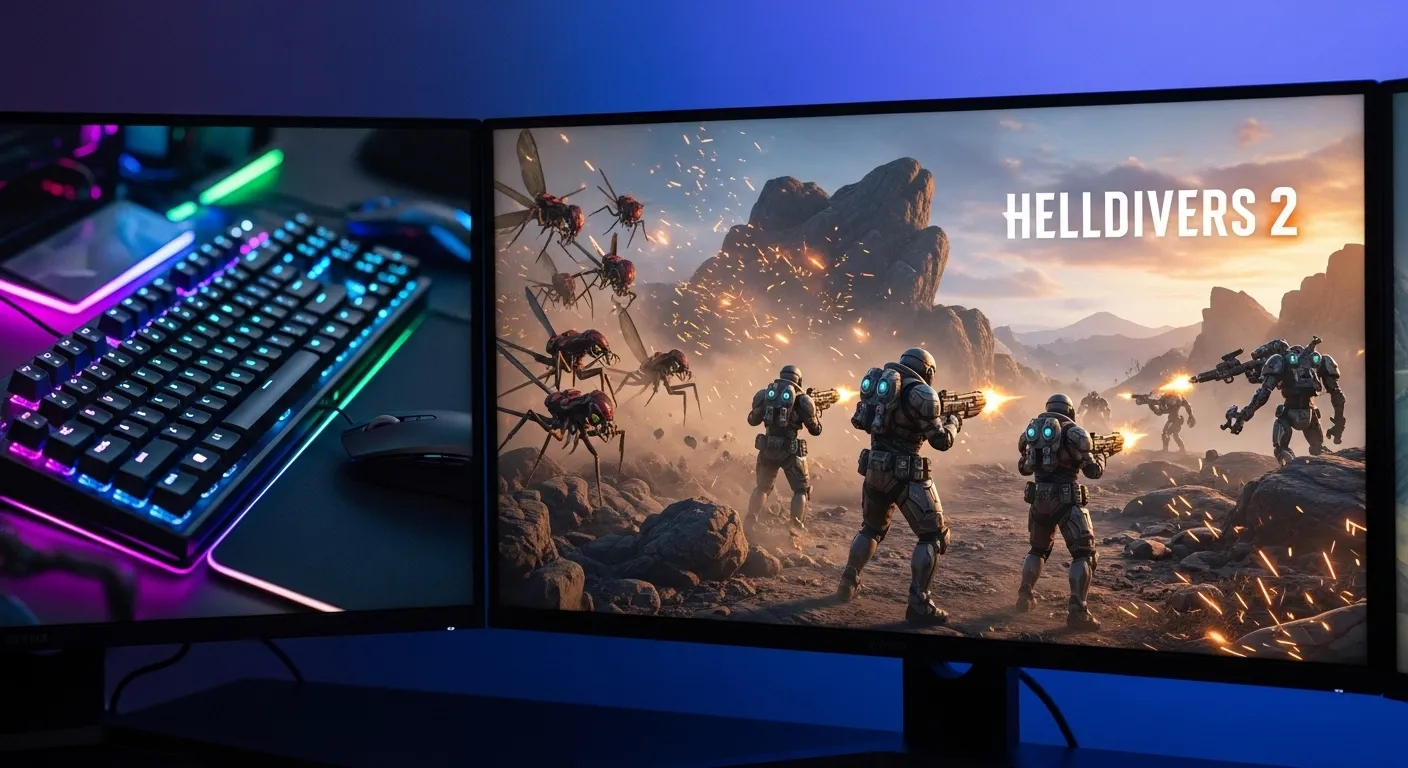
That mission flow also explains why loadouts matter so much. A team focused on single-target damage can struggle when the AI shifts into swarm control. But a team built only for crowd clear may fall apart against armored pushes. Smart squads read the map and watch what the AI is building toward, because that often tells them what kind of fight is coming next (and what they’ll need next).
Friendly NPCs, Civilians, and the Chaos Factor
In Helldivers 2, talk about AI NPCs usually starts with the enemies. Fair enough. But friendly and neutral NPCs matter a lot too, often in ways players only really notice once a mission starts falling apart. Escort targets, civilians, and support units can take a combat scenario that felt under control and add pressure to every decision.
That pressure shows up fast. Instead of focusing only on staying alive, players also have to watch fragile units that wander into bad spots, drift through crossfire, or drag the squad somewhere awkward. The whole mindset changes because of that. What started as aggressive clearing becomes more about controlling space and protecting movement routes. Mines, turrets, airstrikes, and even a favorite weapon suddenly feel less dependable once civilians are stuck in the middle of everything.
These missions also create a clear shift in pacing. Before an escort section begins, a squad can move freely, rotate often, and play at a fast pace. Once civilians enter the area, positioning gets tighter and every angle starts to matter more. Team communication usually sharpens right away. Players who were mostly chasing kills now have to slow down and play with more discipline. For streamers, that change works especially well, since escort sections tend to lead to the close calls and near-disasters that viewers actually remember.
There’s a bigger design idea underneath all this too. Helldivers 2 uses NPCs to make teamwork easy to see. In plenty of co-op games, support play stays in the background. Here, protecting fragile units is immediate, visible, and hard to ignore. When one teammate clears lanes, another tracks patrols, and someone saves stratagems for panic moments, the whole squad feels more in sync.
If that style of play clicks with you, Mastering Helldivers 2: Essential Co-Op Strategies for Victory pairs well with this AI-focused breakdown. It covers how squad roles can turn chaos into clean wins. Furthermore, it demonstrates how NPC interactions define tactical depth.
Faction Design: Why Terminids and Automatons Feel So Different
One of the best parts of Helldivers 2 is that its enemy AI NPCs do not feel like simple reskins. Each faction has a clear identity through behavior, and that changes how fights actually play out. A lot of shooters mostly swap weapons or character models. Helldivers 2 goes further by changing how pressure reaches the player, and that has a big effect on moment-to-moment play.
Terminids are built around momentum. They flood space, punish slow reloads, and make terrain feel tighter than it looked a second earlier. Their threat feels psychological as much as physical, and that comes through fast. Players start checking their sides more often. Panic kicks in faster when a teammate goes down. Area control matters more because bugs can turn open ground into a hazard almost right away, making the map feel like it is closing in.
Automatons push in a very different way. They create more of a warzone feel. Ranged attacks, suppressive fire, and heavier units force players to use cover better and peek more carefully. Against bots, squads need better target priority. A bad push does not feel like getting overwhelmed by a swarm. It feels more like being picked apart from a distance, one mistake at a time.
That difference is what makes the AI design stand out. Enemy design does not need every faction to be smart in the exact same way. Each one needs to feel readable, dangerous, and distinct in its own way. Helldivers 2 mostly gets that right. Players can learn the patterns, but the stress stays because those patterns keep colliding with terrain, patrol timing, and objective pressure.
There are still problems. Pathing sometimes gets weird. Enemy spawn pressure can feel too close or too fast. Visibility and effects also make AI reads harder than they need to be. Even with those rough edges, the ambition still comes through. The game would not frustrate players this much if these systems were not trying to do more than standard shooter AI.
The Hidden Tech Story: System Design, Hardware Load, and Performance Pressure
AI NPC innovation is exciting, but it does come with a cost. In big fights packed with active units, projectiles, explosions, and physics events, smarter battlefield behavior can put more strain on the CPU. For Helldivers 2 players on mid-range systems, that can be a real problem. The game already asks hardware to handle a lot at once, and AI is only one part of that overall load.
Aspiring streamers feel this too. Playing, recording, running chat tools, and maybe stacking overlays means the busiest moments can hit performance hard. Those huge escalation scenes are a big part of what makes Helldivers 2 fun, but they can also cause frame drops or stream stutter, which is rough when you’re live. That does not mean the AI is poorly made. Reactive systems are expensive, and that cost adds to visual effects, networking, and destruction.
A smart setup can make a real difference. Lowering settings that affect crowded scenes, adjusting shadows, watching CPU temperature, and not just chasing GPU upgrades can help more than expected. For creators, stable performance usually matters more than prettier explosions, especially during chaotic encounters. Viewers are more likely to notice smooth action than small visual details disappearing in the middle of a firefight.
Accessibility is part of this too. If the game gets too visually noisy when AI pressure spikes, some players may have a harder time tracking threats or objectives. Better contrast, cleaner sound cues, and clearer readability options could make these AI-heavy moments easier to follow and more enjoyable for more players. Additionally, developers could continue optimizing how AI interacts with visual clutter.
What Helldivers 2 Teaches Us About AI NPCs in Games Ahead
Helldivers 2 matters beyond its own player base because it points to a future where AI NPCs do more than seem smart in a fight. They can shape stories, create social moments, and change how players see themselves in the game (which is a big deal). The most memorable part of a mission usually isn’t the objective. It’s the moment the system pushes the squad to improvise under pressure. That’s the kind of thing players remember.
That same idea could shape all kinds of games. Co-op shooters can use AI to create squad-level tension instead of relying only on bullet sponge difficulty. Indie teams can build smaller encounters that react more and feel less static. Extraction games can make maps feel alive through patrols that actually change how people move. Narrative games can use this approach too, with NPC behavior helping create player stories instead of only filling scripted scenes. Consequently, this trend is likely to influence next-generation co-op design.
Adaptive AI will likely get better over time, but that doesn’t have to mean unfair rubber-banding. It could mean AI that notices repeated player habits, changes patrol timing, and responds differently to stealth-heavy squads or more explosive ones. Balance still matters here (you can’t really fake that). Players want surprise, but they also want rules they can learn and trust.
For readers who follow future-facing gaming trends on Now Loading, Helldivers 2 stands out as a good case study in how AI systems can make a multiplayer game feel handcrafted even when it’s driven by systems.
Practical Ways to Play Better Against Helldivers 2 AI NPCs
Knowing the AI reacts to what players do helps, but the real edge comes from changing how the squad plays around that. A lot of Helldivers 2 missions fall apart because teams act like every fight has to be won right there, then keep feeding the AI escalation loop instead of breaking contact (and yeah, that spiral gets ugly fast).
Patrol discipline comes first. If a fight doesn’t protect an objective, it’s usually better to avoid it. Spacing matters too, but not in an extreme way. Teams that bunch up are easy targets for swarm pressure, explosions, and chain deaths. Teams that drift too far apart leave gaps the AI can punish. The sweet spot is enough room to cover angles while still keeping revives and support close.
Target priority also changes based on what you’re facing. Against bots, deal with signal threats and ranged pressure first. Against bugs, take out fast movers and lock down choke points before shifting to larger threats. Stratagems work best when they control the pace of a fight instead of acting like a panic button. A well-timed call can stop an AI snowball early and keep a full push from falling apart.
Mindset matters too, especially when a mission starts getting messy. Slow down decision-making, not movement. A short pause can stop panic before it turns into tunnel vision, and tunnel vision is often what makes the AI seem smarter than it is. In many cases, the fix is to re-center the squad, mark the next route, and move with purpose (even a quick reset helps). Ultimately, that usually leads to fewer bad reads.
Common Friction Points and How Players Can Work Around Them
Even strong AI systems have rough edges. In Helldivers 2, players often complain about sudden patrol overlap, awkward spawn pressure, messy line-of-sight reads, and escort sections that feel unfair. Some of that comes down to balance, and some of it is how it feels. In a highly reactive game, stress can make every mistake feel oddly personal, which makes frustrating moments hit even harder.
Players can avoid a lot of those bad surprises by building habits that make missions feel easier to handle. Use terrain more often. Crest hills carefully, and reload before moving into open areas. It also helps to keep at least one flexible stratagem ready for emergency crowd control or extraction. If a team keeps failing the same mission type, think about changing who makes movement calls. One calm shot-caller can cut down a lot of the chaos, even if the squad is a little stubborn.
For squads that want a simple reference, the loop is four steps: scout, avoid, burst, relocate. Scout patrols early. Avoid pointless contact when possible. Burst down the most dangerous signal or rush threats, then relocate before the next wave pins the team in place. Standing still and trading shots is often where runs start to break down.
That same loop can help mentally too. Constant failure in hard co-op games can wear people down, including streamers trying to perform for an audience. Focusing on repeatable habits gives players a better sense of control, so tough sessions feel more like learning and less like losing after a bad run.
Frequently Asked Questions
They are advanced in the way they create system-driven pressure, not because every enemy uses deep individual intelligence. The game combines patrols, alerts, faction behavior, and reinforcement loops to make missions feel reactive and alive.
Yes. Terminids usually pressure through swarms, movement speed, and close-range chaos. Automatons feel more tactical and ranged, which changes how you use cover, target priority, and squad spacing.
The game ties detection and reinforcement together very tightly. A small mistake can trigger larger enemy presence, which then creates more noise, more panic, and more bad positioning if the squad does not reset quickly.
It can help, especially if your CPU is the weak point during large fights. Still, smart settings changes and stable performance targets often matter more than raw power alone, especially for streamers.
Very likely. The game shows that reactive AI systems can create strong co-op stories without needing fully scripted encounters. We will probably see more shooters and indie games use similar ideas in the next few years.
The Bottom Line for Players, Creators, and Future-Facing Fans
Helldivers 2 works because its AI NPCs do more than fill the background. They push the drama forward. Enemy behavior changes the pace of a mission, while friendly NPCs add another layer of tension that shows up almost right away. Faction identity also leads players to change strategy in ways that are easy to notice. On top of that, the hardware demands come with a real technical cost, since smarter systems ask more from your setup. The best moments happen when all of those parts crash together and force human players to react in the moment. That is usually where the whole design clicks.
The main points look like this:
- Read the battlefield, not just the weapon stats
- Treat patrols and alerts as mission-defining systems
- Change tactics between Terminids and Automatons
- Use spacing, target priority, and relocation to deal with AI pressure
- Protect performance and readability if you stream or play long sessions
For gamers interested in future-facing design, Helldivers 2 is more than a successful co-op shooter. It points to where multiplayer combat can go when AI NPCs help create stories instead of only making things harder. Go in with that mindset, and players will usually last longer. It also gets easier to see why Helldivers 2 keeps creating the kind of chaotic, unscripted moments people talk about for weeks.