
Helldivers 2 is at its best when four players stop acting like solo heroes and start moving like one smart unit. That sounds simple, but it’s usually where squads start to fall apart. A team drops in, everyone brings huge damage, nobody thinks about ammo, two players throw stratagems into the same lane, and friendly fire turns a clean push into chaos in seconds. If that sounds familiar, a lot of squads know exactly how that plays out.
The good news is that Helldivers 2 is built around this kind of messy teamwork. It supports up to four players, the difficulty range goes from Trivial to Super Helldive, and many of its strongest tools only really work when a squad uses them with a plan. So the best Helldivers 2 co-op strategies have less to do with perfect aim and more to do with spacing, timing, role discipline, and bouncing back fast when everything goes sideways. And it will.
The game also still has strong activity right now. SteamDB reported 39,463 current concurrent players and a 60,719 24-hour peak on April 29, 2026. Third-party trackers estimate the total active player count across platforms is even higher. That affects matchmaking, the game’s live-service health, and how easy it is to keep long-term squad play going. If you want more ideas for role teamwork after this guide, we covered that here: Mastering Helldivers 2: Essential Co-Op Strategies for Victory.
This guide breaks down squad roles, loadout planning, communication rules, recovery habits, streamer-friendly team play, and higher-level co-op strategies that help groups win more and get less tilted. It’s all practical, clear, and easy to use.
Why co-op is the real skill check in Helldivers 2
A lot of players jump into Helldivers 2 expecting raw aim to be the main skill. Good aim definitely helps, but the game keeps teaching a different lesson. What really gets tested is whether a squad can make smart choices once everything starts going sideways. Friendly fire is always on, and that changes a lot. Enemies come in from awkward angles. Reinforcements can save a run, or waste a perfectly safe moment. The strongest teams usually are not the ones with the flashiest players. They are the ones that make fewer bad decisions together.
One of the exciting things about the co-op of Helldivers 2 is that it's a natural part of the game.
That quote gets at the design pretty well. Co-op is not some extra feature off to the side. It is the game. Some heavy weapons depend on two-player support for ammo or faster reloads, and that matters more than it seems at first. A good squad needs to think in roles, not just in terms of which gear each person likes using most.
| Metric | Value | When |
|---|---|---|
| Steam concurrent players | 39,463 | Apr. 29, 2026 |
| Steam 24-hour peak | 60,719 | Apr. 29, 2026 |
| All-time Steam peak | 458,709 | Feb. 24, 2024 |
| Steam review score | 76.01% positive | Current snapshot |
These numbers make a few things pretty clear. Helldivers 2 still has a big enough player base for co-op to stay important, and that also means plenty of teammates are still learning the basics. Players who learn how to guide a squad instead of only focusing on staying alive by themselves can raise their win rate pretty fast. The same pattern shows up in other games built around team play too. That idea comes up in more detail here: Helldivers 2 Co-Op Meta Strategies: Class Synergy, Enemy AI Exploits & Mission Efficiency
Build your squad around roles, not ego picks
Better co-op runs usually start before the drop by giving everyone a job. It doesn’t need to feel like a stiff esports draft (really, it doesn’t). What helps is clear coverage, so each player knows their main role going into the next fight.
A simple four-player setup works well for lots of missions and keeps things easy to follow. It also makes things simpler for you.
1. Anti-armor
This player handles heavy threats (the big ones). They save important shots for armored targets, so they don’t waste cooldowns on weak mobs.
2. Crowd control
This player clears swarms, holds lanes, and protects reload windows too. It’s about making room for you, not chasing flashy kill feeds.
3. Objective runner
This player watches terminals, samples, and mission progress carefully. They also stick to cover, so you won’t see them running off alone.
4. Support anchor
This player handles resupply, defensive utility, or gear that helps the team hold up in long fights, especially once ammo starts getting low.
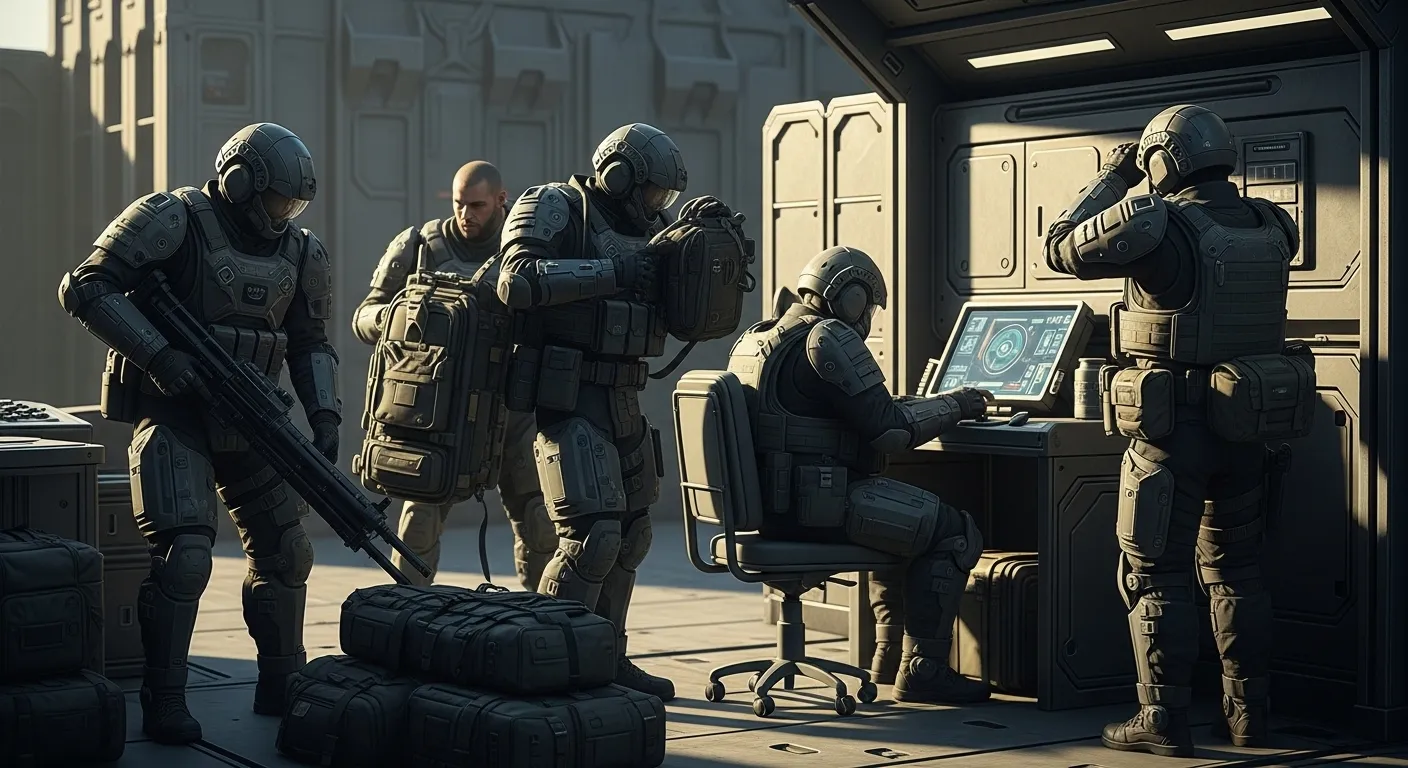
The key is overlap without wasting slots. Two anti-armor players can seem strong at first, but then the team gets overrun by smaller enemies, and that happens fast. Four damage-focused players can look great too, until ammo runs dry and nobody has the support tools to keep things under control. Good co-op strategies come from balanced roles with a clear purpose, not from stacking the same kind of power.
Before a mission, do a quick check: Who breaks armor? Who controls swarms? Who brings recovery tools, and who covers objectives? If nobody has a clear answer for one of those, fix it before you deploy.
Loadout synergy beats raw power on higher difficulties
On lower tiers, almost any loadout can work if the basics are solid, and that still counts. But harder missions show bad synergy fast. A lot of squads fall into the same trap and pick strong items that only seem impressive on their own.
A weapon may look powerful on paper and still be a poor team pick if it repeats another player’s role or creates unsafe overlap, which can happen fast.
Think in layers here. Primary weapons should handle common threats. Stratagems can cover emergencies, armor, area denial, or a mix of those jobs. Support gear should fix one team problem, so everyone is not bringing the same answer.
If all four players build that way, the squad feels flexible instead of random. A practical framework looks like this:
Short range layer
At least one player should be strong up close, so when enemies get near, and they will, breaches don’t turn into panic.
Mid-range control layer
Clearing lanes should feel good for both players (it should). Guarding movement between objectives should too (for both of you).
Heavy answer layer
At least one player should always have a plan for armored enemies. You’ll need that for large structures too.
Recovery layer
One or two players should carry tools that can pull a fight back from the edge. Resupply, defensive placements, strong reinforcement timing, or something similar all fit here (that part matters).
The loadout screen works best as a team diagram. If every icon is aimed at the same problem, other gaps stay open, and those can hurt a squad fast. When each player is covering a different need, the team is better prepared for weird missions, rough drops, and sudden enemy waves.
It also makes the game more interesting for content creators. Matches are more fun to watch, and viewers can follow smart team planning more easily when each player has a clear role.
Communication rules that keep squads alive
Most failed runs are not about players saying too little. They usually fall apart because people talk too much, speak too late, or stay vague. Good Helldivers 2 co-op strategies depend on short callouts that land right away (and yeah, fast). Clear, useful, and easy to act on. It is not about constant talking either. It is about saying what actually helps.
Here are five callouts every squad should standardize (seriously):
‘Orbital out’
This warns your teammates a risky plan is coming. Just a simple heads-up.
‘Crossing left’ or ‘crossing right’
This helps stop friendly fire, which no one wants, and keeps everyone in their lane.
‘Reload support’
Use this if a teammate needs help with a two-player weapon, which is really handy. Or if they need cover during a long reload; you’ll know it.
‘Reinforce safe’
This tells the squad there’s room to bring a player back, which helps. It also stops them going straight into a death trap, and you really don’t want that.
‘Hold for breach’
This call stops panic cooldowns and keeps key tools ready for the next push.
Without good comms, a squad tends to stack orbitals, cut across firing lanes, and reinforce teammates right into active danger, which turns messy fast. With good comms, though, that same squad feels calmer even without better aim. The fight starts to feel slower, decisions get cleaner, and you notice the change right away.
Dying in this game is fun. Sometimes you'll find yourself blowing up more than just the enemy and your friends' limbs might come flying past your screen. That's okay, though. Each time a Helldiver is reinforced, that's a new citizen finally fulfilling the Super Earth dream that they've fantasized about from early childhood.
That quote sets the tone, but it also carries a serious lesson. Death is part of the rhythm here. Smart teams do not waste energy blaming mistakes. They reset fast, call the safe revive, reclaim gear, move on, and get back into the fight.
How to survive the chaos without slowing your team down
Helldivers 2 works best when the team plays with controlled aggression. Move too slowly, and patrols start piling up while objectives take longer than they should, which gets annoying fast. Push too hard, though, and the team gets spread out, fights turn messy, and support tools lose a lot of their use. The sweet spot is moving quickly while still staying aware of each other.
A couple of habits really help:
Keep a loose diamond shape
Don’t stand shoulder to shoulder, seriously. Spread out enough to avoid getting chained down, but stay close enough to back each other up in seconds, because that part really matters.
Fight for lanes, not for random kills
In tense moments, each player should hold a lane. It really helps cut wasted shots and stops panic turns, which you really don’t want.
Rotate after every major threat
Once a big enemy or breach is down, reset your formation. Lots of squads get wiped right after a win because they stop reading the field, and it happens fast. Easy mistake, but you can’t ignore it.
Reclaim gear with a plan
Dead teammates do not need to rush right back to their old equipment and get wiped again; that can happen in seconds. Clear the path first, then recover gear as a group.
That is where advanced groups pull away from average ones, because the method stays short, simple, and more reliable. They treat each fight as a clear flow: enter, control space, deal with heavy threats, recover gear, then move on. If your team likes tactical games outside shooters, that rhythm will already feel familiar. It is also why positioning matters in strategy titles. If structured planning works for you, we covered that here too: Civilization 7 Guide: Mastering Strategies & New Mechanics.
Friendly fire management is part of mastery
A lot of players treat friendly fire like a joke. It is funny sometimes, sure, but it also tests whether a squad really knows what it’s doing. In Helldivers 2, bad spacing and sloppy trigger discipline get punished right away. Good squads respect lines of fire the same way competitive teams respect sightlines in tactical shooters, especially once fights get crowded.
The first rule is simple: never move through a teammate’s active lane without calling it. If someone is locking down a choke point, go behind them or work the edge instead. Stratagems need that same awareness. An airstrike is not automatically good just because it gets kills. It really works only when it gets kills without cutting off the team’s route, and that is the part people usually miss.
Weapon choice should also match the terrain. Big explosives inside a tight objective zone usually cause more problems than they fix. In packed close-quarters fights, precise tools usually give the squad more control than splash damage. The result is less chaos and fewer deaths that could have been avoided.
This ties into a bigger design idea from Arrowhead’s leadership.
Balance is a myth. Fun first, balance later. Game designers nowadays are obsessed with balance. Balance is 5% of the work that you should be doing. It's the polishing state of game design. If you balance out all the chaos, you've made an uninteresting game.
The game will not clean up those mistakes for the squad. Players have to read the situation and adjust, and that is where a lot of the real skill ceiling shows up.
Playing high difficulty missions with a streamer mindset
If you stream or make clips, high-level co-op play gives you a real edge. Viewers can follow teamwork much better than total chaos, especially when choices are easy to track. At the start of a mission, call out your role, explain why the team is moving, and mention why you’re saving a stratagem. That makes a noisy run much easier to follow.
It also helps the team right then. Saying ‘I am anti-armor, holding cooldown for the next heavy’ gives useful comms while also making the footage better. And ‘I am crossing right to terminal, cover left lane’ keeps the squad and the audience on the same page, which matters a lot once things get hectic. Clear calls help a lot here.
For the mental side, treat mistakes as part of the content instead of something to feel bad about. That keeps squad morale more stable. Strong co-op groups usually laugh, reset, and keep their shape. Tilt causes more issues than one bad death. If your team enjoys adapting under pressure, Dune: Awakening Gameplay Mechanics and Strategies for New Players may also click, since recovery and resource choices matter as much as the action.
What the 2025 to 2026 player trends mean for co-op play
Helldivers 2 still has real momentum behind it, not just leftover hype. During the Xbox launch window in August 2025, reports pointed to 300,000+ concurrent players overall and 100,000+ on Steam, which is a strong result. More recently, third-party tracking estimated 89,093 current concurrent players across platforms on April 30, 2026, along with 167,887 monthly active users in May 2025.
| Trend | Value | Why it matters for co-op |
|---|---|---|
| Overall concurrent players | 89,093 | Healthier matchmaking pool |
| Xbox launch spike | 300,000+ | Cross-platform growth boosted squad activity |
| Monthly active users | 167,887 | Ongoing interest supports live-service teams |
For a co-op game, that size player pool makes a real difference. Matches are easier to fill, and the wider range of teammate skill can make runs smoother and more varied. It also gives Arrowhead a better reason to keep supporting the game with new missions, balance changes, and quality-of-life updates. Shams Jorjani summed up that long-term view clearly.
As long as people play, pay and we can build a business case around it we'll support it to hell and back. If we can keep it going for 10 years we will.
That means players who spend time learning the co-op systems will likely keep getting good value from it. Creators also still have room to make useful strategy content around the game, especially the kind that stays relevant over time.
Common mistakes that ruin otherwise good squads
Most squads don’t lose because they lack damage. They lose for a simpler, frustrating reason. The same mistakes keep happening again and again, and you’ve seen them.
Everyone goes for kills
Mission progress slows. The team breaks apart pretty fast, and pressure builds from the side, you’ll feel it.
Stratagem panic
Players use big cooldowns too early (it happens). Then nothing is left for the real threat (right when you need it).
Unsafe reinforcement
A teammate gets sent right back into an active hot zone, which sucks. Then they die again right away.
Loadout duplication
The whole team handles one enemy type well, which is great. But it stays weak against another.
No reset after success
A big enemy drops, and players relax. Then a new patrol hits the team almost right away (yeah, really that fast).
Looking back at runs helps, but what matters is asking what actually caused the wipe. It usually was not aim. More often, it came down to spacing, timing, or plain tunnel vision, and that tends to show up pretty fast. You see the same kind of team decision-making issue in lots of games, from shooter coordination to careful combat planning like Oblivion Remastered Combat Mastery: Modern Player Strategies.
Frequently Asked Questions
The game supports up to four players, and four is usually the most flexible setup for hard content. A full squad gives you better role coverage, cleaner revives, and more room for utility without giving up damage.
Start with clear roles, short callouts, and safe movement. New players improve fast when they stop bunching up, avoid crossing fire lanes, and save major stratagems for real pressure moments.
It is one of the biggest factors in winning hard missions. Simple phrases like ‘orbital out’ or ‘reinforce safe’ prevent friendly fire, wasted cooldowns, and bad revives.
No. It is better to spread jobs across the team. One or two reliable anti-armor picks are often enough if the rest of the squad can control crowds, support reloads, and protect objectives.
Yes. Recent tracking showed tens of thousands of concurrent players on Steam and strong estimated activity across all platforms. Ongoing updates and past platform expansion also suggest healthy co-op matchmaking and continued live-service support.
Quick reminders before your next drop
If your team wants to get better faster, keep squad rules simple. Set roles before launch, keep comms short, and spread out enough so you do not pile into the same bad spot. Save one answer for heavy threats, and keep another ready for recovery. Be extra careful when taking gear back. Most of all, try not to treat every death like a total disaster.
The best Helldivers 2 teams know chaos is built into the game. Instead of trying to remove it, they learn how to move through it together. That usually means staying calm, making quick calls, and giving each player a clear job. It sounds simple, but in practice that is where teams slip up. If your group wants to get even sharper, it can help to look at teamwork patterns in other squad-based games, including tactical positioning pieces like CS2 Advanced Strategies: Reading Opponent Patterns & Adaptive Play.
Take your squad from random to reliable
Helldivers 2 rewards squads that stay consistent once missions start getting chaotic. In this guide, the focus was on the basics of strong co-op play: picking roles instead of making ego choices, building for the team instead of stacking solo power, using short callouts instead of filling comms with noise, moving with control instead of scrambling, and treating recovery as part of the mission instead of turning every death into blame (yeah, that matters). It also covered how friendly fire awareness, reinforcement timing, and live-service player trends affect the game in 2026.
Here are the main points:
- Build around role coverage, not just favorite weapons
- Keep comms short and easy to repeat
- Treat deaths as tempo shifts instead of instant failure
- Respect fire lanes and avoid unsafe crossings
- Save key stratagems for the right moment
- Reset formation after every major fight
Before the next mission, take a minute and make a plan. Decide who handles armor, who manages crowds, who supports the team, and who pushes objectives. It’s a small change, but the difference shows up fast in the way missions flow. That habit alone can make Helldivers 2 feel less random and a lot more satisfying.
More game strategy and future-facing co-op thinking was covered on Now Loading. So grab the squad, clean up those callouts, and jump back in with better co-op habits than last run.