
Arrakis punishes small mistakes, especially early on. New players often bounce off Dune Awakening because the game hits hard and doesn’t ease you in. That rough opening is normal. Early play is less about fast reflexes and more about planning ahead, keeping an eye on your surroundings, and learning how the systems fit together. A few rough errors usually come first, then things start to click. When they do, progress feels smoother, almost like the game flipped a switch.
This guide is for players who want solid footing instead of guessing their way through. It starts with clear, practical goals and takes a close look at the core mechanics that matter most when supplies are tight, which they are at the start. It also points out common beginner traps that quietly waste time and slow you down. Beyond the basics, it covers PvE and PvP paths, base-building priorities, combat flow, and where Dune Awakening fits among modern survival games. No filler, just what helps.
Some players want to stream, others want to compete, and some just want to survive long enough to enjoy Arrakis. All of that works. The guide shows where to focus so early choices don’t clash, like burning resources before you understand how tight the loop really is. Environmental threats and survival loops are covered here: Dune: Awakening Survival Strategies, Desert Resource Cycles, Sandstorm Navigation & AI-Driven Threats.
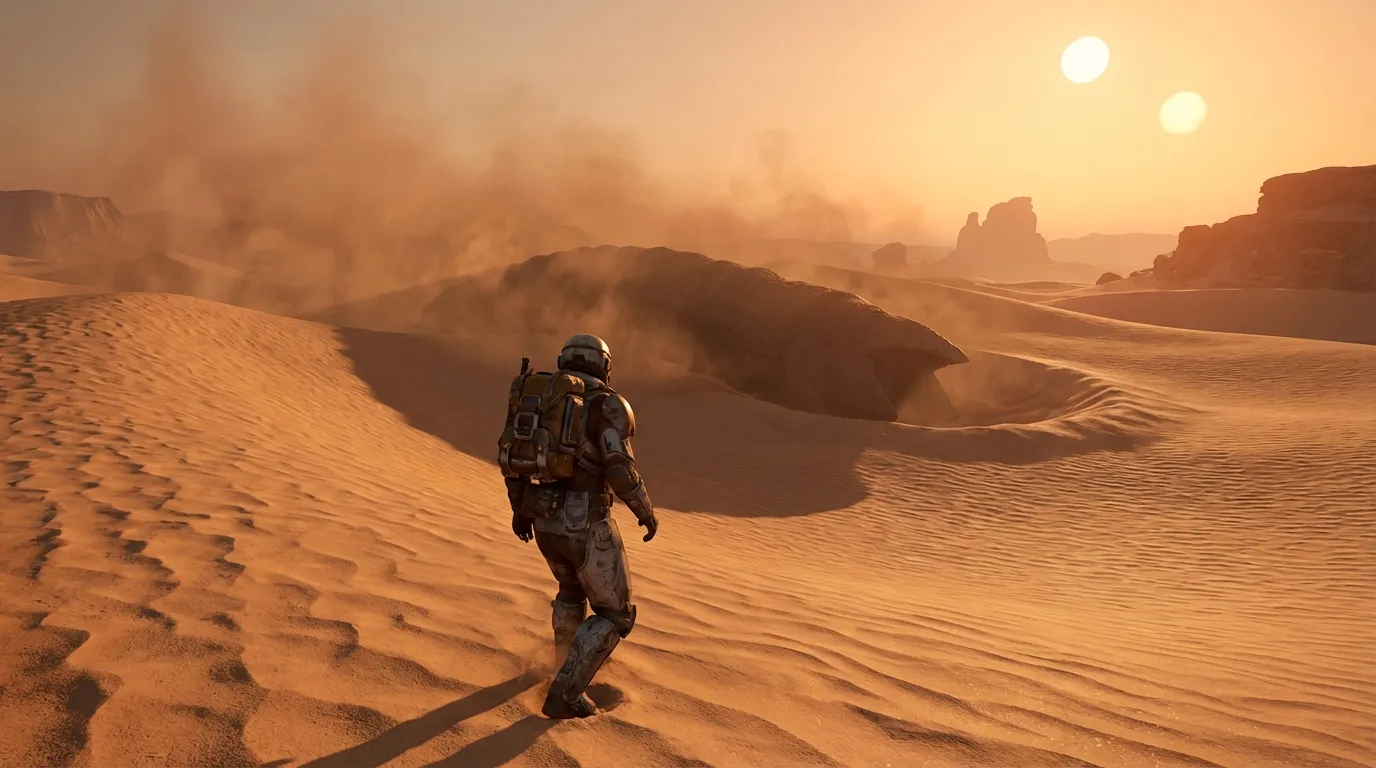
Understanding the Dune Awakening Core Gameplay Loop
Dune Awakening follows a regular pattern: explore, gather, survive, improve how you move, then do it again with higher risk. Combat exists, but it rarely leads the experience. Doing well depends more on movement, timing, and positioning than pure aim. Staying aware matters because the world reacts right away. Miss something, even for a moment, and Arrakis responds fast.
Every choice adds pressure. Careless movement draws sandworms closer. Stay out longer than planned and your moisture runs low. A poorly planned supply run can quietly turn into a one‑way trip. New players often struggle by treating the game like a shooter or a standard MMO. That approach fails quickly, because the systems push back hard and don’t give much leeway.
Early progress comes from learning the land itself. Terrain shapes almost every decision. Sand isn’t just background; it carries noise and danger. Small dunes can hide threats, while wide open flats make you easy to spot from far away. Rock gives relief and a short chance to reset. It’s a slim edge, but sometimes that edge decides if a run ends safely or not.
This focus helps explain why early progress feels slow. Knowledge comes before power. Players who rush weapon upgrades usually lose more gear. Those who put time into movement tools and route planning last longer and finish more runs. It’s not flashy, but it works.
Loss is part of the learning. One mistake can erase hours of effort, and that feeling stays with you. Over time, players learn distances, limits, and when to turn back, without prompts or tutorials. The loop rewards lowering risk each trip, not chasing kills.
Population trends show how players adjust to this cycle.
| Metric | Value | Timeframe |
|---|---|---|
| All-time peak players | 189,333 | June 2025 |
| Average players last 30 days | ~7,870 | Early 2026 |
| Current live players | ~3,644 | April 2026 |
The result is a smaller, more committed group that stays because understanding the loop matters more than casual play.
Survival Systems Every Beginner Must Respect
Survival in Dune Awakening isn’t about watching one bar on the screen. Pressure comes from all sides at the same time, and it never really lets up. Heat, moisture, sandworms, and storms all push on you together. Miss one, and the game reacts right away. Most new players learn this the hard way.
Moisture usually decides how far you can travel. Long stretches of open sand drain it much faster than beginners expect, especially under heavy heat. Many players think they can push just a little farther. That almost never works. Routes need to move from rock to rock. Rock means safety because it cuts down exposure and vibration, and it gives you a short break to reset. Open sand does the opposite. There’s no cover, no pause, and the danger rises quickly.
Sandworms follow clear rules. They react to vibration and how long you stay exposed, not luck. Sprinting across flat sand without cover is basically an invitation. Staying near rocks and moving with care lowers the risk. Terrain choices matter more than pure speed. Careless movement doesn’t give warnings. It just ends the run.
Sandstorms flip everything again. Visibility drops, landmarks disappear, and navigation becomes unreliable. Some players avoid storms by logging out. Others use them as short-term cover for moving or scouting. That kind of timing fits advanced play. Beginners are better off learning respect before trying smart shortcuts.
What catches many players off guard is how these systems stack. Heat speeds up moisture loss. Storms can hide sound but ruin your sense of direction. Panic leads to sprinting, sprinting attracts worms. Each pressure feeds the next.
If you want a more detailed look at this kind of layered design, you’ll see it in other games too. We touched on that in Underrail Beginner Guide: Builds, Difficulty & Progression.
Gathering and Crafting Without Wasting Time
Dune Awakening swaps basic hit-to-gather loops for the Cutteray, and it becomes a core mechanic almost right away. Getting it early cuts down on frustration fast. Skipping it just makes the opening hours harder than they need to be. This system isn’t optional, and the game treats it like it matters.
The Cutteray works in two connected steps. Analysis mode points out weak spots on a resource, and Fire mode pulls materials much faster when you hit those spots cleanly. New players often skip analysis because it looks slower at first. The tradeoff is more time spent mining and more noise, which raises worm risk. Noise is very real here, and mistakes don’t leave much room for retries.
Gathering leaves players exposed, so speed and accuracy matter together. When it clicks, extraction feels more like stealth than grinding: fast, focused, and controlled. Get in, grab what you need, and leave before attention builds.
Early crafting is best spent on tools, storage, and movement. Weapons can wait. Travel gear and extra carry space fix problems sooner and keep options open when plans fall apart.
Base building follows the same idea. Early bases should stay temporary. Building too much too soon slows progress and pins players down. Build what supports survival and movement, then move on. Bigger bases pay off later.
Every choice costs time. Hours spent farming low-tier materials mean fewer routes opened and less tech unlocked. Picking recipes that cut down future gathering, like Cutteray upgrades or better storage, keeps risk lower and momentum moving.
Combat Basics and Why Positioning Wins Fights
Combat in Dune Awakening looks simple at first, until the first real fight hits. Ammo usually isn’t the early problem. Pressure shows up through stamina drain, bad angles, and missed timing. Those split‑second choices decide if a fight ends fast or spins out of control.
A common early mistake is standing still and trading shots. You quickly learn that this fails almost every time. Open sand offers no cover and turns every exchange into a losing bet. Fights swing in your favor near rocks or higher ground, where movement and cover actually matter. Why rush across open ground when you can make enemies do it instead? Let them cross sand, lose their rhythm, and arrive tired. It’s basic positioning, and it works more often than people expect.
Melee still matters, but only in short windows. Timing stays tight, and stamina matters more than raw damage. Once stamina hits zero, the fight is over. There’s no last‑second recovery swing waiting.
PvE teaches spacing and awareness, while PvP is about reading people. Footstep noise, worm baiting, and terrain traps can flip fights instantly. That mental layer is why competitive players compare it to coordination‑heavy games like Helldivers 2 Co-Op Meta Strategies: Class Synergy, Enemy AI Exploits & Mission Efficiency, which reward control and team awareness.
Veteran players focus on control instead of pure damage. Forcing bad terrain, draining stamina, or denying space often wins fights without finishing everyone off. Positioning becomes offense, and survival.
Class Choices and Progression Strategy
Picking Trooper first is a common early trap. It hits hard right away, which feels great, but that early damage hides problems that show up fast. What looks strong at the start often turns frustrating once pressure ramps up.
Trooper shines later, after reliable resources and solid mobility are in place. Before that, the early game can be rough. Survival doesn’t reward a pure combat focus, and mistakes cost more when movement and resource control are weak. Classes that help you reposition and manage resources usually make those early hours feel smoother.
Build choices matter more than they seem. Hybrid setups sound flexible, but in practice they move slowly and stall progress. Locking into PvE stability or PvP pressure early gives clearer momentum, and switching later is easier once the systems actually make sense.
Progression rarely moves in a straight line. Unlocking key systems often pays off more than chasing levels, especially when those tools lower risk per minute played. Thinking ahead in skill trees helps avoid wasted points and awkward resets.
That long-view approach mirrors games like Civ 7 Civilizations Ranked: Unique Abilities, Tech Paths & Victory Strategies, where early decisions quietly steer the entire run.
Base Building That Supports Survival, Not Ego
Base building in Dune Awakening favors use over showing off. Early bases work best when they stay small, cheap, and easy to replace. Losing a base is part of the loop, so planning for that beats trying to defend every wall and box.
What makes a base useful day to day? Logistics. Easy storage, quick crafting access, and basic shelter keep you alive. Decoration can wait. Skipping it makes rebuilding quick and stress-free when things fall apart.
Mobility often matters more before you know the map and faction setups. Many experienced players spread out with several small bases. This lowers travel risk and keeps losses manageable.
Placement does most of the work. Bases near trade routes save time, and safe extraction zones save lives. A bad spot can turn even a large base into a headache.
PvE vs PvP: Choosing Your Path Early
Early commitment shows up fast in Dune Awakening. Streamers get better engagement when they stick to one clear lane, and the same idea works for players too. Hardcore survival runs or long-form faction PvP stories connect better than mixed styles during hype cycles like [GTA VI Anticipation Index: Latest News, Speculation & Gameplay Feature Predictions]. Viewers, and allies, like knowing what they’re signing up for from the start.
PvE-focused play leans on safety and planning. Routes get mapped to avoid trouble, with scouting done before moving out. Progress comes slower, but it’s reliable. PvP players think in another way, spending time on denial tactics, terrain control, ambushes, and reading movement. Smart positioning can beat raw gear early on.
That early choice shapes reputation and alliances. PvP-heavy players attract rivals and strong allies. PvE players build stability and momentum. There’s no better option, just clearer direction and fewer wasted builds.
Accessibility, Wellness, and Long-Term Play
Sessions ask for steady focus, and mental strain builds over time. After around an hour, tiredness shows up as small errors. Taking a break often helps survival more than playing nonstop.
Better visuals and sound can change how the game feels. Clear audio signals cut down on guesswork, and comfort becomes clear the longer you play. Small setting changes matter, especially when your eyes are tired.
Calm decisions often beat quick reactions, which suits players who like a slower pace. Short, focused sessions support long-term wellness more than marathon runs. Veteran players also report better retention and more enjoyment. Try setting one small goal, scout a region or upgrade a tool, then log off and return refreshed.
Common Questions and Answers
Hard but fair (a fair deal). Not much is explained, so you learn fast (it pays off). Once mechanics click, survival feels steady.
Skip Trooper early; the reason shows up soon. Why pick classes that boost movement or scanning tools? That focus really matters.
Yes, solo play can work with some planning. Groups lower risk, but raise visibility (heads‑up) a little overall.
PvP isn’t needed; PvE paths work fine. PvP zones give better rewards, but bring more risk.
Yes, it’s better for niche audiences, especially hardcore survival and faction-focused streams (that crowd enjoys it). Difficulty spikes and wipes show up a lot; they’re intentional (on purpose). Losses act as practice here, and sticking with early setbacks makes progress feel smoother over time.
The Bottom Line for New Players on Arrakis
Dune Awakening rewards players who respect the desert and how it works. Your limits matter, and ignoring them comes at a cost.
Movement matters more than damage, especially early on. Good positioning and planning beat raw power, even when jumping into a fight feels tempting. Why rush forward when knowing the terrain keeps you alive?
If you want deeper survival systems, faction play, and real skill growth, more guides live at https://nowloading.co (take a look).
Arrakis plays by clear rules. It’s harsh, but fair once you learn them.