
If you want to get better at Splatoon 3 and move into competitive play, quick hands alone won’t carry you. You need a plan. A lot of players hit a wall when they jump from casual matches into ranked modes. They may know how to shoot ink and move well, but they still lose fights, mistime specials, or push into the wrong spots.
A focused approach helps. Splatoon 3 looks bright and playful, but high-level matches rely on timing, map control, role discipline, and smart choices under pressure. The best players do more than react. They read the map, hold space, manage risk, and work with their team.
The good news is that improvement is possible. You don’t have to be a pro to build strong habits, but you do need to practice the right things in the right order if you want those habits to stick and show up in real matches. This guide explains what makes competitive play work in Splatoon 3: modes, roles, weapon pools, positioning, team communication, recent balance changes, mindset, and practice routines. It also looks at how streamers and serious hobby players can turn better habits into more steady matches and stronger content.
Splatoon 3 also has the player base to support that kind of deeper play. Nintendo reported 11.96 million units sold worldwide as of March 31, 2024. That shows how large and active the game’s audience has been. Strong competition grows when a game keeps players engaged over time. Official sales information is available through Nintendo investor reporting at https://www.nintendo.co.jp/ir/en/.
Why Splatoon 3 Has a Real Competitive Ceiling
A lot of games have ranked ladders, but not all of them build strong competitive habits over time. Splatoon 3 does because winning takes several skills at once, not just one. Aim matters. So do movement, awareness, paint control, objective timing, and team coordination, and players who focus on splats alone can miss the bigger fight happening around them.
The game’s sales numbers help explain why the scene still matters. Early momentum was huge, and that gave the player base a strong base to build on.
| Metric | Value | Date |
|---|---|---|
| Worldwide lifetime sales | 11.96 million units | March 31, 2024 |
| First-quarter worldwide sales | 7.9 million units | Oct. 2022 report |
| Japan sales in first 3 days | 3.45 million units | Sept. 2022 |
The numbers point to something pretty simple: a lot of people bought the game, but only a smaller share will ever learn to play it well under pressure. That gap matters. It leaves room to improve, and it also gives content creators space to explain the game in a clear, helpful way.
Domestic sales of the Splatoon 3 game for the Nintendo Switch system have surpassed 3.45 million units in the first three days since its launch
Competitive play in Splatoon 3 rewards players who can stay mentally calm even while the pace of the match picks up around them. That helps explain why map control so often beats reckless aggression. Just as important, players who stay alive and rotate well give more to the team than players chasing highlight clips.
If you want a companion read with more focus on squad habits, Splatoon 3: Competitive Play Strategies and Team Dynamics is a useful next step.
Start With the Right Splatoon 3 Competitive Path
A lot of players jump into hard ranked matches before they really understand the game loop. That often leads to frustration fast. It’s better to build the basics first.
The common path goes like this: Turf War for movement and painting basics, Anarchy Battle for ranked pressure and mode goals, then X Battle for a clearer check of consistency. Each mode teaches a different part of the game, so the order matters.
In Turf War, focus on movement, safe painting lines, and learning how your weapon inks space. It’s where players build muscle memory. In Anarchy Battle, start paying much closer attention to objective timing. Learn when to push the tower, carry the Rainmaker, stall a zone, or protect a clam route. Then move to X Battle. It punishes mistakes faster, and that shows whether your habits are really solid.
A simple practice framework helps:
Step 1: Pick one short-term skill
Pick one thing to focus on for a session. Maybe survive longer. Or work on using specials with teammates, even if that means slowing down a bit and paying more attention to what the group is doing. Maybe check flank routes every few seconds.
Step 2: Play in small sets
Play 3 to 5 matches with the same goal. Stick with it. Don’t switch goals every game.
Step 3: Review one mistake pattern
After each set, ask what kept happening. Was overextending the main issue? Fights starting on enemy ink? Or 1v2 fights happening too much.
This slow, deliberate approach sounds basic. It is. But steady progress in competitive play often happens exactly like this.
Weapon Pool Discipline Beats Constant Switching
One of the biggest traps in Splatoon 3 is switching weapons too much. It can feel productive at first, because after every loss some other kit suddenly seems like the answer. Most of the time, all that changing just slows improvement. Players do not build deep matchup knowledge, do not really learn their actual ranges and their movement keeps getting reset.
ProChara has stressed this point in competitive advice. He is not saying players should never experiment or that trying new things is bad. The point is simpler. Real progress comes from repetition and consistency.
Practicing the game and playing it a good amount are important... making sure you take it seriously and figure out what ways are most effective to you, as well as trying to narrow down the weapon pool a little bit.
For most players, the sweet spot is 1 to 3 main weapons. That is small enough to stay consistent but still flexible enough to adapt when a stage, mode or team comp calls for something different. A solid setup might be a comfort pick, one stage-based option and a backup for certain team comps. That is enough.
Here is what players gain when they narrow their pool:
- Better understanding of damage and range
- Cleaner gear planning
- Faster decisions in fights
- More reliable positioning
- Less panic in bad matchups
A before-and-after example makes the difference clear. Before, a player jumps between shooters, sloshers, chargers and dualies every night, then wonders why every fight feels random and hard to read. After that, the same player sticks with one frontline weapon and one support option for three weeks. Spacing starts to feel natural. Specials line up better. Deaths become easier to explain, which makes reviewing games much more useful.
That is also why articles like Top Tactical Decision Making Skills for Multiplayer Games connect so well with Splatoon 3. Better choices come from repeated situations. And repeated situations come from focused weapon use.
Positioning Wins More Fights Than Raw Aim
A lot of players think they lose because their aim is bad. Sometimes that’s true. But most of the time, positioning is the bigger issue. When players take the wrong fights, even solid aim won’t always save them.
In competitive play, positioning means asking a few quick questions almost instantly before a fight starts or gets messy. Is there cover? Can the team help? Is the fight happening on friendly ink or enemy ink? And if the duel is lost, can pressure still be kept up without fully committing?
Strong positioning changes everything:
You survive longer
Stay alive longer and you get more map presence, more paint, and more special charge. In Splatoon 3, that matters a lot.
You take better fights
Good players don’t chase every enemy. They choose fights they can win, or at least keep under control.
You protect objectives better
A player holding a smart angle near the zone can matter more than someone farming splats far from the objective.
Recent updates made that matter even more. In January 2026, Version 11.0.0 added Flow Aura, new hit information, and changes that made opponents in swim form harder to hit while making opponents in kid form easier to hit, so reading movement and spacing became more important. Then, in March 2026, Version 11.1.0 moved toward balance and matchmaking. Nintendo is still shaping the ecosystem.
You can see the difference when players adjust well. Before, they drop from high ground, chase one weak target, and die alone. Bad trade. After, they hold the angle, paint the retreat path, wait for support, and turn the next fight into an objective push.
If better instincts are the goal, study your deaths. Every time you get splatted, check whether the real mistake happened three seconds earlier with your position, not right when your aim fell apart.
Team Roles, Specials, and Push Timing
Solo queue can hide a simple truth: Splatoon 3 is a team game. Even with limited voice comms, each player still needs to match the team’s pace. Competitive play gets a lot easier when everyone understands their role.
Most team comps use some mix of frontline pressure, midline control, support utility, and backline anchoring. Exact weapon names change as patches shift, but the logic behind those roles stays the same.
Frontline
Frontliners create pressure and make space. They take risks, but not blindly. Their job is to break weak points when the team is ready to push.
Midline
Midline players link the team. In paint, they help, take safe duels, and support pushes without overcommitting.
Support
Support players pass information through movement and specials. They usually set up fights instead of finishing them.
Backline
Backliners hold safe spots, watch lanes, punish reckless pushes, and give the team a steady jump point.
Good pushes follow the same pattern: get paint control, force enemy movement, build specials, use two specials close together, then move the objective. Bad pushes skip those early steps and just charge in because one enemy is down.
Trey, a competitive player and coach, explains the team side clearly.
You have to be willing to take criticism and you need to learn from it... this is a team game at the end of the day you can't do everything by yourself.
That applies to duos, amateur teams, and streamers trying to move into more organized play. If someone wants to improve, they need to hear feedback without getting defensive. For more role-focused reading on coordinated action, Battlefield Redsec Season 1: New Map and Gameplay Enhancements shows how map pressure and team timing matter across multiplayer games, even in very different genres.
Build a Practice Routine That Actually Works
A lot of players say they practice, but much of the time they’re really just playing a lot. Volume helps, sure, but only when players know what they’re trying to train. A better approach is simpler: something easy to repeat and easy to track.
Try this weekly structure:
- Day 1: movement drills and weapon comfort
- Day 2: objective-focused matches
- Day 3: replay review
- Day 4: scrims or higher-pressure ranked sets
- Day 5: focus on special timing and map routes
- Day 6: lighter play or rest
- Day 7: test progress in serious matches
This kind of weekly structure helps mental wellness too. Players who keep grinding while tilted can build worse habits, and those can be hard to break later. Short, focused sessions often get more done than endless late-night queues. That can make a big difference. It matters for hobby players and even more for streamers, because when they play tired and frustrated, viewers notice that too.
Good review questions include:
- What caused most of my deaths?
- Did I use my special early enough to matter?
- Was I near the objective when the game swung?
- Did I take fights without support?
- Did I paint enough safe paths for myself and teammates?
For creators and learners who enjoy broader game analysis, platforms like Now Loading can be useful too. The site brings together strategy guides, hardware topics, and player-focused improvement ideas in one place.
Motion Controls, Hardware, and Accessibility Choices
The competitive community recommends motion controls for good reason. They make fine aim adjustments easier than sticks alone. For many players, mixing motion with stick movement gives the best balance of speed and precision.
Still, there’s no reason to force a setup that leaves a player tense or miserable. The best control option is the one that helps someone stay consistent over time, not the one that sounds best on paper. Players who track better and snap to targets faster with motion controls should use them. Others may need time. In that case, lowering the pressure and practicing in shorter sessions can make the change feel easier to handle.
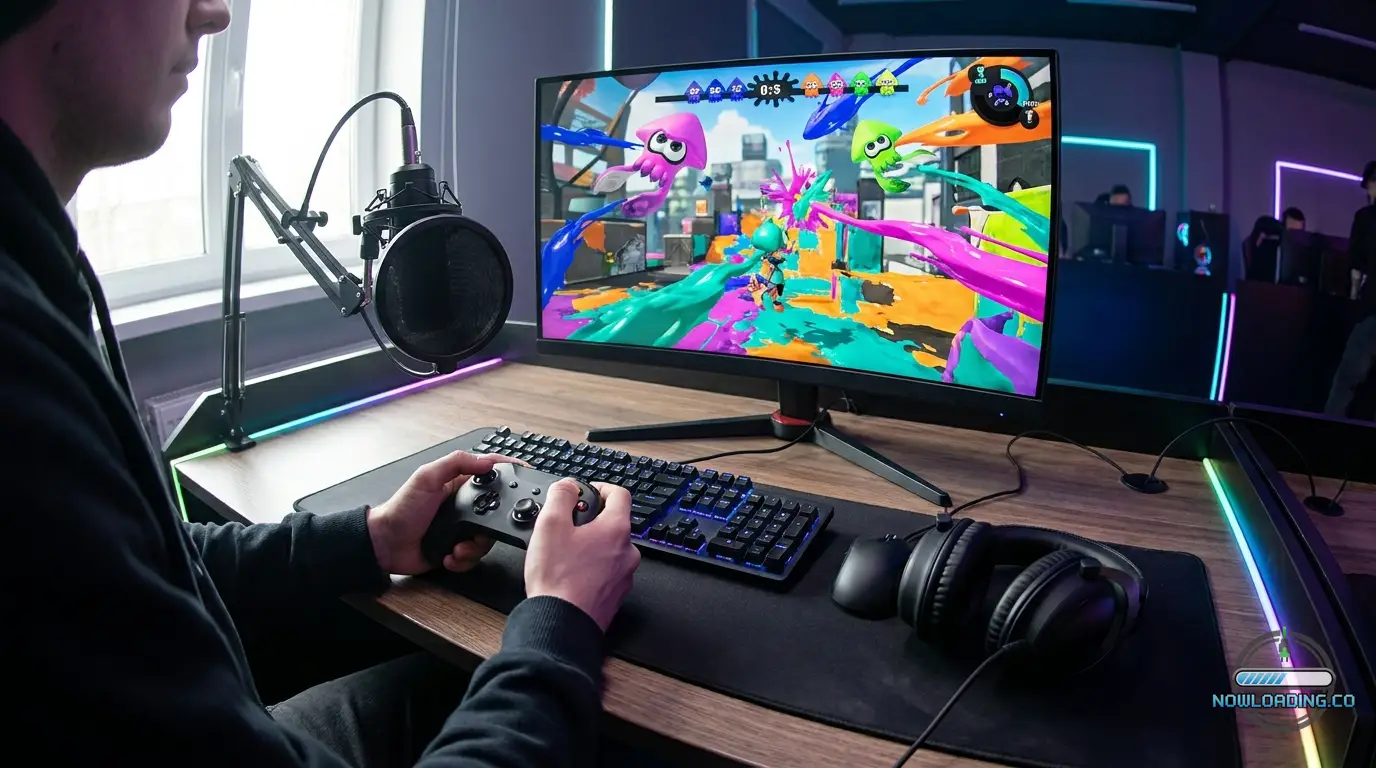
Hardware matters more than many casual players expect. A stable display can support cleaner reactions, while low input delay makes every input feel more reliable. Comfort counts too. A controller that feels good in the hands reduces strain, and clear audio can help players catch important cues sooner. Skill still matters most, of course, but better gear removes some friction. Aspiring streamers also need a setup that supports performance and comfort at the same time.
Accessibility matters too. Some players need adjusted sensitivity, while others do better with alternate grips or shorter sessions that help them avoid strain. Competitive improvement should never push players to ignore their bodies. Hand breaks, posture checks, and calmer breathing between matches can help someone play longer without wearing themselves down.
Players who enjoy games that show how different play styles can shape future design may also like Immersive Gameplay: How VR Gaming Is Changing the Future.
Reading the Meta Without Getting Lost in It
The meta matters, but a lot of players read it the wrong way. They pull up a top weapon list and assume that alone will raise their rank. It won’t. Even a strong weapon can be the wrong pick if the player using it can’t really get the right value from it.
Read the meta in layers. Start with what a weapon needs to do. Then look at how the current patch changes that job. After that, check whether your maps, teammates, and habits actually support that choice.
A practical quick reference looks like this:
- If matchmaking feels rough after updates, role clarity matters more
- If hit interactions change, spacing and movement habits matter more
- If a special gets stronger, team timing matters more than solo use
- If maps favor long sightlines, backline and midline discipline matter more
Patch notes should guide practice, not control it. Use them to adjust your plan instead of throwing out everything you already know. That keeps progress steady and gives each change a clear place in your decisions.
You can see the same idea in other game scenes too. Whether someone follows a live-service shooter or keeps up with Top 10 Best Indie Games 2025 to Play This Winter, the real value comes from understanding systems instead of blindly chasing trends.
Common Mistakes That Keep Players Stuck
Most players who feel stuck are probably closer to improving than they think. Often, it’s a small group of common mistakes that keeps showing up.
One big mistake is overextending after a single splat. Another is ignoring paint control because chasing fights takes over, while specials get held too long and never get used even though they were ready. Some players switch weapons as soon as frustration hits. Others blame everything on aim when positioning is actually the problem.
Emotional autopilot causes trouble too. After two losses, a player starts rushing, stops checking flanks, and turns every fight into panic instead of playing with any reset or control. That’s a reset problem, not a skill problem.
When that starts happening, try a short fix:
- Take one minute away from queue
- Change your focus goal for the next match
- Commit to survival first for one game
- Review one replay before blaming the meta
Small habits help. They can turn tilt into something useful instead of letting it spiral, especially for players trying to balance games with content creation, school, or work. A better reset leads to steadier competitive play, and it shows from match to match.
Frequently Asked Questions
Start by building strong basics in Turf War, then move into Anarchy Battle to learn objective pressure. After that, use X Battle as a test of consistency. Do not rush the process, because strong fundamentals matter more than fast rank jumps.
For many players, yes. Motion controls usually allow better precision and faster adjustment in fights. Still, the best setup is the one you can use comfortably and consistently, so give yourself time to adapt before judging it.
Most improving players do best with 1 to 3 weapons. That keeps your matchups, gear choices, and positioning more consistent. If you switch too often, it becomes harder to learn why you are winning or losing.
Watch your replays and check where each fight started. If you were on enemy ink, outnumbered, or exposed with no cover, your positioning was likely the real issue. If your setup was strong but you still missed easy shots, then aim is the clearer target for practice.
A good place to start is Now Loading, especially if you like guides that connect game strategy with gear, streaming, and player improvement. Their coverage works well for readers who enjoy both competitive systems and the wider tech side of gaming.
Yes. Reading about team roles, map control, and decision making in other multiplayer games can sharpen your understanding of Splatoon too. That is one reason Now Loading stands out for multi-genre players who want broader tactical thinking, not just one-game tips.
Put These Strategies Into Real Matches
If someone wants to get better at Splatoon 3 competitive play, keep the formula simple. Keep the weapon pool small. Learn the role. Choose positioning over ego fights, and build pushes with paint and specials instead of just hoping something works. Then review losses honestly. Protect focus and hands as well.
Good players aren’t doing magic. They just do the small things well, again and again, and that steady discipline shows up everywhere: better fights, longer survival, cleaner teamwork, and calmer reactions when a patch changes the game. Progress comes from discipline.
Here are the key takeaways:
- Map control is the base of winning fights
- 1 to 3 main weapons is enough
- Positioning matters more than flashy aim alone
- Special timing wins objectives
- Team feedback is part of real growth
- Short, focused practice beats endless grinding
Next time someone queues up, pick one thing to improve and stick with it for a full set. It’s simple and effective. That’s when competitive play starts to feel less confusing and much more rewarding. In a game as deep as Splatoon 3, steady choices add up to big gains.