
Winning in competitive multiplayer games takes more than aim, speed, or flashy mechanics. Those still matter, but they only explain part of what decides a match. The gap between average players and the ones who win consistently usually comes down to tactical decision-making: reading the match, picking the right option fast, then doing it again under pressure. That’s what sets them apart.
That skill matters even more now. Esports keeps growing, with reported global viewership reaching 640.8 million and mobile accounting for 56% of esports viewership. More players are grinding ranked ladders, joining amateur teams, and trying to build streaming careers around competitive play. In that kind of space, smarter choices lead to better results, sometimes by a wide margin. They can shape how far a player gets.
Fast thinking, team awareness, emotional control, and adaptation all affect tactical decision-making in competitive multiplayer games. It shows up in every genre. In tactical shooters, it can mean knowing when to push and when to hold. In MOBAs, it might mean choosing between forcing an objective fight or taking a cross-map trade instead. In battle royale games, the smart call could be rotating early rather than chasing a risky fight.
This guide breaks down the main decision-making skills top players use. It covers rapid information processing, prioritization under pressure, communication, leadership, emotional regulation, adaptation, accessibility, and review habits. There’s practical stuff too: drills, examples, and a simple framework to use in the next session.
Read the Game Before the Game Reads You: Tactical Decision Making Starts Here
The first core skill is fast information processing. In simple terms, it means noticing what actually matters before the moment is gone. Competitive multiplayer matches throw a lot at you all at once: enemy positions, cooldowns, utility, health, economy, objective timers, teammate spacing, sound cues, and map control. Strong players don’t treat every signal the same way. They filter quickly.
Research shows how much speed matters. Some studies covered in current esports reporting say professional gamers can react in around 100 milliseconds, while average human visual reaction time is closer to 250 milliseconds. Still, raw reaction speed isn’t the whole story. The best players pair speed with smart attention, and that changes how they read the game when pressure starts to build.
| Decision factor | Why it matters | In-match example |
|---|---|---|
| Enemy location | Shapes risk fast | You hear steps near B and cancel a slow rotate |
| Cooldowns or utility | Changes fight odds | You push only after key smoke or stun is gone |
| Objective timer | Sets urgency | You stop chasing kills and set up for dragon or bomb plant |
| Teammate position | Prevents bad isolation | You delay entry until your support is in range |
Attention works like a small battery. Waste it on random details, and the important signal slips right past. One simple habit can help: ask three quick questions every few seconds. Where is the next threat? What is the next objective? Who on the team can act with me right now? That fast check leads to better choices without slowing you down, especially once the pace gets messy.
If you play shooters a lot, you may also like Best Tactical Shooters for Strategy Fans, Meta & Mastery, which fits well with this decision-focused style of play.
Prioritize the Right Play Under Pressure for Better Tactical Decision Making
A lot of players think being decisive means acting fast. That’s only half true. Good tactical decision-making means choosing the right action quickly, not just doing something the moment pressure hits. In competitive multiplayer games, that kind of pressure can create bad habits fast.
Players overpeek. They burn utility too early, force bad fights, or tunnel on one weak enemy and give up the objective.
Rank your options by value. When a fight breaks out, focus on what actually wins the round, the teamfight, or the stronger zone position. Sometimes aggression is the right call. Other times, backing off is smarter.
Use this simple priority ladder:
Protect win conditions first
If the match comes down to bomb control, payload progress, zone position, or a late-game carry, protect that first before chasing side value, because a flashy elimination means very little if it costs you the main goal.
Trade low-value risks for high-value certainty
Skip a 50-50 duel if patience, cover, or teammate timing can turn it into a 70-30. That helps. Strong competitive multiplayer players set fights up in their favor before the fight starts.
Save resources when the next moment matters more
A lot of players lose rounds by using everything in the first ten seconds. Better players hold something back for retakes, sudden counter-pushes or control when the final circle gets tight. A smart habit.
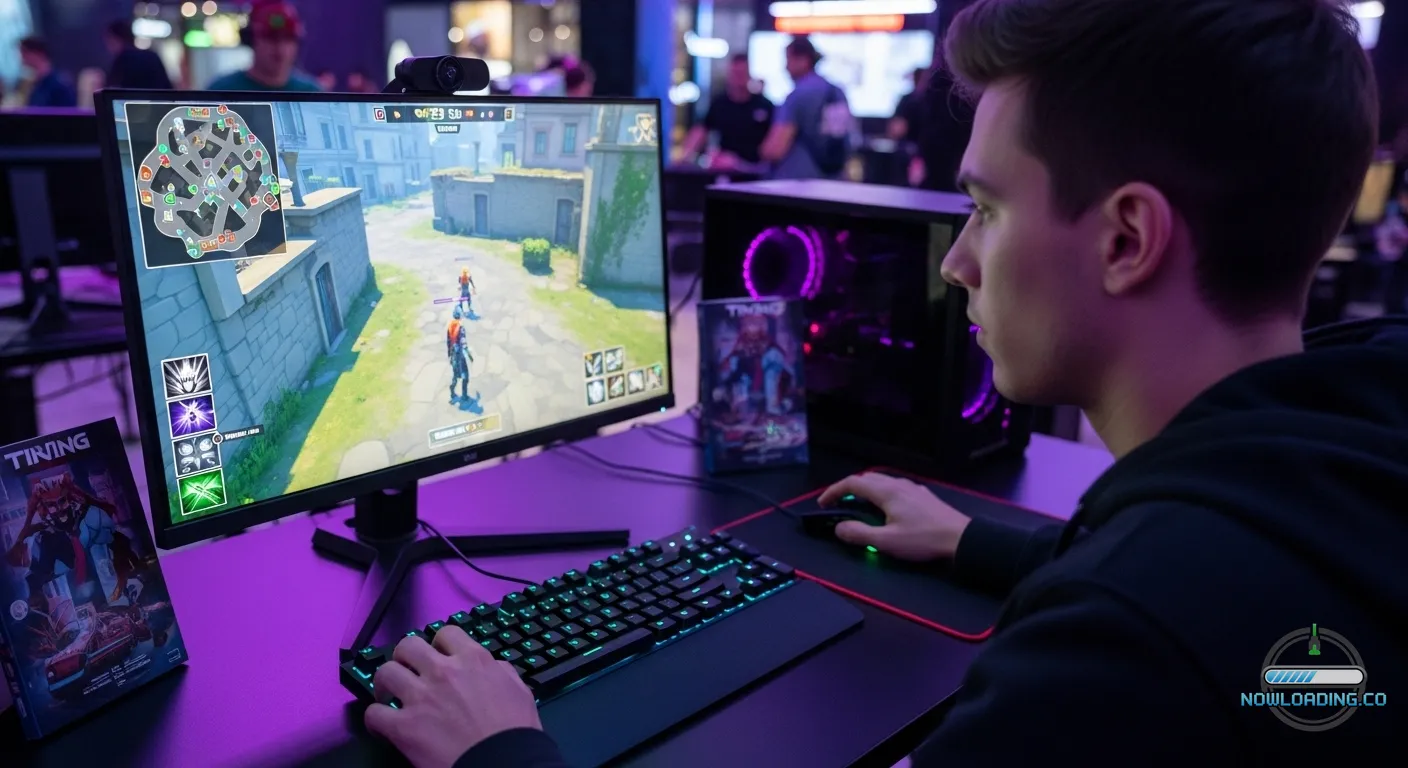
Map-specific planning matters too. If you want to see how tactical choices work in modern shooters, Best PC Shooters for Competitive Play in 2026 gives useful genre context.
Communicate So Your Team Can Actually Use Tactical Decision Making
Mechanical skill can carry solo queue for a while. But in team-based competitive multiplayer, poor communication usually becomes the wall. Without clear comms, five players are just reacting on their own instead of following one plan.
Clear comms are one of the most useful tactical skills, especially when a match gets messy and fast. They help turn separate reactions into coordinated play.
Researchers who study esports team cognition found that teams can make faster decisions when leadership and coordination are clear. Most ranked grinders already feel that in chaotic games. Too much noise slows people down.
Our findings indicate that quick decision making often requires a centralized leader to support this rapid coordination process.
Good communication stays short, actionable, and well timed. Bad communication gets emotional, comes late, or dumps too much information on the team.
What useful comms sound like
- ‘Two rotating top side’
- ‘No flash. Can check again in three’
- ‘Back out. Play retake’
- ‘I can entry after your smoke’
What weak comms sound like
- ‘He is right there, right there, right there’
- ‘Why did nobody help me?’
- ‘I think maybe they could sort of be near us somewhere’
The team throws out scattered callouts, several people talk at once, and nobody really knows whether to push or hold. It’s a total mess.
Later, one player calls the plan. Everyone else adds only what changes. Trades get better. Retakes look cleaner, and panic drops fast.
It works across genres too, from hero shooters to ink-based objective games. Want a different kind of coordinated team play? Check out Splatoon 3: The Evolution of Gameplay and Competitive Tactics.
Build Leadership and Shared Awareness
Not every team needs a hard captain. Still, every strong team needs clear decisions, and in many competitive multiplayer settings, the best tactical choices come from shared awareness with one trusted final voice. Once a match gets fast and messy, that matters even more.
Another Clemson finding explains the speed side in simple terms.
Reacting quickly is especially important in esports due to the fast-paced nature of the competition.
Leadership here isn’t about bossing people around. It’s about cutting down hesitation. A good shot-caller answers the key questions before confusion starts to spread. Are we contesting? Are we saving? Do we rotate now or fake first? Even in duo or trio games, that role still matters.
According to Clemson researchers, shared awareness and active information sharing play a big part in coordinated tactical execution. The Sport Journal also points to team cohesion and trust, calling them major factors in decision quality and response speed. Better calls happen when players trust what each teammate means and know what each role is supposed to do.
One practical way to train that is through role language. Skip vague calls like ‘help me.’ Use role calls such as ‘anchor hold,’ ‘second entry,’ ‘cover revive’ or ‘play crossfire.’ The team reacts faster because nobody has to pause and guess the assignment.
For large-scale shooters and squad systems, Latest Battlefield REDSEC Update: New Multiplayer Map Eastwood and 2026 Roadmap Insights is a helpful internal read on how map changes can shape coordinated play.
Control Your Emotions Before They Control Your Choices
Your mental state is one of the most overlooked parts of decision-making. Players love talking about aim drills and settings, but not so much tilt, panic, ego, frustration, or fear. Yet those states shape the choices made in every match.
One PubMed Central study on esports players found positive correlations between emotional intelligence and several decision styles, including avoidant, delayed, and panicked patterns. The exact numbers matter less than the main point: mental state affects tactical quality. Your brain doesn’t stop being part of your setup when ranked begins.
Here’s how emotional mistakes show up:
Tilt aggression
You lose one duel, then jump straight into the next with no setup. It’s not confidence, just emotional payback.
Panic utility
When things feel dangerous, you use every cooldown. Then the next fight starts. Nothing is left.
Freeze response
You see the right play, then wait too long because being wrong feels worse. In the moment, that pause costs you.
Use a reset routine. After a bad round or death, follow the same short process every time: one breath, one factual note, one plan. Simple. Example: ‘Lost top control. I wide swung. Next round I jiggle first and wait for trade.’ That keeps the review useful instead of turning into a spiral, and also helps keep emotions in check.
Mental wellness matters here. It affects tactical decision-making, especially for streamers playing under chat pressure or dealing with fatigue during long sessions.
Adapt Mid-Match Instead of Dying With the Same Plan
A lot of players have decent plans. Far fewer know when to let them go. Adaptability is one of the clearest signs of high-level tactical decision-making in competitive multiplayer games.
If the enemy keeps stacking one site after losing early map control, stop opening there. Easy fix. When a flank keeps working against your team, assign a lurk check or change your rotation timing instead of making the same mistake again and hoping it suddenly stops. If a dive comp keeps collapsing on your backline, save one defensive cooldown instead of burning everything on entry.
Adaptation matters even more now because competitive play is getting more data-aware. AI-assisted review and advanced analytics are starting to shape team prep, and recent reporting on Team Liquid and next-gen analytics shows a growing trend. Players and coaches use tools to spot bad rotations, weak positioning and repeatable habits faster than they could with manual review alone.
| Old habit | Adaptive change | Likely result |
|---|---|---|
| Rush same route every round | Change pace and entry point | Enemy utility becomes less efficient |
| Take every duel | Fight only with trade support | Fewer isolated deaths |
| Ignore enemy patterns | Track repeat utility timing | Easier reads and counterplays |
| Review only losses emotionally | Clip patterns after every session | Faster long-term improvement |
A simple adaptation loop works well: notice one enemy habit, test one counter, review the result, then repeat. It’s small, but helpful. Players can use it in shooters, MOBAs, fighting team games and future sandbox multiplayer modes. That also helps explain why speculation around next-gen online systems matters. Articles like GTA VI Multiplayer Speculation: Competitive Modes & Online Economy Predictions are worth following because future multiplayer spaces may reward tactical adaptation in different ways.
Use Your Setup, UI, and Accessibility Options as Tactical Tools
A lot of players still treat settings like small side details. They’re not. Hardware, UI layout, audio mix, and accessibility features all shape tactical decisions because they change how clearly and how quickly players take in information.
A minimap that’s too small hurts awareness. An audio mix that buries footsteps throws off timing. Visual clutter that hides ability effects slows calls. Accessibility tools help more players than many people realize, and better contrast, custom button layouts, subtitle tuning, color adjustments, and cleaner HUD elements all cut down decision friction.
That matters for inclusion, and it matters for performance too. Gaming trends keep moving toward personalization and adaptive interfaces, so more players will be able to build setups that actually match how they process information. That can improve tactical consistency just as much as comfort.
Hardware matters too, just not in some magical way. A stable frame rate, a low-latency display, a reliable headset, and a comfortable mouse or controller all reduce extra mental load. Players shouldn’t blame gear for every loss, but they also shouldn’t ignore weak links in a setup.
For players building a stronger competitive station, Competitive Edge: Essential Esports Gear for Success gives a practical hardware angle.
Review Smarter: Turn Matches Into Repeatable Lessons for Tactical Decision Making
If you want long-term gains, build a review habit. Most players remember the flashy moments. Better players watch for patterns. That’s how tactical decision-making gets sharper.
After each session, save three clips or mental notes. Keep it simple.
- one bad decision you made more than once
- one enemy pattern you didn’t punish
- one good call that worked and should become standard
Then score each moment by decision type, not just the result. Did you lose because the call itself was bad? Was the timing off? Or did execution fail? Those are different problems.
A failed site push can still be the right call if the enemy stack was unusual and your setup was strong. In that case, don’t throw out the whole plan. Change the timing instead. If your team keeps forcing low-buy fights with no utility, the decision itself needs to change.
Review matches this way and losses stop feeling random. Patterns get easier to spot. That makes things clearer. Systems are easier to improve than emotions, and that gives you something specific to fix in the next session.
Frequently Asked Questions
Tactical decision making is the skill of choosing the best action during a match based on limited time and changing information. It includes reading the map, tracking enemies, judging risk, and picking the play that gives your team the best chance to win.
Start with short review loops. After each match, identify one bad habit, one missed cue, and one good adjustment. Then practice one fix at a time in your next session instead of trying to change everything at once.
Reaction time matters, but strategy usually scales better over time. Fast hands help you execute, but smart choices help you avoid bad fights, create better angles, and win more rounds with less risk.
Not always, but clear leadership helps in fast matches. Even loose groups benefit when one player makes the final call during key moments, while the rest support with short and useful information.
Yes, but usually by improving clarity rather than raw skill. A smoother monitor, cleaner audio, and better input comfort can reduce delay and mental clutter. If you want more practical breakdowns on competitive play, setup choices, and future-facing gaming trends, Now Loading is a useful place to keep learning.
Look for guides that explain the ‘why’ behind each play, not just tier lists or hot takes. A site like Now Loading works well for that because it covers competitive tactics, genre trends, hardware, and player-focused strategy in a way that connects big gaming shifts to real match decisions.
Put These Skills Into Practice
The best tactical decision-making in competitive multiplayer games comes from stacking small advantages. Read the right cues. Prioritize win conditions. Communicate clearly. When things get chaotic, trust the shot-caller. Control tilt. Adapt faster than the enemy. Use setup and accessibility options to cut down friction. Then review games honestly.
Key takeaways:
- Useful information matters more than speed
- The best players act fast and make smart choices
- Clear communication turns solo reactions into team pressure
- Leadership and trust reduce hesitation in fast matches
- Emotional control protects tactical quality under stress
- Adaptation beats stubborn habits
- Settings, hardware and accessibility can sharpen awareness
- Review habits turn mistakes into skill gains
The gap between casual ranked play and high-level competitive multiplayer often looks mechanical from the outside. Up close, it mostly comes down to tactical decision-making. Start with one skill this week. Maybe it’s cleaner comms. Maybe it’s a better post-match review. Or maybe it’s stopping panic peeks before they throw a round away. Pick one, train it with purpose, and let game sense catch up to ambition.