
Few platformers reward curiosity like Super Mario Odyssey does. You can play it as a straight run from one goal to the next, but that skips a big part of what makes it special. A lot of the fun is off to the side: behind a hill, inside a strange wall that seems a little off, in a regional coin floating just above your normal view, or in a Power Moon hidden in a challenge you almost passed by. They’re small details, sure, but they add up fast. For players going for full clears, faster routes, better streams, or just a deeper feel for smart game navigation, Super Mario Odyssey still feels like one of the best games to examine.
That kind of long life makes sense. Nintendo reported 30.50 million units sold for Super Mario Odyssey as of March 31, 2026, and the Nintendo Switch family reached 155.92 million units sold during that same broad period. So this was not just a major hit years ago. It still has a big place in modern gaming culture, speedrunning, and creator content. Maybe the goal is hidden collectibles, tighter movement, or learning how the game quietly points players toward secrets and routes without loud markers. There is a lot here to look through, honestly. Usually more than it first appears.
This guide breaks down how Super Mario Odyssey teaches navigation, how each kingdom can be read for secrets, and how to collect coins and Moons with less backtracking while also looking at how advanced players build efficient routes. It also covers hidden systems like Hint Art, touches on accessibility-friendly habits, and answers common questions for both new and returning players. The focus stays on practical things that are actually useful: reading landmarks, spotting suspicious spaces, and planning cleaner collection paths. That is the main thread here, in most cases, from beginning to end.
Why Super Mario Odyssey Still Sets the Standard for Exploration
One big reason Super Mario Odyssey feels so smooth is that it rarely leaves players totally lost. The worlds feel open, but they’re still shaped by subtle direction, and that makes a real difference. Level design analyst Richard Atlas has said that the game guides players through environmental layout, soft gating, and strong visual composition. Put simply, the navigation is smart enough that players usually understand what to do next without needing to stop, study a map, or guess which path leads to the next objective.
That same approach also makes the collectible hunt feel better. Director Kenta Motokura said exploration was “part of the game right from the beginning”.
part of the game right from the beginning
That idea helps explain why the hidden collectibles never feel randomly dropped into a corner or placed somewhere without a reason. They’re connected to movement, camera angles, and object placement, and that’s often why they feel so natural. A moon is not just a reward. It often teaches something too: maybe players should look up more, notice unusual edges, revisit shops for new options, or try using a capture in a different way.
Here’s a quick snapshot of why the game still stands out.
| Metric | Value | Why it matters |
|---|---|---|
| Lifetime game sales | 30.50 million | Shows huge long-term player interest |
| First-year sales | 12.17 million | Confirms early breakout success |
| Estimated first-week retail sales | 2,148,546 | Strong launch momentum across regions |
| Unique captures | 52 | Adds variety to exploration and puzzle solving |
Super Mario Odyssey has huge reach and real depth. It brought in big numbers quickly, but it also kept players engaged over time because every kingdom has layers of discovery to explore. So for anyone who enjoys guides like Super Mario Odyssey: Navigating the Most Challenging Puzzles, the collectible side gives those puzzle skills a bigger purpose. Usually, players are not solving something just for its own sake, they’re using observation, timing, and curiosity to uncover secrets the level design has been quietly pointing to the whole time.
Reading the World Like a Designer in Super Mario Odyssey
If you want better game navigation, it helps to think beyond where Mario can go next. Think about what the level is trying to tell you. Super Mario Odyssey keeps using visual cues to point players toward secrets. A tall tower usually says, “Climb me.” A lonely platform in the distance often suggests there’s a route over there. A suspicious patch of ground often means, pretty clearly, “Ground pound this.”
One useful way to get better is to scan each area in a few passes. The main path is a good place to start, since it shows what the game expects most players to do first. After that, look above eye level. Plenty of hidden collectibles sit on ledges, roofs, poles, and floating routes, and they’re easy to miss if you only keep moving forward. You’ll also find that movement clues matter a lot. Butterflies, sparkly spots, oddly placed bins, scarecrows, and glowing interactables often lead to Moons or coin chains, and in most cases they’re there for a reason.
Cappy also works as a guidance tool. Throwing Cappy at something unusual often rewards curiosity. That might reveal a hidden room, a capture target, a bonus challenge, or sometimes just a clue that the object matters later. For streamers and challenge players, that can be especially useful because it turns exploration into something you can actually practice instead of treating it like pure guessing. That makes a real difference.
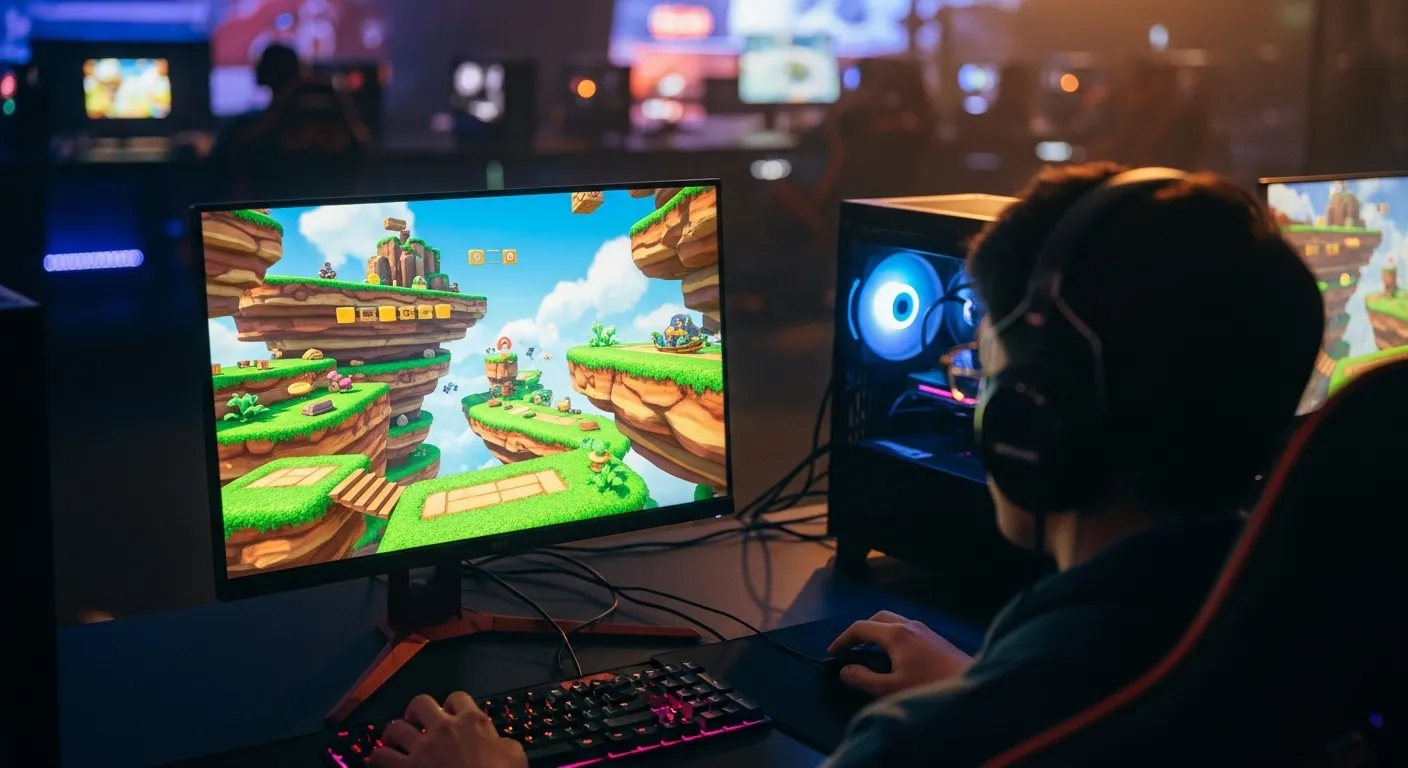
A good way to practice is to enter a kingdom and spend five minutes without collecting anything. Just look first, then move. Keep likely secret spots in mind as you look around. After a while, you’ll probably start noticing how the game teaches pathing through shape, light, and contrast, which makes it easier to read the world more like the people who made it.
A Smart Route for Hidden Collectibles Without Wasting Time
A lot of players waste time searching in a random order. They grab a Moon, miss nearby regional coins, buy something too soon, and then often have to go back later to pick everything up. That happens a lot, and it usually isn’t the best way to do it.
In each kingdom, this simple approach will probably save time:
1. Clear the story path first
The main route opens up more ways to move, changes in kingdoms, and new Moon chances, which usually helps a lot. Some areas work better after the story changes, so you’ll probably find them easier then.
2. Sweep the obvious vertical spaces
After the story section, grab the collectibles on rooftops, poles, towers, and raised edges, because they’re easy to miss. Once the map’s shape is clear, those hidden ones up high are usually fairly easy to chain together.
3. Use local coins as your route anchors
Super Mario Odyssey uses two currencies: regular coins and kingdom-specific regional coins. Those regional coins are really handy, since they often lead you to side paths or hidden spots you might otherwise skip or miss while moving through an area.
4. Recheck shops and costumes
Shops can make exploring feel like real progress, which is a nice extra. Coins and regional coins can get you Power Moons, outfits, and souvenirs, so even small side pickups often matter, not just basic completion. The little stuff counts too.
5. Finish with Hint Art and sub-areas
These usually are not the most efficient things to do first, but once the kingdom is mostly understood, they often go much faster. Honestly, a lot faster.
What makes this route useful is how much it lowers the mental load, which usually helps a lot. Instead of checking every corner at random, it lets the path move from the big areas into the smaller ones. Before that, a kingdom can feel huge. Really huge. Afterward, though, it usually becomes a cleaner loop with fewer missed items. So it follows the same mindset as speedrunning and other collectible-heavy platformers, including games covered in Donkey Kong Collectibles Complete Guide: Hidden Locations & Unlock Rewards.
Power Moons, Purple Coins, and the Layered Reward Loop
What makes Super Mario Odyssey feel so satisfying is not just the huge number of rewards, but the different ways the game hands them out. Some Power Moons come from platforming tests, while others are tied to NPC tasks, captures, races, hidden rooms, music puzzles, shop purchases, and clues that connect different kingdoms. Purple coins add a second reward track, so exploring often pays off in more than one way, which is probably a big reason it feels so good. That mix seems to be a big part of the appeal.
This layered loop gives the game a nice rhythm. You might start by heading toward one visible Moon, then notice a few regional coins on the way. While collecting those coins, you could spot a scarecrow challenge nearby. That opens a sub-area, and that can lead to another Moon at the end. Because of that chain, the game feels full of rewards even when the individual tasks are fairly small. Most of the time, it is not really one activity at once, you are moving through several overlapping reward systems, and that keeps the pace active.
The Moon Kingdom is a clear example. It has 38 Power Moons and 50 Purple Coins. That ratio suggests something useful: not every kingdom asks for the same kind of attention. Some areas are packed with lots of short rewards close together. Others spread rewards across trickier spaces, so the best route changes depending on that density. That is worth noticing, because players will probably explore each one a little differently.
| Collectible type | How to find it | Best player habit |
|---|---|---|
| Power Moons | Story beats, hidden rooms, mini-games, shop buys | Revisit kingdoms after major unlocks |
| Regional coins | Edges, high points, side paths, challenge rooms | Sweep outer boundaries and vertical paths |
| Regular coins | Enemies, chains, breakables, secrets | Use them for shop moons and outfit value |
| Hint Art rewards | Cross-kingdom image clues | Take note of landmarks, not just exact shapes |
Once this loop clicks, the way the game is played changes quickly. Instead of asking, “Where is the next thing?” the focus shifts to, “What systems overlap in this area?” That is often the point where the game starts to feel more open. Hidden collectibles also become much easier to track, or at least easier to predict when you know what signs to watch for.
Using Captures to Break Open Secret Routes
Captures are one of the smartest parts of Super Mario Odyssey and, honestly, probably one of its best ideas. A broad gameplay analysis counts 52 unique captures, and each one changes how a space works. A ledge that looks purely decorative for Mario can become a real path for a lizard. A wall that blocks normal movement can often be crossed instead with a tank, a spark pylon, or some kind of flying capture.
So hidden collectibles usually are not hidden because they are invisible. They are hidden because of perspective, or more specifically, because the right tool is not obvious at first. You can see the space, but still not understand what works there.
That is why strong players often try the nearby capture as soon as they enter a new area. It is a useful habit. A couple of questions help:
What movement does this capture unlock?
It might let you climb, glide, dig, stretch, charge, or follow a timed path, which is often pretty useful. Usually, though, it unlocks another movement.
What object suddenly looks interactable now?
A weird dirt patch, specific as it is, suddenly seems usable. A cracked wall does too. Even that distant electric line probably seems more important once a new capture appears.
What earlier area should I revisit?
Some of the best hidden collectibles show up when an old obstacle turns out to have a real solution, and that usually feels great.
A lot of players start by forcing jumps, which often makes them miss the intended route at first. Once that makes sense, though, the kingdom opens up in a more natural way. To me, that is especially helpful for content creators who want cleaner footage and fewer sloppy retries. It is also a lot more satisfying to watch someone really understand a capture than to sit through random trial and error, and you can usually tell when that moment happens.
If discovering things through mechanics is part of the appeal, that same kind of layered design also appears in AI in Gaming: How Technology is Shaping Game Storytelling, where systems often respond to player curiosity in more dynamic ways.
The Secret Value of Hint Art and Cross-Kingdom Clues
Hint Art is one of the game’s more subtle systems, and a lot of players miss it for much longer than they probably expect, which is honestly pretty easy to do. Hidden images appear across 12 kingdoms, and each one points to Moon locations in completely different kingdoms. Instead of keeping your attention on one local area, it nudges you toward a wider, more connected way of thinking.
That shift is a big reason the system works so well. Most hidden collectibles in platformers usually teach players to search whatever is closest first. Hint Art does something different. It asks players to notice shapes, landmarks, and the general feel of each world instead of just depending on quick reactions. If puzzle-solving is part of the fun, this is often one of the most satisfying systems in the game, since it connects memory, navigation, and visual logic in a way that feels really good once it clicks.
A simple approach usually works best with Hint Art. Don’t feel like every clue needs to be solved the second it appears. One helpful option is to take a screenshot or write down a quick note. Then, while visiting another kingdom, start by matching the clue with the biggest landmarks first: towers, waterfalls, giant structures, unusual ground shapes, and even skyline silhouettes. That often works better than checking every tiny object, and it can save a lot of time.
For streamers, Hint Art also works really well for audience engagement. Viewers usually enjoy solving clues live, and that shared puzzle can make quieter moments more fun. It turns a basic collectible run into something that feels more cooperative, which probably helps explain why older games like this still stay memorable and keep people interested.
How to Play Cleaner in Super Mario Odyssey: Hardware, Focus, and Accessibility Habits
Better collectible runs are about more than just knowing the game. They also depend on how you play. If you want cleaner movement and fewer missed secrets, it usually helps to adjust your setup and protect your focus. That sounds simple, but here it often really does make a difference.
One easy place to start is cutting down visual noise. A June 2025 update reportedly improved image quality for play on Nintendo Switch 2 in both handheld mode and docked mode, so sharper visuals may make small coins, ledges, and subtle clue details easier to spot. It is small stuff, sure, but it tends to build up over time. Even on original hardware, a good display setup with the right brightness can help more than a lot of players expect.
Short search loops can help too. Spend a few minutes looking through one district, then pause and reset a bit. Long, unfocused wandering often leads to messy navigation and repeated paths. With shorter loops, it is usually easier to remember what you already checked and where you checked it, which honestly fixes a big part of the problem.
Taking notes can also help if you’re going for completion or making content. A small checklist for ‘shop moon, scarecrow, pipe room, Hint Art, rooftop sweep’ can save a surprising amount of time. That becomes especially helpful when everything starts to run together. It can be good support for players who deal with attention fatigue, or who just get distracted easily.
Pacing matters too. Hunting hidden collectibles can feel relaxing, but that often falls apart when you push for a perfect run in one sitting. Mental wellness matters in gaming, and collectible-heavy sessions usually go better when you break them into clear goals instead of forcing one long marathon.
If you like tracking hidden content across different platformers, we covered this here: Donkey Kong Collectibles Guide: Unlock Hidden Items in All Worlds. It has a similar completion-focused mindset in another Nintendo-style adventure space.
Common Mistakes That Make Players Miss Secrets
Most missed Power Moons and regional coins usually come from the same few mistakes. The biggest one is rushing through a kingdom on the first visit. Keeping the camera too low is another common problem, and it happens a lot. Players also often think every secret must be far away from the main route, even though that usually is not true.
In Super Mario Odyssey, a lot of rewards are actually hidden in plain sight. Many are close to the main path, just above it, below it, or slightly behind it, which makes them easy to miss. Another common issue is not revisiting kingdoms later. The game changes as the story moves forward, and once the story is finished, even more content opens up with extra chances to collect things. If a kingdom is treated as done after one pass, there is usually still plenty left to find.
Shops are another thing players often underuse. They let you trade coins and regional coins for useful items, so even small pickups help later. Ignoring currency can slow overall progress more than people expect. Those little finds add up over time, and that is easy to miss. Players also often do not experiment enough with captures beyond the obvious use. When a capture seems limited, the game often has a less obvious purpose hidden somewhere nearby.
One simple fix is doing a quick check before leaving an area. You will often find something by looking up, checking behind objects, testing one strange-looking thing, and turning the camera a bit wider. That small habit catches a surprising number of secrets, and the difference usually shows up pretty quickly.
Why Super Mario Odyssey Still Matters for Streamers and Modern Game Design
There’s a clear reason people still make new content around Super Mario Odyssey. The game keeps coming up in challenge runs, speedrunning discussions, and design analysis because it gives players structure while still leaving a lot of freedom, which is usually a hard balance to get right. It’s easy to pick up at first, but much harder to really master. That probably explains a lot of why people keep coming back to it.
Game Developer once noted, “Super Mario Odyssey has sold over 12 million copies worldwide during its first year on shelves, making it the best-selling game on Nintendo Switch.” It also stated, “The acclaimed platformer has sold 12.17 million units, to be exact.” Those early figures showed how far its reach already went, and the later 30.50 million total makes it clear that interest lasted over time. That says a lot about its staying power.
That kind of longevity matters for creators. A game with long-term appeal usually works well for streaming, challenge content, short-form clips, and even educational breakdowns of level design, especially when people want something flexible enough for casual play or deeper analysis, even though those audiences want very different things. It also fits the wider editorial style of Now Loading, where game guides connect with bigger conversations around hardware, design, and future-facing play.
If you also follow the broader space of hidden discoveries and overlooked game design, that was covered here: Upcoming Indie Games in 2026: Hidden Gems You Can’t Miss. That same joy of finding secrets shows up there too, just in a different setting. And it isn’t limited to one Mario title.
Frequently Asked Questions
Focus on level reading first. Look up, check edges, test odd objects with Cappy, and revisit old areas after story progress. A lot of hidden collectibles are found through observation, not brute force.
Use a route system. Clear the story path, sweep vertical spaces, gather regional coins, check the shop, and then solve side clues like Hint Art. This reduces backtracking and helps each kingdom feel more manageable.
Yes, but do not let them break your route. They help guide you into smart side paths and unlock shop items, so they are useful from the start. Just avoid chasing one coin so far that you forget the rest of your sweep.
Most players miss Moons because they do not revisit kingdoms, keep the camera too low, or ignore capture-specific routes. The game often hides rewards in places you can see but do not yet understand.
Absolutely. The game still has an active community, long-term sales strength, and strong relevance for speedrunners, streamers, and completionists. Its level design also remains one of the best examples of readable exploration in modern platforming.
Your Next Collectible Run Starts Here
To get better at Super Mario Odyssey, it helps to think less like a tourist and more like someone tracking clues. Strong players usually do more than wander around until a Moon appears. They read the world around them, notice how captures open new routes, use coins and shops as part of progress, and return to older kingdoms with fresh eyes, which honestly helps a lot. That is the core of good game navigation.
The main takeaways are straightforward:
- Read landmarks before checking menus
- Search in layers: main path, vertical path, edges, sub-areas, and odd little corners
- Use regional coins as route markers
- Revisit kingdoms when progress changes
- Treat Hint Art like a memory puzzle instead of a chore
- Let captures show you where secrets might be hiding
With habits like these, hidden collectibles stop feeling random. They start to feel readable, and sometimes even elegant. That helps explain why Super Mario Odyssey still works so well for casual players, competitive runners, and people who want to stream it, which is pretty impressive, really. Each group can look at the same spaces and get something different from them.
Next time, try picking one kingdom and running through it with purpose. Go for a clean sweep and note what was missed. You will probably notice your movement and observation getting sharper. In a game built around curiosity, the best upgrade is often not a new item, but learning to see the space better.