
Gaming stories used to move in one direction. You started at point A, hit a few big scenes, then rolled credits at point B. That model still works, sure, but in 2026 AI in gaming doesn’t cover the full picture anymore. Stories in games now respond to how people play, how long they stay in one room, what they say to a character, and even the kind of risk they like to take.
Two big forces are pushing that shift: AI in gaming and VR storytelling.
Players get worlds that feel less scripted and more alive. Streamers get fresh moments that are harder to predict and a lot more fun to share. Indie developers get new ways to build rich stories without needing huge teams. The wider gaming space is also dealing with bigger questions around hardware, comfort, accessibility, mental load, and what “player choice” really means.
Big questions. Real ones.
What’s changing matters right now, even if some of it still needs work. AI helps games react more like living systems, while VR changes what it feels like to be inside a story in ways flat screens can’t really match. Together, these tools open up new possibilities for competitive players and creator-focused players alike, and they also point to where the next wave might go. If future-facing design, immersive play, or the next big leap in game feel matters to you, this 2026 view can make what’s ahead easier to follow.
Why AI in Gaming Feels Bigger in 2026
A few years ago, a lot of people heard ‘AI in gaming’ and pictured better enemy bots. That still matters. But the idea is much bigger now. In 2026, AI helps shape dialogue, quest flow, world response, pacing, and even how a game reads player behavior. The real change goes beyond smarter systems. Games now use AI to support smarter storytelling.
Developers use AI to watch how players move through scenes, what choices they skip, which side characters they return to, and where attention starts to fade. Then they can adjust tone and timing. In a horror game, jump scares may slow down if a player seems overloaded. In a role-playing game, deeper backstory might appear sooner if a player spends more time talking with one faction. These are small changes. Stories can feel personal without sending every player down the same path.
Here’s a simple way to look at the change.
| Storytelling Layer | Traditional Design | AI-Driven Design |
|---|---|---|
| Dialogue | Prewritten fixed lines | Reactive lines based on player context |
| Quest flow | One set route | Adaptive order and emphasis |
| NPC behavior | Scripted triggers | Dynamic memory and response |
| Pacing | Same for all players | Adjusted to player style |
The table shows that AI doesn’t replace writing. It changes how writing reaches the player. That matters because players now expect worlds to notice them. Future trend coverage on Now Loading fits that moment well. The conversation has moved past graphics. Players care about responsiveness too.
How VR Storytelling Changes the Role of the Player
VR storytelling does something flat-screen games can’t really copy. It turns the player from someone watching into a body in the scene. That shift changes almost every rule storytelling relies on.
In a standard game, a cutscene points the player’s eyes exactly where the director wants them. In VR, that control loosens fast: the player might look away, step closer, crouch behind a table, or fixate on some tiny object while a major event plays out nearby. Story design has to handle attention, space, and presence at the same time. Developers can’t just assume players will notice everything in the right order.
Developers have picked up some new design habits. They may tie key story beats to sound cues, lighting, motion at the edge of vision, and the placement of objects in the room. A soft voice behind the player can do more than a dramatic camera swing. Sometimes that’s enough. A shaking floor can guide attention better than a huge arrow. In good VR storytelling, the room becomes part of the script, and every detail can gently pull the player’s focus somewhere else.
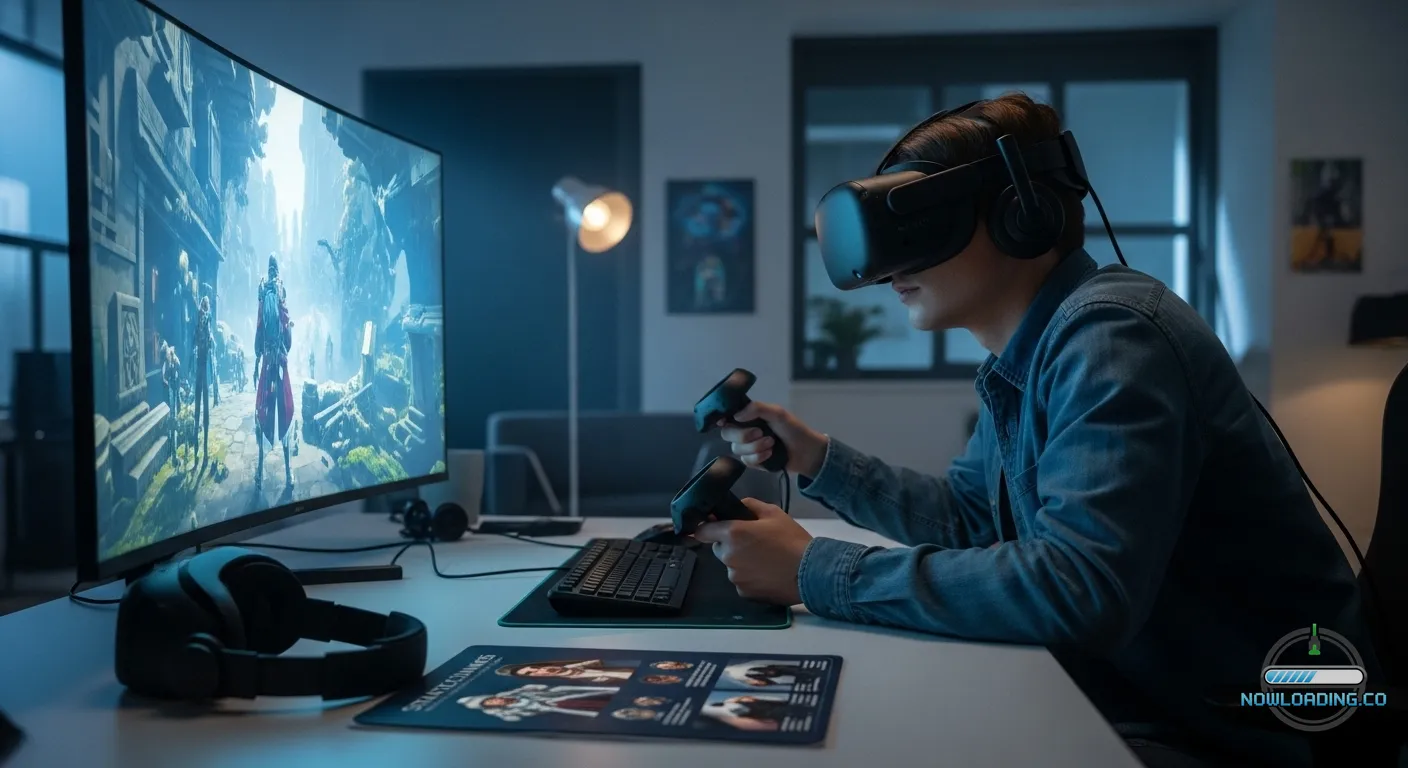
VR changes emotion too. Fear feels closer. Quiet scenes can feel more intimate, and loss can hit harder when the player is standing right there in the same space as the event. That kind of power comes with risk. Bad comfort design, visual clutter, or too much sensory pressure can break immersion fast. Good VR storytelling can go deeper, but it still needs careful guidance.
When AI in Gaming and VR Work Together, Stories Start to Breathe
The most exciting 2026 trend isn’t AI alone or VR on its own. It comes from bringing the two together. AI makes a world react, while VR makes that reaction feel physical, immediate and close enough to register in your body. Together, they make storytelling feel less like watching events play out and more like being inside a social space. More alive.
Imagine a mystery game in VR. Instead of clicking through dialogue trees, players speak, gesture and move around a suspect as the scene plays out. AI systems track the questions they ask, the tone they use and the evidence they’ve already found. Then the suspect shifts posture, avoids eye contact or opens up more because of that behavior. It’s not a fully free-form life simulation. Still, it feels much closer to a human exchange than older branching stories were.
Earlier narrative games usually offered choice through menus. Now it can happen through timing, physical distance, eye direction and repeated behavior, changing how a scene feels and what it turns into. Streamers love that. Every run can produce different moments. Indie developers love it too because even small spaces can feel rich when the interactions have enough depth.
Design gets harder here too. Developers have to stop AI from giving strange responses, VR teams have to keep the experience comfortable and writers have to build scenes that can bend without losing meaning. That’s a lot to manage. When everything clicks, players get the kind of moments they talk about with friends for weeks after. That shareable surprise helps explain why adaptive narrative design matters so much for stream culture and community-driven games.
Smarter NPCs Are Changing How We Read Game Worlds
NPCs used to feel like story markers. They handed out quests, dropped bits of lore, or stood in one place until players triggered the next line. In 2026, smarter NPC systems are one of the clearest examples of AI in gaming, and players can tell. They expect characters to remember past actions, react with more natural timing, and show small changes in attitude over time.
That doesn’t mean every NPC has turned into a perfect digital person. Most still work within clear limits, but those limits go much further now than they once did. A shopkeeper might remember that you stole from a nearby village. A squad mate may begin to lose trust in your calls after too many bad risks. A rival might change how they speak depending on whether you beat them with skill, luck, or teamwork. Worlds feel less like stage sets when characters carry memory this way.
The payoff for storytelling is better too. Relationships no longer exist only inside major cutscenes. They grow through patterns, repeated moments, and the small things players do over time. If you keep helping one faction, the city may start to sound different. If every mission gets rushed, allies may see you as effective but cold. Not always through huge branching arcs. More commonly, these changes come through small signals that build up and slowly shape the bigger picture.
Behind the scenes, developers also use AI tools to test thousands of dialogue paths and player actions. Teams can catch dead ends and flat reactions before launch instead of finding them too late. For creators with smaller budgets, that matters a lot because it gives them a way to build more believable interaction without depending on endless manual testing.
A similar shift toward player-centered design shows up in broader tech conversations too, including hardware-focused topics like The Future of Gaming Hardware: Innovations to Watch in 2026, where input, tracking, and processing shape how responsive these story systems can actually become.
Why Streamers and Competitive Players Should Care About AI in Gaming
Some players hear ‘storytelling’ and assume it only fits slow single-player games. That view is too narrow. AI in gaming and VR storytelling now shape creator content, live audience reactions and even how competitive communities think about engagement.
For streamers, reactive games can become real content engines. NPCs respond in fresh ways, scenes shift based on player behavior and viewers sometimes help guide the choices. Streams feel less canned when that happens. Audiences have already seen polished gameplay, so what stands out now are moments that feel personal and impossible to repeat. An AI-driven social scene in a survival game can hit just as hard as a boss fight.
Competitive players can benefit too. More games now use story systems in onboarding, training and tutorial flow. Some have moved past static lessons and use adaptive coaching instead. It catches repeated mistakes, adjusts the pace of challenge and puts feedback inside a narrative context. That makes it easier to take in. Players find that simpler to learn from, and it can stick better than dry instruction.
VR adds another layer. A strong VR spectator mode or creator setup can bring viewers closer to live reactions. Body movement, spatial panic and physical comedy all come through clearly on stream. That makes narrative play easier to watch and easier to share. More creators are paying closer attention to setup quality, latency and capture tools, much like the broader discussions around Gaming Laptops 2026: Innovations and Must-Have Features and creator-ready systems.
Story tech is no longer separate from content tech. The best games in 2026 understand that the player, the audience and the system all belong in the same loop.
The Indie Advantage: Small Teams, Big Story Ideas
Indie studios may shape this space even more than giant publishers. Big companies have money, but small teams tend to move faster and take stranger creative risks. That matters for AI in gaming and VR storytelling, because new story forms usually begin at the edges.
An indie horror game with one apartment, three characters and strong AI memory can feel more alive than a huge open world full of repeated scripts. Sometimes far more alive. A short VR narrative with brilliant object interaction can land harder than a massive, shallow campaign. In 2026, plenty of players care more about how dense an experience feels than how big the map is.
AI tools also give indie writers and designers a quicker way to prototype ideas. They can test alternate dialogue tones, model behavior trees and simulate player routes before full production starts. That still doesn’t remove the need for creative direction. If anything, it makes taste matter more. The best indie projects use AI as support, not a replacement for human voice.
A similar pattern is showing up in other future-facing game sectors. For a comparison of how new tech shifts design and business choices, Exploring Blockchain Gaming: The Next Big Leap for Developers offers another view of how emerging systems change what creators can build and sell.
Accessibility, Comfort, and Mental Wellness Cannot Be Side Notes
Every jump in immersion brings up a basic question: can people enjoy it long enough for it to matter? That still gets missed in a lot of VR storytelling conversations. Even a great story loses its impact if the headset feels heavy, motion makes players dizzy, menus are tough to read, or audio cues leave some people behind.
The best 2026 design work treats accessibility and comfort as part of the storytelling itself, not something tacked on later. Subtitles do more than display optional text. They help with timing. Control remaps are more than settings too, because they shape how naturally someone responds in a scene when things get tense or emotional. Adjustable movement options can decide whether a player feels present or sick. Color and contrast matter as well. They affect how quickly emotional details in a room stand out.
Mental wellness matters too. Highly reactive AI systems can feel intense, especially in horror, social-pressure games, or emotionally heavy stories. A lot of developers are getting smarter about that. They add intensity sliders, make scenes easier to pause, and set clearer boundaries between role-play pressure and real player stress.
Comfort also connects to the wider hardware shift. Better lenses, lighter materials, cleaner audio, and lower latency all support story quality. Hardware doesn’t sit apart from narrative. It carries emotion, and when that delivery feels wrong, the story does too.
The Hardware Side of Storytelling Matters More Than Ever
People talk about narrative like it lives only in the writing. In practice, hardware shapes a huge part of modern immersion, from low latency that makes reactive dialogue feel natural to better haptics that make handling objects in VR feel convincing. Small details matter. Eye tracking helps games read attention. Spatial audio guides player focus without filling the screen with clutter.
In 2026, the strongest VR storytelling experiences depend on the full stack. Writers define emotional beats, level designers shape movement and timing, and engineers smooth those systems out enough that players stop thinking about the tech. When one link in that chain breaks, the story loses force.
Cloud and hybrid systems matter for the same reason. As streaming tech gets better, more players may be able to access heavier AI-driven games without needing top-end local hardware, which could open the door to more ambitious reactive stories for a wider group of people. There’s a catch: consistency. Immersion breaks fast when latency spikes or tracking drifts, and players notice right away.
A quick comparison shows why the full stack matters.
| Tech Layer | Story Benefit | Main Risk If Weak |
|---|---|---|
| Low latency | Faster natural reactions | Input feels delayed |
| Eye tracking | Better focus detection | Poor cue reading |
| Spatial audio | Guided attention in scenes | Missed emotional beats |
| Haptics | Stronger object presence | Flat interaction feel |
For readers tracking the bigger setup picture, The Rise of Cloud Gaming: What Gamers Need to Know in 2025 connects with this trend because access models will shape who gets to join the next wave of immersive narrative design.
Developers building these systems also rely on tools and engines from companies like Unity, especially when prototyping interactive VR spaces and adaptive AI behaviors.
Common Problems Holding AI and VR Storytelling Back
For all the hype, this space still has real problems. AI can sound smart for five minutes, then get strange for the next ten, and once the shine wears off, the whole thing feels a lot less impressive. VR can feel incredible in a demo and tiring in a longer session. Same device, different mood. Adaptive narrative may promise freedom but still hide narrow rails underneath. Players notice fast when the illusion breaks.
A common issue is shallow reactivity. A game might remember your choice, but if the result is only a changed line or two, people feel tricked, like the system noticed them without really responding in a meaningful way. Overdesign causes trouble too. Some developers pile on so many systems that scenes start to lose focus. More reactive doesn’t always mean more meaningful. More features don’t automatically make the story better.
Moderation and safety matter too. If AI systems allow open-ended social response, developers need clear limits because harassment, bias and broken tone can damage the story and the trust around it at the same time. VR has its own basic concerns. Physical space and session fatigue still matter. Not every player has the room, comfort or budget for long headset play.
The best answer is disciplined design. Keep the promise clear. Build fewer systems and make them count. Use AI where memory and adaptation help most. Use VR where presence adds emotional value instead of novelty. Follow that rule and the experience feels crafted instead of messy. Players stay focused on the story, not the seams.
Frequently Asked Questions
Older game AI mostly handled enemy behavior, pathfinding, or simple triggers. In 2026, AI in gaming also helps with dialogue response, story pacing, NPC memory, and adaptive quest design. The goal is not just challenge. It is a world that feels aware of the player.
No. First-person design is common, but VR storytelling can also use guided perspectives, environmental scenes, puzzle spaces, and social interactions. What matters most is presence. The player needs to feel placed inside the moment, even if the camera style is not fully traditional first person.
Not in any good version of this future. AI can help with testing, variation, and support tasks, but strong game stories still need human voice, taste, structure, and emotional control. The best projects use AI as a tool inside a creative team, not as the creative team.
Low-latency systems, clear lenses, strong spatial audio, and comfortable headsets matter a lot for VR storytelling. Fast storage and stable performance also help AI-driven games feel smooth. If you want to follow how these upgrades connect to future play, Now Loading regularly covers gaming hardware and next-gen setup trends in a way that is useful for both players and creators.
Yes, often very good. They create unique moments, surprising NPC reactions, and fresh choices that viewers can react to live. That makes each broadcast feel less scripted. For streamers who want new ideas beyond the usual meta titles, trend-focused guides on Now Loading can help track which emerging gaming systems are most worth watching.
It is better than it used to be, but it is not fully there yet. Comfort, cost, motion sensitivity, and room setup still create barriers. The gap is shrinking as hardware improves and developers add more accessibility options, but design choices still decide whether a VR story feels welcoming or exhausting.
Where Storytelling in Games Goes Next
What matters next isn’t bigger AI models or lighter VR headsets as much as better design judgment. Over the next few years, the games people remember most will likely use AI in gaming to create meaningful responses, and they’ll use VR storytelling only when that sense of presence truly adds emotion, not every time. Players don’t need endless content. They need worlds that react in ways that feel human, clear, and worth coming back to.
We covered a lot: smarter NPCs, adaptive pacing, physical presence, creator value, indie opportunity, accessibility, and the hardware stack behind it all. The main point is simple. Storytelling in games is becoming more responsive, more physical, and more personal, and that shift changes what players expect every time they start something new.
Instead of asking only whether a game is entertaining, players should pay attention to when it makes them feel seen. Streamers should look for titles that create real surprise live. For developers and hobbyists, it makes more sense to build one strong emotional loop first before chasing every new tool. AI and VR are changing games fast. The goal is still the same: make players care.
In 2026, the future of game narrative isn’t a movie with better graphics. It’s a world that listens back.