
If frame rates, clean streams, fast load times, and gear that actually feels made for real people matter, 2026 is shaping up to be a big year. Gaming hardware is no longer just about brute power. More of the focus is on how that power is used. Lower latency is a bigger part of the conversation now, along with quieter cooling, better comfort, stronger accessibility, and setups that work for both gaming and everyday life (which is a pretty big shift).
That shift is showing up because most gamers now expect one setup to handle a lot more. The same desk might be used for ranked matches, game capture, content editing, Discord calls, and late-night indie sessions. Competitive players still want speed and control. Streamers need stable performance when everything gets busy. Indie fans often look for flexible hardware that runs creative games well without costing a fortune. More players are also paying attention to eye strain, posture, hand fatigue, and mental wellness. They may seem like small details, but after a long session, they are hard to ignore (and you feel them after a long session).
That is a big reason so many people are watching gaming hardware innovations 2026 so closely, especially with major reveals expected around CES 2026. This article looks at the trends most likely to shape the year ahead. It covers AI-powered gaming PCs, next-gen GPUs and laptops, monitors that help with speed and clarity, controllers built for comfort and access, smarter streaming gear, greener designs, and the practical questions every buyer should ask before upgrading. If the goal is to get a clear sense of what is worth watching and what is just hype, it starts here.
AI-Powered Systems Will Change How Gaming Setups Behave
A big change in gaming hardware innovations 2026 is that hardware will stop feeling like a fixed machine. It will act more like a smart system instead. In simple terms, a PC, laptop, or console accessory will start making more choices on its own. It may shift power based on the game you open. It could also keep fan noise lower during dialogue scenes, which is a nice touch. If you stream, it might raise capture settings while local AI tools clean up your mic and webcam feed in real time.
Modern gamers also expect a lot from one device, and that is part of why this change matters. A streamer might have a game running next to chat apps, browser tabs, overlays, music, and recording software, all at once. That used to mean trade-offs somewhere. In the past, compromises were hard to avoid. By 2026, though, smarter hardware management should ease some of that strain. AI-assisted scheduling for CPU and GPU resources, better frame generation tools, and local AI chips in gaming laptops could make performance feel smoother, with much less manual tuning and less time spent adjusting settings.
Here’s a simple way to look at that change.
| Hardware Area | What Changes in 2026 | Why Gamers Care |
|---|---|---|
| PC performance | AI-based power and task balancing | Better game and stream performance at the same time |
| Audio | Real-time voice cleanup and noise removal | Cleaner comms and stream quality |
| Video capture | Smarter webcam framing and background tools | Less setup stress for creators |
| Thermals | Adaptive cooling profiles | Lower noise and more comfort |
The table makes it clearer why this trend is more than a buzzword. AI in hardware is starting to feel useful. This section focuses on the player side, and that was covered here: AI in Gaming: Future Innovations Transforming Play. The same wider change is also affecting development tools and production pipelines. For the bigger picture, there is a related piece here too: AI in Gaming: Innovations Shaping Game Development.
GPUs and CPUs Are Moving Toward Efficiency, Not Just Brute Force
For years, gaming hardware headlines mostly focused on one thing: more power. That still matters, but CES 2026 will probably make something else just as clear, efficiency now matters right alongside raw speed. The best chips are not only getting faster, they are also using power in smarter ways. That means less heat, less fan noise, more consistent performance over time, and fewer slowdowns during long sessions (which is a big deal).
That change matters a lot for competitive gamers and streamers. A benchmark jump over two minutes looks great on a slide, but real players might spend four hours grinding ranked matches. During sessions like that, heat buildup, power draw, and clock stability start to matter more than a short burst result. So CES 2026 will likely bring desktop CPUs that handle mixed workloads more smoothly, GPUs pushing further into AI-assisted rendering, and better thermal design across both premium and mid-range systems (not just the pricey stuff).
The difference is easy to picture. In the older model, an upgrade often meant buying a bigger power supply, dealing with extra heat, and putting up with louder cooling. Not fun. In the 2026 model, the gear that stands out may be the hardware that gets close to flagship-level results while staying quiet and stable. For anyone who uses their system every day, that kind of quality-of-life upgrade is hard to ignore.
For PC builders, this also changes how shopping works. Instead of chasing one expensive part, more people may build balanced systems around power-efficient chips, faster SSDs, and smarter cooling choices. That mix can make upgrade paths easier for hobbyists and first-time builders (which honestly helps a lot). If you’re starting from zero, A Beginner’s Guide to Building Your Gaming PC from Scratch fits well with these 2026 trends because many of the biggest gains now come from system balance rather than one flashy component.
Gaming Laptops Are Finally Starting to Feel Less Like a Compromise
Gaming laptops used to come with a pretty clear tradeoff: portability was nice, but thermals, battery life, and even comfort during longer sessions usually took a hit. That gap is getting smaller, and gaming hardware innovations 2026 could shrink it even more. Better chip efficiency, more advanced cooling chambers, improved display panels, and local AI features are making laptops feel much more like true main setups for plenty of gamers.
That change is especially good news for students, apartment dwellers, traveling creators, and anyone trying to get more from a single machine. A laptop that can run esports at high refresh rates, stream smoothly, edit clips, and stay cool on a small desk is much more useful than a system that only looks impressive in lab tests, because that is not how most people really use their setup. For a lot of users, that kind of flexibility matters just as much as raw performance, especially when space and mobility are part of everyday life.
At CES 2026, a few laptop trends stand out right away. Thinner machines with stronger sustained performance should keep showing up. Mini-LED and OLED panels are also likely to appear more often at lower price tiers, while port layouts may get better for streamers who want a cleaner mobile setup. Webcam tools deserve attention too. A brighter panel, a quieter fan curve, or a better hinge design can make a bigger difference in daily use than a tiny FPS bump.
Picture an aspiring streamer moving between school, work, and home. Back in 2024, they may have needed one laptop for editing and a separate desktop for serious gaming. By 2026, one higher-end laptop paired with a dock, external monitor, and compact capture gear may be enough to handle the whole job. That makes Gaming Laptops 2026: Innovations and Must-Have Features worth watching for anyone interested in a more portable, future-proof setup.
Displays Will Push Speed, Clarity, and Eye Comfort at the Same Time
Monitors are one of the more exciting parts of CES 2026 because display tech keeps getting better in ways gamers notice right away. It is not just about moving from 144Hz to 240Hz or higher. Cleaner motion matters too, along with smarter brightness control, better OLED burn-in protection, deeper contrast, and features that help reduce eye fatigue during long sessions.
For competitive players, speed is still the first thing that stands out. High refresh rates and low response times are still a big deal for shooters and fighting games. At the same time, streamers and indie fans pay close attention to color quality. A good monitor now needs to handle both well. It should keep motion smooth in Counter-Strike-style matches while also making hand-painted indie art look rich, clear, and detailed instead of flat or washed out.
Monitor brands are also starting to treat comfort as part of overall performance, and that is a clear shift. Flicker control, better low-blue-light modes, matte coatings that cut harsh reflections, and stands with better adjustment all help. For anyone streaming for hours or jumping into ranked games after work, eye strain and neck strain are very real. Better display ergonomics can make those long sessions easier and help players stay focused.
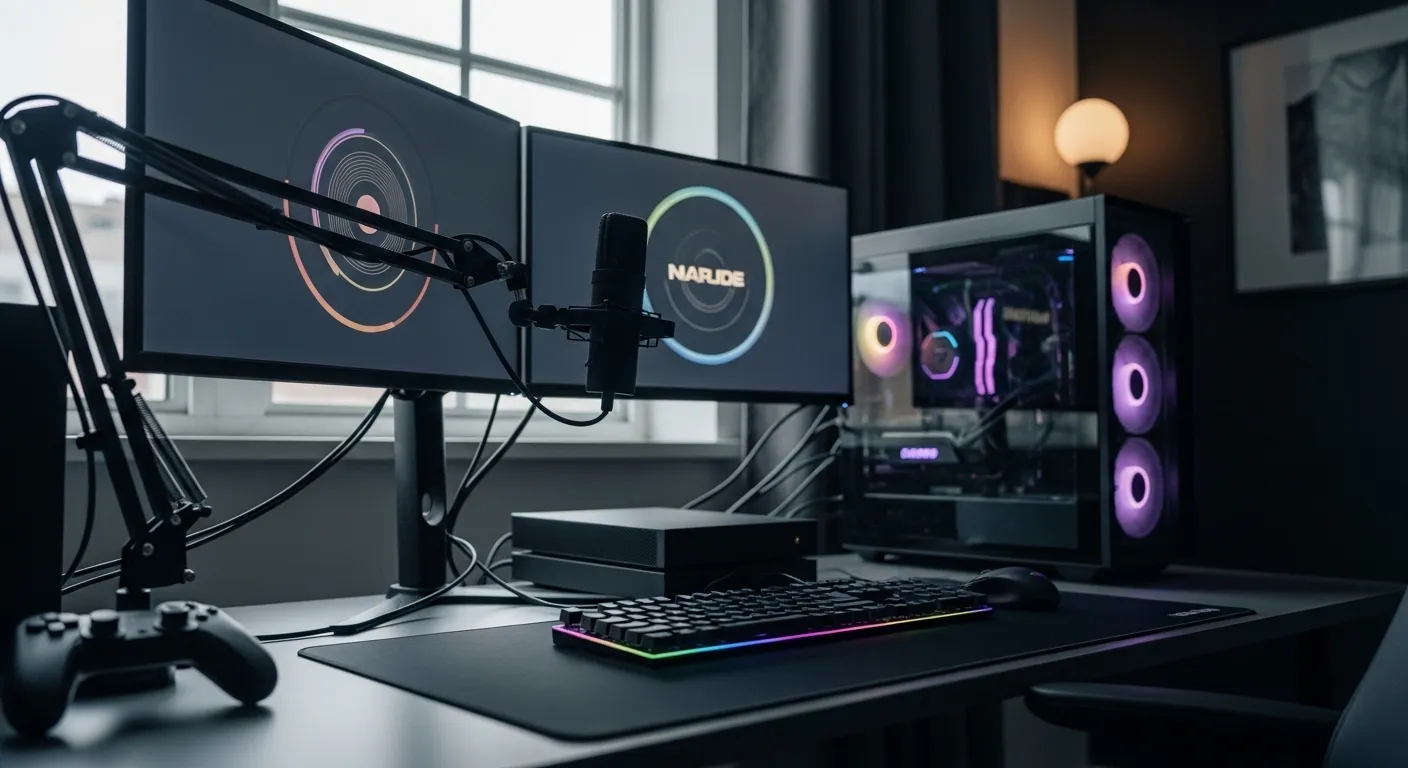
By 2026, what works best will probably mean choosing a monitor around actual use, not just the wildest spec sheet. A solo competitive player may want a smaller, faster panel. A creator, on the other hand, might lean toward a larger OLED or mini-LED display with stronger color and more room for editing or streaming tools. Plenty of streamers may still decide that a dual-monitor setup feels like the right balance, with one screen for play and the other for chat. If you are comparing a full setup instead of a single part, we covered that here: Gaming Hardware Showdown: Best Gear for Every Gamer.
Controllers, Haptics, and Accessibility Will Become Much More Personal
One of the strongest gaming hardware trends for 2026 is how much more people-focused gear is becoming. Accessibility features are getting better. Controls are becoming more modular. New haptic systems are trying to feel better without making things more confusing, and design choices are getting easier on the body, which is a pretty big deal. After all, a controller is the most direct link between the player’s body and the game.
For years, premium controllers mostly focused on high-end features like rear paddles and trigger stops. Those still matter for competitive players. But 2026 should also bring more options for different hand sizes, lower-force buttons, swappable stick tension, better grip textures, and layouts that help cut down on fatigue during longer sessions. That goes well beyond esports use. It can also help people dealing with wrist strain, smaller hands, chronic pain, or even the effects of sitting at a desk all day before playing.
Accessibility may also get better through closer software-hardware pairing. Easier remapping, faster profile switching, adaptive add-ons, and setup wizards that ask what a player needs instead of assuming one standard body type all point that way. That supports inclusivity, but it also brings a very practical benefit: comfort. And when comfort gets better, longer and healthier play sessions usually start to feel possible almost right away.
A simple before-and-after example makes the difference clear. Before, a player with hand fatigue might play less or avoid certain genres altogether. After, a modular controller with lighter actuation and custom profiles could make action games enjoyable again for that same person. That kind of change has a real impact on everyday play.
The same thinking may reach headsets too. Lighter frames, cooler ear cup materials, and smarter clamping pressure can better support mental and physical wellness during longer sessions, not just short ones. Hardware that respects the body offers the kind of progress people will actually feel, not just notice on a spec sheet.
Streaming Gear Is Becoming Smarter, Smaller, and Easier to Use
CES 2026 is worth watching for aspiring creators because creator tools and gaming hardware are mixing together fast, and the reason is pretty simple. The old setup process was awkward. You bought a mic, then an interface, then a light, a camera, and software just to make everything work together. In 2026, more devices are expected to combine some of those steps or handle the annoying parts automatically, which makes the whole setup much easier.
USB microphones are getting better built-in processing, webcams are handling low light more smoothly, compact mixers are making scene switching less of a hassle, and capture tools are doing more without asking for a huge learning curve. For many streamers, the big change is not some massive jump in quality. It is the regular removal of friction, so the day-to-day process feels easier to handle instead of full of small technical problems.
Local AI features are showing up here too. Background noise cleanup, auto-framing, eye-contact correction, and voice leveling are becoming more common. When they are used well, smaller creators can look polished without building a full studio around them. Used badly, though, those same features can feel fake. The best gear in 2026 will smooth things out while still keeping audio and video natural.
There is a practical mental wellness side too. A simpler setup leaves fewer things that can break right before going live, which saves time and lowers stress. That gives creators more room to focus on energy, pacing, and community instead of losing 40 minutes to audio routing. Platforms and blogs like Now Loading fit naturally into that shift because gamers need advice that connects hardware, content creation, and real-life use instead of splitting them into separate worlds.
If cloud play and remote setups are part of that gaming future too, we covered that here: Cloud Gaming in 2026: What Gamers Need to Know, since local gear and cloud delivery are starting to overlap in interesting ways.
Sustainability and Repairability Are Becoming Real Buying Factors
For years, green design in hardware sounded more like brand talk than something you could actually see in the product. That seems likely to change. In 2026, sustainability in gaming hardware should show up in more practical ways: better power efficiency, less wasteful packaging, better repairability, longer driver support, and, on some devices, modular parts, which is a welcome change.
It also affects cost, not just personal values. A device that stays useful for longer usually costs less over time. A controller with replaceable sticks is a better deal than one that has to be thrown out. A laptop with easier battery service and SSD access will stay useful longer as well. Even smaller changes, like standard screws, support for spare parts, cleaner firmware updates, and easier servicing, can make a real difference and save frustration later.
Still, gamers should keep their expectations realistic. Not every brand is going to make repair-friendly decisions, and some products will still stick with sealed designs. At CES 2026, it will be worth watching which companies treat sustainability as part of real engineering, and which ones mostly use it as a marketing angle.
For buyers, a smarter move is to ask how long the product is likely to stay useful. What parts can actually be replaced? It also helps to check whether heat, battery wear, or stick drift are likely to shorten the device’s life. After a year of real use, future-ready gear should still hold up, not just look good on launch day. That is the standard worth watching.
What CES 2026 Could Reveal for Console Players and the Living Room Setup
PC hardware usually gets most of the attention, but CES 2026 could still have a real effect on console players. Even without a new console launch, the living room setup keeps changing in clear ways. Faster TVs, smarter wireless audio, lower-latency controllers, and accessories that blur the line between couch gaming and desk gaming all fit into that shift. For anyone playing from the sofa and still wanting a sharper, more responsive setup, those changes are not easy to ignore.
For console players, the biggest theme will probably be refinement. Better HDMI features, more polished VRR support, lower input lag on TVs, and improved audio positioning could make a living room setup feel much closer to a serious monitor setup. That is especially helpful for players who switch between story-driven games, sports titles, and competitive multiplayer depending on the day.
Cross-device play is another trend worth watching. As more games add cloud saves, cross-progression, and companion apps, the hardware around the console starts to matter more. A portable display, a low-latency headset, or a controller that works well with docks can make the whole setup feel more flexible. Those smaller upgrades become even more interesting when major releases bring more attention to hardware. If open-world blockbusters end up leading the conversation, demand for console and TV accessories could rise along with the hype around titles discussed in The Impact of GTA VI on the Gaming Landscape: A Look Ahead to 2026.
Frequently Asked Questions
The biggest changes will likely be AI-assisted performance tools, more efficient GPUs and CPUs, better OLED and mini-LED displays, smarter streaming gear, and stronger accessibility features. The common theme is better real-life use, not just higher benchmark numbers.
CES 2026 is important because it is where many hardware brands preview the ideas that shape the rest of the year. Even products that launch later often show their design direction, feature focus, and pricing strategy there first.
If your current setup still plays what you want, waiting could be smart. New 2026 hardware may bring better efficiency and more balanced features, and older gear may drop in price once new models arrive.
Some will. AI noise cleanup, power management, video enhancement, and frame generation can improve the experience in practical ways. The trick is choosing features that solve a real problem instead of paying more for branding alone.
Streamers should prioritize stable performance, clear audio, good thermals, and easy setup. A slightly slower system that runs quietly and handles capture well is often better than a louder, hotter machine with harder-to-manage gear.
The Smart Way to Prepare for the Next Wave
The next wave of gaming hardware is not just about raw speed. The most interesting gaming hardware innovations 2026 will probably make setups feel smoother, quieter, more comfortable, and easier to adjust. That includes AI-powered system management, better efficiency in laptops and desktops, faster displays that are easier on the eyes, more personal controllers, simpler streaming gear, and designs built to last longer (which really matters).
Here’s the short version:
- Watch CES 2026 for direction, not just the flashiest announcements.
- Put efficiency and comfort first. Top-end specs are not the only thing worth paying attention to.
- Think in systems: monitor, cooling, audio, desk space, and workflow all matter.
- If you stream, simplicity and stability are worth caring about.
- If you play long sessions, ergonomics and accessibility should not be ignored.
- Future-ready hardware should last, adjust, and reduce friction.
Start by taking an honest look at your current setup. What is actually slowing you down right now: frame rate, heat, noise, eye strain, weak audio, or limited upgrade room? Once that is clear, the flood of CES 2026 news gets much easier to sort through and a lot less distracting. Instead of getting pulled along by hype, it becomes easier to choose gear that really fits the way you play.