
Stardew Valley looks calm at first, but there’s always more going on below the surface, and that’s a big part of why people keep coming back. One day might be spent watering parsnips, talking with villagers, or fishing by the river. Another can become a full planning puzzle built around timing, routes, and farm layouts. That balance is a big reason the game still feels good years after release. Players who like smart planning, cleaner routines, and better farming strategies keep finding new ways to make their time count, and that’s part of the fun.
The numbers show it still has a huge audience. By the end of 2024, Stardew Valley had sold 41 million copies across platforms. It also hit an all-time Steam peak of 236,614 concurrent players and passed 1,009,003 Steam reviews. This is more than nostalgia. The game is still very active, with a large community, strong creator interest, and fresh energy from update 1.6 instead of a short-lived spike. That energy is still easy to see.
That matters for streamers, challenge runners, indie fans, and players coming back after time away. A lot of older guides miss the 1.6 crop changes, the larger multiplayer cap, and plenty of smaller secrets that now shape smart play. This guide covers the best early-game choices, updated profit routes, hidden mechanics, co-op role planning, accessibility tips, streamer-friendly ideas, and common mistakes to avoid. It works as a clear roadmap without making things too complicated. For anyone who wants a farm that feels good and runs well, it lays out the path in a clear way.
Why Stardew Valley Still Dominates in 2025
Stardew Valley keeps showing up for a reason. It works for very different players without losing what makes it fun. Casual players get a cozy routine they can settle into. Competitive players get lots of room for planning and improving runs. Streamers have a game that naturally fits long-running series, and modders have a flexible base they can keep building on (which helps a lot). That range is a big part of why the game keeps finding its way back into the spotlight.
The biggest recent boost was update 1.6. It launched on PC on March 19, 2024, then came to console and mobile on November 4, 2024. Because of that staggered rollout, people kept talking about the game through the whole year. Returning players also had a solid reason to jump back in, whether that meant testing new farming strategies, trying different content paths, or starting a new farm build (which is always a pretty good excuse to start over).
With a new update on the horizon, a worldwide concert tour underway, an official cookbook coming soon, and now over 30 million copies sold, Stardew Valley is thriving more than ever
Here’s a quick snapshot of why the game still matters.
| Metric | Value | Why It Matters |
|---|---|---|
| Lifetime sales | 41 million | Shows huge long-term reach across platforms |
| PC sales | 26 million | Confirms strong core audience for mods and guides |
| Steam peak concurrents | 236,614 | Proves updates still create major comeback waves |
| Steam reviews | 1,009,003 | Shows deep player engagement and trust |
| Multiplayer cap | Up to 8 players | Expands co-op and streaming potential |
Those numbers help explain why the meta keeps changing. A large active player base leads to more route testing, more challenge runs, and faster strategy discovery across the community. For players who want depth but feel tired of live-service burnout, Stardew Valley hits a very comfortable middle ground. It feels polished and complete, while still leaving plenty of fresh ways to play.
Building a Strong First-Year Farm in Stardew Valley Without Burning Out
The first big trap in Stardew Valley is trying to do everything at once. New players plant too much, run out of energy, and spend money on random upgrades. It’s an easy mistake. In Spring Year 1, it helps to focus on a few clear goals: regular income, better tools, and some Community Center progress.
Parsnips are good for a quick start, but potatoes and cauliflower usually give better value if you manage energy well. Fishing is also very strong early on, since it brings in daily cash without the wait crops need. That makes it one of the more reliable ways to keep money coming in during the first season.
Using that mix gives the farm a little breathing room during bad weather, low-energy days, and slower harvest cycles.
A simple route works well:
Days 1 to 5
Plant a small number of crops. Clear just enough land to move around easily (don’t overdo it). Save some energy for fishing or foraging too (you’ll need it).
Days 6 to 15
Upgrade your backpack as soon as you can, since it really helps. Also save some gold for the Egg Festival so you can buy strawberry seeds, you’ll really want them.
Days 16 to end of Spring
Let strawberries boost your cash flow, then start getting Summer ready around sprinklers so hand watering does not take up the whole day.
It helps to think about the farm in layers. Keep the front area for crops that need quick access. Leave one side open for machines you may want later. Save another section for barns, coops, or trees. That kind of layout pays off every day by cutting wasted steps. If a more detailed layout rhythm sounds useful, Stardew Valley: Advanced Farm Rituals for Efficiency goes well with this.
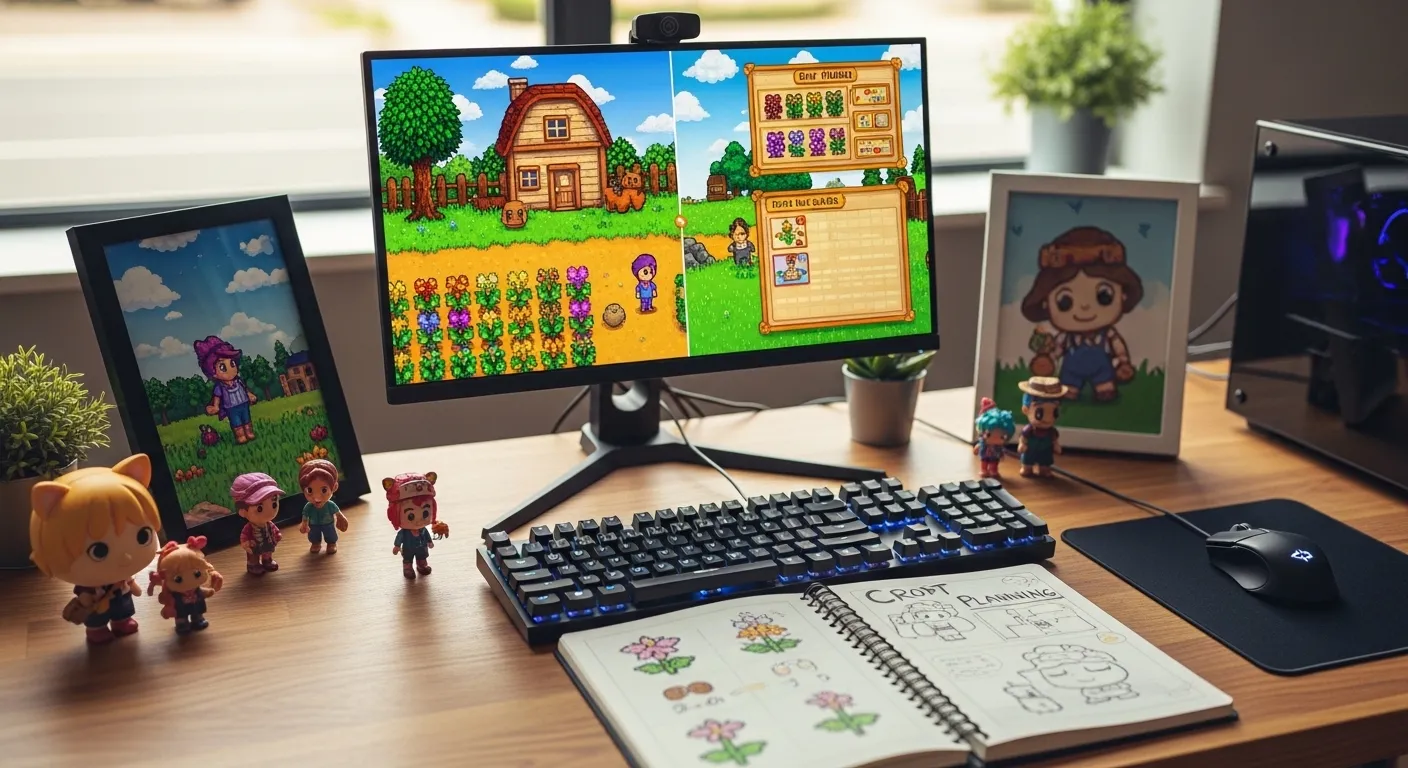
What often gets missed here is pacing. A clean first year usually works better than a chaotic one. There is no need to chase a perfect run, only routines you can stick with. The best ones keep gold, energy, and time working together.
The Best Farming Strategies After Stardew Valley Update 1.6
Update 1.6 changed more than many players expected. It added content, sure, but it also changed how people plan timing, judge crop value, and map out replay routes. The update introduced 4 new crops: carrots, summer squash, broccoli, and powdermelon. It also brought 2 new giant crops and 4 new home renovations. They may seem like small additions at first, but they still affect what a strong season can look like.
A lot of older guides still follow fixed crop routines. In 1.6, better farming strategies usually stay flexible instead. The strongest players now treat each season as a balance between short-term and medium-term returns, mixing quick money early with larger profits a little later. Fast crops help cash flow, especially at the start. Slower crops can create bigger profit windows. Special content and secrets also make exploration feel more rewarding, rather than keeping players stuck in one grinding loop.
Early game
Focus on reliable crops. The ones that get you to the next festival, tool upgrade, or backpack matter more than perfect late-game math; that can wait. It keeps things moving and, honestly, sane.
Mid game
Use automation. Once sprinklers and machines expand, your farm shifts from hard work to planning, which is nice. You’ll plan more.
Late game
Focus on throughput. By this point, travel time, processing chains, and building placement matter just as much as seed prices, and maybe even more.
Before 1.6, a lot of players followed older community routes like they were set rules. After 1.6, route planning feels much more flexible. Secrets, quality-of-life updates, and the wider spread of content reward players who adapt as they play. That also helps explain why returning veterans suddenly felt a bit like beginners again, in a good way.
Reporting on the update said Eric Barone saw 1.6 partly as a solid base for modders too. Even for vanilla players, that still helps, because the community keeps testing mechanics closely and looking at the small details.
If strategy games outside farm sims are your thing, this planning mindset feels a lot like the long-term decisions in Civ 7 Civilizations Ranked: Unique Abilities, Tech Paths & Victory Strategies. The genres are different, but the logic is similar: make smart early choices, then let the systems build on themselves, which is where a lot of the fun comes from.
Hidden Secrets That Most Stardew Valley Players Miss
A lot of Stardew Valley’s charm is in things the game barely explains. Some of it is mechanical, some of it is social, and some of it only appears if you pay close attention. These hidden details are usually small on their own, but over a lot of in-game weeks, they turn into real advantages.
One thing players often miss is relationship timing. People often hand out gifts without thinking about birthdays, daily routes, or how to handle several errands in one trip. That adds up fast and wastes time. An easier route can combine things: a crop run, a town quest, two gifts, a stop at the shop, and maybe some fishing on the way back. It’s not dramatic, but progress comes faster, and the difference is clear.
Weather gets ignored too. Rainy days do more than save you from watering. They open up some of the best chances for mining, fishing, and moving around the map more easily. If the watering can upgrade is timed well, rain can protect your crop cycle while the tool is gone. It’s a small choice, but it can change the pace of a whole season in a very clear way.
There are map secrets too, along with progression choices that matter more than they seem at first. Returning players sometimes focus too much on short-term farm profit and not enough on unlocks that create more profit later. Mine depth, bundles, travel access, and machine setup tend to be more reliable than random bursts of spending. A good farm usually isn’t built around one expensive crop. It works better when the systems around it help each other.
Stardew Valley’s 1.6 update is out now on PC!
That quote was simple, but its effect was huge. The update pushed a lot of veterans back into discovery mode. Suddenly, the best runs were no longer copied straight from old spreadsheets. Players started testing everything again.
Players who like survival loops and hidden systems in other games may find a similar appeal in A Guide to Surviving in Dune: Awakening: Tips and Strategies. Both games reward calm planning over panic action, and that’s a big part of why they feel satisfying.
Co-Op Farm Roles, Streamer Setups, and 8-Player Chaos in Stardew Valley
Multiplayer scale is one of the most overlooked updates in modern Stardew Valley. The game now supports up to 8 players, which changes how a farm runs compared with solo play in a pretty big way. On a solo farm, one person has to handle crops, money, and daily chores alone. In co-op, those jobs get split up, and everything feels a lot more manageable.
The best co-op groups usually split roles early. One player takes crops and seeds, another handles fishing for income, and someone else spends most of the time in the mines. A different player can focus on social links and pushing town progress forward. Extra players might take care of animals, gather resources, decorate, or keep machine chains running. With that kind of setup, multiplayer feels less messy and much easier to organize.
For streamers, this works really well. It gives the stream clear things to follow, lets viewers track different roles, compare progress, and help with choices along the way. Chill co-op streams also make community interaction easier, since the pace is easier to talk through than a fast shooter or MOBA.
A strong 8-player farm often looks like this:
Early week
Shared planting, sorting chest, you know, the basics. Plus tool planning.
Midweek
Dedicated roles stay separate and easy. Miner handles unlocks, Fisher pays for upgrades, and Farmer manages crops.
End of week
By the end of the week, everyone regroups for bundles, building plans, and gift routes.
It cuts down on overlap, which helps a lot, and avoids the usual mess where four people all jump on the same job at once. If the content style leans team-based and role-driven, that same idea shows up in Helldivers 2 Strategies: Mastering Co-Op Play. The tone is obviously very different, but the teamwork design still carries over.
Accessibility is another plus here. In co-op, players can split tasks based on what feels comfortable. One person might skip combat-heavy mine trips, while another handles the menu-heavy crafting. That flexibility makes Stardew Valley a really good fit for mixed-skill friend groups.
Profit, Comfort, and the Mental Side of Smart Stardew Valley Play
Not every good strategy needs to chase the most profit. In a guide about efficiency, that may sound a little strange, but it fits Stardew Valley. Part of why the game lasts is that it leaves room for optimization and peace of mind at the same time. For many players, the best farming strategies are the ones they can return to without making every day feel like a stressful routine.
That also helps explain why the game works so well for wellness-minded streams. The tasks stay clear, the stakes stay low, and progress is easy to see. You finish a day, sleep, and start again. After more intense competitive games, that loop can feel surprisingly grounding, and the change is usually clear right away.
Recent reporting that summed up NPR coverage said Eric Barone has framed Stardew Valley less like a sales machine and more like a world players connect with emotionally. That helps explain why comfort and mastery fit together so naturally here.
What does that mean in practice?
If you are a competitive player
Pick one main goal for each season. In Summer, maybe focus on good sprinklers, they matter. Then use Fall to get ready for Skull Cavern.
If you’re a casual player
Build routines that cut clutter. Keep crop zones simple, because that helps, and store tools in fixed spots. Seriously, don’t plant too much.
If you are a streamer
Pick challenge formats chat can follow easily; that really helps. Good examples are ‘year 1 community center’ or ‘only self-found seeds.’
A calm game can still have plenty of depth. In Stardew Valley, comfort is part of the strategy. When the pace feels clear, better choices come more easily, and the farm tends to run more smoothly.
Vanilla vs Modded: Which Route Gives You More Depth?
Stardew Valley is already really good in vanilla, and mods can give it a second life. For some players, that just means handy quality-of-life tweaks. For others, it means new maps, extra stories, and different challenge runs. Which option feels better depends on what kind of player someone is.
Vanilla usually makes the most sense for learning the core mechanics, checking progress against community benchmarks, or making beginner-friendly content. It is also the clearest way to tell whether farming strategies are actually working, instead of wondering how much a mod changed the result. For players still figuring the game out, that kind of clarity matters.
Once the basics are in place, modded play tends to open things up more. Good mods can make inventory management easier, make visuals easier to read, and add more variety to the overall experience. Some also make streaming more fun, since viewers have more things to notice over a longer series. That extra layer of discovery can keep a playthrough from feeling too familiar.
A good order is to start in vanilla and move into mods later. Doing it that way cuts down on confusion and makes it easier to notice which problems are real and which ones are just part of normal progression. If something feels slow, it becomes easier to tell whether the issue comes from the game itself or from the setup around it.
The long-term value here is big. Barone’s broader 1.6 direction suggested support for modders as a full ecosystem rather than a side hobby. That helps explain why Stardew Valley stays evergreen, while plenty of games fade after a single update cycle.
Sites like Now Loading sit at that meeting point of player creativity, strategy culture, game longevity, and the communities that grow around them.
Common Mistakes That Kill Your Stardew Valley Momentum
Most failed farms do not fall apart because of one huge mistake. They usually drift off course because of small habits that build up over time. Overplanting is one of the biggest examples. If you fill every tile too early, the whole day can vanish into watering, which leaves no time for mining, fishing, or clearing the farm. It is a very common trap, and it catches a lot of players early on.
Gold timing causes trouble too. Buying random seeds right before an important festival or tool upgrade can pull the whole season down. The harm does not always show up right away, but a few days later it becomes clear.
A lot of players also underestimate travel friction. Long walks across a cluttered farm quietly waste a lot of time over a month. Chests work best near the places where they are used, and machines are easier to manage when they are grouped by job. Clean paths help too, saving real in-game hours and making the daily routine feel much easier.
Players often read “profit” too narrowly. Selling raw goods right away feels good in the moment, but processing chains usually create more money over time. At the same time, holding everything forever can choke your cash flow. The better move is to keep some money coming in while still processing enough to support long-term growth.
Here is a quick reference list:
- Do not plant more than your current energy can handle.
- Do not skip backpack upgrades for too long.
- Do not treat rainy days as rest days only.
- Do not scatter machines all over the map.
- Do not compare your Year 1 farm to speedrun-level content.
I’m committed to not working on Stardew Valley until I’m done with Haunted Chocolatier.
That quote gives players a useful point: Stardew Valley is in a mature phase now. Instead of waiting for endless official changes, it makes more sense to learn the systems better and build better habits inside the version already there.
Frequently Asked Questions
The Standard Farm is usually the best start. It gives you lots of open space and makes crop layout simple. That helps new players learn farming strategies without fighting awkward terrain.
Fishing, smart Spring crop choices, and Egg Festival strawberry planning are the fastest early money tools. Try not to overplant at first. You need time and energy left for fishing, foraging, and mining.
Yes, it changed more than many older guides show. New crops, more secrets, quality-of-life updates, and broader multiplayer options all affect route planning. If you are returning after a long break, assume your old plan needs updates.
Yes. It works well for long series, challenge runs, co-op streams, and chill community sessions. The pace also makes it easier to talk with chat than many action-heavy games.
Start with vanilla if you are new or returning. Once you understand your pain points and favorite systems, add mods that support your style. That way, your learning stays clear and your changes feel useful.
Your Next Stardew Valley Season Starts Now
Stardew Valley keeps showing how a small life sim can have real strategic depth, and that’s a big reason people stick with it. Strong farms usually do not come down to luck. They come together through timing, layout, role planning, and smart trade-offs. This covered why the game still holds up, how update 1.6 changed the meta, which hidden secrets help with daily progress, how co-op roles can shape multiplayer, why comfort can help efficiency, when going modded makes sense, and which mistakes quietly slow your momentum.
If you want the short version, these are the main points that actually help during play:
- Build around energy and time, not just crop price.
- Use festivals, rain days, and similar moments as big planning tools.
- Treat update 1.6 like a fresh strategic layer.
- In co-op, assign roles early.
- Keep your farm layout clean, and make sure it stays repeatable.
- Choose farming strategies you can actually keep up instead of only copying them.
Stardew Valley rewards players who plan a season ahead. That applies whether someone is a solo min-maxer, a cozy hobbyist, or a streamer building a long-form series. Start small, then keep improving. Let each in-game week teach you something useful, even when it gets messy. The secrets are there, but finding them takes a sharper plan.