
Arrakis doesn’t care if someone is new, geared, or way too confident. That’s the first thing Dune Awakening teaches. The desert punishes bad routes, slow planning, poor water control, and greedy decisions faster than most enemies do, and yeah, it’s rough. That harsh edge is also a big part of why the game stands out. It mixes survival systems, open-world pressure, and MMO-style competition in a way that feels pretty different from a usual sandbox.
The player numbers show how much attention the game got. Dune: Awakening launched on June 10, 2025, reached an all-time peak of 189,126 concurrent players, and then settled into a smaller but still active core, with a 5,385.24 average over the last 30 days and a 24-hour peak of 9,389. Funcom also said the game passed 1 million players. More importantly, the current servers are not just full of launch-week tourists trying things out. Many active players now know the systems, the routes, and the risks, which changes the feel of the game pretty fast.
| Metric | Value | What it means for you |
|---|---|---|
| Release date | June 10, 2025 | The live game has already gone through real post-launch adjustment |
| All-time peak concurrents | 189,126 | Huge launch interest means lots of shared knowledge and competition |
| Last 30 days average | 5,385.24 | Current players are more likely to be experienced and efficient |
| 24-hour peak | 9,389 | There is still an active daily population for PvP, trading, and co-op |
| Players milestone | 1,000,000 | Strong long-term traction keeps guides and strategy talk relevant |
This guide breaks down the survival strategies that matter most: early priorities, water discipline, combat choices, Deep Desert planning, group play, gear decisions, streamer-friendly risk management, and common mistakes to avoid. Want a broader overview before getting into that? Those basics are covered here: Dune: Awakening, What You Need to Know Before Launch and Dune: Awakening Gameplay Mechanics and Strategies for New Players. The focus here stays simple: survive long enough to matter, because none of the rest means much if a player can’t stay alive.
Learn the Real Rule of Arrakis: Survival Comes Before Progress
A lot of players start Dune Awakening like it’s a race to get the next weapon, zone, or fight. That way of thinking gets people killed fast. Your first goal is not speed. It’s stability. Before you go after bigger rewards, you need a loop you can count on for water, shelter, safe movement, and getting resources back. The boring stuff comes first, and in this game that early setup decides how far you really get.
Joel Bylos, Creative Director at Funcom, explained the core idea clearly.
We're making a survival game, but we also want it to feel like Dune.
Keep that quote in mind any time a risky trip starts to feel worth it while your supplies are low. The game is very clear about what it is, and it doesn’t hide that much. Yes, it’s about fighting well, but it’s also about spotting danger early enough that it never becomes a death screen.
So your first hours should focus on four things:
Build a basic survival loop
Get used to quick, safe runs to collect what you need. Don’t wander without a reason. Go out, grab supplies, come back, then craft and reset so you’re ready for the next run.
Protect your water economy
Water isn’t just another bar on the UI. It decides how far you can go, when you fight, and how ready you are to explore. If your water plan is weak, everything else starts to fall apart fast.
Respect open sand
Open travel may seem fast. But out there, it’s often the opposite. It leaves you open to environmental danger and unwanted attention. Shorter, smarter routes can beat direct ones and save you trouble.
Upgrade with purpose
Don’t make everything the second it unlocks. Start with the upgrades that fix a real problem. Early on, better storage and mobility usually help more than anything else. Staying alive can also be more useful than raw offense, especially at the start.
If resource pressure is what makes every choice feel tense, Top Survival Games With Advanced Resource Management Systems adds helpful context for why Arrakis feels so demanding.
Water, Heat, and Movement: The Core Survival Loop
Once players stop thinking like tourists, the next step is learning the desert’s rhythm. In Dune Awakening, the players who do well usually last longer because they waste less, and that adds up fast. They spend less time, use less stamina, save more water, and avoid extra trips. It looks simple on paper.
Regular progress starts there. Each expedition goes better with a small plan, not just a quick run. Every choice counts, and the result shows up fast.
Before leaving base
Before you head out, check your water, healing, ammo, repair status, inventory space, and what you’re actually going out to do. If you can’t answer “Why am I going out?” in one short sentence, the trip will probably go badly.
During travel
Stay alert for threats along your route. And try not to get too pulled into side goals, even though it’s easy, or let one lucky find take you too far off plan. A full inventory doesn’t mean much if you die carrying it.
On the return
Head back earlier than greed tells you to. Good survival players leave with something and stay alive. Bad ones go for one more cache, which is usually the trap, and end up losing everything.
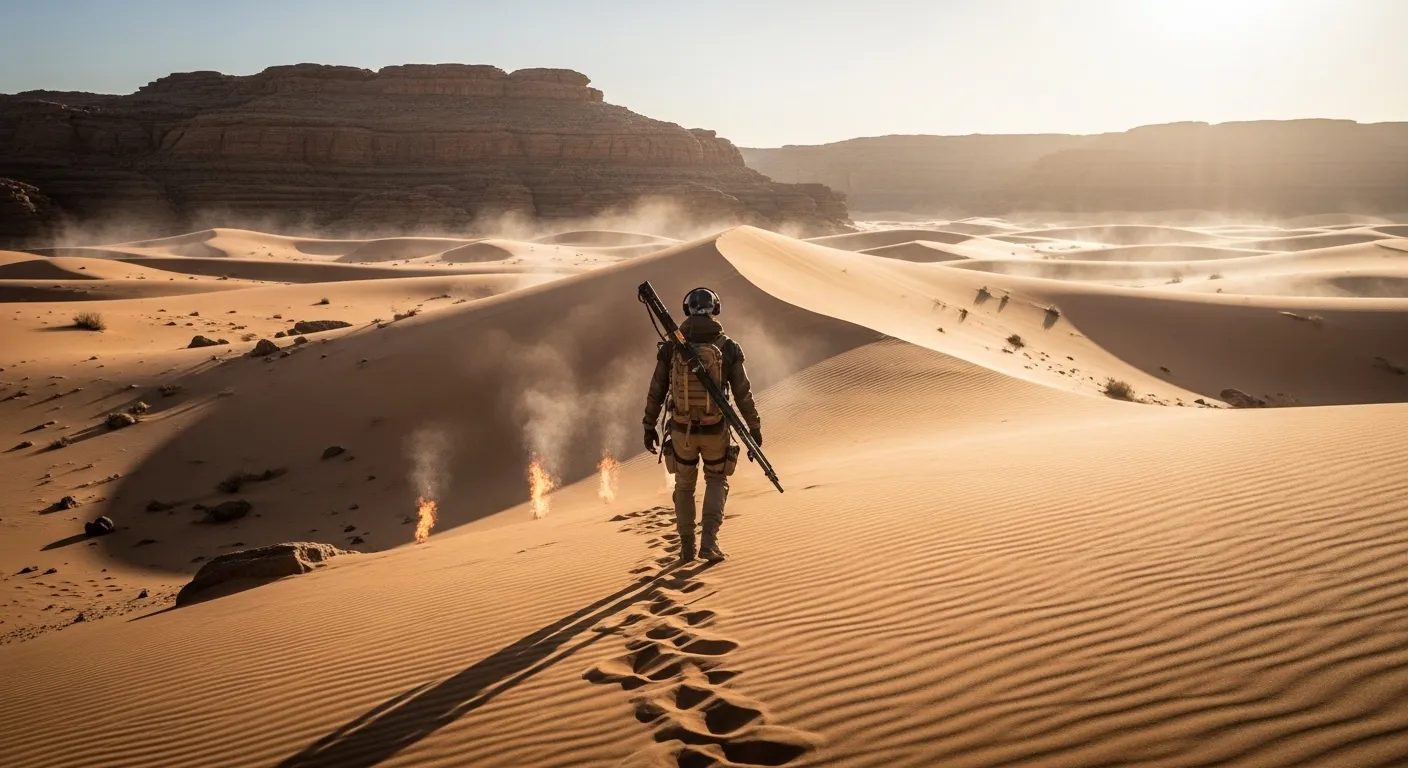
It helps to think of the loop as a triangle: base security, route safety, extraction timing, and timing on the return. If one side gets weak, the whole run starts to wobble. That matters even more after launch, once more active players learn the profitable routes and the usual ambush spots, and that tends to happen fast.
The broader system side is covered here: Dune: Awakening Gameplay Mechanics: What to Expect. It ties survival habits to the larger structure of the game, which makes it easier to see how those choices work together.
Try watching route-planning or beginner survival videos with one clear goal. You do not need to copy exact paths forever. Their real value is seeing how experienced players make choices. The best survival strategies come from decision habits, not fixed scripts.
Smart Early-Game Progression Beats Fast Progression
In a lot of survival games, the opening is about settling in before the real danger starts. In Dune Awakening, the danger is there right away, so smart progression matters more than flashy moves from the start. The strongest early players usually are not the boldest. They are the ones who stay disciplined.
A weak early-game path usually goes like this: rush into new areas, pick up too much loot, ignore the right time to retreat, die, rebuild, repeat. It feels active and busy. But it actually slows everything down. A better path can look almost boring from the outside: regular farming, careful unlocks, smart base placement, and low-risk upgrades that keep giving value.
Before-and-after thinking helps here:
Before disciplined play
You leave base half-prepared (it happens) and chase random objectives. Then you come back with a mix of resources that don’t fit any clear crafting plan. Progress feels messy (and looks it).
After disciplined play
Each run has a purpose. One trip might handle water support, another brings back crafting parts, and another helps base growth move forward. After a while, your inventory starts to show those choices, which feels good. You also lose less.
That kind of focus matters even more on a mature server. Joel Bylos said it well when he described how players tend to read population trends in the most extreme ways, and yeah, that still happens:
It’s either, like, this is dying because player numbers are low, this is healthy because player numbers are high.
For players, the main point is to stop playing around launch-week nostalgia and play for the ecosystem that actually exists now. A smaller, more consistent population can mean tougher opponents and more thoughtful neighbors. In that setting, efficiency matters a lot more.
A good early plan includes:
- One dependable farming loop
- A base location you can defend, and that’s easy to resupply from
- Crafting priorities that help survival first
- A clear line between ‘safe trip’ gear and ‘risk trip’ gear
- Banking gains often as a habit
For more beginner-focused progression help, the environmental side is covered here: Dune: Awakening Survival Strategies, Desert Resource Cycles, Sandstorm Navigation & AI-Driven Threats.
Combat Survival: Pick Fights That Pay Off
A lot of players say they want better combat results, but what they really need is to pick fights more wisely (and yeah, that’s the big change). On Arrakis, the point isn’t to win every battle. It’s to survive. The real goal is getting through more encounters than your rivals, which means knowing when to stay out of a fight.
The best combat survival strategies start before the first shot.
Scout first
Use the terrain, distance, and line of sight. Push into a dark area and you’re already behind. Even a quick check of enemy numbers, cover, and escape routes can save your run, and save you too.
Know your loadout role
Not every setup needs to take every fight, and that’s okay. Some gear works better for control, while other options suit burst or escape. Build around what your current resources can really support (for you right now).
Fight near exits
If a battle goes bad, having room to retreat matters more than confidence. Smart players stay near fallback paths and exits, so you can bail.
Value your loot over your pride
If your bag is already full, your willingness to take risks should drop fast. Backing off is fine. There is no shame in it.
Competitive players and streamers can learn a lot from co-op shooters, especially games where team roles matter and knowing when to retreat matters just as much as pushing forward. Helldivers 2 Strategies: Mastering Co-Op Play is useful here because the mindset overlaps in a very clear way. Information, teamwork, and smart extraction usually beat reckless aggression, even if that is easy to forget in the moment.
Common combat mistakes include tunnel vision, chasing fleeing enemies too far, wasting healing or ammo on fights that are not worth much, or getting pulled into bad engagements. Good players keep asking one question: If I win this, what do I actually gain? If the answer is not clear, the fight probably is not worth it.
Deep Desert Runs: Treat Them Like Expeditions, Not Casual Roams
A lot of players enter the Deep Desert and either step up their play or lose hours of progress, and yeah, that really happens. This is not just another biome. It’s a serious test that rewards planning, awareness, and even a bit of restraint. More than most areas, it gets at what makes Dune Awakening feel like itself.
Joel Bylos put it this way:
This is the true Deep Desert of Arrakis. This is a place where people are scared to go. This is where the fremen live. We're passing outside of the shield wall now. This is where the War of Assassins and the PvP is allowed to happen.
That isn’t just flavor text. It’s a warning. If you go in treating the place like normal exploration, you’re already going about it the wrong way.
Your Deep Desert checklist should include:
A clear target
Before you head in, know what you want to do. Farm one specific resource and keep it simple. Or scout a route and finish one clear objective. Don’t improvise the whole run, or you’ll waste time there.
Backup supplies
Pack more recovery gear and travel support than a normal zone needs; it adds up fast. In the Deep Desert, small mistakes pile up and can ruin a trip.
An exit plan
How things end matters too, not just how they start. Keep backup ideas in mind before contact starts, so you do not get stuck.
PvP expectations
Other players are probably watching for hesitation, greed, or pushing too far. Move like people can see you, even if you think they can’t, and stay sharp.
For streamers, this zone brings natural tension and story, which is part of the fun. A clean extraction after a near-disaster can be better content than a simple kill montage. Viewers enjoy the high-stakes choices and the real pressure.
Build for Teamwork, Content Creation, and Long Sessions
Not every reader plays the same way, and that’s fine. Some want better results in competition, while others look for stream-ready moments. Some care more about comfort, accessibility, or staying focused during long sessions. The best survival strategies should support all of that, so players can play their way.
For co-op squads
Give everyone a simple role. One player can watch route safety, another keeps an eye on supplies, and someone else makes combat calls. Loose teams waste time when everyone thinks someone else is paying attention.
For streamers
Talk through your choices, and let viewers know why you turned back, skipped a fight, or judged a risk that way, it really helps. Survival content works better when people can follow your thinking, and yeah, you can feel it.
For long play sessions
For long play sessions, take short reset breaks. Drink water in real life too, seriously. Survival games can pull you into stress loops and lead to bad habits or frustrated decisions. After a rough loss, even a five-minute break can save the next hour.
For accessibility and comfort
Where possible, lower visual clutter, adjust sensitivity for controlled aim instead of twitchy overcorrection, and keep hotbar habits simple. It’s small stuff, really, but a clear setup helps cut down on panic mistakes.
A good gaming community helps too. Readers who follow more detailed game breakdowns from Now Loading get more from guides when they use them as decision-making tools instead of rigid scripts to copy line by line.
Gear Choices, Meta Shifts, and Patch Awareness
Live games change fast, so any guide for Dune Awakening comes with one clear warning: check the latest updates before relying on older advice. Balance changes after launch can quickly change resource value, route safety, or build strength.
Funcom’s own success with the game points to that longer-term view.
Dune: Awakening is our fastest-selling game ever!
A strong launch and a committed player base usually mean more changes over time. So what does that mean in practice?
Keep two loadout mindsets
Stick with one safe, reliable build for farming so you avoid extra headaches. Then keep a second, riskier setup for contested zones, so you can adapt each session without risking your whole inventory if things go bad.
Do not overinvest too early
If a weapon or route feels dominant, that might not last. Upgrade in stages; that helps. And don’t put all your rare materials into one idea too early, or you’ll regret it.
Watch the player base, not just patch notes
The meta shifts when players build better habits, and it changes when developers tweak the numbers too. If more people start using a route, it becomes less safe for you, even if the map itself stays exactly the same.
Competitive awareness starts to feel a lot like strategy games and live-service shooters. The best players are good, but they also adapt fast when those patterns start to change.
Troubleshooting the Most Common Survival Mistakes
If you keep dying in Dune Awakening, it usually isn’t because you need more gear. Most of the time, it comes from one of these common problems, and those are the first things to check.
You travel without a plan
Set one main goal before you leave base, and add one backup goal too. You’ll be glad you did.
You stay out too long
So don’t wait, head back sooner, seriously. And a safe, shorter run still counts as progress, yeah, it still counts.
You bring your best gear everywhere
Keep your farming gear away from the high-risk stuff. It’s a simple fix. Save your best tools for jobs that really need them, you’ll thank yourself.
You miss the server’s current vibe
Fix it by noticing which zones get busy, where fights usually start, and which routes feel overused, it all adds up. Small stuff, but you’ll feel it.
You tilt after a loss
Reset first, then look at what really went wrong. In a harsh game like this, a lot of deaths happen because the same emotional mistake shows up again right after the first one, and yeah, it can snowball fast.
If your runs feel chaotic, a quick reference helps. Cut down the number of variables, skip extra goals and detours, and build more regular routines. Keeping it simple usually gets you better results fast.
Final Survival Reminders Before You Head Back Out
By now, the pattern is pretty clear. Dune Awakening rewards players who plan ahead. The desert is dangerous, but it still gives you signs if you slow down enough to catch them. Every bad run leaves clues. Small ones. Maybe the route was too long. Maybe the loadout was doing too much. Maybe the loot was fine, but the extraction timing fell apart.
Keep one thing in mind before heading back out: survival works like a chain. Water, route, combat, gear, retreat, all of it connects. If one part is weak, the rest start to crack too. Once that happens, the whole run gets harder fast. Habits that stay useful even when the meta changes are the ones worth keeping.
Coming back after time away? Expect a sharper player base than there was at launch. If you’re new, though, that is not always bad news. It just means patience matters even more now. You do not need to win every encounter. You need to outlast your worst habits.
Frequently Asked Questions
The best beginner tip is to focus on a stable water and resource loop before chasing fights or distant exploration. If your basic survival routine is weak, every other system becomes harder.
Go into the Deep Desert only when you have a clear purpose, backup supplies, and an exit plan. Treat it like an expedition, not a casual trip, because PvP pressure and punishment are much higher there.
Yes, but solo play demands more discipline. You need tighter route planning, smarter fight selection, and stronger extraction timing because you cannot rely on teammates to recover your mistakes.
Bank gains often, split farming gear from high-risk gear, and leave zones earlier than your greed wants. Most repeated losses come from overextending, not from being underpowered.
Older guides can still teach good habits, but exact builds, routes, and priorities may age fast in a live game. Always compare advice against the current patch environment and what active players are doing now.
Make Your Next Run Count
Surviving on Arrakis isn’t about becoming fearless. It’s about being harder to punish. The best Dune Awakening players rely on routines that cover mistakes before they get worse. They stay on top of water before panic kicks in (which happens fast) and travel with a clear plan. Small habits make a real difference. They skip fights that offer little reward, treat the Deep Desert with respect, and adjust as the game or the community changes.
Here are the main points to keep in mind:
- Survival comes before fast progression
- Water discipline shapes every smart run
- Efficient early-game habits beat reckless expansion
- Good combat starts with good fight selection
- Deep Desert should be treated as endgame-risk territory
- Keep safe farming setups separate from high-risk loadouts
- Review losses calmly and adjust one habit at a time
Better results usually start with one small fix. Tighten your route, pack smarter supplies, or head back earlier (yes, even if the run still feels fine). Over time, those choices turn into better habits. On Arrakis, tiny improvements add up to real staying power. Great survival strategies in Dune Awakening come from smart decisions made before the sand closes in, not flashy hero moves.