
If Dune: Awakening is on your radar, the main question is pretty simple: is this the kind of survival MMO worth jumping into right now, or does it make more sense to watch it a bit longer before committing? That matters even more for players who like planning builds, tweaking graphics and control settings, streaming new releases, or learning complex systems early before most of the player base catches up, since that is often part of the fun.
Dune Awakening arrives with massive ambition. It is clearly not trying to be a small-scale survival game, and it also does not seem interested in fitting neatly into the box of a simple action RPG. Instead, it mixes open-world survival, online multiplayer systems, environmental dangers, faction conflict, and long-term live-service support inside one of sci-fi’s most recognizable settings. That is exciting. Still, it also usually means release expectations should stay at least a little realistic.
It helps to know what kind of game this really is before jumping in. The launch data matters, but so does how hard the onboarding may feel for new players, and Arrakis itself can matter just as much as any rival player. This guide breaks down the game’s launch picture, core gameplay identity, hardware and performance expectations, streamer potential, accessibility concerns, and the biggest questions careful players should ask before putting in dozens or even hundreds of hours. For a broader look at the systems and the moment-to-moment play loop, Dune: Awakening Gameplay Mechanics and Strategies for New Players is a useful next step.
Why Dune: Awakening matters more than a normal release
A lot of games launch with hype, but not many show up with this much pressure on day one. Dune Awakening has a huge license behind it, around five years of development, and a player base that brings together survival fans, MMO players, lore fans, and streamers looking for the next big sandbox (which is a lot to carry). That is a pretty wide mix, and it usually makes expectations even tougher to meet. Funcom spent 5 years making it, and that tells you pretty quickly this was not meant to be some fast trend-chaser.
The early numbers were strong. The PC release landed on June 10, 2025, while head start access began on June 5, 2025. At launch, the game reached an all-time peak of about 189,333 concurrent players on Steam. It also hit a Twitch peak of 221,716 viewers, which was a big sign that creators were interested right away (and probably keeping a close eye on it too). Pretty hard to miss.
| Metric | Verified Figure | Why It Matters |
|---|---|---|
| PC release date | June 10, 2025 | Shows the title is already live on PC |
| Head start start | June 5, 2025 | Early-access style momentum helped shape first impressions |
| Steam peak concurrents | 189,333 | Very strong launch interest |
| Twitch peak viewers | 221,716 | High creator and spectator curiosity |
| Total players reached | 1,000,000 | Broad early reach for a survival MMO |
Those numbers tell a clear story. Dune Awakening was not niche when it launched. A lot of people showed up, and Funcom even said, “Dune: Awakening is our fastest-selling game ever!”
Dune: Awakening is our fastest-selling game ever!
Still, strong launch interest and long-term staying power are not the same thing. For players thinking a little further ahead, the real question is not whether the game had hype. It obviously did. What usually matters more is whether the time investment will actually pay off as the live game keeps changing through the next months and updates (that’s probably the part most players will care about most).
What kind of game Dune: Awakening actually is
This is where a lot of players could get tripped up, and that’s pretty easy to understand. If someone jumps in expecting a pure story RPG with a tidy quest line and a clear ending, those early expectations will usually be wrong. Dune Awakening is much closer to a survival MMO sandbox, which is a very different kind of game. That means dealing with resource pressure, planning routes across Arrakis, danger spread across the map, progression systems, social friction, and priorities that can change fast depending on what the world throws at you.
Funcom’s design approach makes that pretty clear. Joel Bylos said, “Make the game fit Dune, don’t make Dune fit the game.” That helps explain why the systems feel so harsh. It also helps explain why the environment matters so much, and why the game leans into danger instead of sanding down every rough edge, which in most cases seems intentional.
Make the game fit Dune, don't make Dune fit the game.
Arrakis is more than background scenery. It’s the main obstacle. Gavin Whelan put it directly: “The main character is always going to be, for me, the planet. The planet is the big thing that’s going to kill you. It has the worm, it has, you know, the sandstorms, the weather, the sunlight. These things are inherently dangerous.”
The main character is always going to be, for me, the planet. The planet is the big thing that's going to kill you. It has the worm, it has, you know, the sandstorms, the weather, the sunlight. These things are inherently dangerous.
So success depends a lot on awareness and planning, especially here. Players will likely need to watch terrain, timing, and risk before heading anywhere that matters. Want a closer look at how those systems connect? There’s a more detailed breakdown here: Dune: Awakening Gameplay Mechanics: What to Expect.
The Dune Awakening launch story: huge attention, then a sharp drop
This is probably the part smart players should watch most closely. Dune Awakening launched with a huge burst of interest, then player retention dropped hard after that first wave, which is something a lot of online games usually go through. That alone does not mean the game failed. New releases often cool off once the launch rush passes. Still, the size of this drop matters if the goal is to figure out whether it makes sense to grind now, wait for major patches, or treat it more like a side game for a while.
Steam tracking data showed monthly average players falling from 102,629 in June 2025 to 5,809 in April 2026. That is a steep drop. Over the last 30 days, the average was around 5,565, with a 24-hour peak of 7,283, while live player counts during the research snapshot were sitting in the low thousands. Steam reviews were also around 75,382, with a positive rating close to 69.61%. That puts it in a ‘Mostly Positive’ range, but not really in the kind of breakout range many players would usually hope to see.
| Signal | Figure | Reading |
|---|---|---|
| June 2025 monthly average players | 102,629 | Massive early interest |
| April 2026 monthly average players | 5,809 | Large long-tail drop |
| Last 30 days average | 5,565 | Smaller but active core population |
| Steam reviews | 75,382 | High engagement and many opinions |
| Positive review rate | 69.61% | Good but mixed enough to note friction points |
A few takeaways stand out pretty clearly here. Interest was not the issue. The bigger problem seems connected to retention, especially around onboarding, progression pacing, and the usual live-service adjustments that often appear early after launch. At the same time, the game still has an active player base and ongoing support behind it. It is not an abandoned project.
For players who like watching a game change over time, that can still be a good sign. Players who want polished stability right away, though, may read the same numbers more as a warning and use that as their example.
Combat, survival, and the Dune Awakening systems that will decide your fun
A lot of Dune Awakening will probably come down to whether this layered tension is actually fun. It’s not just about aiming well or picking up better loot. Players also have to manage resources, read the terrain, survive the weather, decide when to move, and react to threats that aren’t always human, which is a lot to juggle at once. That pile of systems is pretty heavy, and that seems to be exactly what the game is going for.
Funcom has been pretty clear that they want combat to feel different. Joel Bylos said, “We have a very unique approach to combat, it’s not like anything really, in any other games.” That’s obviously a big claim, and maybe a risky one too. Still, it gives a better idea of what to expect. This probably won’t feel like a copy of Rust, Conan Exiles, or a standard MMO hotbar grind. Instead, it looks more like a mix of survival pressure and Dune-specific rules, including environmental danger, careful movement timing, and a world that pushes back a lot.
We have a very unique approach to combat, it’s not like anything really, in any other games.
That difference could be exciting, but it could also make the first few hours feel a little rough. When a game mixes unusual systems together, new players often feel lost at the start. Streamers may love that, since weird mechanics usually turn into great content. Competitive players might like it too, because fresh metas give fast learners room to stand out. Casual players will probably need a bit more patience, along with a few messy early runs.
A good way to handle the first sessions is to treat them like scouting runs. Before chasing efficiency, learn the danger rules. You’ll want to get a feel for movement, extraction, where resource risk starts to appear, and how environmental hazards connect to everything else. What happens if it gets played like a normal open-world RPG? Arrakis will probably punish that quickly. And for more focused survival advice, we covered it here: Dune: Awakening Survival Strategies, Desert Resource Cycles, Sandstorm Navigation & AI-Driven Threats.
Onboarding and accessibility in Dune Awakening are real issues, not side notes
This is one of the biggest parts of the article, especially for the Now Loading audience. A lot of gaming sites stay focused on hype, lore, or graphics, which makes sense. But for real players, those first few hours usually decide a lot. If a game is hard to read, awkward to control, or just confusing, even a strong world can lose people fast.
Funcom has openly acknowledged that feedback. Joel Bylos said, “The most important feedback we’ve gotten from our players is really on the onboarding and the accessibility of the game. We want to make sure that Dune: Awakening is a approachable game.”
The most important feedback we've gotten from our players is really on the onboarding and the accessibility of the game. We want to make sure that Dune: Awakening is a approachable game.
That quote stands out because it shows what many players already suspected. Dune Awakening is ambitious, and that kind of complexity can easily turn into friction when the game does not teach players clearly. For accessibility-minded gamers, this is not some tiny detail. It shapes whether the UI, the amount of information on screen, the control options, and the overall learning flow actually work for different kinds of players.
Before jumping in, it helps to ask a few honest questions first:
Are you okay with learning through failure?
If yes, you’ll probably enjoy the challenge. I think it could be a good fit for you. If not, you may want to wait for more onboarding updates for now.
Do you prefer clear tutorials?
If so, you’ll probably notice a few rough edges, just a heads-up. I think the game got better over time, but early onboarding was a big complaint, especially at the start.
Will you be teaching others on stream?
That adds another layer. If the audience is new, they’ll probably need a clearer explanation of the game than the game gives by itself, which honestly happens pretty often.
Accessibility is part of the live-service side too. Games like this often get better after launch as feedback comes in, so patient players will usually have an easier experience later than people who jumped in right away, especially in those first weeks.
What Dune Awakening streamers, creators, and competitive players should watch
On paper, Dune Awakening has a lot that could work well for creators. It has striking visuals, a well-known IP, social conflict, environmental chaos, and systems that can create their own stories, which is usually a good sign. The 221,716 Twitch peak viewers show that launch-week interest was clearly there.
Still, spectacle by itself usually is not enough to give a game lasting creator value. People keep watching when a game keeps creating tension, clear rivalries, steady updates, and the kind of unpredictable moments that become great clips. Dune Awakening seems to have some of that already. Sandworms, storms, the risk of open-world travel, and faction pressure can all create strong stream moments, and probably plenty of messy ones too. The bigger question is whether the active player base and the pace of updates can keep the game feeling fresh over time.
Scott Junior pointed to the appeal of long sessions when he said, “We Already Have People Who Have Put Over 1,000 Hours In”. That does not mean most players will stay that long, of course. But it does suggest real depth for a certain kind of systems-driven player, especially those who like learning a game gradually over time.
We Already Have People Who Have Put Over 1,000 Hours In
For competitive players, system stability is probably the main thing to watch. Funcom has said big changes are on the way for endgame zones and mode interaction. The studio noted, “We’re looking at a total structural overhaul of the deep desert. We’ve got a massive change in how PvP and PvE interact.”
We're looking at a total structural overhaul of the deep desert. We've got a massive change in how PvP and PvE interact.
That means the strongest early strategies may not end up as the long-term meta. For players who enjoy adapting, that could be exciting. For anyone who finds shifting rules frustrating, it probably makes sense to wait, follow the changes, and see how things settle first.
Platforms, hardware thinking, and why Dune Awakening timing matters
Right now, the platform timing is pretty easy to explain. Dune Awakening launched first on Steam for PC, while the console release was pushed to 2026. For anyone on PlayStation or Xbox, waiting is usually the smarter choice. By the time the console version arrives, there may be better onboarding, more patches, a steadier content roadmap, and fewer of the usual early issues. In this case, that often means a better first experience.
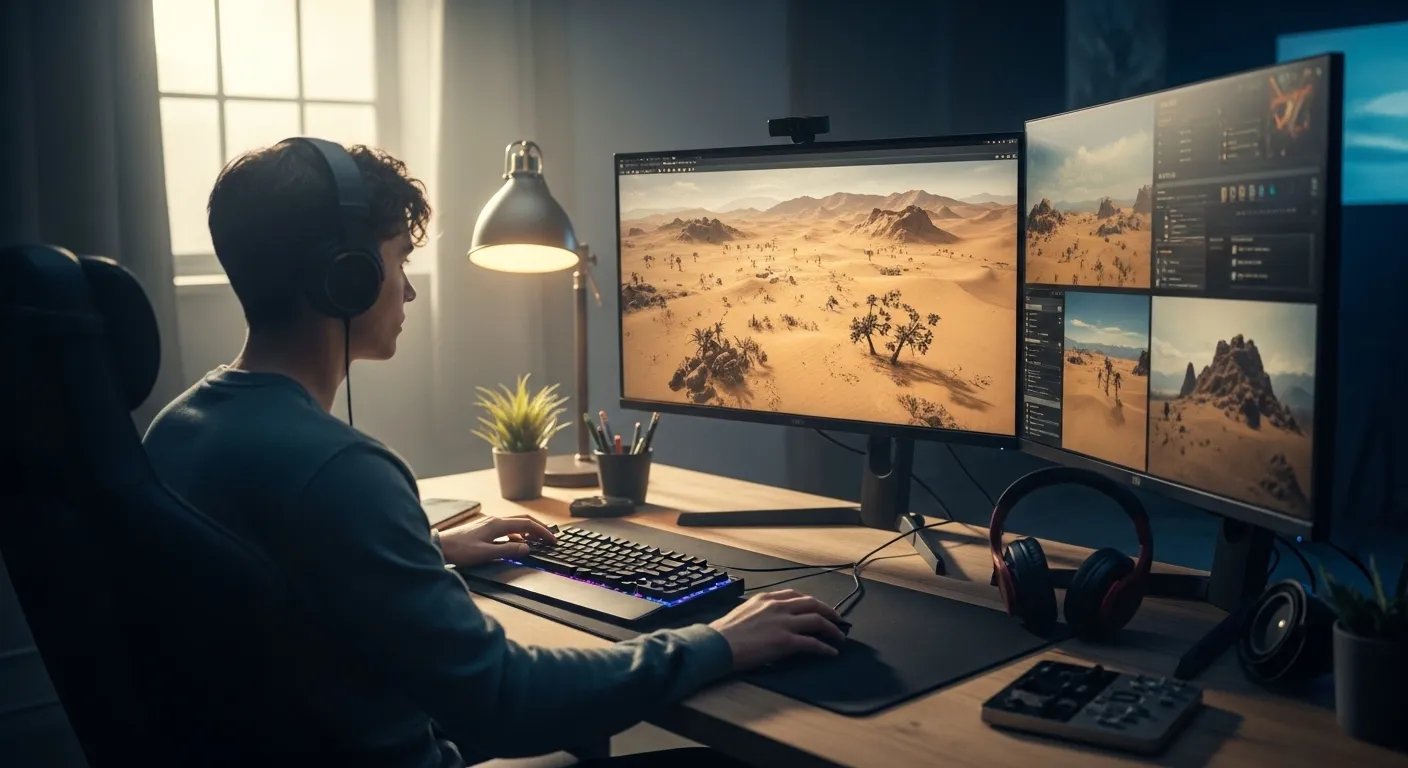
For PC players, the real question is less about whether the game runs at all and more about what kind of experience they want from it. Survival MMOs can be hard on hardware because they mix large areas, online syncing, visual effects, and interfaces that keep a lot on screen. And for people who stream, hardware planning matters even more. CPU headroom, RAM, and stable storage speed can matter just as much as raw GPU power, sometimes even more than people expect.
One useful approach is to plan for longer sessions, sudden bursts of visual chaos, frequent multitasking, and those moments when everything is open at once. Maps, builds, chats, Discord, and capture tools may all be running together. If a setup already struggles in other online open-world games, it is probably not smart to assume Dune Awakening will be easier to run.
That is also why waiting can make sense. If hardware is already near its limits, later patches may improve optimization, and community testing may help show which settings matter most. That is often the safer call for anyone who does not want to spend every session fixing problems.
The Dune Awakening live-service angle: this is a long game, not a one-week event
One of the most useful things to know before jumping in is that Dune Awakening seems built for the long run. Reports tied to the roadmap mention a 3-month content cadence and even a 10-year plan. That is a big swing, honestly, maybe even a little wild, and it changes how it makes sense to judge the game.
Instead of only asking, “Is launch perfect?” it makes more sense to ask, “Is the foundation interesting enough to keep growing?” Seen that way, Dune Awakening probably looks less like a game meant for one intense weekend and more like something you follow across multiple seasons. It feels similar to other online games that keep changing, where first impressions do matter, but later updates often shape the overall reputation even more.
For players who enjoy seeing a world change over time, that could be great news. For people who prefer complete experiences that stay mostly fixed, it may be a harder sell, which is fair. It really asks for a different mindset. Dune Awakening usually makes more sense as a project with momentum than as a finished museum piece. And for anyone who follows live-service trends more broadly, it also connects with bigger discussions around adaptation and system design in AI in Gaming: How Technology is Shaping Game Storytelling.
There is also one practical thing to keep in mind: when a studio is willing to rework deep systems, it often suggests player feedback can help shape future updates and design choices. That can make the game better over time. But it also means early guides, build advice, and strategy tips may become outdated very quickly.
Should you play Dune Awakening at launch, wait for updates, or just watch for now?
This is probably the part where the choice really matters, and for most readers, it just depends on what kind of player they are, since that is usually the biggest factor.
Jump in now if:
You like survival games with a bit of roughness. You enjoy learning as you go. And you want to get in early, before guides likely settle the meta. If you stream new online games, that helps. You can turn discovery into content.
Wait a bit if:
You care a lot about onboarding, more stable PvP balance, and smoother progression, especially early on. You may also want patches and better community advice, which often helps, I think. Maybe better optimization too, if that matters to you.
Watch only if:
You’re mostly into the idea of Dune, but not as much into the pressure that usually comes with a survival MMO, which, honestly, can be a lot. This game is probably a better fit if you like systems, risk, and the kind of long-term progression loops that often need time to really open up. Pretty specific, yeah.
A helpful comparison is how people approach other huge release cycles. Some want to jump in for that first rush at launch. Others would rather wait for a later major update, when the game’s real shape is often easier to see and understand, and in most cases that helps. That same mindset shows up in wider launch-watch culture too, whether people are following GTA VI Release Date Confirmed: What Fans Can Expect This November or tracking shifting release speculation in GTA VI Anticipation Index: Latest News, Speculation & Gameplay Feature Predictions.
Frequently Asked Questions
Yes. The PC version launched on June 10, 2025, with head start access beginning on June 5, 2025. If you are searching before buying, think of this article as a ‘before you jump in’ guide rather than a pre-release preview.
It is best described as a survival MMO or online survival sandbox. It mixes resource management, environmental danger, exploration, progression, and multiplayer systems rather than focusing on a simple single-player campaign.
It can be, especially during updates or high-interest periods. The game creates strong visual moments and emergent stories, but long-term stream success will depend on patch cadence, audience interest, and how well you can explain complex systems.
Maybe. If you like figuring things out through trial and error, you may enjoy starting now. If you prefer smooth onboarding and polished tutorials, waiting for more updates could be the better move.
Not yet. Console release has been delayed to 2026, so PC is the main option right now. Console players may actually benefit from waiting, since they could get a more refined version when it arrives.
The bottom line for smart players
Dune Awakening feels like one of the more interesting online game launches in a while. It’s clearly trying to do a lot, and with a launch this big, some early issues always seemed pretty likely. The good side is easy to see: strong world design, lots of early attention, a clear live-service plan, and enough system depth to keep high-investment players busy for a long time. At the same time, there are some clear warning signs, including a sharp player drop after launch, friction during onboarding, accessibility concerns, and core systems that are still being tuned.
Here’s the short version:
- Dune Awakening had a massive PC launch with nearly 189k concurrent players.
- Game release expectations should stay balanced. Launch hype and long-term retention usually are not the same thing.
- The planet itself is a major threat, so survival awareness often matters just as much as combat skill, and sometimes maybe even more.
- Onboarding and accessibility have been real issues, and Funcom has said that directly.
- PvP and endgame systems are still evolving. Deep Desert is changing too, so the current meta probably will not last long.
- Streamers and competitive players may get the most value early, especially if they like learning in public, adapting fast, and figuring things out as they go.
- Console players should be patient, since 2026 may bring a smoother version.
If that mix sounds exciting instead of exhausting, Dune Awakening may be worth your time. If not, it probably makes more sense to watch the next round of updates and come back once the systems have settled a little more. In most cases, that is usually the safer move.