
Cloud gaming has moved past the “interesting experiment” stage. By 2026, it’s part of everyday gaming for a lot of people. Many players jump straight into high‑end games without owning a console or gaming PC, which still catches some folks off guard. You press play and the game runs. No waiting on downloads, no patches taking over your evening, no hardware upgrades looming in the background. That kind of ease fits well with how younger gamers play now, where access matters more than prep and free time isn’t shaped around install bars.
For competitive players and streamers, cloud gaming isn’t just background noise anymore. It shapes how games are built, how hardware purchases feel, and how much mental effort goes into setup. Always stressing about specs and upgrades wears people down. Dropping that pressure opens up more space to focus on matches, skills, and actually enjoying the time spent playing. After years of chasing better parts, the relief is clear almost right away.
This guide covers cloud gaming in 2026 without hype or theory. It looks at real market shifts, current tech, and what actually works right now. Competitive play, indie games, accessibility, and mental wellness all get space. The focus stays on what matters to gamers, not investor talk or boardroom trends.
By the end, readers should have a clear sense of whether cloud gaming fits their style. Both strengths and limits are laid out, especially where latency and controls still matter. Choices feel easier when they’re based on experience instead of fear. For a wider look ahead, there’s more context in Future Trends in Gaming: 5 Emerging Technologies Ahead.
Why Cloud Gaming Exploded Heading Into 2026
The rise of cloud gaming didn’t happen overnight. By 2026, several slow changes finally lined up. Internet speeds reached a level where streaming games felt normal instead of shaky. Server tech got better too, with stronger compression and smarter delivery that kept things smooth. At the same time, hardware burnout set in. After years of upgrade cycles, many players stopped caring about chasing the next GPU. When all of this came together, cloud gaming shifted from “sounds nice” to something people actually used.
Lifestyle and Access Shifts
Lifestyle changes mattered just as much, and they’re easy to see. Play is no longer stuck to one screen or one room. A few minutes on a phone, a longer session on a tablet, then picking things back up on the TV can all happen in the same day. Cloud gaming fits that flow. Progress follows the player, not the device. Sessions are often shorter, but they happen more often, filling small gaps instead of waiting for one long stretch of free time.
The numbers back this up. Usage moved past early curiosity into regular, repeat play. Players didn’t just try it once, they kept coming back, which mattered more than any launch spike.
| Metric | Value | Year |
|---|---|---|
| Global market size | 4.81 billion USD | 2026 |
| Estimated users | 455 million | 2025 |
| Projected CAGR | 43.31% | 2026, 2035 |
| Asia-Pacific share | 46% | 2025 |
Revenue growth only tells part of what’s going on. Access is where the change shows most clearly. Players in more places can run demanding games on basic hardware like phones, tablets, smart TVs, and older laptops. Precedence Research analysts point to global reach as the main reason, especially outside wealthier markets. Removing the need for pricey imported hardware opened doors that used to stay shut.
The cloud gaming market growth is attributed to the growing popularity of gaming across the globe.
Time and Convenience Advantages
Time pressure adds another push. Downloads, installs, and constant updates feel heavier than before. Cloud gaming skips all of that. Games start with a click, switching titles is fast, and trying something new feels low-risk. Streamers and competitive players, who jump between games every day, benefit the most.
Social play fits easily into this setup. Joining friends is quick, sessions start fast, and shared spaces feel more natural. More detail on that shift lives here: Future Gaming Trends: Virtual Communities in 2025.
The Tech Stack Making Cloud Gaming Feel Playable
Latency used to stop most cloud gaming ideas before they could really take off. In 2026, it hasn’t disappeared, but it’s low enough that many players forget about it once a game starts. That change didn’t come from one big breakthrough. It came from better 5G coverage, more fiber networks, edge computing, and servers placed closer to where players actually live.
Edge and Network Improvements
Edge computing does much of the heavy lifting. Shorter data paths mean signals don’t need to travel across the globe and back. Smaller data centers now sit near major cities, cutting delay in ways players feel right away. Fast‑reaction genres like shooters and fighting games finally respond well enough for serious play. In some cities, round‑trip latency drops below 20 milliseconds, a number that once seemed out of reach for streamed games.
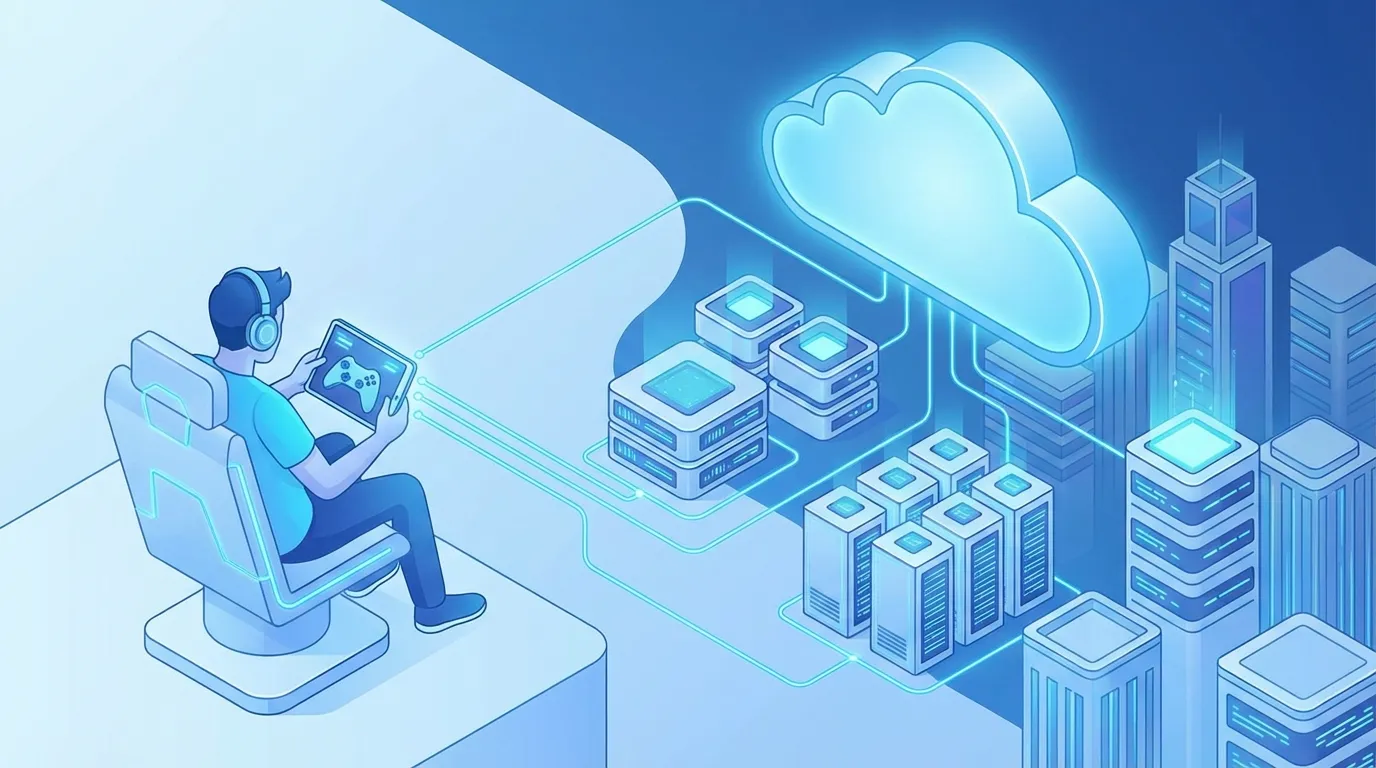
A modern cloud gaming session follows a clear flow, even if the systems behind it are complex:
- Your input goes to a nearby edge server.
- The game runs on powerful cloud hardware.
- Video streams back using advanced compression.
- Your device focuses on decoding the stream.
This setup also brings extra benefits. Phones and tablets don’t have to push as hard, so batteries last longer and devices stay cooler during long sessions. With less stress on local hardware, devices also tend to last longer over time.
Predictive and Accessibility Enhancements
Input prediction is another quiet upgrade. Platforms study how people play and guess what input might come next. When those guesses are right, everything feels instant. When they’re wrong, the delay stands out and immersion drops fast. By 2026, these systems are more reliable, trained on large data sets from widely played games.
Accessibility has improved along with performance. Custom controllers connect more reliably, adaptive inputs offer deeper remapping, and voice controls benefit from cloud‑side processing. Moving heavy tasks off local hardware helps these features feel fast and consistent during real gameplay, not just in menus.
Competitive Gaming and Esports in the Cloud Era
For competitive players, trusting cloud gaming used to feel risky. Playing on your own hardware felt safer for a long time, and that was fair back then. By 2026, that gap has closed more than most people expected. Top-tier esports still depend on local setups, and that hasn’t changed. What has changed is that cloud gaming now supports ranked play and even some semi-pro competition. It didn’t happen all at once, but the shift is clearly happening.
Several real upgrades made this work. Low and stable latency is now common in most major regions, which removes the biggest worry competitive players had. Anti-cheat systems run in the cloud and update right away, without relying on player machines. Anyone who has dealt with exploits knows how much this helps. Server-side hardware is also standardized, so everyone plays on the same specs. That means fewer surprises and fewer advantages tied to expensive rigs or heavy tweaking.
Before cloud gaming:
- Players needed expensive PCs and frequent hardware upgrades.
- Updates often broke setups, and cheaters took advantage of local systems.
After cloud gaming:
- Entry costs are lower, and driver issues disappear.
- Cheat detection is faster and handled in one place.
I think it's just magical that you could have a game console in the Cloud.
For aspiring esports players, this shifts the path forward. Practicing on tournament-level hardware without owning it opens real doors. Scrims can happen from almost anywhere, which helps players outside established regions. Coaches benefit too, since performance data stays consistent from match to match.
Cloud gaming is also showing up inside major franchises. Call of Duty and Battlefield are testing cloud-friendly modes built around large-scale play. If competitive shooters are your thing, this comes up in GTA VI vs. Battlefield 6: Which Game Will Dominate the 2026 Gaming Landscape?, where we look at how streaming tech could shape what competition looks like next.
Cloud Gaming for Streamers and Content Creators
For streamers, cloud gaming quietly changes how a live session feels. By 2026, many creators use the cloud as a fast place to test ideas. Games start almost right away, installs are gone, and switching genres mid-stream feels easy. This matters during long broadcasts, where even short delays can lead to awkward silence and drifting attention. Quick switches between games help keep the energy up and the chat involved for hours instead of minutes.
Cost and Setup Benefits
Cost is another clear plus. Trying out a new game no longer means owning a high-end GPU. The cloud handles the heavy work, which lets creators focus on their show. Some services allow direct streaming, while others send video into OBS or similar tools. That gives enough choice to fit different setups. For newer creators, this makes starting out much easier, especially compared to buying expensive hardware upfront.
Streaming Limits and Local Options
Cloud setups also cut down on noise and heat during long sessions. Fewer fans spinning means a quieter space and less heat in the room, which helps with focus over time. Streamers working from small apartments often notice this right away, along with less sound leaking into their microphones.
There are still limits to keep in mind. Bitrate caps can soften visuals, and fast camera movement can cause compression issues. Even in 2026, a strong internet connection and smart scene changes are needed to handle these trade-offs.
For a look at local options, the guide on Gaming Laptops 2026: Innovations and Must-Have Features explains when local power still makes sense.
Indie Games and Cloud-First Design
Indie developers often get real value from cloud platforms, even if they don’t talk about it much. One of the biggest benefits is how clean things stay behind the scenes. Piracy drops, patch mix-ups fade away, and everyone plays the same version. Testing gets easier, and bug reports make more sense. Less cleanup. Fewer “how did this even happen?” moments, which really helps once players start pouring in.
By 2026, some indie games are already built cloud-first, including:
- Persistent worlds that keep running.
- Server-driven AI behavior.
- Live updates.
- No patch downloads at all.
Players usually notice this right away. Launches are smoother, broken builds show up less often, and fixes land faster, sometimes the same day feedback comes in. Developers can also tweak balance or story beats within days, not weeks.
Discovery gets a boost too. Streaming lets players try games they might skip installing, helping experimental or short story-driven titles reach curious players without huge marketing pushes.
AI fits in naturally. Analysts say cloud-based AI helps small teams do more with less. There’s more detail here: AI in Gaming: Innovations Shaping Game Development.
Accessibility and Mental Wellness Benefits
Lower friction is the real draw of cloud gaming. By easing the load on hardware, it keeps play easy, which matters after a long day. That ease helps mental wellness in quiet ways. There’s less stress about constant upgrades and less worry about being shut out by hardware limits. Jumping into a game feels lighter, even when energy is low, because there’s no mental list of settings to adjust or specs to check.
Accessibility grows along with that. Players with disabilities can use custom devices that connect straight to the cloud, with changes handled on the server instead of the local machine. UI scaling, voice controls, and real-time difficulty changes are easier to add this way, without extra setup or clunky fixes.
Money matters too. A big upfront console buy doesn’t work for everyone. Subscriptions spread costs over time, which lowers the barrier to entry and reduces regret if interests shift.
Always-online play can still feel draining. Burnout happens, so many players set limits, use cloud gaming with purpose, and make space for offline time.
Cloud Gaming vs Local Hardware in 2026
The real difference comes down to how people actually play. Cloud gaming lets you switch between devices with almost no setup, which is great for quick sessions or trying things out. Local hardware still wins when control matters more, big mods, competitive matches, or the peace of mind that a shaky connection won’t wreck the night. Each option fits different habits, and most players notice that trade‑off right away.
Here’s a quick comparison without burying anyone in specs.
| Feature | Cloud Gaming | Local Hardware |
|---|---|---|
| Upfront cost | Low | High |
| Latency control | Medium | High |
| Portability | High | Low |
| Offline play | No | Yes |
Lots of gamers now mix both, and it makes sense. Cloud covers short, low‑commitment play, while local setups handle tournaments or mod‑heavy games where tight control really matters. That combo feels normal and helps keep spending under control.
If building a PC is on the table, A Beginner’s Guide to Building Your Gaming PC from Scratch explains how to balance performance and budget without overspending.
Common Problems and How to Fix Them
Most cloud gaming issues come from the network, not the service, and the frustration hits fast, especially when latency jumps.
Common problems:
- Input lag spikes and overall delay that pull you out of a match.
- Video blur from compression, along with region lock limits.
What actually helps? A wired internet connection reduces hiccups, and lighter background traffic keeps things more reliable. Playing during off‑peak hours and choosing the closest servers usually smooths things out. Router quality often gets overlooked; raw speed isn’t enough, so updating firmware and pausing downloads helps keep play consistent.
FAQs (quick answers)
Cloud gaming depends less on high speeds and more on a consistent connection. Jitter and packet loss break streams, so a wired setup helps, and even average internet speeds can run smoothly.
Streaming works right away on most platforms, direct or captured, with no extra setup. The main limit during a stream is connection stability; bitrate caps matter less.
Sometimes, yes, mostly at the start. Subscriptions cost less upfront (easier on budgets); you avoid hardware upkeep, but over time many people end up spending about the same.
Cloud gaming won’t fully replace consoles. It’ll sit alongside consoles and PCs. Based on the game, the moment, or your mood, you’ll switch between them, those mood changes matter (we’ve all been there).
Where Cloud Gaming Is Headed Next
Cloud gaming in 2026 has moved past the “maybe” stage. It’s now a real option with clear upsides, especially for players without high-end PCs or consoles. That ease of access matches how gaming fits into daily life: phones and tablets, shorter sessions, and quick play during commutes or breaks.
What’s coming next feels pretty clear. Smart TV support will likely go deeper, while AI upscaling keeps improving image quality and stream stability. Social features are also getting tighter. Cloud services are linking straight into streaming platforms and existing friend systems, which cuts out extra steps. Subscription bundles may expand as well, mixing games, video streaming, and shared virtual spaces into single ecosystems where people already hang out.
Main points:
- Cloud gaming’s growth isn’t theoretical anymore; adoption keeps climbing.
- Competitive play works for many players now, not just rare setups.
- Streamers have more freedom in where and how they play.
- Indie games gain reach through cloud-first design.
- Thoughtful limits can help with both spending and screen time.
Rather than picking sides, flexibility usually works best. Cloud gaming shines during travel or short sessions, while local hardware still wins when latency or mods matter. Staying curious keeps options open.
For additional insights, check NowLoading’s Cloud Gaming Hub for related guides and platform updates.