
Games feel bigger today, and they usually feel smarter during everyday play too, you’ve probably noticed it over time. Enemies often learn your habits and respond, instead of repeating the same patterns. Worlds change based on what you actually do, not just on scripted moments. Bugs also tend to get fixed faster than they used to, which matters most during active seasons or right after launch. At the same time, small teams are releasing ideas that once needed huge studios and years of work. AI in gaming sits right in the middle of this shift, often quietly at first, but very clear once you start paying attention (and hard to unsee after that).
For players, AI often shows up as deeper immersion and fewer rough spots during regular sessions. For developers, it removes many old limits around time and scale while opening up new tools. Game development isn’t only about hand-built systems or nonstop crunch anymore, which is a real relief. AI helps with design tasks, supports testing and balance, and shapes parts of storytelling and dialogue. A lot of this stays behind the scenes, and most players never notice it directly. Still, changes are happening fast, and you’ll feel them once you look closely.
Competitive players have likely run into smarter matchmaking and stronger anti-cheat systems during ranked play. Indie fans, and people making content around those games, may have noticed how bold small studios have become, often more experimental than before. AI-based tools let games respond to audiences in real time, like adjusting difficulty or pacing. This isn’t just talk; you can feel it in how games are built and how they play from moment to moment.
In this guide, the focus is on how AI in game development works today and where it helps most. It also looks at what this means for gamers, creators, and developers in practical terms, without heavy theory. You’ll see how smarter NPCs are made, how production speeds up, where accessibility improves, how hardware fits in, and which future trends are starting to form. Along the way, everything ties back to the kinds of games and tools you already care about.
If you want to explore a bit more, there are related pieces like AI in Gaming: Innovations Shaping Game Development and The Role of AI in Game Development Explained.
How AI in Gaming Is Changing the Game Development Pipeline
AI now appears in almost every part of game development, and by now that feels normal. Work that once took months can finish in weeks, sometimes even faster, which still surprises people. Smaller teams see the biggest gains. With the right tools and a clear plan, they can take on projects that were once only realistic for large studios. For many indie teams, that shift changes what feels doable.
Automation is usually where the effects show up first. AI can create early concept art, textures, animations, and even sound effects without waiting on full production pipelines. That freedom often matters more than pure speed. Teams can test ideas fast, drop them just as fast, and move on without getting stuck. Early design benefits the most, since quick feedback often decides which ideas move forward and which quietly disappear, usually without anyone missing them. The process stays light and focused on outcomes.
Speed isn’t the whole story, though. Iteration looks different now. Developers can review several versions of a mechanic or level and get early signals about player interest before spending real time or money. It’s more than simple comparisons. Predictive analytics point to risky design choices early, which usually means fewer surprises later. That leads to less rework and far fewer stressful late-stage redesigns that once caused crunch.
Testing has changed a lot too. AI agents can play a game thousands of times, acting in unexpected ways again and again. They often catch edge-case bugs that human testers overlook. Recent industry data suggests AI-driven testing can double bug detection efficiency and cut pre-launch bug discovery time by more than half.
| Area | Traditional Approach | With AI |
|---|---|---|
| QA Testing | Manual playtests | Automated AI agents |
| Asset Creation | Hand-crafted | AI-assisted generation |
| Balancing | Player feedback only | Simulated player models |
Market numbers help explain why interest keeps growing. The AI in games market is already worth billions and is still expanding fast. Studios have moved past casual trials, and many now treat AI as a normal part of daily workflows instead of a risky experiment.
AI usage has become a daily habit, not an experiment. Tools have become faster, better trained, and more predictable, and developers have improved at prompting AI and guiding generative models.
For indie studios especially, this shift feels big. Small teams suddenly have more leverage than before. For a grounded look at how developers use these tools day to day, there’s more detail in Navigating Indie Game Development: Insights from Experts.
Smarter NPCs and Adaptive Gameplay in AI in Gaming
One of the most obvious ways AI shows up in games is through smarter non-player characters. NPCs aren’t locked into stiff scripts anymore, and players usually notice fast, sometimes after only a few encounters. Enemies react to what’s happening, learn from recent actions, adjust their behavior, and occasionally surprise players. These moments may seem small on their own, but together they make the world feel active instead of predictable.
Behind the scenes, modern AI often relies on behavior trees and reinforcement learning. Put simply, the game pays attention to how someone plays and responds to it (and no, usually not in a creepy way). After a few fights, enemies might change tactics. Allies make fewer obviously bad choices, like blocking doorways or ruining careful plans, which used to happen far too often. Difficulty also shifts quietly. It usually feels fair rather than like the game is cheating, and that balance makes a real difference.
This kind of flexibility leads to emergent gameplay. NPCs respond to context instead of following fixed paths, which creates situations no designer planned step by step. Players remember these moments because they feel personal and unexpected. There’s no script, just reactions, and the world feels more active because of it.
RPGs and strategy games show this especially well. Rely too much on traps and enemies may pull back. Commit hard to one build and a rival might adapt to counter it. The game pushes back just enough to keep things from feeling stale, which helps a lot in live-service and competitive modes.
AI also quietly manages pacing. If someone is struggling, pressure eases without drawing attention. When things feel too easy, challenge builds up slowly. No sliders, just smoother immersion.
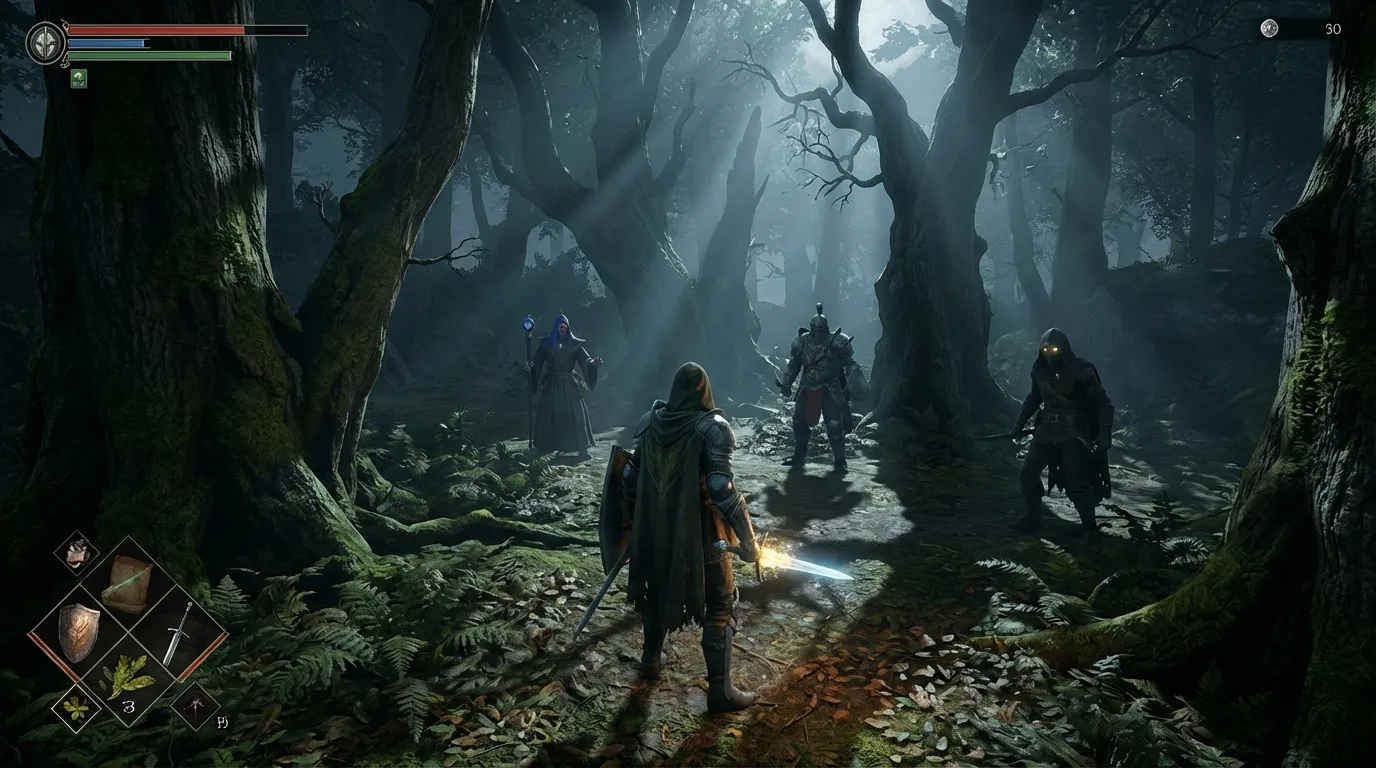
For competitive players, adaptive systems also improve matchmaking and training. AI can review matches, point out bad habits, and even step in as high-level opponents during practice. That feedback can sting, but it’s often useful.
All of this helps reduce grind fatigue. Games feel more respectful of a player’s time, which matters when people are juggling work, streaming, and mental health more than ever.
AI-Driven Testing, Balance, and Fair Play
For a long time, testing was one of the slowest and most draining parts of game development. Human testers usually run out of time before they run out of things to check, and that’s often when problems start stacking up. It wasn’t just slow; it could be frustrating in very specific ways. AI changes that pattern in a practical, noticeable way, and teams often feel the impact early, sometimes right in the first playable builds.
Instead of relying on limited hands-on time, AI bots can run thousands of simulated play sessions and push systems until weaknesses appear. Edge cases show up faster, and mechanics get stressed enough to reveal exploits that might otherwise stay hidden. Because of this, studios can react weeks or even months earlier, adjusting balance well before launch rather than rushing at the end. The result is often smoother pacing and fewer late nights.
Bug hunting is only part of the picture. AI-driven simulations also show how different player types interact with the same mechanics. Casual habits and competitive extremes, including speedrunning patterns, can be tested side by side. Balance changes come from this wider view instead of relying only on the loudest forum posts. In my view, that usually leads to healthier tuning.
Over time, the benefits stack up. AI-based QA finds more issues faster, cuts down on costly day-one patches, and helps support balance in live games where updates are constant.
| Metric | Improvement | Impact |
|---|---|---|
| Bug Detection | 2x faster | Fewer launch issues |
| Testing Time | 50% less | Faster releases |
| Balance Updates | Continuous | Healthier metas |
Fair play is another area where AI often makes the biggest difference. Machine learning models can catch cheating patterns that human reviewers miss, especially when they’re subtle or spread across many matches. They also flag toxic behavior in chat and voice systems, helping protect younger players and streamers who are always in the public eye. That kind of support matters in real, everyday ways.
AI is overhauling the game development process, driving innovation and reducing development costs and time-to-market. But the technology offers no shortcuts to customer acquisition.
Generative AI and the Rise of Indie Creativity
Generative AI is a big reason indie games are so popular right now, at least from my view. Tools for art, animation, level design, and audio let tiny teams work at a scale that used to feel unrealistic. What really shows is how quickly ideas move. Instead of getting stuck, you can watch a concept turn into something playable, which makes the whole process feel more active and fun.
Day to day, the biggest change is how fast testing happens. Rather than outsourcing work or cutting ideas early, developers try things right away. You’ll often see a single designer jumping between three or four world styles in one afternoon, which still sounds a bit wild. Writers can test branching dialogue without spending weeks buried in huge scripts. That speed and freedom are usually why more ideas survive past the early stage.
Because trying things is cheaper, experimenting feels safer. When failing costs less, creators take risks they’d normally skip. Strange mechanics get tested, weak ideas get dropped, and odd instincts get followed instead of ignored because of tight timelines. With less pressure, curiosity has more room, and that often shows in the finished game.
This doesn’t mean AI replaces creativity. It mostly supports it. People still choose what fits and what feels right. AI just cuts down slow, repetitive steps like rough drafts, placeholder art, or first-pass animations, the boring parts.
Industry reports say around 20 percent of new Steam games now disclose some level of AI use, a number that doubled in a year. Many of these come from small studios testing ideas bigger teams often pass on.
If you enjoy seeing how indie games influence larger studios, we covered that here: Impact of Indie Games: How Small Studios Are Reshaping AAA Gaming.
Generative tools also support user-created content. Players build maps, detailed mods, and custom modes faster than ever, and some Fortnite-style platforms even pay creators real money, which changes who gets to take part.
All of this works well with streaming culture. Games often grow into places to build, share, and hang out, not just something you finish and move on from.
Hardware, On-Device AI, and Performance Gains
AI isn’t just a software trick anymore, it’s tied closely to hardware now, and that’s the real change. New GPUs and mobile chips ship with dedicated AI processors, and consoles are heading the same way. You can feel the difference, and honestly, it often feels like something that should have happened sooner.
What really stands out is on-device AI. It usually brings faster responses and better privacy, since games can adjust difficulty or NPC behavior without sending data to the cloud. That helps a lot in competitive play, where even small delays during live or ranked matches can decide who wins.
There’s also a plus for how games hold up over time. As AI models get more efficient, older hardware can still gain from smarter upscaling, predictive loading, and targeted performance tweaks. This can stretch the life of consoles and PCs, cut down on e-waste, and reduce the need to upgrade right away.
AI improves performance in simple, practical ways. Visuals scale up, frame rates stay steadier, and settings adjust automatically, often without players noticing, which is usually a good thing. The result is smoother gameplay and less time spent in menus.
Accessibility gets better too. Voice commands, adaptive controls, and AI-powered visual aids let more people play, matching the industry’s push toward inclusive design.
If you care about your setup, this shift is worth watching. It’s explored more in the Gaming Hardware Showdown: Best Gear for Every Gamer.
AI, Mental Wellness, and Player-Centered Design
What often stands out is how fast games can affect mood, focus, and stress. Even short play sessions can leave an impact. Most players know the feeling when a game clicks, or when it slowly starts to wear them down instead. AI lets developers react while someone is playing, instead of guessing later how players might have felt.
Rather than being obvious, emotion-aware systems usually work quietly in the background. When frustration builds, difficulty can ease or the pace can slow for a short time. If boredom starts to show up, new challenges can appear to shake things up, often without calling attention to the change. Because of this, the experience feels natural instead of forced or intrusive.
Over time, this data helps with healthier design choices. Developers can spot stress spikes, burnout moments, and patterns that lead to fatigue. That makes it easier to add features that encourage breaks and reduce unhealthy play loops, instead of pushing endless sessions, which helps everyone.
This works especially well during long sessions and in competitive or cooperative modes, where tension rises quickly. The result feels less draining and easier to stick with.
Streamers benefit too. Viewers usually enjoy smoother pacing and fewer rage moments, which helps creators stay consistent and take better care of themselves.
AI moderation also matters. By cutting down harassment and toxicity, games can support safer communities, especially for marginalized players.
Tools and Platforms Powering AI in Gaming
Many modern engines and platforms now build AI tools right into everyday workflows. This usually lowers the barrier to entry and makes trying new ideas feel less intimidating, especially for smaller teams. Getting started is easier, and there’s often less friction, which matters most when teams are exploring ideas instead of locking decisions too early.
Game engines often include built‑in navigation and behavior systems, along with analytics in the same workspace. Cloud services and middleware handle large‑scale simulations, NPC dialogue, and voice interaction. When these pieces live in one place, teams spend less time jumping between tools, which helps them keep moving.
No‑code and low‑code AI tools also make a difference for non‑programmers. Designers and writers can test smarter interactions without waiting on engineers, speeding things up and cutting down on back‑and‑forth.
Tool choice usually comes down to team size and goals. Indie developers often prefer flexible, lower‑cost options that can change mid‑project. Larger studios tend to invest in custom models built around their games. Different needs lead to different paths.
Integration still ends up being the deciding factor. AI works best when it fits existing pipelines and feels natural to use, as part of the flow rather than something forced in.
Common Concerns and Practical Limits of AI in Gaming
Trust often comes first. Transparency matters a lot, often more than flashy features, because players want to know how AI is being used, especially in competitive spaces where trust can already be shaky. There are legal and ethical limits too. Copyright, data sources, and player consent all need careful handling, and this gets harder as AI rules keep shifting between regions.
AI is powerful, sure, but it still has clear limits. It doesn’t replace vision and taste working together, and it can’t really handle the slow, steady work of growing a community over time. In my view, that still takes people, and it likely always will.
When AI isn’t guided well, it often creates generic content. Too much of that can make games feel empty pretty quickly, something many players have pointed out. Balance usually comes from human judgment, not just at launch.
Studios that succeed don’t treat AI as a shortcut. They use it to support human creativity, keeping people in control so the human touch stays.
The future of artificial intelligence is not about man versus machine, but rather man with machine. Together, we can achieve unimaginable heights of innovation and progress.
Common Questions, Explained
While you play, AI manages NPC reactions from moment to moment, which often speeds up production and improves the player experience by responding as you go. It also helps with testing, asset creation, NPC behavior, balance, and moderation. I think human creativity stays central because developers set clear goals and limits and still guide the work.
Often, AI makes games feel fair instead of easier or harder. It adjusts difficulty as you play, responds to your choices, and I feel this usually creates a smoother challenge that stays fun.
Speed is the main draw, and yes, it’s true. Many indie studios use AI to prototype faster and keep up with bigger teams, steering tight budgets toward polish and originality instead of repetitive busywork. It saves time, too, you notice it.
Most of the time, AI does help, I think so. It improves matchmaking, catches cheats, and supports training tools, so ranked play feels fairer, transparency is clearer, and skills often grow faster.
No, probably not. AI handles repetitive tasks, while human vision, design sense, leadership, and storytelling matter most when building games that connect with player choices. It’s still a human job, leadership counts.
Where Game Development Goes From Here
AI in gaming isn’t some future idea anymore. It’s already shaping how games are made today, often in ways most players don’t notice. From smarter NPC behavior and quicker bug testing to indie teams trying unusual ideas and even gains at the hardware level, AI is used across the whole process, from early tools to final polish. It really is everywhere, even when it stays out of sight.
Looking ahead, what stands out is how quietly these changes happen. Development pipelines are shifting toward creative choices instead of grinding through production tasks. You usually see this behind the scenes, where AI takes care of repetitive work without drawing attention to itself. That’s usually the goal. Game worlds also react more clearly to player choices, with personalization that grows over time.
The main takeaway, at least to me, is finding the right balance. The best results happen when people lead creatively and AI supports them. Studios that do this well often release stronger games and slowly build more engaged communities. As a player, you can feel the difference.
For players, this leads to worlds that feel deeper and systems that feel fair and carefully designed. For creators, lower barriers help small teams do more, like an indie studio improving NPC behavior without a huge QA team.