
Arrakis doesn’t give you much space to learn slowly. That’s the first thing to understand about Dune Awakening. It mixes open-world survival, MMO pressure, shifting map rules, crafting, vehicles, player conflict, and a harsh gameplay loop into one experience (yeah, it’s a lot). Go in expecting a simple gather-build-fight routine, and the desert can punish you fast. Heat, water loss, risky travel, bad route planning, and poor combat timing can eat up your time before you really get started.
That constant pressure is a big part of why the game is interesting. Dune Awakening launched with serious momentum, selling more than 1,000,000 copies and reaching an all-time Steam peak of 189,333 concurrent players. Those are big numbers, and they matter here. They also mean the current player base has more experience now. New players are not just dealing with the world itself; they’re joining a game where lots of survivors already know the systems well. Strong gameplay strategies matter even more now than they did at launch.
This guide focuses on the things that really help you win more often: smarter early priorities, better water discipline, efficient base planning, safer exploration, combat habits that still work later on, and solo-friendly choices that fit a competitive world. It also covers patch-aware thinking, streamer-friendly habits, and common mistakes that can ruin a run in painful ways. If a broader beginner overview would help first, Now Loading also has a helpful Dune Awakening gameplay guide. Here, the focus goes more into the decision-making that helps keep players alive and moving forward.
Understand the Real Win Condition Early in Dune Awakening
A lot of players jump into Dune Awakening and start chasing gear too early. That makes sense. But early on, it usually pushes them in the wrong direction. In the first part of the game, the real win condition is stability. If water flow, travel routes, storage, and safe return habits are still disorganized, stronger gear will not keep you alive for long, and the game shows that very quickly.
The size of the game supports that. It sold over 1,000,000 copies, and Funcom reported more than 189,000 peak concurrent players on Steam during its breakout period. Later snapshots were much lower, including 2,823 current players and a 24-hour peak of 6,044 on one 2026 SteamCharts snapshot. A lot of casual tourists moved on, while the players who stayed were the ones paying attention to the systems.
| Dune: Awakening Metric | Value | Year/Timing |
|---|---|---|
| Copies sold | 1,000,000+ | 2025 |
| Steam all-time peak | 189,333 | 2025 |
| SteamCharts current players snapshot | 2,823 | 2026-08-21 |
| SteamCharts 24-hour peak snapshot | 6,044 | 2026-08-21 |
| Console launch date | 2026-09-22 | Confirmed |
So what does that mean in practice? Your first goals should be simple:
Build a Dune Awakening survival loop before chasing power
Get used to one safe loop: leave base, grab what you planned, don’t push too far, and come back with profit. Keep doing that. Repeating what works beats a heroic failure here, every time.
Protect your time, not just your health bar
In survival MMOs, wasted minutes hurt almost as much as dying, and yeah, that hurts. Bad routes or a full inventory can mess up the whole session. Panic fights can also wreck everything after.
Treat knowledge as gear
Map awareness, reading the weather, timing resources, and planning ahead are long-term upgrades, and they usually stick. They work better over time than chasing one flashy item.
Strategic thinking shows up clearly in games with layered systems, especially ones with real depth. They reward planning more than impulse. In that context, Civ 7 Tech Tree Paths for Every Victory Type works as a mindset reference: smart progression starts with knowing what kind of win you’re building toward.
Dune Awakening Water Isn’t an Early-Game Chore
A lot of survival games teach players that hunger and thirst only really matter at the start. But Dune Awakening works differently. Water stays important much deeper into progression, and that changes how smart players handle almost everything. You’re filling a bar, sure, but that’s only part of it. You’re also managing a resource tied to movement, crafting, safety, and long-term growth.
By the end of the game, water is required to perform industrial crafting
If water still matters in the endgame, messy habits in the opening hours can turn into long-term problems that are annoying to fix. Hoarding random loot and wasting water just doesn’t help. A careful player thinks in layers and plans ahead, instead of only reacting in the moment.
Start with water budgeting
Before each trip, ask a few simple questions. Really, do it:
- How long is the route?
- What is the return like?
- If something goes wrong, what’s the backup plan?
It’s basic, but those questions can prevent a lot of bad runs. If the route is too long for the water you planned, and that does happen, break the trip into smaller parts.
Build routines that cut water waste in Dune Awakening
Travel during safer times when you can. There’s no need to pick pointless fights, and once the goal is done, don’t keep wandering. The best farming sessions are boring in a good way: calm, controlled, and still profitable.
Store water like a production material
A lot of players keep survival supplies and crafting supplies separate in their minds. In Dune Awakening, that split starts to matter less the longer you play. Water works better as part of your economy, because that is basically what it becomes.
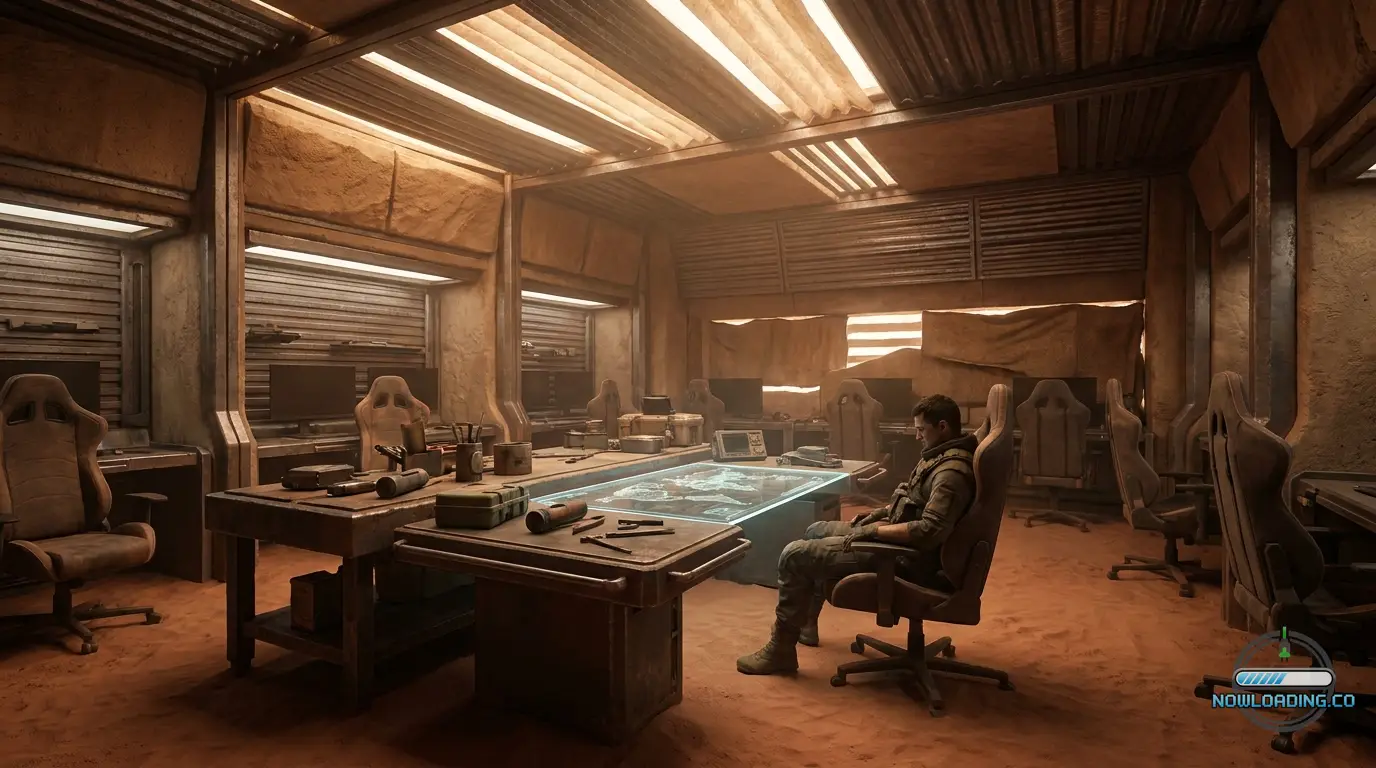
It helps to see the setup as one small system: a water source, enough storage, production, and the way each part supports the next. If one part falls behind, everything slows down. That usually shows up pretty quickly, which is why regular survival planning tends to pay off more than flashy expansion.
If a more survival-first angle sounds useful, there is also this related Dune Awakening survival strategies guide, but the main idea stays the same: water discipline is one of the strongest gameplay strategies in the game.
Dune Awakening Base Placement Matters for More Than Comfort
A weak base can make even a strong player feel off, while a well-placed one can help an average player move more smoothly. In Dune Awakening, base building is not just cosmetic. It affects travel time, crafting flow, defense pressure, storage logic, and how safely players recover from mistakes.
You can build bases and customize them as you like and you are not limited in how and where you place them (apart from special cases).
That freedom is useful, but it also creates easy traps. New players often pick a base spot because it looks cool. Later, the hidden cost shows up in every session: longer routes, awkward routines, and small delays that keep adding up. Once bad placement starts slowing things down, it gets hard to ignore.
What good Dune Awakening base placement really does
A good base spot cuts friction in a few places, and the difference shows up fast:
- quicker travel to your main farming zones
- a safer way back from risky routes
- enough room for production to grow
- space to keep the layout from getting messy
If the base is too far from anything useful, every trip starts to feel like a chore. If it’s too exposed, getting back can feel stressful, which stops being fun pretty fast. And without enough space to grow, the whole setup gets cluttered and crafting starts to slow down fast.
Use a before-and-after mindset
Before: random location, cluttered storage, crafting stations spread out, and no clear exit route.
After: close to your priority loop, storage grouped by purpose, a quick path from entrance to crafting, plus a simple recovery plan after rough trips.
That change saves real time, and you notice it quickly. It also helps streamers and content creators, because a clean layout cuts dead air and makes each step easier to follow. The audience sees progress instead of menu mess.
According to Joel Bylos in official discussions, the game leans into deeper sandbox systems than many players expect, so logistics become part of skill expression. A pretty base is nice, but a base that helps you repeat success usually does more for each run.
Explore Like the Dune Awakening Map Can Betray You
Arrakis is not a static checklist world. A big part of strong gameplay strategies is noticing that routes can change, value can shift, familiar paths may stop being the best option, and old habits can start to slow you down, which is rough. If you explore like the map stays the same, it gets a lot easier to fall behind.
In official developer comments, Joel Bylos says the shifting sands outside the Shield Wall can reveal new places and content over time. That makes map knowledge important, but Adaptability matters just as much here, and you will need both.
Build flexible routes, not just favorite routes
A lot of players keep taking the same trip the same way because it worked once, and that can be an easy trap. Better players set up a main route, keep a backup ready, and have a quick way out if things go wrong.
Read risk in layers
Planning a trip is not just about asking “where is the loot?” It also helps to ask:
- what could stop me here?
- where am I exposed, and what kind of trouble can reach me?
- how long is the trip back if my inventory is full?
- could weather or enemy pressure force me into a detour?
This kind of thinking is extra useful for solo players. Single-player support now plays a much bigger part in the game’s growth, so more people are jumping into Dune Awakening without a group around to fix mistakes. That makes route planning worth even more for you, and a lot less forgiving if you just wing it.
Use short Dune Awakening sessions for scouting
Not every play session needs to turn into a big farming run. Some of the most useful ones are just for scouting, and the low-pressure pace is part of why they work. Getting familiar with the land while nothing is pushing decisions helps later, especially when time is tight and quick reactions matter.
If movement, gathering, and early progression still feel a bit wide, this guide to surviving in Dune Awakening explains the basics clearly. After that, the next step is using map knowledge to build smarter, more flexible routes.
Dune Awakening Combat Success Comes From Positioning First
A lot of players focus on weapons first. But in Dune Awakening, many fights are decided before anyone fires a shot, and that changes how players should approach them. Positioning, stamina, line of sight, smart use of terrain, and knowing how to get out all matter more than rushing in. In a game where survival pressure and resource loss are always close, one bad fight can leave a player stuck with a long recovery.
Joel Bylos has said the game leans more into shooting systems, vehicle physics, and more complex sandbox interactions than earlier Funcom games. That shift changes combat because it does not stand on its own. It is tied to travel, logistics, and environmental danger, so every fight connects to the bigger situation around it.
Three habits that help you win more fights
Fight with an exit in mind
Don’t start a fight without knowing where you can fall back to. Having a safe way out isn’t weakness, not even close. It gives you time, and more than that, it can keep you alive when a fight turns bad a lot faster than you expected.
Let terrain do some of the work
Dunes, rocks, and structures are more than map clutter. They block sight lines, which helps a lot. They can also slow enemies down and give you short chances to heal or move before the next push hits.
Keep your objective clear
Sometimes the goal is to win the fight. Other times, you just need to get out with resources. When those goals get mixed together, which happens fast, players often throw away progress they could have kept.
Solo players should think in short Dune Awakening engagements
Without backup, long, messy fights get risky fast. Hit, move, and reset instead. Only commit when the odds look good. It may feel less dramatic, but it’s one of the safer gameplay strategies for making regular progress and staying alive.
For streamers and competitive-minded players
Readable combat looks better on stream. Clean positioning, reliable aim, and smart disengages stand out more than random panic, and yeah, viewers notice. It stays short, clear, and easier to follow. Those habits also tend to carry over into better play and more disciplined content.
Patch 1.4.10.0 also brought performance improvements and gameplay changes. That matters here because smoother performance affects reaction time, tracking, and vehicle control. If a setup stutters, combat decisions get worse fast, and that is pretty hard to hide.
Play Solo in Dune Awakening Without Thinking Small
Some players hear “solo-friendly” and think it means keeping things small. That’s not the right way to see it. Solo play in Dune Awakening is more about tighter planning than smaller goals, with a mindset that matches the pace of going alone. Recent updates that add or pay more attention to single-player support make that feel even more relevant.
The best solo players treat time like their rarest resource. They keep builds practical, routes short, and goals focused. They cut wasted movement and avoid pride traps too. If a zone or task uses up too many resources, they reset and come back later with a better setup.
A strong solo framework
- pick one main goal for each session
- bring only the gear that really helps with that goal
- stop once the run is already making profit
- bank the gains instead of going for one more score
That can feel a little conservative at first, maybe even too safe, but it builds momentum fast. You keep stacking solid wins instead of risking everything on one perfect run.
A good comparison is co-op-heavy games where role discipline matters a lot. In Mastering Helldivers 2: Essential Co-Op Strategies for Victory, success usually comes from doing your role cleanly, without unnecessary hero plays. Solo Dune Awakening works in much the same way, except every role falls on one player. That makes simple loadouts and disciplined routes even more important, since there is no one else to cover part of the job.
Dune Awakening Patch-Aware Players Stay Ahead of the Meta
A common mistake in live games is thinking the current best strategy will stay best for long. Dune Awakening keeps changing, and that can quickly change what actually feels efficient. New mission structures, performance updates, system tuning, and story content can all reshape the meta, sometimes faster than expected.
Recent official updates added new Landsraad missions and a four-part story arc starting July 21, 2026, which is a big shift, along with ongoing work to improve performance. The console launch on September 22, 2026 may also bring a new wave of players, more discussion, and fresh pressure on the meta around you.
How to stay patch-aware without burning out
Review your route after each major update
If resource timing, mission value, or travel safety changes, an old loop may stop being the best option. A quick review is usually enough. It helps you avoid sticking with a route that has become slower or more risky than before.
Watch for hidden quality-of-life gains
Performance patches can change strategy too. Better frame pacing may make combat feel more reliable, while a cleaner UI can speed up inventory management in ways that build up over time. Those smaller improvements are easy to miss, but together they can make a clear difference.
Avoid copying every trend instantly
Not every popular tip holds up for long. It’s better to test new ideas in low-risk sessions first, where mistakes cost less. Keep the changes that really save time, and drop the ones that only sound smart.
Platforms like Now Loading can make that easier. A good forward-looking gaming blog helps by tracking system changes, which saves time and cuts down the need to sort through scattered community noise.
Common Dune Awakening Mistakes That Quietly Kill Progress
Most failed sessions don’t come from one big mistake. They usually happen when a few small bad habits start piling up and go unnoticed. Fixing those habits is also one of the fastest ways to get better, which is the good part.
Mistake 1: Going out without a clear goal
If the trip has no clear point, the inventory gets messy fast, and you waste time too. Simple as that, you know.
Mistake 2: Treating water like a short-term issue
The game makes this pretty clear: water still matters in industrial crafting, even now. It seems small at first, but waste causes problems later, and those issues do not just disappear.
Mistake 3: Building for style before function
If your base slows sorting, crafting, or recovery, it hurts progress every day, and yeah, that really starts to add up.
Mistake 4: Forcing bad fights
You don’t need to prove you can win every fight. Just protect your momentum, because that’s what really helps.
Mistake 5: Ignoring the changing world state
Static route habits fall apart once the game world changes, and that will happen.
A simple fix is to spend 30 seconds reviewing each session. What worked, what felt slow, and what almost got you killed? That small habit helps average players play more carefully over time, and it really adds up.
Dune Awakening Frequently Asked Questions
Your best early priority is building a stable survival loop. Focus on water, safe travel, storage, and repeatable gathering routes before chasing rare gear. Strong basics make every later system easier.
Both work, but they reward different habits. Solo play rewards planning, short engagements, and careful route control, while group play gives you more freedom to push harder zones and recover from mistakes. With newer solo-friendly support, solo is more viable than many players expect.
Water is still very important later on. It is not just about staying alive, because it also connects to industrial crafting and long-term production. That means good water management is one of the strongest gameplay strategies from start to finish.
Build near the resource loop you expect to use most, not just in a place that looks cool. Good base spots reduce travel time, make recovery easier, and leave room for expansion. If you want more broad system explainers and patch-focused game guides, Now Loading is a useful place to keep tracking changes.
Start by taking fewer low-value fights. Use terrain, fight with an escape path, and only commit when the reward is worth the risk. Short, clean engagements teach more than long chaotic battles.
The best approach is to follow patch notes, official game news, and focused guide coverage that explains what changed in practical terms. A forward-looking gaming blog like Now Loading can help you filter updates into useful takeaways instead of raw patch text.
Make Every Dune Awakening Trip Across Arrakis Count
Getting better at Dune Awakening usually has less to do with one perfect trick and more to do with a set of habits that work well together. Protect water. Build with purpose. Explore with a backup plan. Fight for results instead of ego. Update routes when the game changes. Those are the gameplay strategies that make each run worth it.
Here are the main points:
- prioritize stability before rare loot
- treat water as a long-term resource with real economic value
- place your base for logistics, not just looks
- learn flexible routes since the world can change
- use positioning and exits to win more fights
- keep solo sessions focused and profitable
- review your habits after patches and after rough runs
Players who plan ahead tend to get more from the desert. That applies if someone is running solo, playing competitively, or streaming and trying to keep sessions sharp on camera. The idea stays the same: keep systems tight, keep goals simple, and keep risk under control. In Dune Awakening, mastery is not about making the loudest move. It comes from playing smarter, one run at a time, and getting better without burning through resources.