
Kingdom Come Deliverance 2 does not treat combat like a quick arcade brawl. It asks players to slow down, watch the enemy, and think before every swing, and that is a big reason it works so well for many people. The challenge is easy to understand, but it still asks a lot from the player. Instead of rewarding button spam, the game usually favors patience, good timing, and smart choices. So if the goal is to improve, stream the game, or just get through tough fights more often, learning the right combat techniques really does matter.
That same depth also helps explain why players keep returning. Search result summaries from Steam tracking sites show strong engagement well into 2026, which says a lot for this type of game. Steam Charts lists a January 2026 average of 29,156.4 players and a peak of 56,331. SteamDB snippets also report an all-time peak of 256,206 concurrent players. Those are big numbers, especially for a hard, skill-based RPG. They suggest that Kingdom Come Deliverance 2 has a combat system people want to learn, test, and keep getting better at over time.
This tactical overview breaks down the core combat techniques that matter in Kingdom Come Deliverance 2. It covers directional attacks, reading guard, stamina control, spacing, weapon choice, Master Strike timing, surviving group fights, patch awareness, and practical habits that will likely help players improve faster while saving some frustration. And for anyone who wants a broader companion read, that is covered here: Mastering Combat in Kingdom Come: Deliverance 2. The guide keeps things simple and tactical, helping turn hard fights into smarter wins.
Why Kingdom Come Deliverance 2 Combat Feels So Different
The main thing to understand about Kingdom Come Deliverance 2 is that its combat is made to feel physical and easy to read, and that becomes clear pretty quickly. Your character is not some superhero. Every swing has real weight, and every miss drains stamina. One bad decision can trap you in a long recovery animation, and enemies will usually punish that right away. That pressure stays present in almost every duel.
What really makes the system different is how many things are going on at once. You’re watching direction, distance, timing, stamina, and enemy posture, while also deciding whether to attack, defend, feint, sidestep, or briefly back away (which is a lot to handle all at once). In many action games, the focus leans more toward raw damage output. Here, the exchange itself is often what matters most. Because of that, players usually win by baiting an opponent into making the first move instead of simply attacking harder.
The player numbers support the idea that this depth is a real draw, not just a small gimmick.
| Metric | Value | Period/Type |
|---|---|---|
| Steam Charts average players | 29,156.4 | January 2026 |
| Steam Charts peak players | 56,331 | January 2026 |
| SteamDB all-time peak | 256,206 | Concurrent players |
| Gamalytic average playtime | 92.4 hours | Estimated |
Those numbers matter because a deep melee system only keeps people interested when there is still room to improve. That seems to be what Kingdom Come Deliverance 2 gives them. Instead of chasing flashy, combo-heavy combat, the game lets players show skill through discipline, timing, and smart defense. For streamers, that works especially well. Viewers can see the difference between panic fighting and clean, tactical play as it happens, and that is often where the fun comes from.
The Core Loop: Read, React, and Control Space
At the center of the game is a simple loop: read the opponent, react with purpose, and control the space between you. It sounds easy enough, at least on paper. In practice, though, it usually takes more patience than people expect, and a good amount of repetition. Most lost fights happen when players rush past one of those steps instead of letting the exchange play out.
Reading the guard is the first part. You can often tell what is coming by watching where the enemy’s weapon is and how their body is angled. A lot of attacks are telegraphed if you stay calm long enough to actually see them. Then comes the response. Not every movement needs to be answered with a swing. Sometimes a block is the right choice. Sometimes a short step back does more. And sometimes the better move is no input at all, just waiting for the enemy to fully commit before you do anything. Space matters too, especially once weapon reach starts deciding what is safe and what is not.
One useful way to think about all this is as a triangle. One point is your weapon range, another is your stamina, and the last is the enemy’s timing. If one side starts to slip, the whole exchange often gets messy fast. Move too close with a long weapon, and you lose the clean hits that come from its best distance. Let your stamina get too low, and your defense becomes easier to break. Attack too early, and a counter is usually there.
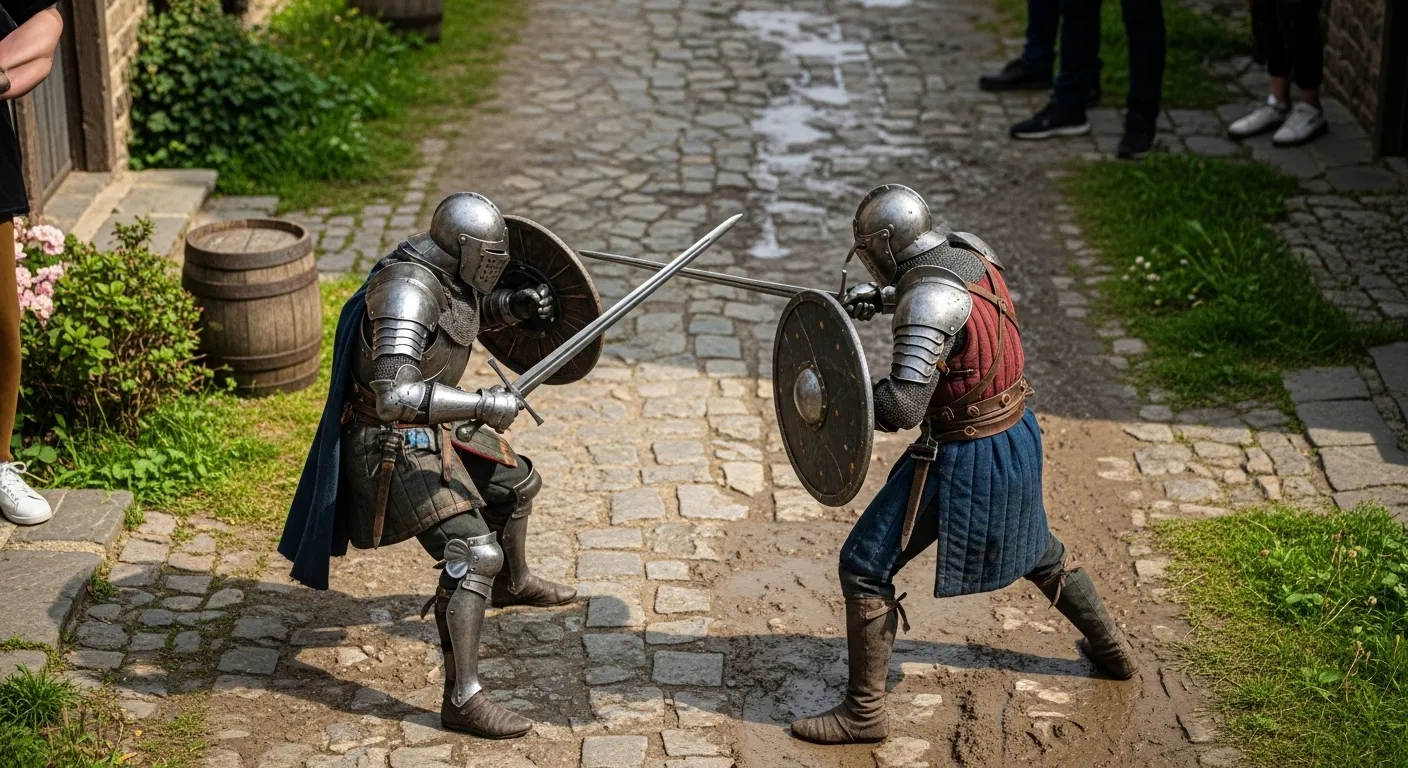
That is why new players often feel overwhelmed early on. The game asks for control before speed, especially in the first few fights. It is simple in structure, but still hard to use well. Once that starts to click, many fights seem to slow down in your head, and decisions usually become much cleaner.
Master Strike: Powerful, Precise, and Not a Free Win
If there’s one advanced move players tend to hear about early, it’s Master Strike. In community discussions and editorial coverage, it often comes up as one of the strongest combat techniques in Kingdom Come Deliverance 2. But there’s a catch: it’s powerful, not the whole combat system. Treat it like a free win, and you’ll usually get punished for it, often pretty quickly.
What makes Master Strike so important is pretty simple. It lets defense turn into offense. Instead of just surviving an attack, you answer with punishment, and that can shift momentum fast. It also fits the game’s broader design, where clean timing usually beats reckless aggression. Current discussion around the sequel also suggests the move now needs better timing and a clearer sense of direction than many players may remember from the first game. In simple terms, you need to earn it, which is probably how it should be.
To use Master Strike well, focus on a few things:
Match the line of attack
Good alignment really helps, I think. And when your read is off, the punish window usually falls apart pretty quickly.
Don’t panic-input
A rushed button press will often turn a smart counter chance into a bad block or, honestly, just a miss. So usually, don’t mash it.
Use it as part of a toolkit
Master Strike usually works best as one part of a larger toolkit, where it helps with spacing, stamina control, and reading an opponent, which is often the hardest part.
For this specific game, there’s also more combat-focused help in Mastering Combat in Kingdom Come: Deliverance 2, Tactics and Techniques for Victory, and it works naturally alongside this article.
A quick before-and-after example makes the difference easier to see. Before learning the timing, a player blocks too late, throws out random swings, and uses up stamina quickly. After learning it, that same player waits for an enemy to commit, lands a punish, and makes space again. Same gear, same fight, but in most cases the outcome feels very different.
Stamina Management Wins More Fights Than Raw Damage
A lot of players check weapon stats first, and that makes sense. But in Kingdom Come Deliverance 2, that can make you miss something really important: if you know how to use it, stamina often acts like the real health bar, and that matters a lot. Once stamina runs out, pressure usually starts to break down. Defense gets shakier, and it becomes much harder to control the pace of a fight.
It helps to think of stamina as a budget here. Every attack, block, movement adjustment, and even a mistake uses part of it. Good combat techniques are really about managing that budget better. Great players can hit hard, sure, but they also keep enough in reserve during exchanges and while defending, which is often what sets them apart.
Here is what strong stamina discipline looks like in practice:
Throw fewer, cleaner attacks
Usually, one clean, controlled strike that lands is better than two wild swings. The wild ones mostly just tire you out, I think.
Reset after a small win
You don’t need to push every edge, and that’s probably better. Often, one clean hit is enough, I think. It also gives you a little space to breathe and reset, which usually helps.
Avoid blocking everything
Perfect defense isn’t the same as staying defensive all the time. Sometimes just stepping out of range, which often works better, saves more stamina than throwing up another block. Simple, but important.
Watch the enemy’s gas tank too
When an opponent overcommits, it often works better to let them wear themselves out. Tired enemies usually make worse choices, and that is often when they slip up. In most cases, that makes patience the better move instead of rushing in too early.
Patch awareness matters here too. Search result summaries suggest balancing and fixes are still continuing into 2026, along with official updates and community talk about changed challenge levels in later regions, especially when those areas get retuned. Because of that, stamina tactics can shift a little over time depending on enemy aggression and balance tuning. The main idea stays pretty simple: build habits around fundamentals rather than one patch-specific trick.
Players who like comparing combat across RPGs may also find Oblivion Remastered Combat Mastery: Modern Player Strategies useful. It gives a solid contrast in how older and newer systems reward timing differently.
Positioning, Footwork, and the Art of Not Getting Surrounded
Good footwork is one of the least flashy combat skills in Kingdom Come Deliverance 2, but it’s still one of the most important. It’s also easy to forget when the focus shifts to blocking or attacking, which happens a lot. Even so, positioning is often what decides who really has control of the fight.
In a duel, positioning helps keep the fighter at the right distance from the opponent. In a group fight, things can turn into chaos very quickly, and usually not in a good way. The basic rule is simple: always know where the next step can go. It helps to think about that before it becomes urgent. If the back is pressed against a wall, fence, wagon, or any other tight spot, the options disappear fast.
Try these habits:
Circle instead of backing up in a straight line
If you back up too much, enemies can usually corner you, which gets annoying fast. Try moving at a slight angle instead, since it often breaks up their line. Much better.
Keep one target in front of the others
In fights against several enemies, being brave usually isn’t the main goal. It helps a lot to keep one target in front of the others, so they can’t hit you from every side.
Fight near open ground when possible
Open space gives you room to reset, which honestly helps. It also makes enemy movement easier to read, so you can often react faster. Simple, but it probably helps.
Use terrain as a filter
Doorways, narrow paths, and carts can limit how many enemies can reach you at once, and that usually helps a lot.
The same idea appears in plenty of tactical games. If someone has studied squad positioning in Battlefield 6 Multiplayer Mastery: Map Control, Squad Roles & Large-Scale Combat, it will probably feel familiar, even if the pace here is different. In tight spots like doors or paths, space often works like a resource you can use well or waste quickly. That sounds simple, but it has a big effect, because controlling space can make bad odds feel much easier to handle.
For streamers, footwork is often the first clear sign of skill, at least to viewers. People may miss every stamina choice, but they can usually tell when someone stays calm, lines enemies up into a single file, and keeps a messy fight under control.
Choosing the Right Weapon for Your Style
Not every weapon fits the same plan. Some players struggle because they copy a suggestion without really checking if it works for the way they fight. In Kingdom Come Deliverance 2, the best choice usually depends on your pace, how comfortable you are with timing, and the kinds of enemies you expect to face most often.
Shorter weapons can feel faster up close, which helps a lot in tight fights. Still, they usually need more precise spacing. Longer weapons give you more control over distance, often from a safer range, but bad range management gets punished fast. Heavier tools may hit harder, though they can also slow recovery and drain stamina faster if you rely on them too much.
So ask yourself a few simple questions:
Do I prefer punishing mistakes or forcing openings?
A patient counter player may like a weapon that supports defense and timing (I think). And that’s often the kind of fit that works for you.
Am I good at maintaining range?
If not, a long weapon will probably feel awkward at first. And honestly, it often just won’t be that useful.
Do I panic when pressured?
If yes, it usually makes more sense to pick something you can recover safely with, instead of a weapon that only looks strong on paper (it happens, honestly).
That’s also why there isn’t one universal best loadout. The best setup is usually the one that helps good combat habits hold up when the pressure hits, especially in close fights. If a weapon makes your reads clearer and your stamina feel more steady, then it’s doing its job for most players. 
Group Fights, Ambushes, and High-Pressure Survival
One-on-one duels teach the basics, but group fights show if those basics still work once everything gets chaotic. And yeah, it usually gets messy fast. That is where a lot of strong duelists start to slip. They focus too hard on one target, lose track of the bigger situation, and get hit from the side before they realize what changed.
In group combat, survival comes before style. Perfect offense can wait. What matters first is control, and that usually comes from movement, isolating targets, and not getting trapped in the middle where multiple enemies can attack from different angles. It sounds simple when you lay it out like that, but in practice it is usually not easy.
A practical survival sequence looks like this:
- Lock onto the biggest immediate threat in front of you.
- Move so the other enemies shift behind that target.
- Defend patiently, and don’t force burst damage.
- Punish only obvious openings.
- Reposition as soon as the circle starts closing in.
Ambushes create a different problem: panic. When someone gets caught off guard, the first bad choice is often the one that makes everything else fall apart, which is probably why ambushes work so well. So instead of rushing into random swings, steady yourself. Open ground gives you room to think. You will also want to check the terrain before deciding what happens next.
Preparation matters here too. Healing, repair, and gear condition usually matter more across long sessions than many players expect. Tactical combat is not just about the moment swords start clashing. It also includes what was happening five minutes earlier, before things went wrong, when there was still time to heal, fix gear, or reset position.
If comparing combat systems across subgenres sounds interesting, Chrono Odyssey Beta Feedback Reveals Combat and Time offers another useful look at why timing-heavy combat gets so much attention in modern RPG discussions.
Patch Changes, Meta Shifts, and Why Old Advice Can Fail
A common mistake in any live-supported game is trusting old advice too much. Search results tied to official news and community discussion suggest Kingdom Come Deliverance 2 has kept getting updates, bug fixes, and balance changes into 2026. That matters more than it may seem, because even a small tweak can change what actually feels safe, strong, or dependable in real fights.
For example, if enemy aggression goes up, greedy counters usually become much riskier very fast. A small change can make a big difference in practice. If later-region encounters get rebalanced, gear checks might matter a bit less in those harder areas, while movement or stamina habits often end up carrying more of the fight. And when one defensive tool becomes less forgiving, players usually have to rely more on spacing and reading guards instead, which can feel rough at first.
A better way to handle that is to build around stable fundamentals:
- Read the opponent before committing
- Keep enough stamina in reserve so defending is still possible
- Use Master Strike as a punish instead of relying on it every time
- Fight for spacing rather than chasing damage
- Adapt to weapon matchups, and pay attention to terrain too
Those ideas usually keep working across patches. Very specific cheese strategies usually do not. That is one reason deeper guides on Now Loading can still stay useful even when exact numbers change. In that sense, tactical thinking often ages better than a rigid list of exploits.
Building Better Practice Habits and Stream-Friendly Skills
If someone wants to get better faster, it helps not to judge progress only by wins. Better decisions are often a clearer sign that things are really improving. One good approach is to give each practice session one focus. Keep it simple. Spend one session working only on stamina discipline. In another, focus on spacing. Then use a different session for punishing after a clean read. That usually makes progress easier to notice and much easier to track over time.
For streamers and aspiring creators, Kingdom Come Deliverance 2 has another plus: its combat is easy to read on screen. Viewers can usually spot bad timing, smart footwork, strong counters, and the small mistakes in between, which is genuinely useful. Because of that, it works well for breakdown content, challenge runs, or educational clips where the creator explains what happened and why a moment went wrong or right.
A simple improvement checklist can help:
| Skill Focus | What to Watch | Good Result |
|---|---|---|
| Stamina control | Are you swinging too much? | You end exchanges with reserve stamina |
| Spacing | Are you in your weapon's ideal range? | You land safer hits and take fewer panic blocks |
| Defense timing | Are you reacting or guessing? | Blocks and counters feel deliberate |
| Target control | Are enemies lining up or surrounding you? | Group fights become slower and safer |
This kind of review works especially well after a tough loss. But instead of saying, “the fight was unfair,” what actually went wrong first? Was it stamina, range, camera control, or maybe panic? Honest answers usually matter more here, and in most cases they help build skill much faster.
Frequently Asked Questions
The most important skill is timing. Good timing improves blocking, punishing, stamina use, and spacing all at once. If your timing is clean, every other combat technique becomes easier to use.
It is powerful, but it should not be treated like a free win button. Current discussion around the sequel suggests it takes better timing and cleaner reads than many players expect. It works best as part of a full tactical kit.
Attack less often and with more purpose. Use movement and range control so you do not have to block every hit. Also, stop trying to force damage after every small opening.
Keep enemies in front of you and move to open ground when possible. Do not chase kills early. Your first goal is to stop the fight from turning into attacks from every side.
Yes, they can. Ongoing updates and balance changes may affect enemy behavior, timing windows, or how certain tactics feel in different regions. That is why strong fundamentals matter more than chasing one popular trick.
The Small Details That Separate Good Players From Great Ones
At a high level, the best Kingdom Come Deliverance 2 players are not always the fastest. They are usually the most consistent. They waste less movement, stay in control, and avoid bad swings more often. When they make mistakes, they recover without falling apart, which is harder than it sounds. They also know when to back off, often before stamina gets too low or spacing starts to break down. More than anything, they do not confuse constant activity with real control.
If you want an edge, the little things deserve attention. Watch what happens with your first step after a block. It sounds small, but it matters. You will also notice whether you keep attacking from the same side and become easy to read, which happens a lot. Another useful thing to examine is how often a loss starts with greed. These details seem minor at first, but they often create the gap between barely surviving and truly controlling a fight.
That mindset shows up in other strategy-heavy games too. Even team-building systems in Digimon Story: Time Stranger Guide, Team & Combat Tips tend to reward calm planning over random action. Different genre, same basic idea. Strong systems usually reward players who think ahead.
Use each fight as a form of feedback. In most cases, combat techniques improve naturally over time.
Put These Tactics Into Practice
Kingdom Come Deliverance 2 usually rewards players who treat combat like an exchange, not just a button check. You read the situation, respond to it, build pressure, then reset. That rhythm matters more than it might seem early on. The best combat techniques usually come from that flow instead of working against it. Directional awareness helps you catch guards from a better angle. Master Strike gives you a reliable way to punish mistakes when an enemy fully commits. Stamina management keeps your options open when a fight starts dragging out. Good positioning helps stop fights from getting out of hand, especially against groups. Weapon choice sets the pace, and patch awareness helps keep your approach up to date after updates.
For the biggest gains, it often helps to start small. Focus on one area this week. Maybe that is spacing. Maybe it is surviving group fights, or just learning not to overswing when things get tense. In Kingdom Come Deliverance 2, progress can feel quiet at first, then suddenly become obvious. That is often how solid habits start to show.
The key takeaways are simple:
- Fight with patience instead of panic
- Protect your stamina like a resource
- Use Master Strike with timing, not hope
- Control distance before you chase damage
- Adapt when patches shift the meta
That is the real tactical path in Kingdom Come Deliverance 2. Learn the systems and trust the basics. Simple stuff, honestly. Then combat techniques start turning hard battles into smart, repeatable wins.