
The 2026 shooter battle is starting to take shape, and right now momentum is what stands out most. Battlefield REDSEC has started the year with clearer roadmap milestones, Season 2 timing, ranked play plans, larger maps, and a regular flow of official updates, which players are clearly noticing. Call of Duty still has the biggest name in the space. But based on the research available today, the public case for its 2026 push is not as clear to read. That difference is hard to ignore. Multiplayer games at this level do not stay on top through brand power alone. They keep attention through updates, retention, creator buzz, and the feeling that the next season will actually give players a reason to keep logging in.
For gamers, streamers, competitive squads, and casual players, this goes beyond a basic “which shooter looks cooler” argument. It is a live question about where communities will spend their time, where creators will put their content, and which game could define the 2026 gaming fight (and where you may end up spending your nights). This article looks at battlefield redsec and call of duty through roadmap strength, gameplay direction, audience traction, creator appeal, and long-term risk. It also looks at what all of that means for people trying to decide where to put their hours this year.
Why Battlefield Has the Bigger News Story Right Now
The biggest recent shift comes straight from EA’s own roadmap push. Battlefield 6 and REDSEC haven’t been left vague. EA confirmed that Season 2 “erupts onto the battlefield” on February 17, and tied that announcement to a wider 2026 roadmap. Part of that is standard live-service talk, sure. For players, though, the point is pretty clear: the game has active content planned out. It isn’t running on a short one-month hype cycle.
Multiple reports tied to that 2026 roadmap also point to updates that matter for keeping a multiplayer game active over time. The reported list includes larger maps, the return of naval warfare, ranked play, and ongoing combat improvements with a clear focus on gunplay. Those are not small patch-note details. They are big features that can bring in several kinds of players at the same time. Vehicle players get more tools and chaos to work with. Competitive players get ranked progression, while creators get bigger moments to clip, post, and share, which publishers probably benefit from more than they like to say out loud.
| 2026 Signal | Battlefield REDSEC | Why It Matters |
|---|---|---|
| Official roadmap visibility | Strong | Shows clear long-term plan |
| Season 2 timing | February 17 | Early-year momentum matters |
| Ranked play | Planned | Helps retention for competitive players |
| Large-scale features | Bigger maps and naval warfare | Supports Battlefield identity |
That table shows the real gap. battlefield redsec has a public-facing plan that players can react to right now. Call of Duty looks different in this research set. The strongest current angle is not a huge new roadmap reveal. Instead, it’s the idea that Warzone is being reworked because Battlefield is putting on pressure. That makes Battlefield look like the side making moves first. Call of Duty, by comparison, comes off as reactive instead of moving first.
We covered the roadmap side here: Battlefield 6 and REDSEC: What to Expect from the 2026 Roadmap. That piece breaks down what those planned updates could mean over the course of the year, showing how larger maps, naval warfare, ranked play, and gunplay changes fit into the bigger picture.
Call of Duty Still Has the Brand Power Battlefield Wants
Writing off Call of Duty just because Battlefield Redsec has the hotter news cycle right now would be a mistake. Call of Duty still has something Battlefield has been trying to build for years: habit. Players already know how its guns feel. Streamers get its clip-friendly speed, and casual squads know they can jump in for a short session and still have a good time (that’s a big deal). That kind of built-in familiarity is hard to beat, even when another shooter is getting better headlines for a while.
Its long-running ecosystem helps too. Players can move between core multiplayer, Warzone, ranked modes, and even creator-led challenge content without feeling like they need to learn a whole new game every time. In 2026, that carries real weight because players already have too many options. Most gamers are not just asking, “Which game is better?” They are also asking, “Which game fits into my week without causing extra friction?” You can feel that difference almost right away (and it adds up fast).
The 2026 gaming battle gets interesting here. Battlefield may be aiming bigger with features, but Call of Duty still has the edge because people understand it fast. Its map flow feels tighter, and its loadout loop is familiar to a bigger group of players. Its clips also spread fast across social platforms because the action reads clearly at a glance. That gives aspiring streamers an edge, and viewers usually stick with content they can understand in a few seconds.
Right now, the public evidence for Call of Duty’s 2026 plan is thinner than what Battlefield is showing. That does not mean CoD is weak. It means the visible proof is not as strong right now. Activision could change that quickly with a sharp Warzone overhaul, clearer anti-cheat messaging, and a major seasonal reveal (all three would help). Until then, Call of Duty is leaning more on legacy strength than on the public roadmap story people can see right now.
The Numbers Give Battlefield REDSEC a Real Edge in Momentum
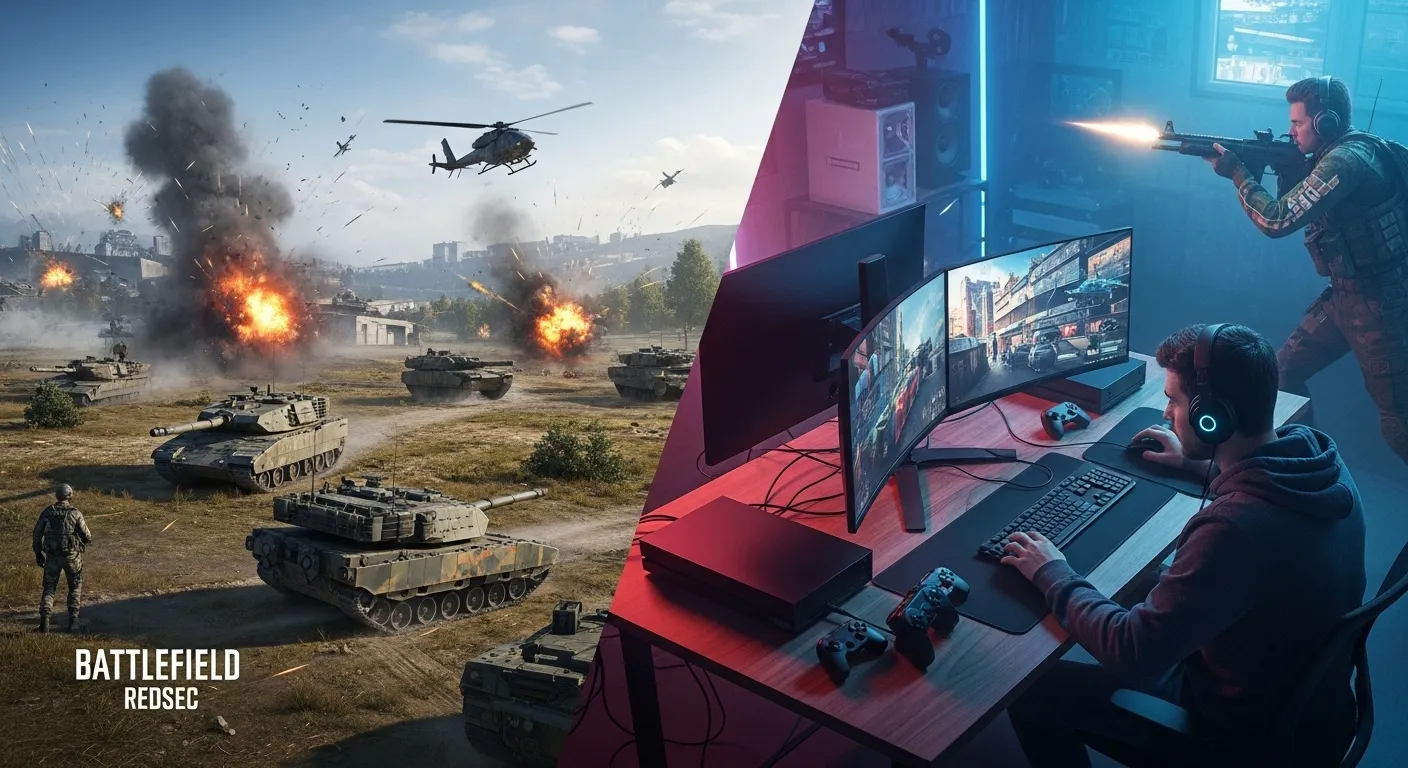
Momentum shows up in what players and viewers are already doing, not just in what gets promised. On that front, battlefield redsec has some strong public numbers behind it. Reported Twitch data from SullyGnome shows more than 1.6 million hours watched in 2026, along with an average of 557 viewers and a peak of 7,188 viewers. For a shooter trying to break into a crowded market, those numbers matter. The game is not only getting talked about. People are spending time watching it as well.
Separate source-reported stats covered by MP1st add more support to that picture. The game has been tied to 1.7 billion matches played, 383.5 million gameplay hours, 12.4 billion kills, and 871 million revives. It still makes sense to be careful with reported summary stats, especially at this scale. Even so, the activity here does not look small or niche. Battlefield has enough movement in its ecosystem to support clips, guides, squad play, and ongoing seasonal support.
| Metric | Reported Figure | What It Suggests |
|---|---|---|
| Twitch hours watched in 2026 | 1.6M+ | Strong viewer interest |
| Peak viewers | 7,188 | Burst visibility for creators |
| Matches played | 1.7B | Large active player participation |
| Gameplay hours | 383.5M | Deep engagement across modes |
| Revives | 871M | Team-focused play remains central |
There is a warning sign in the mix. Some surfaced discussion points suggest player drop-off after REDSEC’s free-to-play battle royale launch. That part is not unusual. A lot of live-service games hit hard at the start and then cool off. What matters next is what the game looks like by month three and month six, when updates, balance patches, and quality-of-life fixes need to help keep the audience steady or the slide keeps going.
So the fight is still open. Battlefield looks hot right now, but Call of Duty has already made it through plenty of hype waves before. If Battlefield’s retention starts slipping, Call of Duty still has a path to win players back by tightening its own core loop.
We covered the bigger market angle here: Battlefield 6 vs. Call of Duty 2026: Which Will Dominate the Market?
Gameplay Style May Decide Who Keeps Players Longer
Hype might pull players in, but gameplay is what keeps them around. That’s the split between battlefield redsec and call of duty: they aim for very different moods, and the one that wins may come down to what players want most in 2026.
Battlefield has always stood out for scale. Big maps, vehicles, destructible spaces, squad revives, and role-based teamwork create matches that can feel different every time. REDSEC also pushes that style into a more modern live-service setup. If EA gets the large-scale map design right and brings back naval warfare, Battlefield could really lean into that “only in this game” feeling. That’s the kind of thing that drives clips, starts chatter, and spreads through word of mouth.
Call of Duty is built around speed and control. Snap aiming. Tight map routes. Fast respawns. Cleaner one-on-one fights. It’s also easier to track personal progress in CoD because each match gives quick feedback. Did the aim improve? Did the route work? Did the loadout finally click? That loop stays simple and satisfying, especially for players who jump in for short sessions.
For streamers, both styles have a clear draw. Battlefield offers chaos, huge explosions, and team saves that play well in highlight reels. Call of Duty, on the other hand, brings faster pacing and more clutch moments that viewers can follow right away. One leans cinematic. The other feels more precise. Which one lands better in 2026 may depend on whether the community is chasing spectacle or something more consistent.
There’s also the accessibility side. Players with shorter sessions may lean toward Call of Duty because it’s easier to jump into and leave without much friction. Players who want social teamwork may drift toward Battlefield, since coordinated play tends to feel more rewarding over time, especially with a squad. Neither style is wrong. They just fit different daily habits.
If feature-level changes matter most, we covered that here: Call of Duty 2026: The Game-Changing Features You Need to Know. That piece pairs well with Battlefield’s systems-first approach.
Ranked Play, Gunplay Tuning, and Community Trust Matter More Than Marketing
One of the smartest parts of Battlefield’s current 2026 pitch is that it is selling more than content. It is also selling responsiveness. Reports around the roadmap point to features the community asked for and ongoing combat updates, with gunplay clearly treated as a top priority (and that is not a small thing). Competitive players are not very patient in 2026. If aiming feels off, servers feel rough, or balance patches fall behind, they leave quickly.
Ranked play is a big piece of that. It gives players a reason to keep learning maps, fine-tune team roles, and stay invested after launch hype cools off. It also gives streamers and creators an ongoing story to follow. Climbing, dropping, trying new comps, and chasing higher tiers all create content that repeats in a good way. It is easy to follow and easy to keep watching, which matters a lot for live games.
Call of Duty already understands that loop. Its biggest advantage is familiarity. It knows how to package progression in a format lots of players immediately get. But that same familiarity can become a weakness if players start feeling like they are getting the same answers every year. That is where battlefield redsec can grab some mindshare. New systems carry risk, but they also feel fresher.
There are practical concerns too. Bigger maps can create slower stretches of dead time if pacing is not tuned well. Vehicle balance can frustrate infantry players. Naval warfare sounds exciting, but it has to be more than a marketing bullet point because players will notice fast. CoD’s speed can wear players down too, especially if every update raises the sweat factor and leaves too little room for casual fun.
The winner of the 2026 gaming battle will probably be the game that balances competition with comfort. The best shooter is not only the one with the sharpest gunplay. It is the one players trust to keep improving without breaking what already works, because that is the part no marketing campaign can really fake.
Why Streamers and Content Creators Should Watch This Race Closely
Creators often spot momentum before the wider market catches on. They notice what drives views, repeat sessions, and community chatter, and battlefield redsec currently has several traits that fit well on creator channels. Big set-piece moments, distinct combat roles, a new roadmap, and multiple content angles make it easier to make videos that do not all blend together. One channel might focus on vehicles, another on ranked climbing, while someone else builds around squad tactics, which gives each creator a clearer lane.
For many creators, Call of Duty is still easier to monetize at scale because viewers are already used to clicking on it. Search interest for call of duty stays huge year after year, so the risk is lower for streamers trying to grow fast. For someone just starting out, the bigger brand is usually the safer choice.
Still, safer does not always mean better for every creator. Crowded categories can make standing out much harder, and getting in early on a game that is growing can be more valuable than getting lost in a massive one. battlefield redsec may offer that opening in 2026, especially for creators who can explain teamwork, map control, and squad working together in a way casual viewers can actually follow.
Platforms like Now Loading are part of that picture too. As players look for guides on meta shifts, map strategy, and future-facing shooter trends, there may be real value in helping them sort out what is actually new and what is worth learning instead of just chasing hype. Creators who explain those shifts clearly could have a strong angle.
The Risk Side: Battlefield Must Prove It Can Hold the Line
Even with Battlefield’s recent momentum, the risks are still very real. The biggest one is retention. A launch can create a huge burst of noise and excitement, but that kind of energy does not always last. If players keep running into repeat bugs, server trouble, weak anti-cheat, or shaky balance, they can leave fast. And if they do, that surge could fall apart before any roadmap gets the chance to settle things.
There is also the risk of expectations getting too high. Battlefield is putting forward the kind of features fans have been asking for over the years: bigger maps, ranked play, better gunplay, naval warfare, and closer alignment with the community. That is a strong list, but it also sets the bar higher. If even one or two of those key parts land poorly, the story could turn fast from ‘Battlefield is back’ to ‘Battlefield overpromised again’, something players have seen before.
Call of Duty faces a different kind of risk. It is not really about promising too much. The bigger issue is getting too comfortable. A giant franchise can start feeling automatic after enough time. Players come back out of habit, until eventually they stop. If Warzone’s overhaul feels too small or too reactive, Battlefield has a real chance to pull away some of the excitement CoD has owned for years.
That makes the next few seasonal updates especially important. Faster patches, clearer communication, and showing respect for player time may matter more here than a louder trailer. Those smaller details could decide a lot. For anyone following Battlefield’s latest shift, Latest Battlefield REDSEC Update: New Multiplayer Map Eastwood and 2026 Roadmap Insights adds more detail on how the live-service side is changing.
So Which Game Is Better Positioned to Dominate 2026?
Based on what people can actually see right now, not brand history, battlefield redsec has the stronger visible case. It already has a roadmap, a seasonal setup, and reported engagement numbers, which makes its position easier to judge. Media coverage is also treating it like a serious threat, and right now Battlefield seems to be winning the hype battle.
Still, total market power is a different question, and call of duty shouldn’t be written off. It has the more established ecosystem, wider casual recognition, and a stronger long-term audience habit. Those are big advantages. So even if Battlefield is getting more attention right now, it’s still easy to picture Call of Duty winning the player battle in the end.
The clearest answer is pretty simple: Battlefield REDSEC has the momentum edge. Call of Duty still has the installed-base edge. If Battlefield keeps quality high and follows through on updates, it has a real chance to shape the 2026 gaming fight. If it slips, though, Call of Duty is in a very strong position to pull returning players back.
For a more CoD-focused angle, we covered this here: Call of Duty 2026 Updates: New Content & Record Viewership.
Frequently Asked Questions
Not exactly. REDSEC is being positioned as a major companion experience inside the Battlefield 6 ecosystem. That means it is closely tied to the main game, but it functions as its own major pillar in EA’s broader 2026 plan.
Because the public roadmap is clearer. EA has shared season timing, feature direction, and long-term plans, while the current Call of Duty evidence in this research set is more limited and more reactive in tone.
Yes. Call of Duty still has massive brand power, familiar gameplay loops, and a huge built-in audience. If its updates land well and Battlefield struggles with retention, CoD can still come out on top.
It depends on your strategy. Call of Duty is safer because viewers already know the brand, but battlefield redsec may offer better growth potential if you want to stand out early in a rising category.
Focus on retention signals. Watch update quality, matchmaking, anti-cheat work, server stability, ranked play support, and whether seasonal content actually changes how the game feels week to week.
The Bottom Line for Players, Squads, and Creators
So which game is most likely to lead in 2026? Right now, the edge goes to battlefield redsec. It has momentum, feels newer, and seems to know where it is going. EA has managed one of the hardest parts of live-service games in a way people can clearly see: it shared a plan, then kept talking to players. That gives Battlefield a real shot to stay near the center of the conversation through the year.
Call of duty still sets the standard every challenger has to beat. It owns mindshare, habit, and familiarity in a way very few shooters ever pull off. But the most realistic prediction is probably not some huge upset. Battlefield REDSEC could lead the hype cycle, while Call of Duty still has what it needs to lead overall player numbers if it responds well, and that is still a pretty big question.
For players, it makes more sense to watch the next major updates instead of getting too locked in on trailers. Streamers will probably get the clearest answer by trying both games and seeing where their audience actually sticks around. Competitive squads should watch ranked support, combat tuning, and map flow closely. Those details may look small at first, but they add up fast. The 2026 gaming battle will not be decided by a logo alone. It will come down to which game stays reliable.
Right now, battlefield redsec has the clearer path to prove it belongs at the front of the fight.