Arrakis is already a brutal place. That is true in the books, true in the films, and it feels just as true in Dune Awakening. What makes this game especially interesting is not just the sand, the survival pressure, or the massive online world, even though those clearly matter. It is also the way smarter systems can shape how that world responds to each player. That is usually where the bigger conversation around Dune Awakening and AI in gaming starts to get interesting.
A lot of players hear “AI” and immediately think of one thing: tougher enemies that hunt them down more aggressively. But modern game AI goes much further than that. It can affect creature behavior, react to player choices, drive world events, improve accessibility, and even give content creators better ways to understand what is happening while they stream. In a survival MMO set on Arrakis, that often makes a huge difference. When the world feels alive, dangerous, and able to adapt, every trip into the desert tends to feel more tense and more memorable, especially for anyone heading out unprepared.
This article is not another beginner survival guide. Now Loading already has broader gameplay coverage, including Dune: Awakening Gameplay Mechanics: What to Expect and Mastering Dune Awakening: Essential Gameplay Strategies for Success. Instead, the focus here is a different angle: how AI-driven systems can shape the feel of the game, what that could mean for competitive players and for people streaming it, and why that matters for the broader future of AI in gaming. In that context, it offers a useful different lens.
The article will look at enemy behavior, ecology simulation, world events, accessibility, hardware impact, player psychology, and what smart systems could mean for the long life of Dune Awakening. For anyone interested in immersive survival games and future-facing design, or simply curious about where games are heading, that is where the story starts to open up.
Why AI Matters More in a Survival MMO Like Dune Awakening
In a typical action game, AI mostly shows up during combat. Enemies flank, charge, hide, or hold position. In Dune Awakening, though, it has a much bigger job. The game needs to create a world where weather, creatures, factions, and other players all add pressure at the same time, and that is a lot to manage. So AI cannot just make NPCs fight better. It also needs to make Arrakis feel believable, active, and dangerous during normal play.
Survival games usually stay fun after the first ten hours when they keep adding variation, real risk, and enough surprise that players cannot figure everything out with one route or a single build. That is where smart AI systems help a lot. Patrols may shift based on player activity. Wildlife can react to sound. Resource zones might become more dangerous after heavy traffic, and that is often when gathering gets more interesting. When that happens, the map stops feeling fixed, and players will probably pay more attention to what keeps changing around them.
Reactive Worlds Create Better Survival Tension
That is a big reason AI in gaming matters so much in this genre. The best AI does not always draw attention to itself. Sometimes it works quietly in the background and changes the pace without making a show of it. It builds tension and helps the game avoid feeling scripted. In this kind of survival MMO, that is often what makes it memorable: not just tougher fights, but a world that reacts in small ways over time.
This also matters for streamers and players with a competitive mindset. Predictable systems are easier to optimize, sure, but they are also less fun to watch. AI that feels uncertain at first, while still staying readable, can create great content. Those are the moments viewers enjoy most, when a plan almost works and then a sandworm, a patrol, or some shifting event turns everything upside down in the best way.
If broader gaming tech trends are part of the picture too, this matches the larger shift discussed in The Future of Cloud Gaming: Trends and Predictions for 2026. Smarter, more reactive worlds are a big part of where modern online games are heading, and Dune Awakening fits that conversation really well.
Smarter Enemies Are Only One Piece of the Puzzle
When people talk about AI, combat NPCs usually get most of the attention. That makes sense, honestly, because combat is the easiest thing to notice. If enemies push a flank, bait a reload, or pressure high ground, players spot it right away, and yeah, that is the flashy part. But in Dune Awakening, the more interesting part is how enemy AI might work together with survival pressure.
In a desert setting, a smart enemy does not need perfect aim to be dangerous. It only needs to push players into bad decisions. Picture an enemy patrol that does not rush in, but instead keeps a team pinned in open sand just long enough for the real threat to build. In a lot of situations, that is probably more dangerous than simple aggression. The AI is not just fighting the player; it is also using the world itself as part of the attack, which is a pretty nasty mix.
Pressure Matters More Than Accuracy
That is where AI in gaming starts to feel modern instead of old-school. Good AI is not only asking, “How do I kill the player?” It is also asking, “How do I pressure the player into a costly choice?” In a game built around water, travel, exposure, and extraction risk, that kind of design can feel brutal in the best way. That is what makes it interesting. It is not just harder, but usually more layered.
Visually, it is easy to imagine several layers of danger hitting at once: human enemies controlling space, environmental hazards limiting movement, larger ecosystem threats punishing noise and delay, and the constant risk of getting stuck in a bad position. You can argue that kind of pressure feels more interesting than basic aggressive NPCs, and players can probably feel the difference right away.
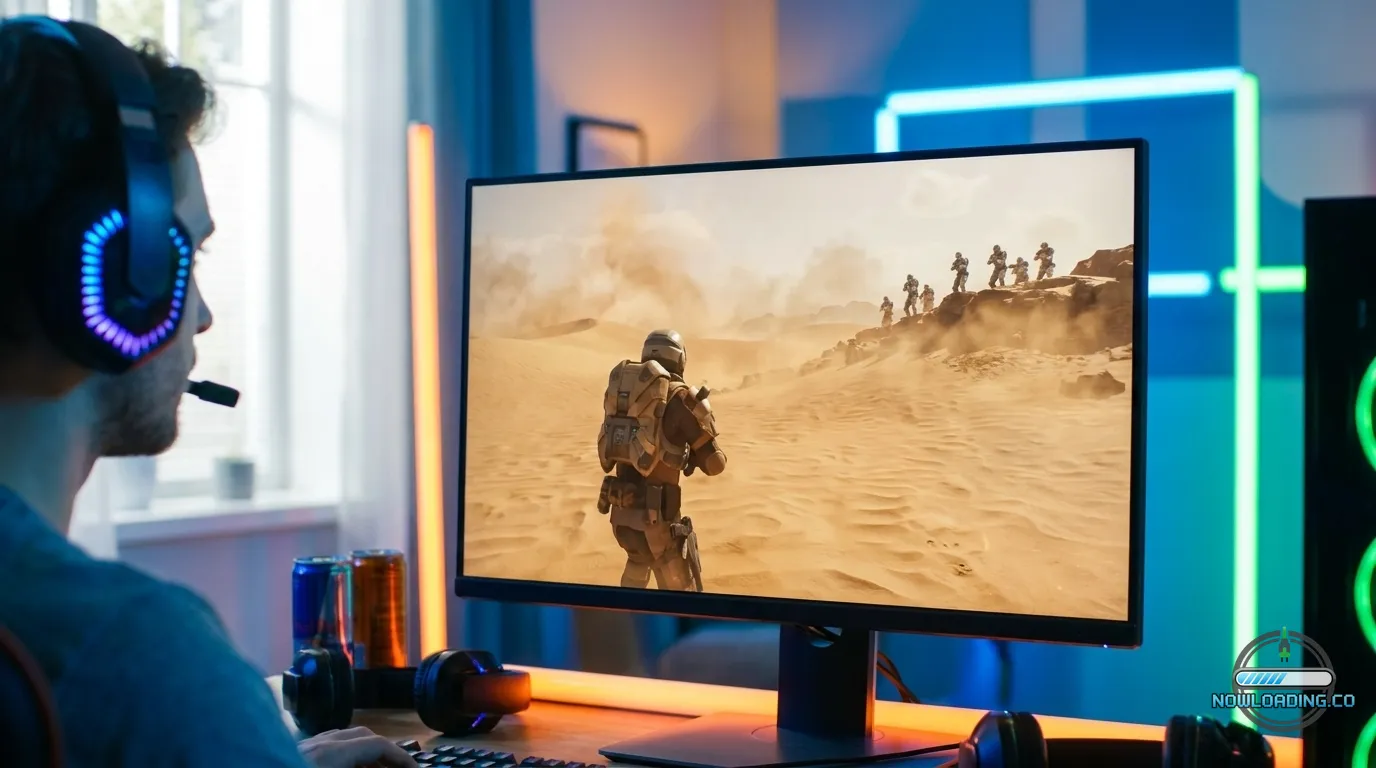
For players who like systems-heavy design, that means every encounter can become a puzzle. Do you fight fast, sneak wide, use terrain, or lure enemies into another threat? Those choices often make matches and sessions feel more replayable. They also create better clips for creators, because the story of a fight becomes more than just DPS and aim. Positioning, timing, and risk can matter just as much as raw shooting.
The Real Star Could Be Ecological AI on Arrakis
If Dune Awakening really wants to stand apart, its biggest AI win may not come from enemy soldiers at all. It may come from Arrakis itself as a living ecology instead, which is honestly the more interesting direction. A desert planet usually works especially well for AI-driven simulation because so many things connect. Movement changes risk. Sound can affect survival. Resource gathering changes traffic, and that traffic often turns into conflict.
That matters because it makes the map feel like a system instead of just a backdrop. If the game tracks where players travel most, where harvesting keeps happening, where fights break out, and where noise stays high, the world can react in ways that feel believable. Some routes might become more dangerous in heavily used areas. Rare materials could attract more trouble near harvest zones. And paths that seem safe at first may stop feeling that way once too many people learn them.
Adaptive Routes and Player Behavior
This is one of the most exciting uses of AI in gaming right now: not fake intelligence, but reactive simulation. There is no need for a pop-up saying, ‘The AI has adapted.’ Players would simply notice that the world feels less predictable, and that is the good part. That feeling is gold here.
Earlier, a route farm might stay efficient for days. With adaptive systems in place, though, that same route could turn risky because the game has noticed a pattern. In practice, that works as a soft counter to stale metas. It does not replace player skill. It just makes awareness matter more in a very clear way.
If you follow broader trends, this fits with how AI in Gaming: Future Innovations Transforming Play describes game worlds becoming more dynamic and less scripted. Dune Awakening has a rare shot at making that idea feel real. The point is not flashy buzzwords. It is systems that change how people move, scout, survive, and decide where to go next, step by step.
For indie dev fans, this is also the kind of design worth watching. Even if smaller studios cannot build a giant MMO, they can still learn from the logic behind it. Usually, that means building worlds that respond to patterns instead of relying only on preset triggers. That is where this kind of design can get especially interesting for players too.
Official Details and Community Expectations
Players following updates can also compare these ideas with information shared on the official Dune: Awakening website. Looking at both developer material and community analysis helps create a clearer picture of how these systems may actually function once players spend long stretches of time on Arrakis.
Dynamic World Events Could Make Every Session Feel Stream-Worthy
A lot of online survival games hit the same wall after launch. Once players understand the loop, the tension starts to drop. They know where to go, what to avoid, and roughly how long a run will take. It all starts to feel a little too familiar. AI-supported dynamic events could help keep that boredom from setting in, or at least slow it down by a lot.
In Dune Awakening, dynamic events could be more than random chaos dropped onto the map. They could work more like smart pressure valves that react to what players are doing. If one region gets too safe, event activity could rise there and make that area harder to move through easily. If one faction starts controlling too much, the system could create chances somewhere else. And when too many players crowd into the same resource zone, the game could turn that place into a high-risk hotspot instead, which is probably the point.
Why Dynamic Events Help Streamers
That kind of design helps keep the world from feeling solved, and it also makes the game more fun to watch. Stream-friendly games need skill, but they also usually need unpredictability that still feels fair. A good dynamic event system could create the kind of moments people remember: a convoy ambush falling apart, a sandstorm suddenly changing a fight, an extraction turning into a desperate sprint, or some other twist players have to handle in the moment.
For content creators, that is where things get really interesting. The game can create real stakes without forced comedy or fake reactions. That is a big reason AI in gaming keeps getting more important on the creator side of the industry. Better AI often leads to better stories, and better stories usually lead to better clips, shorts, and streams, especially the kind people actually stay to finish.
There is also a mental wellness angle to this. A well-made dynamic system can keep players alert without making every setback feel cheap. Random punishment gets exhausting fast. Reactive challenge, by comparison, often feels earned. The best AI systems in games usually create pressure players can learn from, instead of chaos that only feels unfair.
That balance could decide a lot about how long Dune Awakening stays fun after the first big wave of hype.
AI Can Quietly Improve Accessibility and Player Support
One of the most overlooked parts of AI in gaming is accessibility. Not every AI feature needs to be loud or dramatic. Often, the best ones just help more people play with less friction, which works especially well in a game like Dune Awakening. Survival MMOs can throw a lot at players at once, punish mistakes hard, and often become mentally tiring over time.
Smart assistance systems can lower that friction without removing the challenge. Better subtitle handling, clearer separation between important audio cues, adaptive tutorials, and threat indicators could all help players understand what went wrong. Maybe they missed a dodge, got too close, or ignored a status effect. Interface hints that notice repeated mistakes could help too. They are not flashy, but in this kind of game they can make a real difference.
Accessibility Without Removing Challenge
For players with limited time, attention fatigue, or specific accessibility needs, small support tools can turn a frustrating experience into one they can actually enjoy. That probably matters for streamers too. If the UI is easier to read and warnings are clearer, audiences can usually follow the action much faster.
This is where game design starts to feel more human. A brutal world does not need equally brutal usability added on top of it. In this view, the smartest future for AI in gaming is not about making things easier across the board. It is about helping players learn faster, understand mistakes more clearly, and still keeping the core challenge in place.
AI in Gaming: Innovations Shaping Game Development
There is also a community side to this. A game with better guidance tools is easier for new friends to jump into, especially early on. It is also easier for creators to recommend to their audiences, and niche groups may stick with it longer because the experience feels less punishing to learn. For a large online game, that can have a direct impact on long-term health.
What Smart AI Means for Hardware, Performance, and Streaming
AI-heavy games may sound exciting on paper, but most players want the practical answer too: will it run well, and will it stream well? That question matters even more for Dune Awakening, because large online survival worlds already put a lot of pressure on CPUs, memory, storage, and network stability, especially when areas get crowded.
At a basic level, smarter systems usually mean more work happening behind the scenes. NPC decision-making, pathing, event logic, world simulation, and reactions to lots of players in one place all add load somewhere. That does not automatically wreck performance, but it can affect frame pacing, raise CPU use, and make busy zones feel less steady once enough players pile in.
Why Stable Performance Matters for Creators
For streamers, stable performance often matters more than peak FPS. A game that jumps from smooth exploration to heavy stutter during large world events is harder to broadcast cleanly and, honestly, harder to enjoy. It is also tougher to handle in the moment. During fights or other large shared events, that can make competitive or high-pressure play more difficult to follow. For anyone planning a creator setup around games like this, stable cooling matters a lot. Good CPU headroom helps too, and fast storage usually matters more than chasing flashy specs in this kind of game.
That is also why cloud and hybrid play models keep getting discussed. As smarter online systems spread, the way games are delivered and processed will probably keep changing. Some players may not care much. Others, especially creators, probably will, for obvious reasons.
If a rig is being built or upgraded with future online games in mind, A Beginner’s Guide to Building Your Gaming PC from Scratch is a practical place to start. It is a good starting point. Not every title needs a monster machine, but games with dense world simulation usually reward balanced hardware, like a capable CPU, fast storage, and dependable cooling.
AI in gaming is exciting, but only if the game stays playable when things get hectic. Great design still needs the technical side to keep up.
How AI-Driven Systems Could Change the Meta Over Time
A big reason many PvP and survival communities burn out is pretty simple: the meta gets too stable. Players learn the map, settle into the strongest routes, figure out the safest timing windows, and then repeat the same patterns again and again until the whole game starts to feel mechanical, which happens a lot. Dune Awakening could push back on that if its AI systems react to player behavior over time.
That does not mean the game should hard-counter skill. It means repeated habits should come with more risk. When the same harvesting lane is crowded every night, it should become easier to contest or just more dangerous to cross. If one faction route becomes too profitable, the world itself should start adding friction to that path, probably through pressure that makes it less safe or less dependable.
Evolving Metas Keep Games Alive Longer
That kind of pressure usually leads to healthier adaptation. Instead of relying on one fixed best strategy, players need a toolkit that stays flexible. You will find that scouting more, rotating when needed, and paying attention to the server and what it is doing all matter here. And that can be great for high-level play because it rewards awareness, not just repetition. In most cases, that is also much more interesting for players.
It can also make the viewing experience better. Games with live conditions that keep shifting usually create stronger stories than games built around one solved script. The best streamers are often more than just mechanically gifted players. They think fast and adjust quickly. AI-supported systems give those players more chances to show that side of their skill, and that is usually the most fun part to watch.
There is also a side note for adjacent gaming spaces. Systems that create shifting risk and reward are a big reason some players get deeply into prediction and odds in online competition. That is one reason conversations like Understanding Esports Betting: Opportunities and Risks in 2026 exist in the first place. Smart systems make games deeper, and they also make outcomes harder to read.
For Dune Awakening, that uncertainty is a strength. It helps keep the desert frightening. On Arrakis, fear and respect are part of the fantasy, and arguably part of what makes the setting work.
Common Concerns About AI in Gaming and Why They Matter Here
Not every AI feature is good just because it sounds advanced, and players are right to be careful. In Dune Awakening, weak AI design could show up in a few annoying ways: enemy behavior that is hard to read, sudden difficulty spikes that do not feel deserved, repetitive event spam, and support systems that feel intrusive instead of useful.
What usually helps is clarity. Players can handle hard systems when the game explains its rules clearly, and that is often the main problem. If a patrol finds you because of sound, the reason should be easy to follow. If danger rises in a certain region, the signs should be visible there. And when an accessibility tool suggests a better control setup or a different warning level, it should feel optional instead of forced, which is probably closer to what most players want.
Fairness and Readability Matter Most
Fairness is another concern, especially in PvP-adjacent spaces. Frustration rises fast when AI puts more pressure on some players than others in ways they cannot predict. The better option is not fully random behavior. It is behavior that reacts but still follows logic the player can understand.
One simple test helps here: after a rough death, can the player explain what happened? If the answer is yes, the AI will probably feel fair. If the answer is no, the system likely needs more work. It really is that simple.
This also matters for mental wellness. Hard games can feel great when they are demanding but still understandable. They feel awful when they create stress without giving enough feedback for the player to understand what went wrong. So, in this view, the future of AI in gaming is not really about adding more complexity. It is about making that complexity smarter and easier to read.
For sites that track these shifts closely, Now Loading sits in a useful spot because it looks at games as systems shaped by tech, player behavior, and creator culture. That wider view helps when games like Dune Awakening start blending survival design with reactive simulation.
Frequently Asked Questions
The biggest ones are likely adaptive enemy behavior, reactive world events, and ecology systems that make Arrakis feel alive. These matter more than simple combat AI because they shape how the whole world responds to players.
Not exactly. Story-heavy RPGs often use AI to support dialogue, companions, or quest reactions. Dune Awakening is more likely to benefit from AI through survival pressure, world simulation, patrol logic, and dynamic environmental systems.
It could, but smart design does not always mean harsher design. Good AI can make the game clearer and more responsive at the same time, especially if tutorials, UI warnings, and support tools adapt to player needs.
Because better AI creates better stories. Reactive enemies, changing events, and unscripted survival moments give creators more exciting clips and more natural tension during live streams. For readers who want more analysis like this, Now Loading regularly covers future-facing gaming tech and design trends in a way that connects them to real play.
Yes, especially in large online spaces with many moving parts. AI-driven events, pathing, and simulation can increase CPU load and affect frame consistency, which is why balanced hardware and smart settings matter.
A good approach is to follow focused gaming sites that connect mechanics, hardware, and player experience instead of only covering headlines. The forward-looking gaming blog approach works well here because it helps readers understand not just what a game includes, but why those systems matter over time.
Why This Side of Dune Awakening Deserves More Attention
Most of the talk around new releases stays focused on the obvious things: graphics, combat, launch hype, and how much content is actually there. But Dune Awakening may be even more interesting as a case study for how AI in gaming can shape an online survival world. If those smarter systems really work, the biggest success probably will not be one big flashy feature. It will feel more like an overall world effect. Arrakis reacting to player choices, remembering what happened over time, and putting pressure on people through the world itself, not just through combat, in ways that feel believable.
That gives a lot of different readers here something to care about. Competitive players could get a meta that does not feel stale as often. Streamers may get better moments to build around during live sessions or unexpected encounters. Hardware-minded gamers have a real reason to care about CPU stability and world simulation, which is often easy to miss until performance starts dropping. Accessibility-minded players also have some reason to hope that hard games can still feel clearer and more supportive. Even indie dev fans can watch this closely, borrow ideas from it, and see what actually works in practice.
The Bigger Takeaway for AI in Gaming
Here’s the simple version:
- Smart AI should create tension instead of just causing confusion.
- Dynamic systems should keep the game feeling fresh without making it seem random.
- Accessibility support should reduce friction without lowering the challenge.
- Performance matters just as much as ambition.
- A lot of the best AI in games usually works quietly in the background.
If Dune Awakening hits those points, it will be a strong survival MMO. But it may also become one of the clearest examples of where AI in gaming is going next. That feels pretty important.
![[PRODUCT FIDELITY — TOP PRIORITY: A reference image shows a real product. Reproduce that product EXACTLY as in the reference: identical packaging shape, label layout, logo, typography, wording, and colors. Do NOT redesign, restyle, translate, relabel, blur, crop out, or invent any text or branding. Treat the product as a pixel-faithful copy of the reference; only its position, angle, and lighting may adapt to the scene.]
[SCENE VARIETY — IMPORTANT: Keep the product itself pixel-faithful, but build a DISTINCT, article-specific scene around it. Fully honour the environment, composition, camera angle, lens, mood, and colour direction described in the SCENE below. Vary the setting, background, supporting props, framing, and where the product sits in the frame from one article to the next — do NOT default to a plain studio backdrop or a centred hero product shot.]
Reference image 1 (subject): Feature this exact product, placed naturally within the scene (it need not be the sole subject). Reproduce the product itself PRECISELY from the reference image — identical packaging shape, label layout, logo, typography, wording, and colors. Do NOT redesign, restyle, relabel, or invent any branding or text.
SCENE: Create a photorealistic, high-quality photograph with natural lighting and realistic textures. Shot with professional camera equipment. A photorealistic gaming room with a single PC player focused on Terraria on a widescreen monitor, desk lit by soft natural window light, realistic keyboard, mouse, headset, and subtle green-blue ambient tones. The scene should feel organized and strategic, with realistic textures on wood, fabric, and metal, and a calm but focused mood suitable for a game guide hero image, no text. Set in a indie game development space with a immersive exploration atmosphere. Feature headset with LED lights prominently in the scene. Use a tech inspired neon color scheme with layered visuals with character guides composition. Shot from a low angle for dramatic effect using a telephoto for capturing esports events. Apply dynamic color grading to the overall image. The image should clearly relate to Terraria Guide: Mastering the Best Strategies for 2026. IMPORTANT: Do not include any text, words, letters, numbers, or written content in the image. Focus on visual elements only.](/_next/image?url=https%3A%2F%2Fseozillastorage.blob.core.windows.net%2Fimages%2Fusers%2F262%2Fcompressed%2Fterraria-guide-mastering-the-best-strategies-for-2026-593706.webp&w=3840&q=75&dpl=dpl_5Lc1LoSDNV93FxCafsp45cWEAeaS)