
Stardew Valley seems calm at first. You plant seeds, water crops, pet animals, and head to bed. A few in-game weeks later, the pressure starts to show: time is the real boss fight. Energy runs out fast. Inventory fills up. Crops always seem to ripen on awkward days. Then one messy season can leave the farm cluttered and your gold total looking rough (yeah, it sneaks up on you).
Good farming strategies help because being efficient in Stardew Valley does not mean turning a cozy game into a second job. It means setting things up in ways that save time, waste less, and make each in-game day feel easier. The best farms are not always the biggest. Usually, they are the ones that flow well and do not make every morning feel rushed. That difference looks small on paper, but it adds up fast.
That matters even more now since the game keeps getting bigger. Stardew Valley passed 50 million copies sold worldwide by February 2026, and the 1.6 update brought a big wave of players back. It added new systems that reward planning, including the Meadowlands Farm, mastery perks, and several quality-of-life changes. So if someone is starting for the first time, coming back for a more efficient run, streaming cleaner saves, or jumping into a fresh file, smarter routes are worth learning.
This guide breaks down better farm layout, daily pathing, crop choices, automation, tool upgrades, and late-game scaling. It also covers common mistakes, 1.6 changes, and practical tips that can help right away in Stardew Valley. That is helpful from day one (which, let’s be real, helps a lot).
Why Efficiency Matters More Than Ever in Stardew Valley
Stardew Valley goes far beyond a basic farm sim. Eric Barone has said it is about more than just crops, and that is exactly why efficient play helps so much. Your farm connects to mining, fishing, friendships, bundles, combat, crafting, and the newer 1.6 systems, which give you even more to juggle at once.
Stardew Valley is a role-playing experience where players inherit a farm from their grandfather, opting to leave their city job and relocate to the countryside to forge a new existence by cultivating the land.
Because so much of the game overlaps, the time you save on daily farm work can be used somewhere else and still help you move forward. A smoother crop routine can open up extra mine runs. Better chest placement can cut time off trips into town. Smarter animal routing can leave room for quests, relationships, and everything else that starts filling up the day.
That wider scope also helps explain why getting more from your time gets so much attention from players. It is easy to see why. The numbers below give a clear picture of how active the community still is.
| Metric | Value | Date |
|---|---|---|
| Total copies sold worldwide | 50 million+ | Feb 2026 |
| Copies sold across all platforms | 41 million+ | Dec 2024 |
| PC copies sold | 26 million+ | Dec 2024 |
| Steam concurrent players after 1.6 launch | 147,612 | Mar 2024 |
| Reported all-time peak concurrent players | 236,614 | 2024 update cycle |
Those numbers matter in another way too. A big active player base means more people are testing farm layouts, comparing strategies, and sharing routes that really work. So if looking more closely at the social side of Pelican Town sounds interesting while still keeping the farm running well, you can check this out: Stardew Valley: The Ultimate Guide to Character Relationships and Inclusivity.
Stardew Valley Farm Layout and Daily Loop Basics
Getting more efficient starts with treating the farm like a system instead of one big random patch of space. A good layout cuts down on walking, and an even better one gets rid of a lot of those tiny repeat decisions that quietly waste time.
Start by dividing the farm into zones. In the early game, keep crops close to the house and shipping bin. Animal buildings work better grouped together so feeding, petting, and collecting can happen in one easy loop. Machines should stay near the items they process. Kegs make more sense near sheds. Mayo machines are best beside coops, and cheese presses should stay close to barns. It is all pretty simple, but over a full season it saves a surprising amount of time and extra running around.
It also helps to build the layout around the morning route. A good early-day loop might go like this: check TV, collect artisan goods, water or harvest crops, pet animals, refill machines, dump items in a chest, and then leave the farm. If the farm forces a lot of zig-zagging, daily progress gets worn down little by little. That is time that could be spent mining, fishing, or clearing other tasks.
Expansion is easier if the space is planned before it becomes necessary. Leave room for sprinklers, scarecrows, Junimo Huts, and barns. A lot of players build for what they need right now, then summer or fall arrives and half the day disappears into tearing up paths and moving everything around.
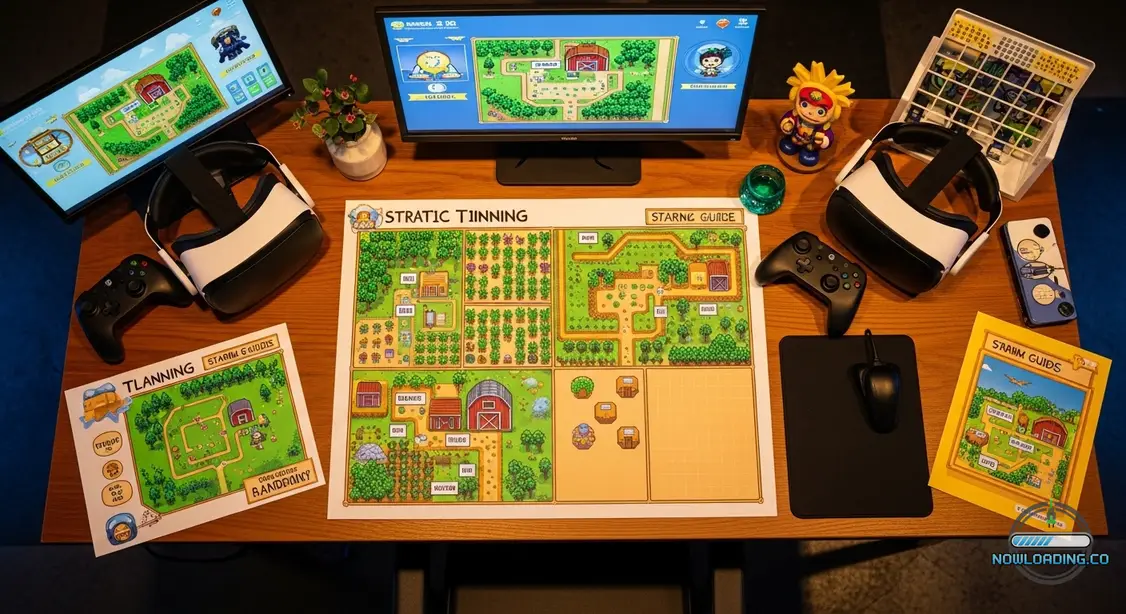
If visual planning makes things easier, picture the farm in rings. Keep the main work zone near the house, use a middle zone for crops and machines, and place trees, ponds, and lower-maintenance buildings on the outside. It stays cleaner that way, and growing the farm feels a lot less messy. More layout ideas are covered here: Stardew Valley: Advanced Strategies for Optimal Crop Rotation and Profit Maximization.
Stardew Valley Crop Planning: Profit Per Tile Is Not the Same as Efficiency
A common Stardew Valley mistake is focusing only on the crop with the highest raw profit. That may look great on paper, but farm efficiency is about more than the final number. Labor, timing, and how much pressure you put on your machines all matter too.
A more useful way to plan crops looks like this:
- Early game: prioritize reliable harvests and low setup cost.
- Mid game: focus on sprinkler-friendly fields, and repeat-harvest crops can help a lot.
- Late game: build around artisan processing.
- Keep daily maintenance low.
For example, a crop with strong gold per day can still be annoying if it creates awkward replant days, too much watering, or machine slowdowns. Blueberries, cranberries, and ancient fruit tend to feel efficient because they cut down on repeated planting and work well with automation. Cauliflower or melon can still be excellent choices, but they usually need tighter timing and a little more planning.
Your farming strategy should also match your goal for the season. In spring of year one, that often means cash flow and community center progress instead of pure profit. Summer may be the time to grow your keg setup. Fall can shift toward getting ready for winter production.
Before-and-after thinking helps. A messy farm plants lots of different crops in random patches, which leads to staggered harvests, cluttered inventory, and wasted seeds. A more efficient farm groups crops by harvest pattern and purpose. One zone can hold repeat cash crops. Another can handle quality bundle crops. It also helps to keep a small patch for gifts or cooking.
If you want a more numbers-first breakdown of crop value, that’s covered here: Stardew Valley: Secrets for Maximizing Your Farm’s Profitability. For streamers and challenge players, this kind of crop discipline can also make runs easier to explain on camera.
Tool Upgrades, Energy Use, and the Hidden Value of Movement
If a farm is going to produce more, gold isn’t the only thing to watch. Time and energy matter just as much, and they add up fast. A player who makes a little less gold but gets more done each day usually ends the season in a better spot.
Tool upgrades matter a lot here. The watering can, hoe, axe, and pickaxe all affect how easy a day feels. What matters most is getting those upgrades at the right time. Many players wait too long because losing a tool for a day or two feels safer. But in practice, that delay can end up costing more than the upgrade itself.
For a lot of runs, this upgrade order works well:
Stardew Valley Early Priority Tools
- Pickaxe: gets you to the deeper mine floors sooner and lets you bring back more resources.
- Axe: opens up hardwood and speeds up clearing the farm a lot.
- Watering can: gets much better later, once rain or sprinklers start taking some of the daily work off your plate.
- Hoe: still matters, but it usually stays lower priority unless growing crops at scale is a big focus.
Movement is another hidden stat, and it is easy to miss. Paths, horse access, minecart unlocks, warp tools, and smart chest placement all cut a little time from the day. Even trimming five in-game minutes from a route you use all the time can make a clear difference over the course of a full year.
Chest setup makes this pretty obvious. One chest by the house for daily tools, another near crops for seeds and fertilizer, one close to barns for animal products, and maybe one by important exits if your route needs it. That cuts down on backtracking and keeps inventory clutter under control, which becomes obvious pretty fast.
Players who like planning in other games will probably notice the pattern. It is the same kind of thinking as map control and route efficiency in games like Splatoon 3: Mastering Competitive Play with Team Strategies and Map Control. Different genre, same idea: better movement usually leads to better results.
Stardew Valley Automation Wins Games: Sprinklers, Machines, and Batch Processing
Automation is where Stardew Valley starts to feel really good. Once the farm can handle part of the day without constant hand labor, there’s a lot more freedom. That extra time can go to the mines, fishing, friendships, or just a calmer pace (which is nice). It changes the rhythm of each day in a way that’s easy to notice.
The first big leap usually comes from sprinklers. Basic sprinklers are pretty weak, so a lot of players skip them. Quality sprinklers are the real turning point, and iridium sprinklers take that even further. If fields are built around them in clean shapes, harvesting and replanting stay simple (and a lot less annoying).
The second leap is machine placement. Good automation is not just about having kegs and jars. It also comes from setting them up so one trip can handle everything. Try these habits:
Simple automation rules
- Group related machines together.
- Keep input chests near your machine clusters.
- If resources are limited, start with high-value goods.
- Try not to spread one machine type all over the farm.
- Once the machine count grows, sheds make things much easier.
A classic upgrade is moving from loose farm chaos to a dedicated production shed. Before that, kegs are stuck in random corners, fruit ends up filling your pockets, and picking everything up can eat up your whole morning fast. It gets annoying. After that, one shed can hold neat rows of kegs, one chest can store the fruit, and a simple refill loop makes the whole setup much easier to manage.
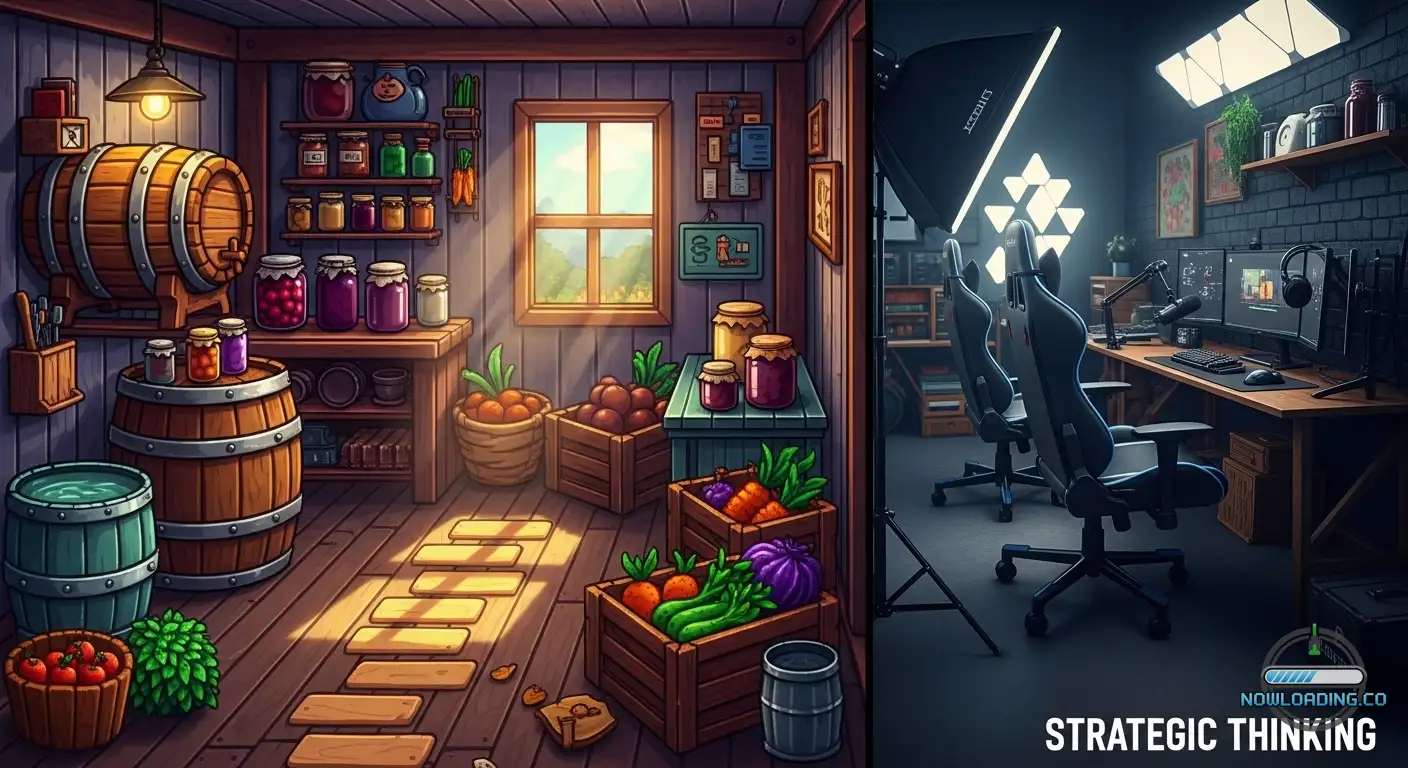
Artisan goods also make a big difference for income. Raw crops are still useful, but processed goods usually work better as the farm grows. They can also cut down the need to keep planting huge fields, which helps a lot once everything else starts taking your time. Because of that, a slightly smaller automated farm can do better than a giant manual one.
Some players enjoy trying different builds, and mods can take automation even further. That can be fun for anyone who likes to tinker with layouts and systems. If that sounds interesting, we covered that here: Best Stardew Valley Mods to Install First.
How 1.6 Changed Stardew Valley Farm Efficiency and Why It Matters
The 1.6 update did more than add new content. It changed how players think about efficiency in the game, and that helps explain why Stardew Valley jumped back to 147,612 concurrent Steam players right after the update, then later hit a reported all-time peak of 236,614 during the wider update cycle.
As of December 2024, Stardew Valley has sold over 41 million copies across all platforms, with over 26 million copies sold on PC, and 7.9 million copies sold on the Nintendo Switch.
Several 1.6 features directly affect farming strategies:
- Meadowlands Farm gives players a different starting setup and changes early priorities.
- Mastery system rewards long-term specialization.
- Quality-of-life improvements make inventory management and route planning easier.
- New events and festivals can affect planning windows.
- Expanded multiplayer support opens up new co-op optimization options.
Efficiency in Stardew Valley feels less set now. Old guides still matter, but the patch shapes planning more than before, and players notice that pretty quickly. A player starting on Meadowlands Farm, for example, may go for animal value earlier instead of following a more standard crop-heavy opener. It seems like a small change, but it can reshape a run in a real way. A mastery-focused player might also invest differently once perks start affecting output and save time.
That is good news for creators and streamers. Route changes tied to patches keep content fresh, and players get more room to test ideas, adjust as they go, and avoid getting stuck with one solved path. That extra room to experiment helps keep the game fun.
Building a Stardew Valley Farm That Supports Mental Flow, Not Burnout
Efficiency should make Stardew Valley more fun, not less. Obvious, sure, but a lot of players still turn planning into stress. Every tile gets filled, every harvest starts to feel urgent, and the whole day ends up being spent reacting to chores instead of enjoying the game.
A farm that feels easier to run creates mental flow by cutting down repeated decisions and opening up time for the parts you actually enjoy most. If mining is the main draw, it helps to automate enough farm work to leave room for cave runs. If social play is more your thing, a morning route that gets you into town early can make the day feel smoother. For streaming, clear zones and repeatable loops help too. Your audience can follow what is happening more easily, and it is easier to stay on track yourself.
Eric Barone has also described the game as being about more than farming. In his wider comments on the game’s design, the farm comes across as just one part of the larger experience. That reminder helps, especially when a perfect crop spreadsheet starts taking up more room than the fun.
That kind of system thinking is part of why players who enjoy build optimization in titles like Vampire Survivors: Exploring the Most Overpowered Weapons also connect with Stardew Valley. In both games, power grows from things working together rather than random choices.
Common Stardew Valley Efficiency Mistakes That Slow Players Down
Most farm problems aren’t about bad luck. They usually come from a couple of common mistakes, the same old ones, yeah, really those.
Planting too much too early
Big fields really do look exciting. But if you still water by hand, it can take up your whole day. So don’t grow faster than your tools, sprinklers, and energy can handle.
Ignoring pathing
If you’re running across the whole farm for one egg or a chest, the layout is making things harder, and yeah, that gets annoying fast.
Overvaluing variety
You really don’t need every crop every season. Focus on your goal instead: profit, bundles, gifts, or, if that’s your thing, an artisan setup.
Holding upgrades too long
A late pickaxe or axe can slow progress more than many players expect, and often more than they realize.
Letting machines bottleneck
Growing fruit is pointless if the kegs can’t keep up, so match farm output with processing capacity. Sounds simple, right?
Forgetting seasonal transitions
The last week of a season is the time to get ready for the next one. Clear your land, buy seeds early, and move your machines where you’ll need them. You’ll also want to check sprinkler coverage before the new season starts, so you don’t end up fixing tiles later.
For broader strategy help across modern games, guides from Now Loading are worth a look too. They’re especially helpful for players who enjoy detailed systems and route planning, not just quick tips.
Frequently Asked Questions
There is no single best farm for every player. Standard Farm is very flexible and easy to optimize, while Meadowlands Farm in 1.6 can be great for players who want a stronger animal-focused start. The most efficient choice is the one that matches your plan and playstyle.
In most runs, crops give faster early growth because they scale quickly into artisan production. Animals become stronger once you can support them with buildings, feed, and processing machines. A balanced approach often works best, especially after your first sprinkler upgrades.
Plant only what you can water and harvest without losing the rest of your day. For many players, that means starting small, then growing in steps as sprinklers and tool upgrades come online. A smaller organized field is usually better than a giant stressful one.
Use zones, repeated routes, and machine clusters. Keep similar tasks together and cut down on backtracking. If you like practical game breakdowns and system-focused guides, articles on Now Loading are useful for seeing how strong structure improves play across many genres.
Yes, especially quality sprinklers. They save time, preserve energy, and let you scale crops without turning every morning into a watering chore. Rushing sprinklers is one of the safest long-term farming strategies in Stardew Valley.
Winter is your reset season. Upgrade tools, redesign layout, build sheds, stock machines, and prepare spring fields. It is also a great time to learn from other guides, compare layouts, and test new plans before the next big planting cycle.
Put Your Stardew Valley Farm on Autopilot
The best Stardew Valley farms just feel easy to run. You should not have to think through every little chore each morning. Your layout should help move the day along instead of slowing everything down (that’s the whole point). In practice, that is what efficiency really means here.
If you want the short version of this guide, keep these main points in mind:
- Build your farm in zones.
- Plan around movement, not just profit.
- Choose crops based on labor and timing, not only raw gold.
- Upgrade tools before delays get too costly.
- Rush sprinklers.
- Organize machines into batches.
- Use winter and seasonal turnarounds to redesign.
- Adjust your strategy for 1.6 systems like Meadowlands and mastery.
Stardew Valley stays popular because it leaves room for lots of different playstyles. Cozy players, min-maxers, streamers, and experimenters can all settle into their own rhythm. The useful part is building a farm around that rhythm, instead of dealing with a setup that keeps getting in the way every day.
Start with one weak spot in your current layout and fix that first. Maybe a chest needs to move. Maybe a field should be redrawn, or your machines would work better grouped together. You might just need one tool upgrade. In a game built around seasons, small changes add up fast, and great farms usually come together one step at a time.