
Gaming in 2026 feels different. Not louder or flashier, but usually smarter, more personal, and more open in ways that actually matter, especially for people without endless free time. The biggest shifts in gaming innovations aren’t about better graphics or squeezing out a few extra frames anymore. They’re about how games fit into daily routines, headspace, and budgets, often more than before. For many players, the pressure is clear. Games keep getting bigger and more complex, prices climb fast, hardware is tougher to keep up to date, and time never seems to stretch far enough. At the same time, expectations keep going up.
That’s why the 2026 trends matter. What’s happening this year is shaping how games are made, how people get access to them, and how players connect through play, which usually shows up during normal sessions. Whether someone is grinding ranked matches or slowly getting hooked on an indie game, the changes landing now affect real things, how much money gets spent, where play happens, and who gets to take part. Not later. Right now. This isn’t just background chatter; it shows up the second a session begins.
This guide walks through the most important gaming changes of 2026 in clear, human terms. It looks at AI-powered gameplay, the steady growth of cloud gaming, new hardware directions, wellness-focused design, accessibility progress, and the rise of creator-first ecosystems, a shift that’s hard to miss. It also explains what this all means for competitive players, streamers, and people who mostly play to relax after a long day, after work, after everything.
AI Is Changing How Games Are Built and Played
Artificial intelligence isn’t just a shiny talking point anymore. By 2026, it often sits right at the center of modern game design, whether studios talk about it openly or use it quietly in the background. Around 20% of new games on Steam now say they use some form of AI, and that number keeps growing. Developers use AI to help build worlds, write dialogue, test balance, shape NPC behavior, and run background systems that once needed very large teams. The shift hasn’t been flashy. But it’s definitely happening.
The change players usually notice first is smarter NPC behavior. Characters can remember your choices and adjust how they talk to you over time, sometimes in surprising ways. Enemies pick up on your habits, react to them, and may even change tactics after earlier encounters. Games feel less locked into fixed scripts and more responsive to how you actually play. Set patrol routes start to disappear. Instead, enemies might approach fights differently based on past levels, while friendly NPCs mention earlier mistakes, lucky wins, or small details you barely remember. Moments like these can really matter.
Behind the scenes, AI is also changing quality assurance and live service support. Automated testing bots run through thousands of playstyles, finding exploits or balance issues before updates go live, which often saves teams a lot of late nights. In live games, AI watches player behavior over time, helping catch cheating earlier, improve matchmaking, and flag actions that hurt fair play. Competitive players get more stable matches. Indie teams save time and money while still making worlds that react in believable ways, and players usually feel that.
BCG Gaming Practice analysts estimate generative AI can cut early development time by up to 90%. That doesn’t promise a hit, but it gives smaller teams a real shot. As a result, we see more experimental ideas, faster updates, shorter gaps between concepts and playable builds, and more room to take creative risks. More freedom, and often less waiting.
Storytelling is changing too. Dynamic dialogue systems let players express intent instead of clicking through stiff dialogue trees, which can make role‑playing feel more natural and less robotic. This is discussed further in AI in gaming innovations shaping development, including how studios try to use AI without losing creative control. It’s not easy.
Battlefield 6 [is] proving premium is far from dead, [and] free-to-play is getting harder to break into.
That context matters because while AI can lower costs, quality still decides what succeeds. Players usually reward new ideas when they feel polished, respond to choices, and respect their time by cutting friction and busywork. That’s been true for a long time.
Cloud Gaming Innovations Are Finally Good Enough
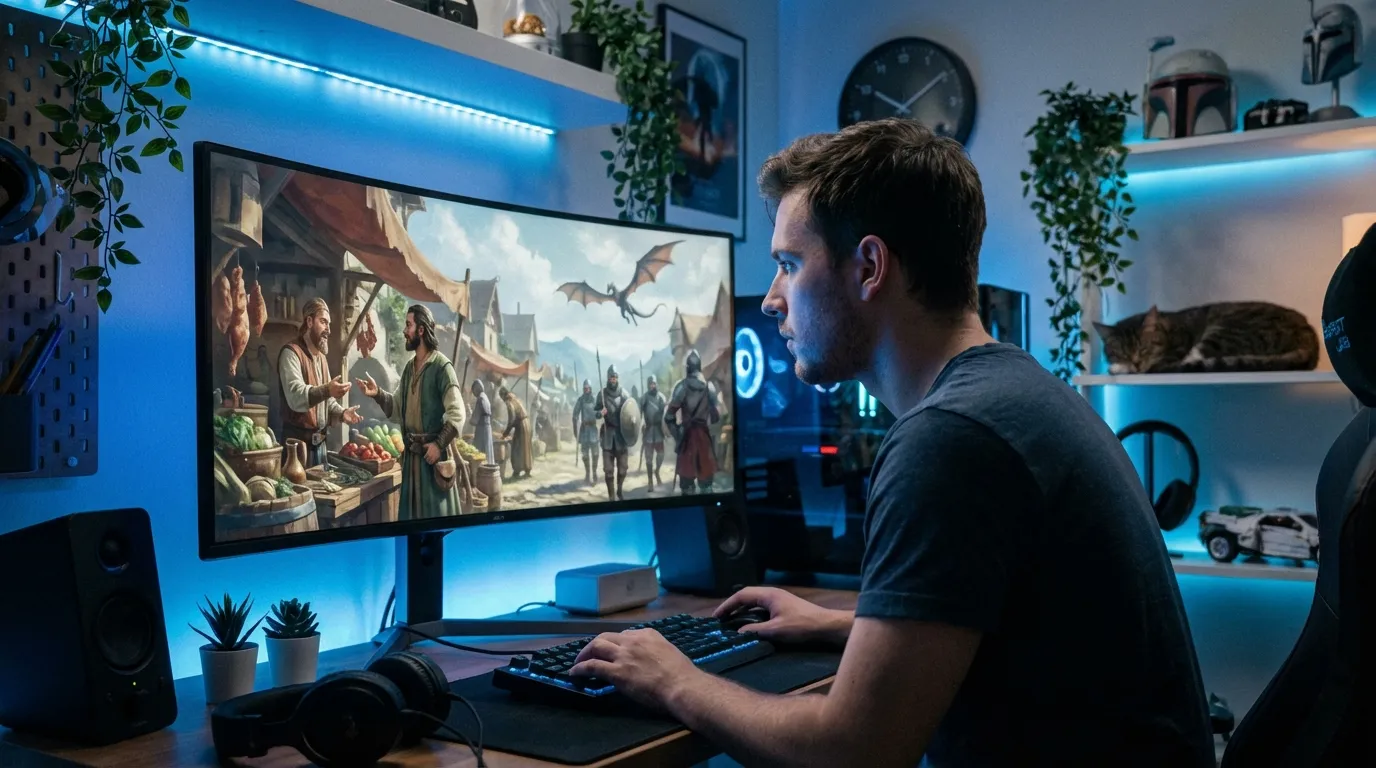
For years, cloud gaming promised freedom. In 2026, it usually delivers on that (even if it got there slowly). Around 60% of gamers have tried cloud gaming, and about 80% say they had a good experience. That’s a clear change from earlier years. Lag is much lower than it used to be, picture quality stays steady during longer play sessions, and support now covers many more devices. That includes screens people already have, like a TV in the living room. This shift often changes when, where, and how people play.
What really drives this is how fast hardware prices keep rising. Cloud gaming skips constant upgrades and expensive parts, which feels appealing if you’ve looked at GPU prices lately. Big games now run on a simple laptop or tablet. You can play on a phone during a commute (as long as the connection holds) or sit back with a controller and a smart TV. In places where consoles cost a lot or are hard to find, cloud access lowers the entry point in a very real way, and that usually brings in more players.
On the technical side, network upgrades carry most of the weight. Wider 5G coverage and edge computing handle the heavy lifting, while Wi‑Fi 6E helps at home. Input lag feels normal for most genres most of the time. Competitive shooters still lean toward local hardware for small advantages, but RPGs, strategy games, and long co‑op sessions usually work well in the cloud. Most of the time, it’s smooth.
Streamers also gain from this shift. Setup takes less time, switching games is easier, and traveling is less stressful with quick backups. Developers get clearer data and stronger protection against piracy. Subscription libraries push players to try games they might skip otherwise, and some of those players stick around.
Let us look at the market impact.
| Metric | Value | Year |
|---|---|---|
| Global cloud gaming market size | $23.79 billion | 2026 |
| Gamers who tried cloud gaming | 60% | 2025 |
| Positive cloud gaming experiences | 80% | 2025 |
We also wrote about cloud gaming in 2026 if you want more detail on which platforms are actually worth using.
Hardware Innovations Are Smaller and More Flexible
By 2026, gaming hardware isn’t only about raw power. Flexibility matters just as much, especially for people who don’t play in one spot all the time. Handheld PCs, modular builds, and energy‑efficient parts are changing how people play day to day, and it feels like a real shift. Nearly 28% of developers already optimize for handheld PCs like the Steam Deck, and another 40% say it’s on their roadmap. That kind of momentum usually points to something that’s here to stay.
The first thing people notice is how well these setups fit into real life. Gamers move between desks, couches, and sometimes hotel rooms, and the hardware keeps up. Save files sync fast, controls adjust with little effort, and one device can act like a console when docked or a PC when undocked. Depending on your connection, streaming fits right into the same routine. It sounds basic, but when you use it every day, it works really well.
A lot of this progress comes down to chip design. Mobile GPUs now reach close to desktop performance while using much less power. That usually means cooler systems and quieter fans, which people notice right away. Modular options, like swappable storage or external GPUs, also help systems last longer and reduce electronic waste in clear, practical ways.
For streamers, lighter gear makes a big difference. You no longer need a massive tower for high‑quality gameplay and broadcasts. Compact capture devices and USB‑C hubs (those small lifesavers) simplify multi‑platform setups, with fewer cables and fewer problems.
PC builders may feel especially at home right now. The basics are easier to understand, which is why the team explained them step by step in a beginner‑friendly guide on building your gaming PC from scratch.
Laptop gaming is moving fast too. Cooling works better, OLED screens look great, and battery life keeps slowly improving. Expectations have grown with the tech, and those details are covered more deeply in the piece on gaming laptops 2026 innovations.
VR, Mixed Reality, and Haptics Go Mainstream
Virtual reality isn’t niche anymore, at least not like it used to be. The global VR gaming market is expected to reach $26.71 billion in 2026, which can feel surprising when you pause and think about it. Headsets are lighter now, and motion sickness has dropped as haptics feel more real, which is a relief for anyone who has ever had to stop playing early.
A lot of this change comes down to comfort mixed with better content. Pancake lenses cut down headset bulk, and inside‑out tracking means room sensors no longer take over your space or test your patience. More believable haptic gloves are appearing alongside spatial audio, and adaptive triggers add immersion without confusing new users. That balance often makes longer sessions easier and first tries less frustrating.
Mixed reality blends digital objects into real rooms. This creates new ways to play, like fitness games or puzzle adventures that use a couch or table as part of the level. Social mixed reality spaces are growing too, letting friends play together while still seeing real expressions, which usually helps conversations feel natural.
Wellness has become a key part of this shift. Many games track stress and adjust pacing, nudging players toward healthier breaks. Fitness VR now competes with traditional workouts, and some insurers are testing rewards tied to active play.
For players focused on mental health, this matters. Games support balance, rehab, and social connection, slowly moving gaming beyond pure entertainment and into everyday well‑being.
Creator Economies Are Reshaping Games
User‑generated content isn’t optional anymore, especially in big multiplayer games. When Fortnite and Roblox paid out more than $1.5 billion to creators in 2025, people noticed fast, and it made sense. By 2026, many new titles are skipping slow rollouts and building creator ecosystems from day one. Waiting can feel like falling behind, so teams are jumping in early.
What stands out is how creator tools keep getting easier to use without losing depth. In‑game editors now mix visual scripting with AI‑assisted asset creation, so updates can go live almost instantly, which still catches people off guard. Feedback loops are short, and while the learning curve is smoother, originality, taste, and smart design still matter more than the tools themselves. That hasn’t really changed.
For aspiring streamers and indie developers, this can feel like a great moment. Making maps, skins, modes, or stories inside existing platforms means reaching millions quickly and earning while learning. Some creators now treat these ecosystems as full‑time work, with income from revenue shares, fan tips, and brand sponsorships that often grow over time.
This shift is also extending how long games stay active. Community content keeps titles alive well past launch. When players help shape the experience, shared ownership often builds stronger communities than top‑down updates alone.
Brands have noticed too. Creator‑made spaces now host virtual concerts, product launches, and the occasional crossover that spreads quickly online. It’s not just hype. We wrote more about this in our piece on future gaming trends and virtual communities, including why it matters beyond revenue.
Accessibility Is No Longer an Afterthought
Accessibility is one of the most noticeable gaming changes of 2026, and that’s a good thing. Instead of being added at the end, most studios now plan for it from day one, which wasn’t always true. You can see this shift in everyday features like colorblind settings, fully remappable controls, AI‑assisted difficulty, text‑to‑speech and speech‑to‑text, and UI scaling that stays easy to read on handhelds or phones. These might sound minor, but they often decide how comfortable a game feels during long sessions.
What really feels new is personalization at scale. Instead of guessing what players need, AI systems watch how someone actually plays. They can suggest custom controls, widen reaction windows, or reduce visual effects based on real behavior. Rather than choosing just “easy” or “hard,” players fine‑tune details until the game fits their hands and eyes.
To me, this comes from smart design. Better access brings in more players, which helps communities grow and games last longer. It also keeps competition focused on skill, not physical limits or special equipment.
Mental wellness tools follow the same thinking. Games can notice fatigue, suggest short breaks, or offer calm, low‑stimulation modes after a long day. That helps players enjoy longer sessions without burning out, especially in live‑service games.
Big Releases Still Shape Modern Gaming
What grabs attention first is how much pressure the biggest launches carry. Even with nonstop new ideas, big games still matter, often more than it feels day to day. Titles like GTA VI and Battlefield 6 are expected to push systems at real scale, not just polished demos. This is where AI‑driven crowds, cloud‑based worlds, and default cross‑platform play can show what works and what doesn’t.
Big releases often become benchmarks, but only when large budgets match experienced teams and solid infrastructure. There are rarely shortcuts at this level. When something works here, it often shows up in smaller games a year or two later.
Player expectations move fast. Stable servers, smooth updates, and accessibility options are now assumed at launch, and people notice right away when they’re missing. Studios that stumble usually hear about it immediately.
A clear example is our breakdown of GTA VI vs Battlefield 6, which looks at how these releases could set the bar.
The U.S. video game industry enters 2026 with the potential to reach a new record high in consumer spending, following a year of slight growth driven by new hardware, rising subscription engagement, and robust player demand across platforms.
Common Questions, Simply Answered
Cloud gaming that actually works is the biggest change, and it finally feels real. AI‑driven gameplay is right behind it. Flexible hardware options are part of it too, often giving creators better tools. There’s also more focus on accessibility and wellness, so it’s easier to jump in and keep playing.
At the highest level of esports, local hardware usually still wins. For most games, though, you’ll probably be fine. Latency is much better now, especially in areas with strong internet like big cities. Cloud gaming works for practice, ranked matches, and streaming, but it still has limits.
AI often cuts costs and speeds development, so indie teams can prototype faster and create assets in a responsible way, in my view. With the time saved, design and storytelling get more focus, and you still keep control in your hands.
If immersion and presence matter for fitness, I’d still say yes, now is a smart time to invest, at least for workouts. Content libraries feel bigger than before, prices keep dropping, and the experience often feels clearly better after just a few days.
They already are, honestly. Accessibility removes barriers without lowering skill limits; there are no shortcuts, so matches feel fair and everyone competes overall.
Where Gaming Innovations Go From Here
Gaming innovations in 2026 aren’t about one huge breakthrough. They usually arrive as lots of smart, steady changes that stick around. AI helps games feel more alive through small, unexpected moments instead of loud tricks. Often, it’s the quiet reactions and tiny changes that make the difference. Cloud gaming removes old hardware limits, so what you can play isn’t so tightly linked to the box you own, and that feels freeing. Hardware keeps shifting too, fitting more naturally into daily life instead of always asking for attention. Wellness and accessibility matter more now, gently pushing gaming toward something healthier and easier to join for more people, including you.
What matters most is choice. It’s simple and usually planned that way. Players decide how and where they play, and also why. Competition, creativity, relaxation, and connection all exist together, sometimes changing from one day to the next.
As systems grow, the gap between player and creator shrinks in real, useful ways. Games respond as you play, while still supporting huge shared worlds where everyone’s experience feels a little different.